

Victorian Writing Slope Box
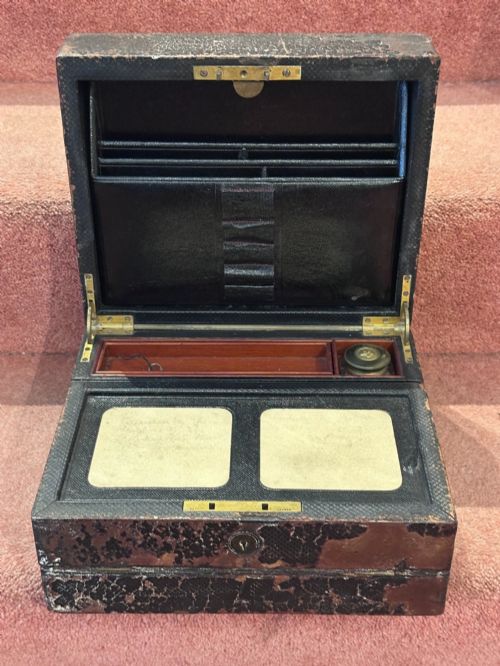
A victorian writing slope box organises correspondence with folding writing surfaces and fitted compartments for ink and pens.
Victorian Writing Slope Box
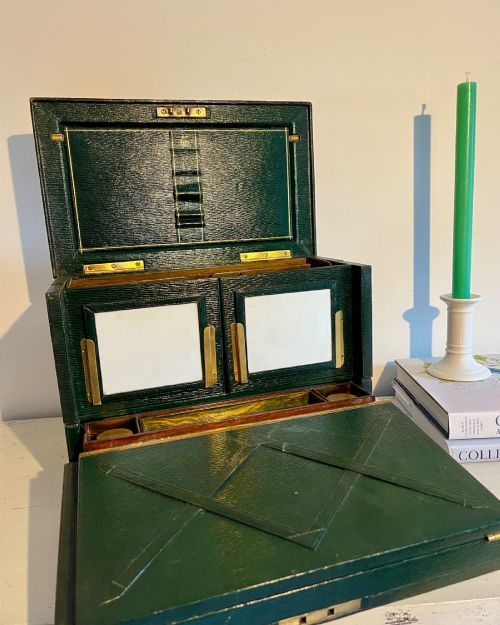
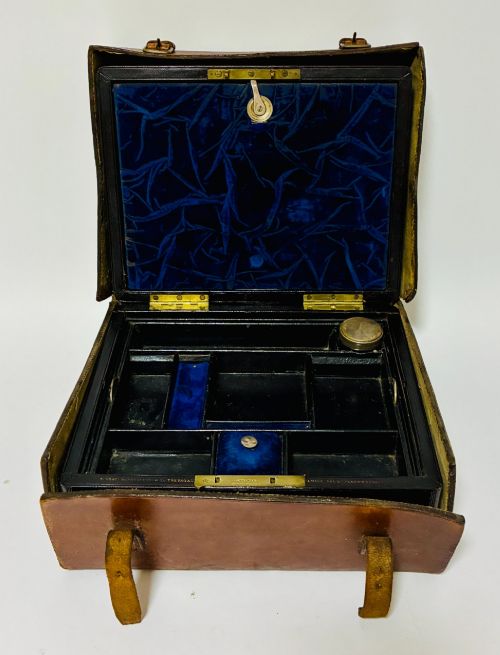
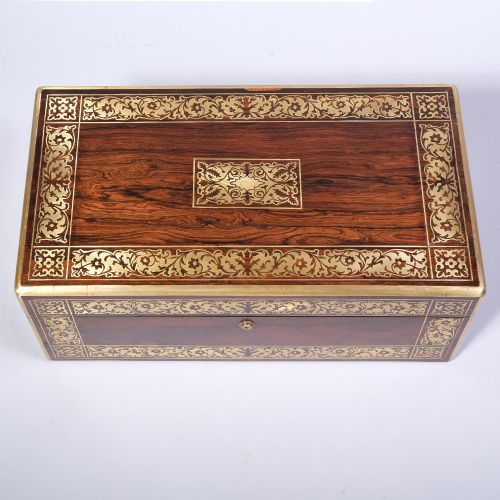
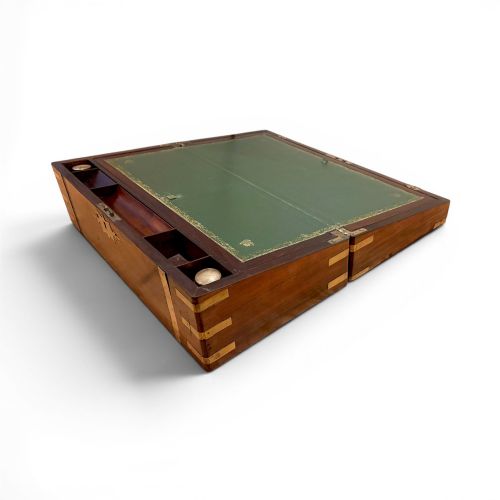
A victorian writing slope box combines a portable desk with a secure storage container for letters, documents, and writing implements. The standard form opens from a hinged lid into an inclined writing surface, often lined with leather or velvet.
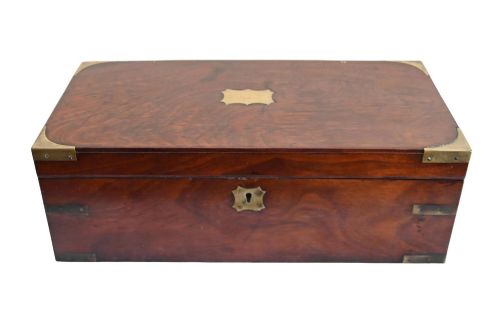
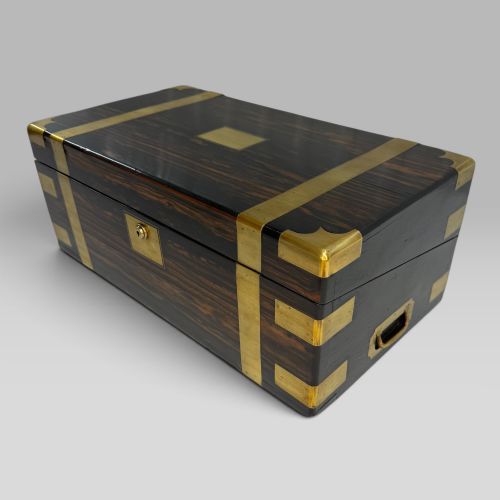
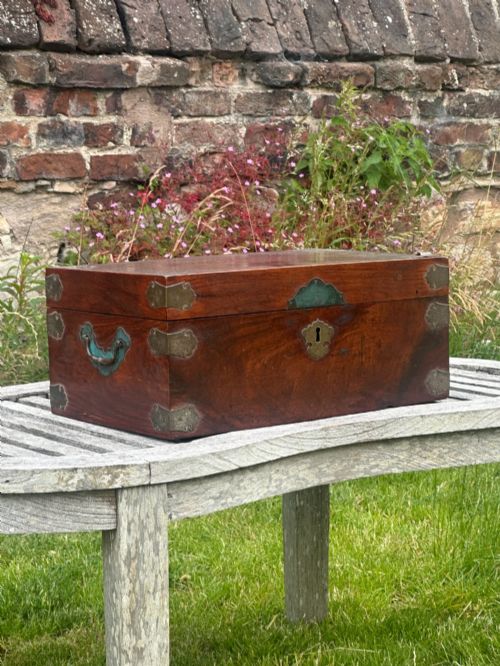
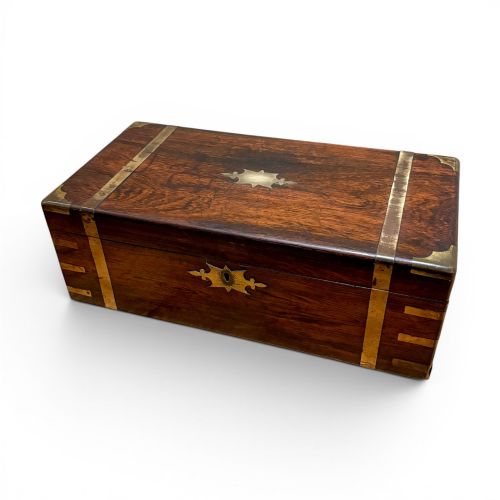
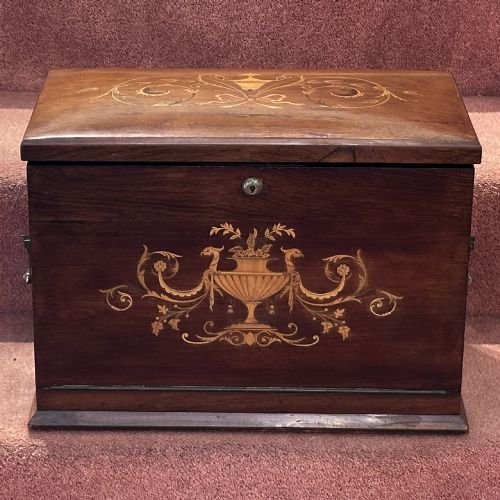
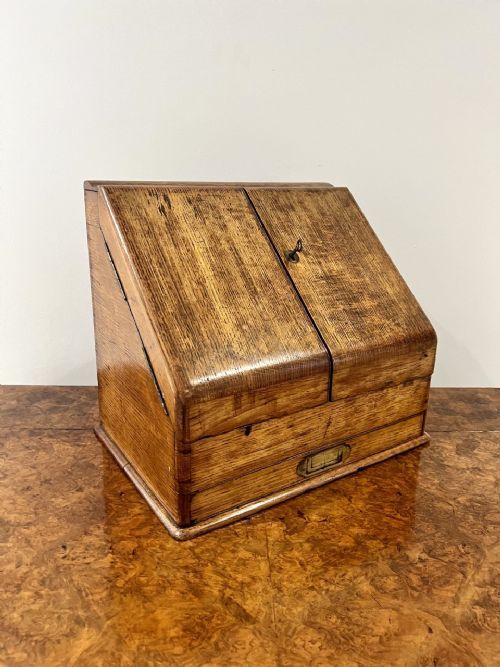
Most examples date from the nineteenth century, ranging from modest mahogany and oak carriers to elaborate rosewood, walnut, and coromandel pieces. Buyers encounter campaign variants with brass corner brackets and flush carrying handles, designed for travel.
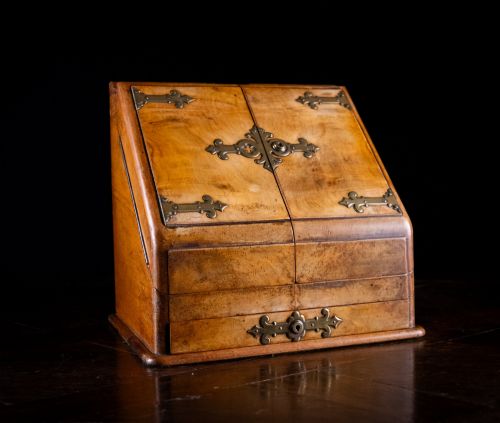
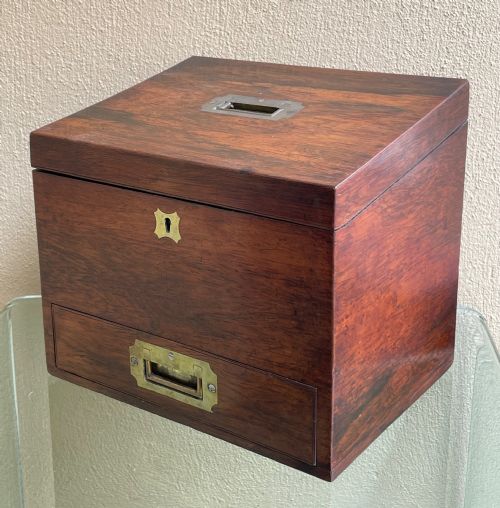
Stationery cabinets and desktop boxes also appear frequently, alongside exotic materials such as camphor wood, padouk, and Anglo-Indian carved wood. Makers incorporated secret drawers, pen trays, and inkwells within fitted interiors to secure private papers.
Standards of Execution
Gradations in quality depend upon the selection of timber veneers, such as highly figured burr walnut or coromandel, matched across the exterior surfaces. Precision in brass inlay, flush-fitting campaign hardware, and structural joinery distinguishes finer workshops.
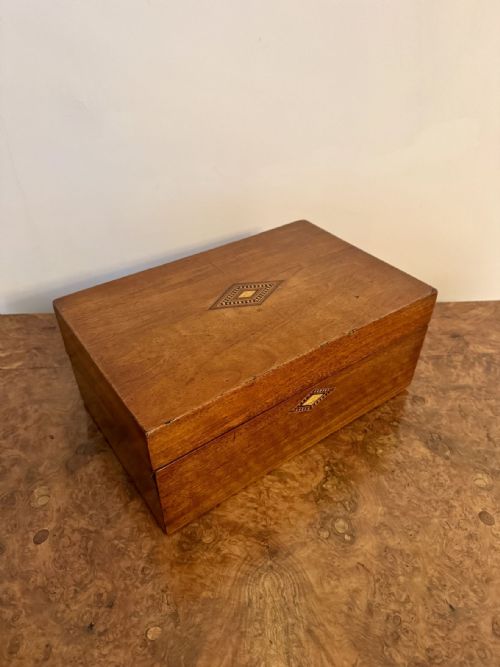
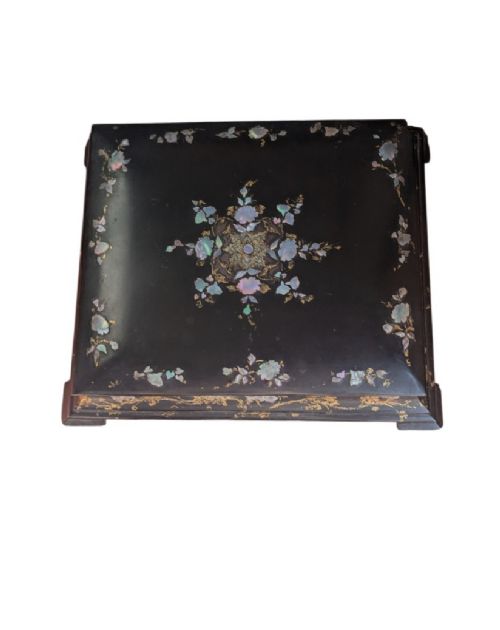
The complexity of the fitted interior dictates standard, including concealed secret drawers, working locks with original keys, and fitted glass inkwells with brass caps. Hand-tooled leather writing surfaces and intricate Tunbridge ware mosaics elevate individual pieces.
Secret drawers require pressing hidden wooden springs inside the stationery well to reveal tiny compartments.
F. West·Toulmin & Gale
The Victorian Writing Slope Box Glossary
- Writing Slope
- A portable desk featuring an inclined surface for writing, opening to reveal storage compartments for paper and pens. These boxes fold flat for travel and lock securely.
- Campaign Box
- A portable piece of furniture reinforced with brass corners and recessed handles for military transport. Officers used these durable wooden chests on active service.
- Tunbridge Ware
- Woodworking characterised by mosaic decoration formed from thousands of tiny tinted wood blocks. This decorative technique creates geometric patterns or pictorial scenes.
- Secret Drawer
- A concealed compartment hidden behind removable panels or activated by a hidden spring release. Makers used these to secure valuables and confidential letters.
- Bramah Lock
- A high-security barrel lock invented by Joseph Bramah in the late eighteenth century. These complex mechanisms resisted picking and appeared on fine nineteenth-century boxes.
Victorian Writing Slope Box: Frequently Asked Questions
How were writing slopes used?
These boxes provided a portable writing desk for correspondence before the widespread use of fitted study furniture. Travellers and officers carried them to maintain records and write letters away from home.
The hinged lid folded down to create a sloping writing plane, while internal compartments held inkwells, sanders for drying ink, pens, and stationery.
What is a campaign writing slope?
Campaign versions feature robust construction with brass binding along the edges and flush-fitting handles for transit. They were built to withstand the rigours of military movement and colonial travel.
These durable boxes often utilise dense timbers like mahogany, camphor wood, or teak to resist changing climates and heavy handling.
How do I find secret drawers?
Secret drawers are typically concealed behind false partitions within the stationery recess or beneath removable pen trays. Finding them often requires sliding panels or pressing hidden wooden spring catches.
Cabinet makers designed these compartments to protect private documents and currency from casual observation during travel.
What woods were commonly used?
Cabinet makers selected dense hardwoods such as mahogany, rosewood, and walnut for their durability and attractive grain patterns. Burr walnut, coromandel, and bird's eye maple appeared as decorative veneers on luxury items.
Utility boxes relied on plain oak or pine, while overseas pieces utilised exotic timbers including camphor wood and padouk.