




Victorian Work Basket
A Victorian work basket brings refined utility to a room, holding needlework or small treasures in timber and brass.
Victorian Work Basket
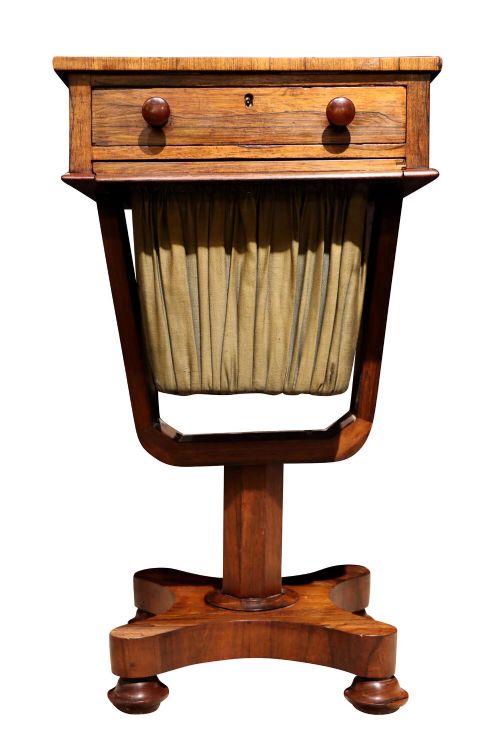
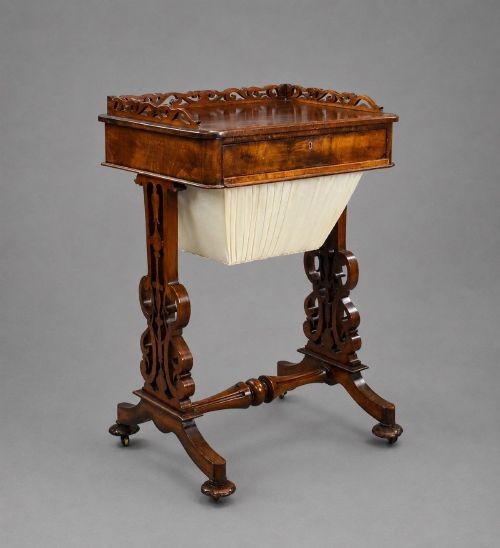
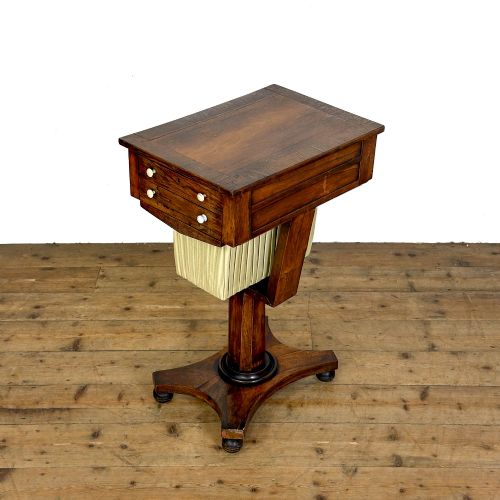
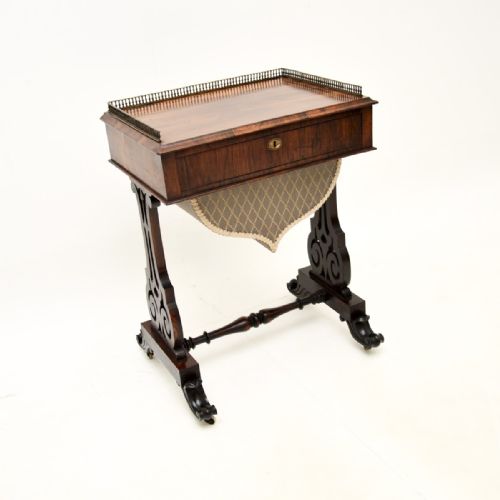
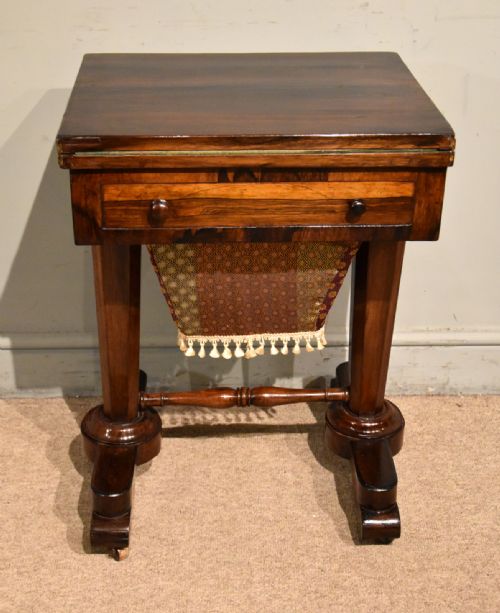
Mahogany and rosewood dominate the wooden sewing furniture, frequently incorporating burr walnut for figured grain patterns. Many examples combine storage compartments with drop leaves, folding tops, or internal trays intended to organise threads and implements. The forms bridge functional furniture and decorative table-top containers.
How they were made
Cabinetmakers constructed these pieces using dense hardwoods like mahogany, rosewood, and walnut, often applying finely figured burr veneers to primary surfaces. Interiors frequently incorporated fitted compartments, small drawers, and fabric bags suspended beneath the table top to hold sewing materials.
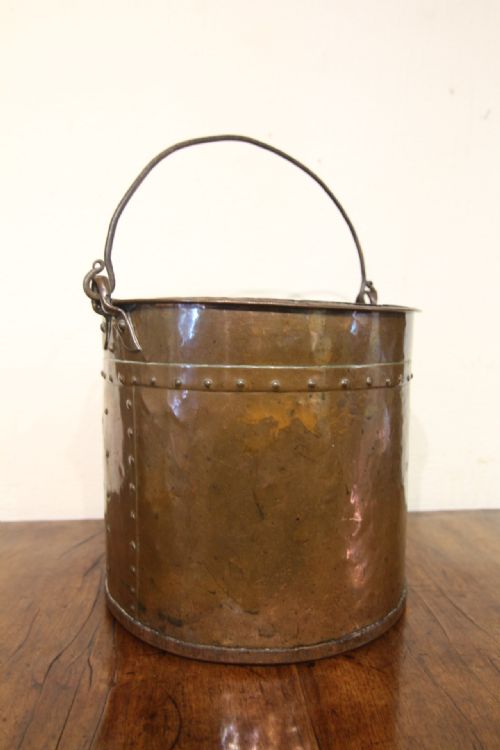
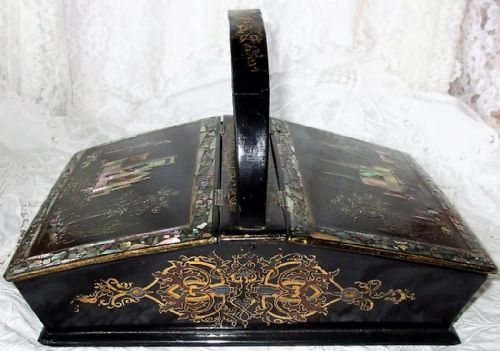
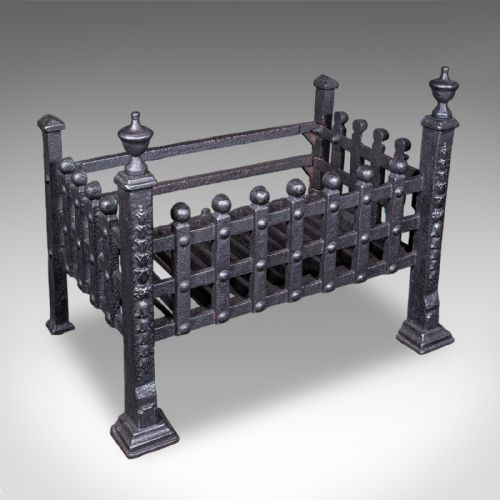
Metal components relied on brass for hinges, castors, and handles, whilst heavier fireside baskets utilised wrought iron and riveted copper. Techniques included precise joinery for drop-leaf mechanisms and intricate papier-mâché moulding for decorative caskets.
Victorian Work Basket Retail Price Guide 2026
Typical asking prices for victorian work basket among the pieces listed under this phrase on Sellingantiques today, from the lower quarter to the upper quarter. They describe what is for sale here now, not the wider market.
The listings demonstrate a strong preference for nineteenth-century rosewood and mahogany sewing furniture alongside copper fireside baskets.
What varies in quality
The refinement of the timber selection dictates much of the distinction, particularly the depth and figure of rosewood and burr walnut veneers. Superior items display meticulous interior fitting, retaining original silk linings, compartmentalised trays, and smoothly operating drop leaves or foldover mechanisms.
Execution of decorative details separates standard production from finer pieces. Finely turned pedestals, carved scrollwork, and intact brass hardware indicate superior workshop origin.
William Comyns·Haseler Brothers
The Victorian Work Basket Glossary
- Work table
- A small occasional table fitted with drawers or a fabric bag for holding sewing materials and needlework. These items served ladies in the drawing room for domestic handcrafts.
- Drop-leaf
- A table top featuring hinged flaps that fold down to reduce the footprint or extend the surface area when supported by swinging brackets.
- Papier-mâché
- A composite material made from paper pulp mixed with glue and resin, pressed into moulds and hardened to form decorative caskets and small boxes.
- Tunbridge ware
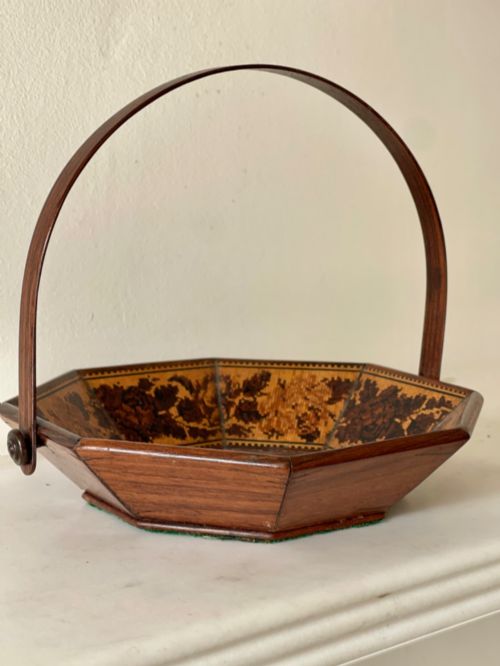
- Small wooden objects decorated with intricate mosaic patterns assembled from thousands of tiny tinted wood blocks. This specialised craft flourished in Kent during the nineteenth century.
- Andirons
- Horizontal metal bars or firedogs raised on legs, used to support logs in an open hearth fireplace.
Victorian Work Basket: Frequently Asked Questions
What is a Victorian work table?
A Victorian work table is a small piece of furniture designed specifically for sewing, embroidery, and needlework tasks. They typically include internal compartments or a hanging fabric bag beneath the surface.
These items were kept in drawing rooms or sitting rooms where ladies gathered for domestic handcrafts.
How do I use a work basket today?
Modern interiors utilise these items to store knitting supplies, sewing accessories, or everyday clutter out of sight. Smaller caskets sit neatly on sideboards or desks to hold letters and small trinkets.
The tables also function well as compact bedside stands or lamp tables in living spaces.
What woods were used for sewing tables?
Cabinetmakers predominantly selected rich hardwoods like mahogany and rosewood for nineteenth-century sewing furniture. Burr walnut also appears frequently, prized for its swirling grain patterns on table tops.
Secondary woods like pine or oak often formed the hidden internal framing and drawer linings.
How do I distinguish different periods?
Earlier Georgian and William IV pieces often display heavier proportions and classic rosewood veneers with minimal fuss. Victorian and Edwardian examples introduce varied styling, including Tunbridge ware inlays and Arts and Crafts copper work.
Construction methods, such as dovetailing in drawers and the style of brass castors, help narrow down the decade of manufacture.