
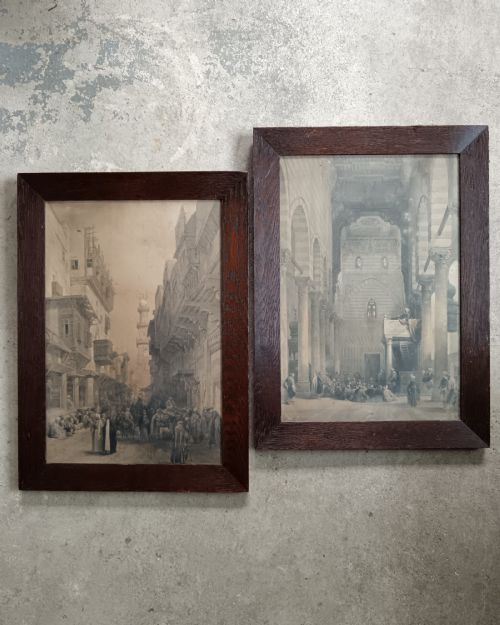
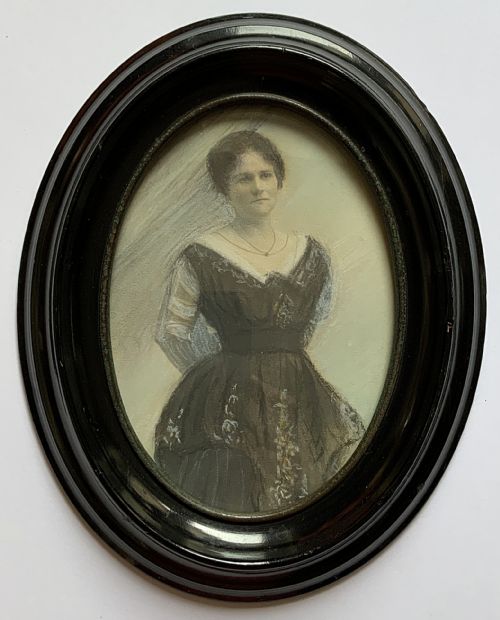


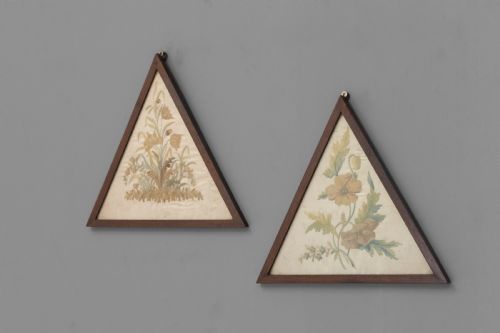


Victorian Wooden Picture Frame
These items bring together a Victorian wooden picture frame and the period paintings, photographs, and textiles they enclose.
Victorian Wooden Picture Frame
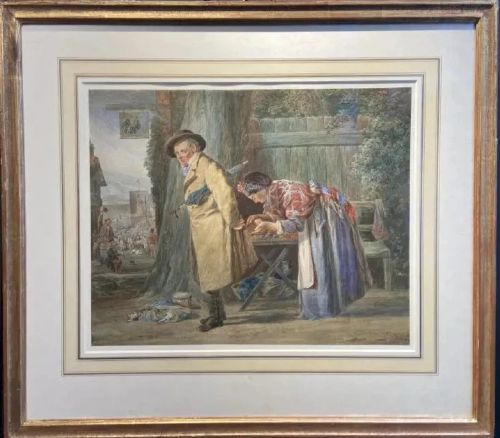
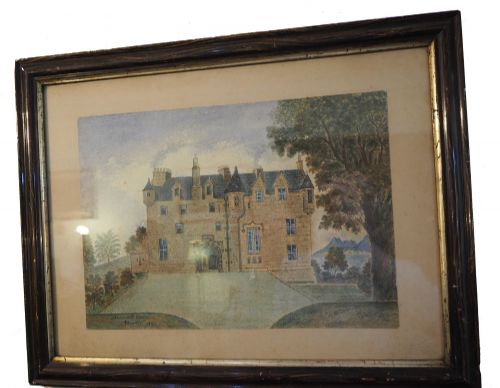
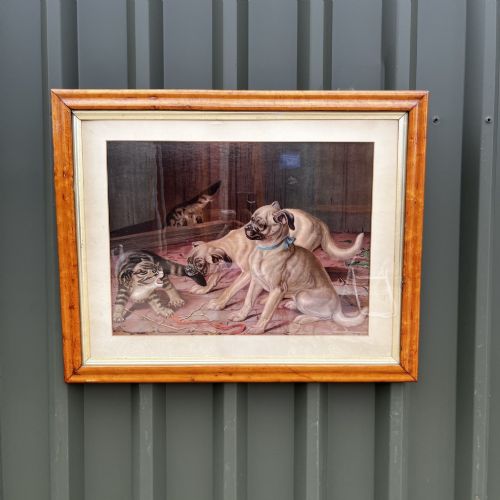
A buyer examining a victorian wooden picture frame encounters surrounds that house oil paintings, watercolours, prints, photographs, and embroideries. The pieces span the nineteenth century and extend into the early decades of the twentieth century.
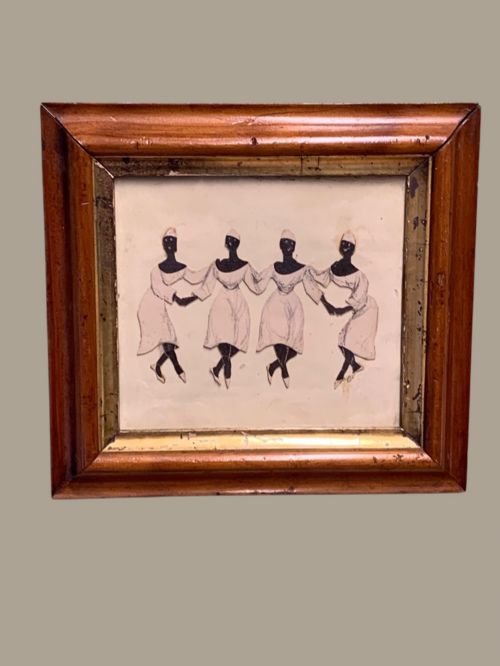
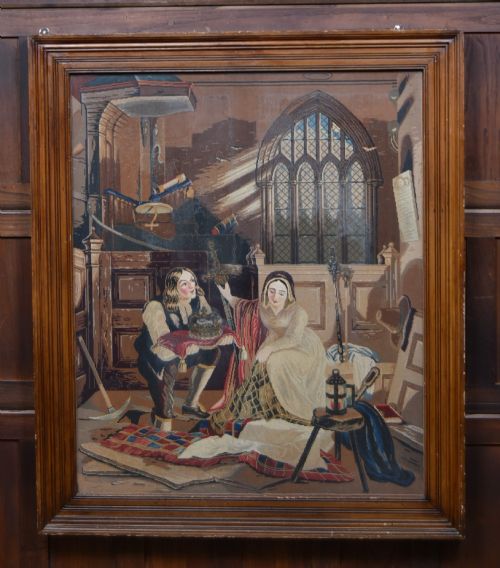
Makers housed varied subjects inside these surrounds, from naive portraits and marine scenes to military prints and wool work embroideries. The most frequent encounters combine timber structures with glazed or open display formats for wall hanging and table top use.
Origins include English country house pieces, folk art dioramas, and continental studio works. The physical formats range from simple carved timber mouldings to elaborate gilt and gesso constructions.
Materials and construction methods
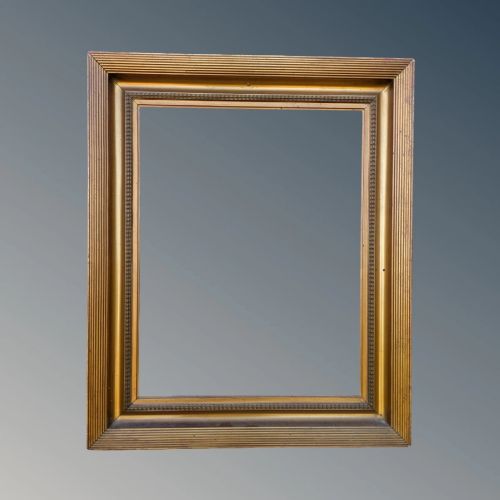
Wood forms the primary structural base of these pieces, utilising timbers such as mahogany, oak, and burr maple alongside carved black forest varieties and Tunbridge ware inlay. Gesso is applied directly to wooden foundations to build up decorative relief detail before gilding.
Gold leaf surfaces provide the metallic sheen on gilt frames, adhering to the prepared gesso layers. Glass protects the face of works containing paper, watercolor, photography, and delicate textiles such as woolies and needlework.
Assembly relies on traditional woodworking joints and backing boards secured behind rebates. Carved elements, Tunbridge mosaic patterns, and applied ornaments demonstrate specialised bench skills of the period.
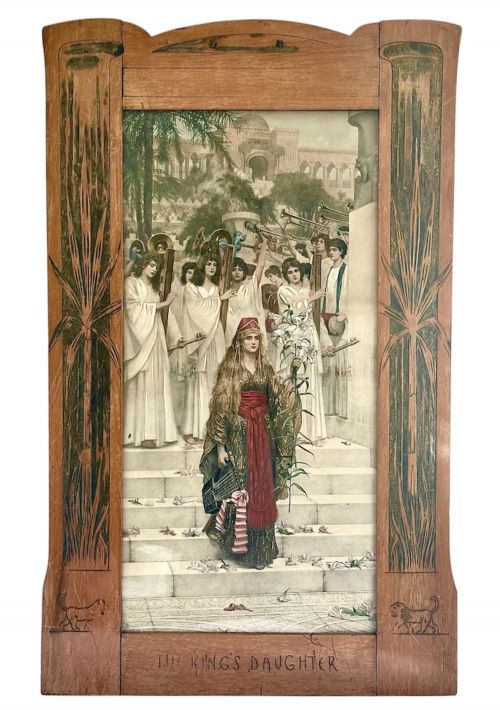
The documented styles range from folk art and Gothic Revival to Art Nouveau and Victorian marine art.
Distinctions in craftsmanship and preservation
Quality rests in the crispness of the wood carving and the integrity of the original surface finish, whether polished timber grain or applied gesso and gold leaf. Finer examples maintain their original gilding and structural joins without heavy intervention.
The sophistication of decorative techniques separates standard production surrounds from exceptional pieces, such as intricate Tunbridge mosaic work, deep relief carving, or specialised framing by documented retailers. Preservation of the original backing and interior glass further elevates an item.
The relationship between the artwork and its surround influences overall merit, particularly where makers paired specific paintings or needleworks with complementary frames from the same period.
The Victorian Wooden Picture Frame Glossary
- Gesso
- A plaster mixture applied to wood surfaces as a smooth base for gilding. This material allows makers to fashion raised decorative mouldings and relief patterns.
- Gilt
- A thin layer of gold leaf applied to the surface of wood or gesso. It gives the frame a bright metallic appearance.
- Rebate
- The recessed groove on the inner back edge of a frame designed to hold the glass, artwork, and backing board securely in place.
- Tunbridge Ware
- Small wooden objects decorated with mosaic patterns made from tiny wood blocks of various natural colours. This technique creates detailed geometric or pictorial designs on the surface.
- Chromolithograph
- A multicoloured print produced using lithographic stones. These images were widely published and framed during the Victorian era.
Victorian Wooden Picture Frame: Frequently Asked Questions
What periods do these frames cover?
The selection spans the nineteenth century, including Victorian examples, alongside pieces from the early decades of the twentieth century. Dates within the evidence extend from eighteen fifty through to nineteen thirty.
Makers utilised traditional styles such as Gothic Revival, Folk Art, and Art Nouveau across these decades. Construction methods and decorative motifs generally reflect the specific design tastes of their production era.
How do I identify a gesso frame?
Gesso frames feature a prepared plaster layer applied over a wooden base to create raised ornamentation before gilding. This material allows for sharp, moulded details along the borders.
Examining the corners and deep relief areas reveals the texture of the plaster beneath the gold leaf surface. Over time, these plaster layers can show characteristic fine crazing or small losses.
Were these frames made for specific artworks?
Many frames house the original artwork, print, photograph, or needlework they were paired with during the period. Pairs and sets often share matching construction and materials suited to the specific visual medium.
Other pieces entered circulation separately or have accommodated different works over their history. Examining the fit within the rebate and the condition of the backing helps indicate original pairings.
How should I hang a heavy wooden frame?
Heavy wooden and gesso frames require secure wall fixings suited to the combined weight of the timber and glass. Using appropriate picture wire and wall anchors distributes the load evenly across the structure.
Ensuring the hanging hardware attaches firmly to the sturdy side members of the frame protects the mitre joints from undue stress. Regular checks of the cord and fixings maintain safe wall display.