
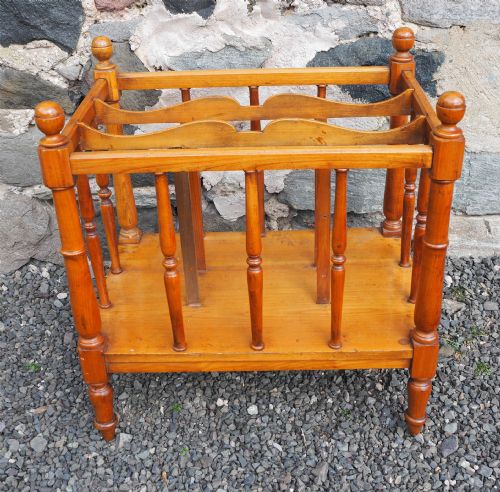


Victorian Wooden Newspaper Holder
These pieces for a victorian wooden newspaper holder are practical items designed to keep daily periodicals tidy, appealing to collectors of period home accessories.
Victorian Wooden Newspaper Holder
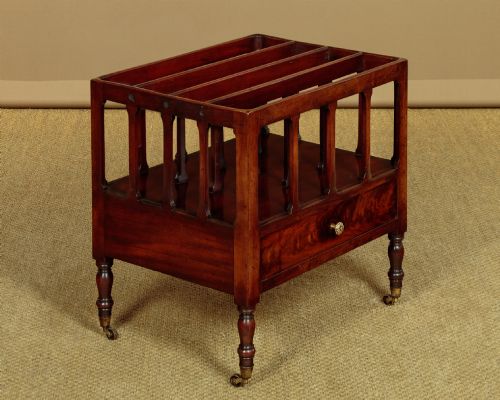
When searching for a victorian wooden newspaper holder, a buyer encounters items commonly referred to as canterburys or magazine racks. These pieces primarily date from the nineteenth century, including Victorian, Regency, and Edwardian periods.
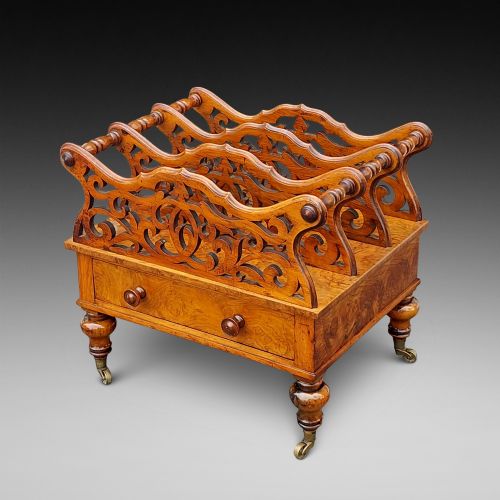
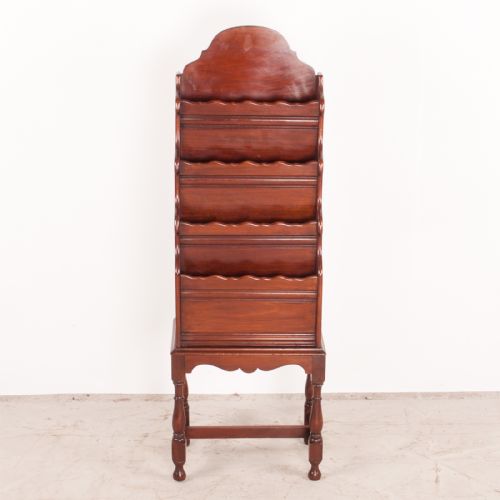
The forms vary from traditional canterburys featuring pierced scroll divisions to later magazine stands and racks. Mahogany, rosewood, walnut, and fruitwood form the main structural timbers found in these selections.
Materials and construction
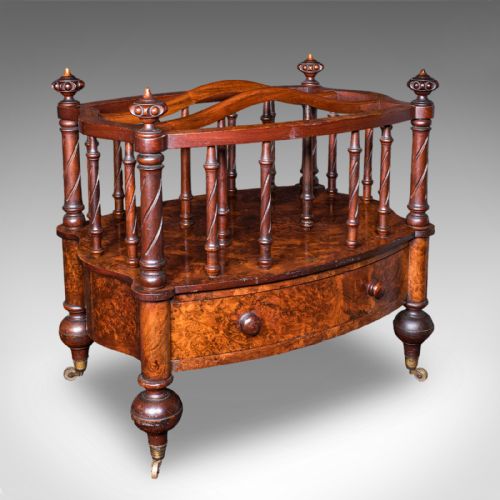
The construction relies heavily on timbers such as mahogany, rosewood, and walnut, often utilising figured or burr veneers to create surface pattern. Wood inlay and brass elements frequently appear as decorative additions on the better examples.
Joinery techniques include pierced scroll divisions and framed racks designed to support paper items upright. Fruitwood and oak also feature among the materials used to build these stands.
Listings feature items from the 18th century, Regency, Victorian, and Edwardian periods, constructed in mahogany, rosewood, walnut, and fruitwood.
Distinctions in quality
Quality reveals itself in the selection of timbers, such as figured walnut or rosewood, paired with refined craftsmanship like pierced scroll divisions. Simpler magazine racks from the early twentieth century contrast with the detailed joinery of earlier nineteenth century pieces.
The inclusion of brass fittings and intricate wood inlay separates standard items from more ambitious workshops. Structural proportion and the integration of handles or castors influence the overall character of the stand.
Howard and Sons of London·J.C.Loudon
The Victorian Wooden Newspaper Holder Glossary
- Canterbury
- A low stand with divisions, originally designed for holding sheet music or newspapers. This form represents the primary type of holder seen in these listings.
- Burr Walnut
- A wood grain obtained from the wart or burl of a walnut tree, highly prized for its swirling patterns. It appears frequently on high Victorian pieces.
- Pierced Scroll Division
- Openwork woodwork shaped in scrolls that separates the compartments of a rack. These divisions provide both structural division and visual lightness.
- Inlay
- A technique where pieces of contrasting wood are inserted into a recessed surface to form a design. Wood inlay is common on decorative Victorian items.
Victorian Wooden Newspaper Holder: Frequently Asked Questions
What is a canterbury?
A canterbury is a low wooden stand featuring multiple vertical divisions designed for holding newspapers, magazines, or music sheets. These items originated in the eighteenth century and remained popular through the Victorian era.
They often include a low drawer at the base and carrying handles at the top. The form serves as the main precursor to the modern magazine rack.
How do I care for rosewood?
Rosewood surfaces benefit from minimal moisture and occasional application of appropriate furniture wax to maintain the timber's natural lustre. Keeping the wood away from direct sunlight prevents fading.
Gentle dusting with a soft cloth preserves the finish without damaging delicate inlay or carved details.
How are different periods told apart?
Regency and early nineteenth century pieces often display clean lines in mahogany with simple turned supports. Victorian examples tend to utilise burr walnut, rosewood, and heavier foliate carving.
Edwardian and later pieces shift towards simpler oak or mahogany magazine stands with less elaborate ornamentation.
Where were these used?
These holders sat in the sitting rooms and libraries of nineteenth century homes to keep daily newspapers and periodicals organised. They kept reading materials accessible yet tidy beside seating areas.
Their portable nature allowed servants or residents to move them easily around the room.