


Victorian Wooden Inkstand
A victorian wooden inkstand brings tactile warmth to a desk, holding glass inkwells within carved or polished timber frames.
Victorian Wooden Inkstand
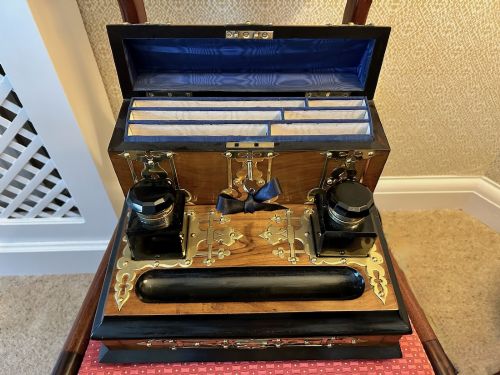
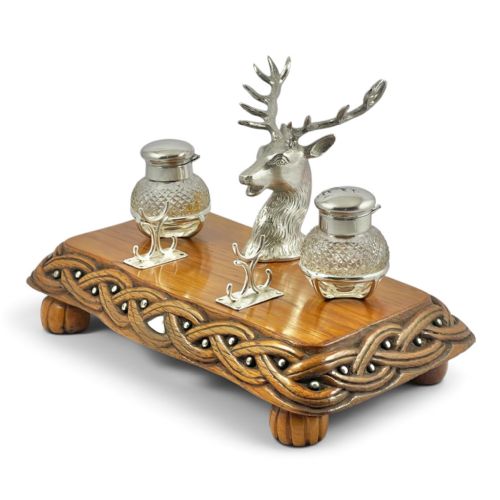
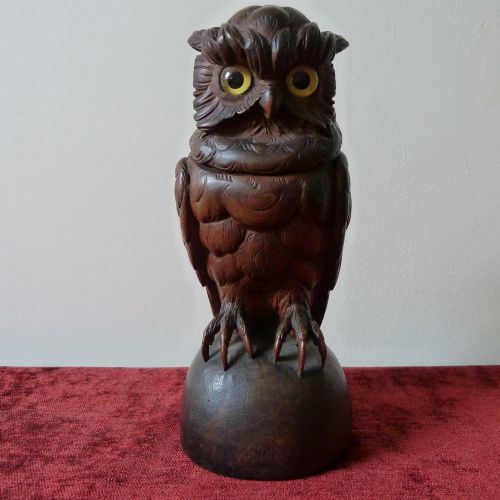
A victorian wooden inkstand serves as a desk tidy or standish, designed to hold writing equipment neatly in place during the nineteenth century. These pieces range from simple rectangular trays in solid oak to elaborate Black Forest carvings featuring animals.
The materials span native timbers like oak and walnut alongside exotic woods such as coromandel, often fitted with brass mounts and glass ink bottles. Many incorporate drawers or letter racks to organise correspondence before fountain pens rendered them decorative.
How they were made
Cabinetmakers constructed the wooden bases using native and imported timbers, employing dovetail joints for small drawers and rebated joints for stationary boxes. Walnut and oak provided sturdy flat surfaces, while linden wood suited the deep, sculptural carving seen in Black Forest pieces.
Metal components such as brass galleries, hinges, and silverplated mounts were cast or stamped separately before being screwed into the wood. Glass ink inserts were mouth-blown or moulded, frequently fitted with hinged metal lids to keep the ink from drying.
Several pieces feature ferocious bears and St Bernards standing guard over tiny glass ink pots.
What varies in quality
The crispness and depth of the wood carving dictate the distinction between standard production items and masterwork figural pieces, particularly in Black Forest carvings. Anatomical accuracy in animals and smooth operation of drawers show the maker's hand.
Originality of the glass inkwells and matching brass hardware elevates a piece significantly, as replacements disrupt the historical integrity of the desk set.
Maison F. Mack
The Victorian Wooden Inkstand Glossary
- Standish
- An inkstand or tray designed to hold inkwells, sanders, and pen nibs on a writing desk. It often includes lidded compartments or small drawers.
- Black Forest
- A style of wood carving originating from the Swiss and German border regions during the nineteenth century. These pieces typically depict lifelike animals in carved linden wood.
- Coromandel
- A dense, heavily figured timber imported from Asia, prized for its dark brown colour and contrasting black stripes. It was frequently used for high-end nineteenth-century desk accessories.
- Tunbridgeware
- A form of mosaic woodwork created by gluing together thousands of tiny tinted wood blocks to form geometric or pictorial patterns. It appears on inlaid travelling inkwells from the period.
Victorian Wooden Inkstand: Frequently Asked Questions
What is an inkstand?
An inkstand is a desk tray fitted with one or more inkwells, pen rests, and sometimes compartments for wafers or stamps.
They sat upon writing tables in studies and offices to keep writing materials tidy and accessible.
How do I date an inkstand?
Dating relies on timber choices, construction methods, and stylistic cues like Gothic revival motifs or Black Forest carving depth.
Hardware styles and the presence of glass inserts also help narrow down the period of manufacture.
Are the glass inserts original?
Many inkstands retained their original blown or moulded glass bottles, though replacements are common due to breakage.
Original bottles generally fit the wells snugly and match the age and wear of the surrounding wood stand.
What is a desk tidy?
A desk tidy is a practical wooden stand that combines inkwells with letter racks or small compartments for stationery.
These pieces kept paper and correspondence organised before the widespread adoption of modern envelopes.