
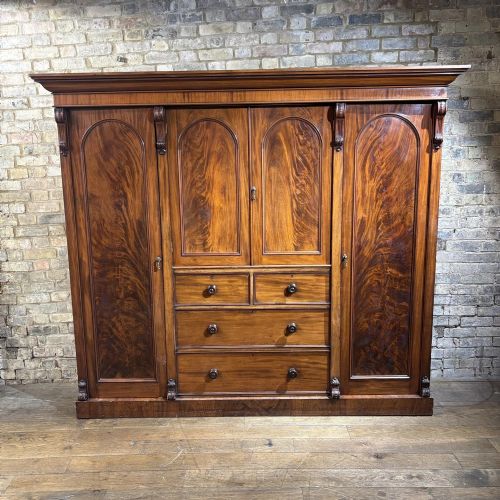
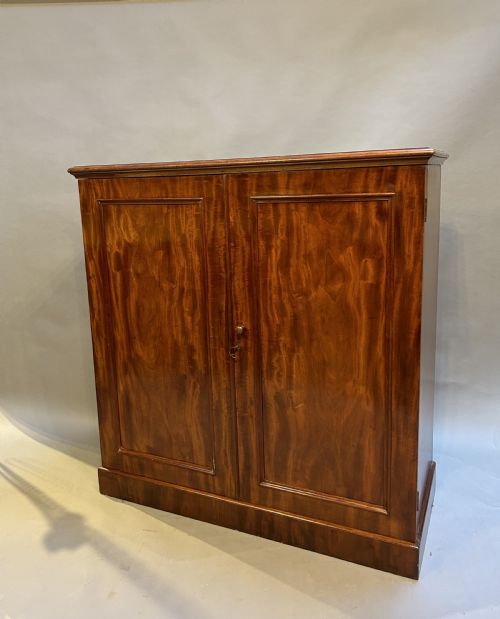


Victorian Wooden Housekeepers Cupboard
A victorian wooden housekeepers cupboard is a substantial storage piece designed for domestic utility, offering generous proportions and practical charm for modern homes.
Victorian Wooden Housekeepers Cupboard
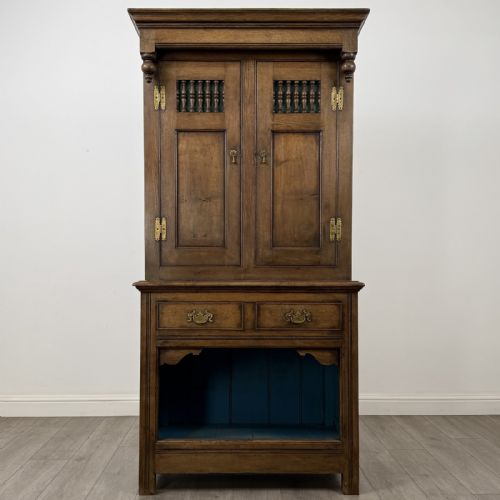
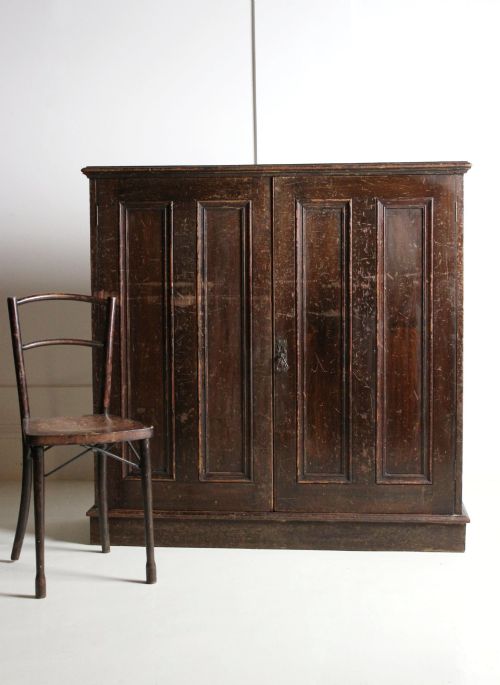
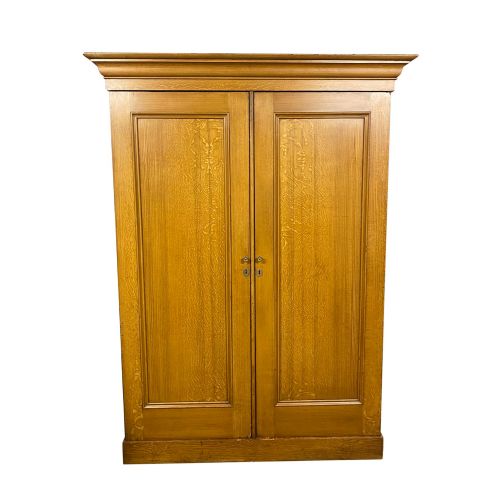
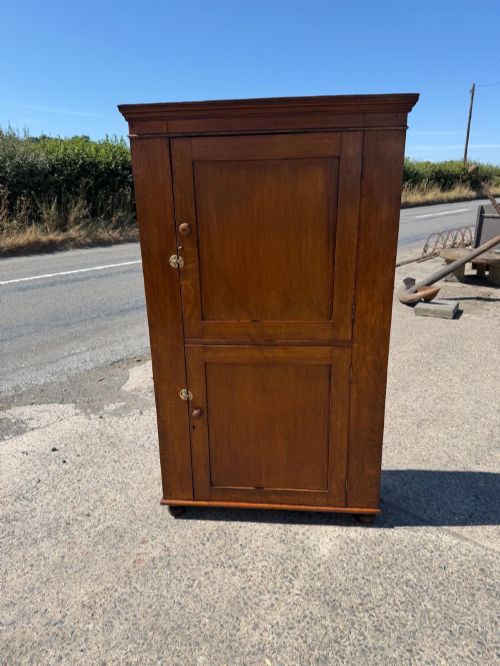
A victorian wooden housekeepers cupboard provides large-scale storage through tall cabinet doors and internal shelving, historically used to store household linens, provisions, and utility items. The pieces seen here span the nineteenth century into the early twentieth century, reflecting the robust functional requirements of large domestic spaces.
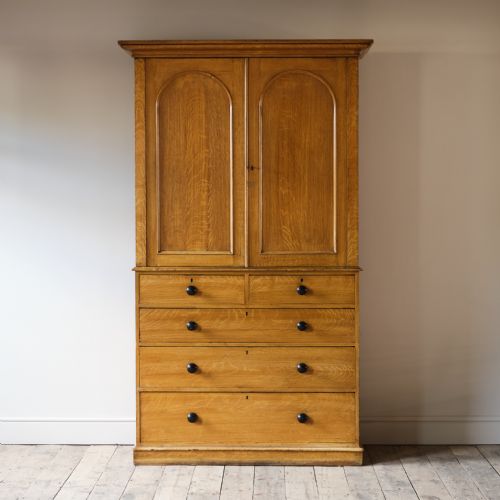
The most common formats on this page are pine and oak cupboards, often built in two sections for transport and positioned in kitchens, sculleries, or hallways. Alongside dedicated housekeepers cupboards, buyers will encounter related storage forms such as linen presses, compactum wardrobes, and country kitchen dressers.
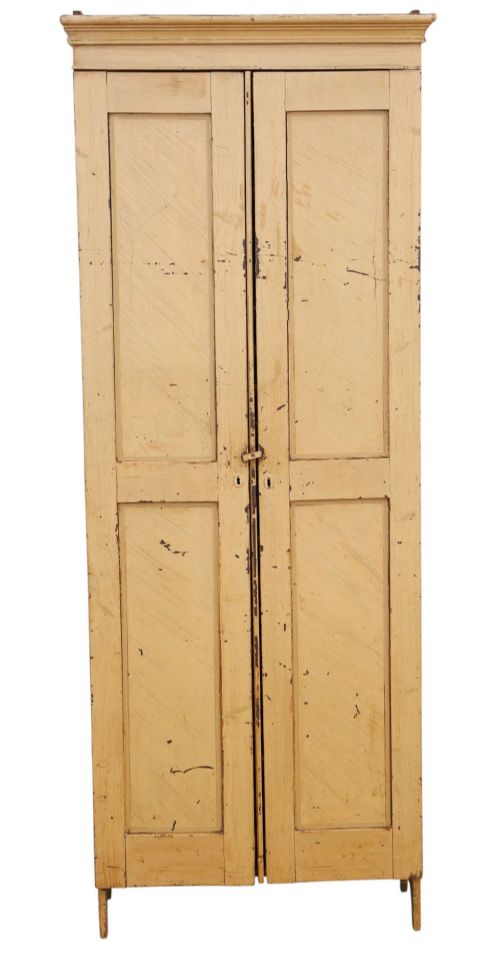
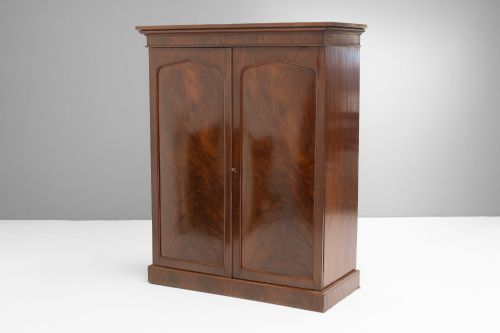
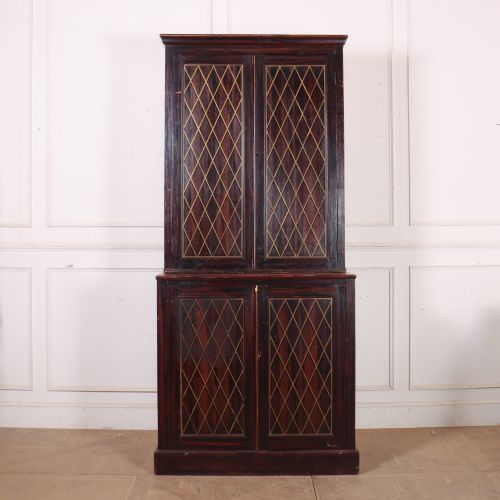
Origins range across English, West Country, and Scottish workshops, encompassing both formal mahogany pieces and rustic painted country furniture. These cupboards demonstrate regional variations in timber choice and surface treatment, from waxed finishes to original scumble paintwork.
Materials and construction methods
Constructed predominantly from solid pine, oak, and mahogany, these cupboards rely on heavy timber framing to support large panelled doors and internal shelving. Finer examples utilise flame mahogany veneer on cabinet fronts, whilst utilitarian pieces employ sturdy softwood painted with original scumble or cream finishes.
Hardware details consist of brass and iron handles, hinges, and locks, which secure the heavy doors typical of these large storage items. Construction techniques combine traditional joinery with robust carcass building designed to withstand decades of heavy domestic use.
Many of these sturdy cupboards carry the faint aroma of decades spent storing household linens and dry provisions.
Judging quality and condition
Quality in a victorian wooden housekeepers cupboard rests on the retention of original surfaces, such as untouched scumble paint or aged wax patination on the timber. Pieces that retain their original brass or iron hardware and uncompromised internal shelving stand apart from those altered or stripped down over time.
Proportion and scale dictate the hierarchy of these items, ranging from tall narrow cupboards to large two-piece linen presses with flared cornices. Well-balanced proportions and clean architectural mouldings signal superior cabinetmaking, even within utilitarian country pieces.
Heals
The Victorian Wooden Housekeepers Cupboard Glossary
- Scumble paint
- A decorative surface finish applied with a comb or brush to imitate the grain of more expensive woods like oak or mahogany. It protects the softwood beneath while adding visual depth.
- Linen press
- A tall cupboard featuring upper doors enclosing sliding trays or shelves for linens, sitting above a base section fitted with drawers. These pieces formed an essential part of large household organisation.
- Compactum wardrobe
- A multi-compartment wardrobe design incorporating hanging space, drawers, and shelving within a single unified carcass. This form maximised storage efficiency in nineteenth-century bedrooms.
- Bun feet
- Rounded, ball-shaped wooden feet that elevate the base of a cabinet off the floor. They appear frequently on nineteenth-century case furniture.
- Flame mahogany veneer
- A thinly sliced section of mahogany timber chosen for its distinct, fiery grain pattern. Craftsmen applied this to prominent exterior surfaces for decorative effect.
Victorian Wooden Housekeepers Cupboard: Frequently Asked Questions
Where were these cupboards used?
These cupboards were traditionally housed in the service quarters, sculleries, and large kitchens of substantial country houses to store household linens and dry goods.
Today, they function effectively in large modern kitchens, boot rooms, or hallways as prominent freestanding storage units.
How do I care for the wood?
Maintain waxed pine and mahogany surfaces by applying a natural beeswax polish occasionally to nourish the timber and preserve its finish.
Avoid placing these heavy wooden pieces near direct heat sources or in damp environments to prevent the timber from warping.
Are these cupboards easy to move?
Many larger examples, particularly linen presses and two-piece cupboards, separate into upper and lower sections to simplify transport and installation.
Due to their substantial height and solid timber construction, they require multiple people and careful handling to relocate safely.
How can I date a cupboard?
Dating relies on observing construction methods, timber choices, and hardware styles, such as brass hinges and iron locks characteristic of the nineteenth century.
Surface treatments like original scumble paintwork or waxed pine also offer clear indicators of the period in which the piece was constructed.