

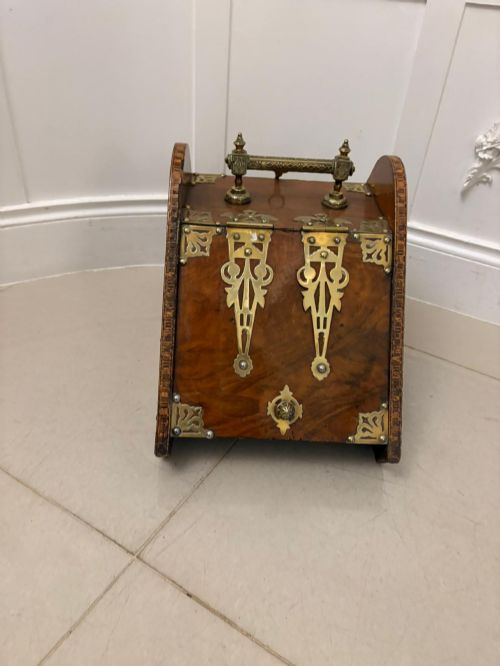
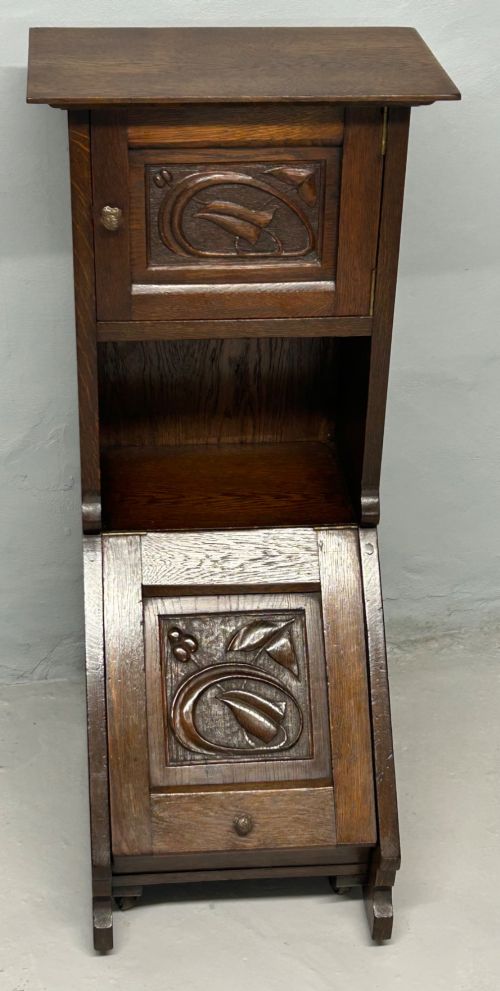


Victorian Wooden Fuel Bin
These Victorian wooden fuel bins are practical fireside necessities crafted to store coal and logs tidily beside the hearth.
Victorian Wooden Fuel Bin
A victorian wooden fuel bin serves as a purposeful fireside container designed to hold solid fuel such as coal, logs and kindling near the fireplace. These pieces take various forms including coal boxes, purdoniums, log bins and scuttles originating from the Victorian and Edwardian periods.
Buyers frequently encounter English and Scottish examples fashioned from timber and fitted with metal interiors or liners. The selection spans straightforward functional receptacles to ornately carved and inlaid designs suited to formal reception rooms.
Materials and Construction
Cabinet makers utilised dense hardwoods like mahogany, walnut and oak to build robust bodies capable of withstanding heavy daily use. Many surfaces feature deliberate carving or decorative wood veneers.
Makers integrated structural and decorative metal components including brass handles, hinges, liners and ormolu mounts to reinforce the wooden frames and withstand the grit of coal.
Victorian Wooden Fuel Bin Retail Price Guide 2026
Typical asking prices for victorian wooden fuel bin among the pieces listed under this phrase on Sellingantiques today, from the lower quarter to the upper quarter. They describe what is for sale here now, not the wider market.
Some Victorian coal purdoniums include a hidden compartment specifically sized to hold the coal shovel out of sight.
Assessing Quality
Quality rests upon the selection of timber and the precision of the joinery rather than mere age alone. Pieces exhibiting careful carving, matching veneers and refined inlay work sit at the higher end of the range.
The choice of metal fittings also dictates standard, where substantial brass hardware and secure internal metal linings indicate superior manufacture compared to simpler utilitarian versions.
The Victorian Wooden Fuel Bin Glossary
- Coal purdonium
- A specialised domestic coal container featuring a sloping front door or drop-down flap designed to dispense fuel cleanly. These often incorporate an internal metal shovel and liner.
- Ormolu
- Gilded bronze mounts applied to furniture for decorative effect. This technique adds metallic contrast against dark timber surfaces.
- Inlay
- The technique of inserting contrasting strips of wood or other materials into the surface of a primary timber to form decorative patterns. This ornament appears frequently on Edwardian pieces.
- Log bin
- A deep wooden receptacle specifically proportioned for holding firewood rather than loose coal. They often lack the complex internal chutes found in coal scuttles.
Victorian Wooden Fuel Bin: Frequently Asked Questions
What is a coal purdonium?
A coal purdonium is an enclosed wooden box designed to store domestic coal neatly by the fireplace. They typically feature a hinged or sloping front to facilitate easy shovelling.
Inside, these containers usually house a removable metal liner that protects the surrounding timber from coal dust and moisture.
How were these fuel bins used?
These bins sat permanently beside the hearth to keep solid fuel close at hand without creating mess in the room. Housemaids filled them from larger cellar stocks for daily use.
The attached metal handles and shovels allowed residents to tend the fire cleanly and efficiently throughout the day.
How do I date a wooden fuel bin?
Dating relies on examining the timber species, decorative styles and construction techniques present on the piece. Victorian examples often display heavier carving, while Edwardian pieces frequently feature lighter inlaid decoration.
Makers also utilised specific stylistic revivals, such as Rococo details, which help place the object within the late nineteenth or early twentieth century.
Can I still use these for firewood?
These bins function well for storing logs or kindling beside modern hearths or wood-burning stoves. The robust wooden construction remains entirely suited for holding heavy fuel.
Owners should check the condition of any internal metal liners before placing loose materials inside to protect the historic timber.