
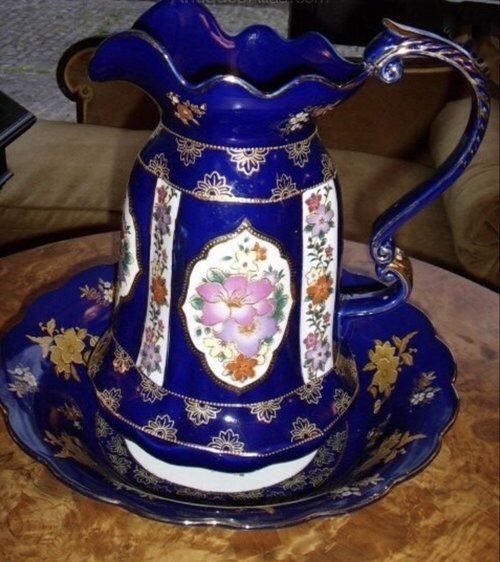


Victorian Washstand Ceramics
Victorian washstand ceramics are functional toilet sets and basin outfits designed for nineteenth-century bedrooms, offering authentic period charm for modern interiors.
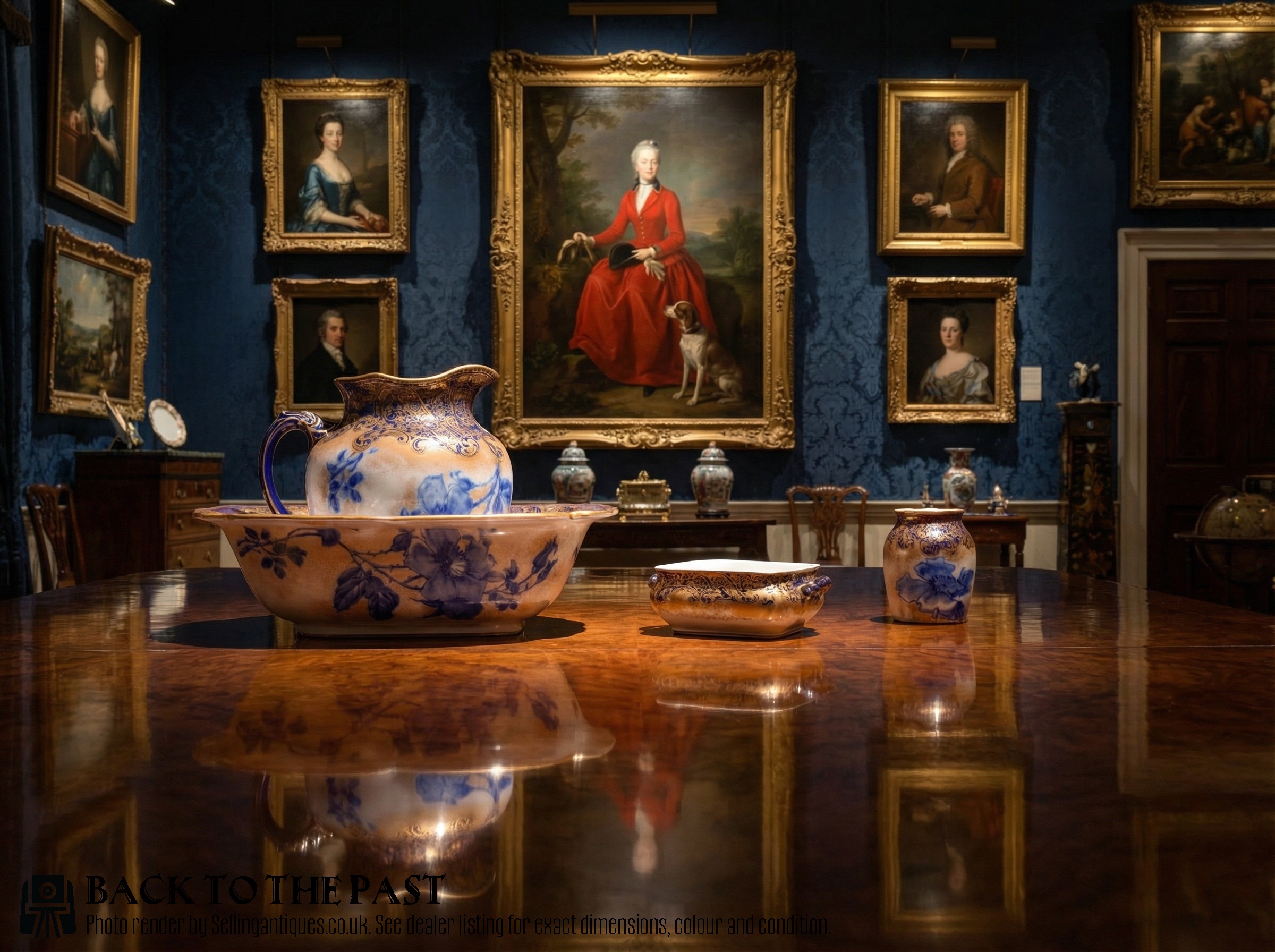
Victorian Washstand Ceramics
Victorian washstand ceramics encompass utilitarian and decorative sets designed for nineteenth-century bedroom hygiene, including complete jug and basin sets, individual water pitchers, chamber pots, and soap dishes. These items formed an essential part of the washstand setup before plumbed bathrooms became standard in domestic homes.
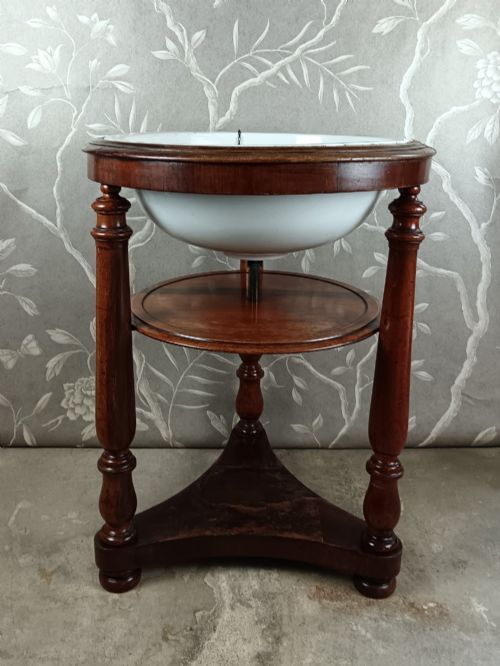
The pieces appearing on this page span several decades of the nineteenth century and extend into the early twentieth century, reflecting shifting domestic tastes. Alongside standard earthenware and porcelain bathroom sets, buyers encounter specialised forms such as round campaign washstands with wooden frames and ceramic slop buckets.
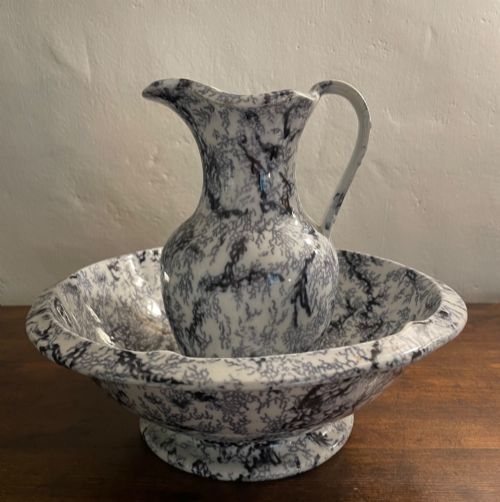
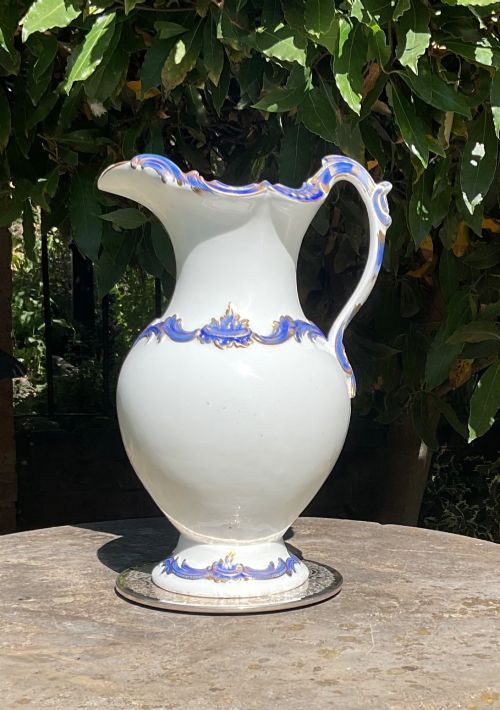
Makers and potteries produced varied aesthetic outputs, ranging from floral porcelain glaze designs to vibrant Gaudy Welsh patterns and transfer-printed blue and white pottery. Whether utilised as decorative planters or retained as historic toilet sets, these ceramics anchor a room in period detail.
How they were made
Potteries utilised earthenware, ironstone, and porcelain as the primary ceramic bodies for these washstand sets. Ironstone provided a durable, heavy material suited for daily domestic utility, whilst porcelain and fine earthenware allowed for delicate decorative finishes and thinner wall sections.
Glazes and transfer-printing techniques defined the surface appearance, often enhanced with cobalt blue pigments, enamel colours, and gilt highlights or gold leaf accents. Makers applied these decorative layers beneath or over the glaze before firing the ceramics in kilns to achieve a lasting finish.
Miniature jug and bowl sets allowed Victorian children to practice morning ablutions with proper adult scale.
What varies in quality
Quality in these ceramics depends upon the crispness of the transfer print, the evenness of the glaze, and the intricacy of the hand-painted enamel or gilt detailing. Pieces produced by established factories exhibit finer potting, more balanced proportions, and superior pigment saturation.
Completeness dictates overall desirability, as matching multi-piece sets featuring jugs, basins, and soap dishes command greater interest than isolated components. The survival of crisp gilding and unblemished glaze surfaces distinguishes standard utilitarian ware from finer parlour display pieces.
Doulton Burslem·mark Jones & Sons
The Victorian Washstand Ceramics Glossary
- Ironstone
- A dense, durable type of earthenware patented in the nineteenth century. It resists chipping better than standard pottery, making it ideal for heavy-use items like wash basins.
- Flow blue
- A nineteenth-century transfer-printing technique where the cobalt blue pigment intentionally bleeds into the surrounding white glaze. This creates a soft, misty outline around the printed pattern.
- Gaudy Welsh
- A distinctive style of pottery decorated with vibrant cobalt blue, copper lustre, and iron-red enamels. It gained popularity for domestic tableware and toilet sets during the Victorian period.
- Slop bucket
- A lidded ceramic vessel housed beneath or beside a washstand to collect used washwater. These utilitarian pieces match the accompanying jug and basin sets.
- Campaign washstand
- A portable piece of furniture designed for travel or military use, typically featuring a folding mahogany frame that supports a ceramic wash basin.
Victorian Washstand Ceramics: Frequently Asked Questions
What pieces belong in a full wash set?
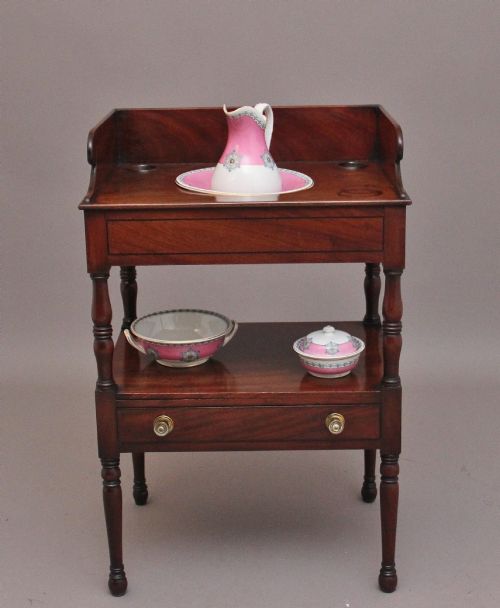
A complete Victorian wash set typically includes a large water jug, a matching basin, a slop bucket, and smaller accessory items such as a soap dish or toothbrush holder.
These matching components sat atop a wooden washstand to provide morning washing facilities before indoor plumbing transformed domestic bathrooms.
How do I date these ceramic pieces?
Dating relies on maker marks stamped or printed on the base, stylistic clues like Aesthetic Movement or Art Nouveau motifs, and the weight of the ceramic body.
Early nineteenth-century examples often feature flow blue transfer printing or heavy ironstone construction, whilst Edwardian sets show lighter forms and softer floral glazes.
What is the difference between ironstone and porcelain?
Ironstone is a heavy, opaque, and highly durable earthenware developed to withstand rigorous daily use in domestic households.
Porcelain offers a finer, lighter, and more translucent body that often displays delicate painted details and gilt embellishments suited for finer bedchambers.