




Antique Pottery Wash Bowl
These antique pottery wash bowl pieces are washstand vessels and basins from the nineteenth and early twentieth centuries that bring historic utility and ceramic character to domestic spaces.
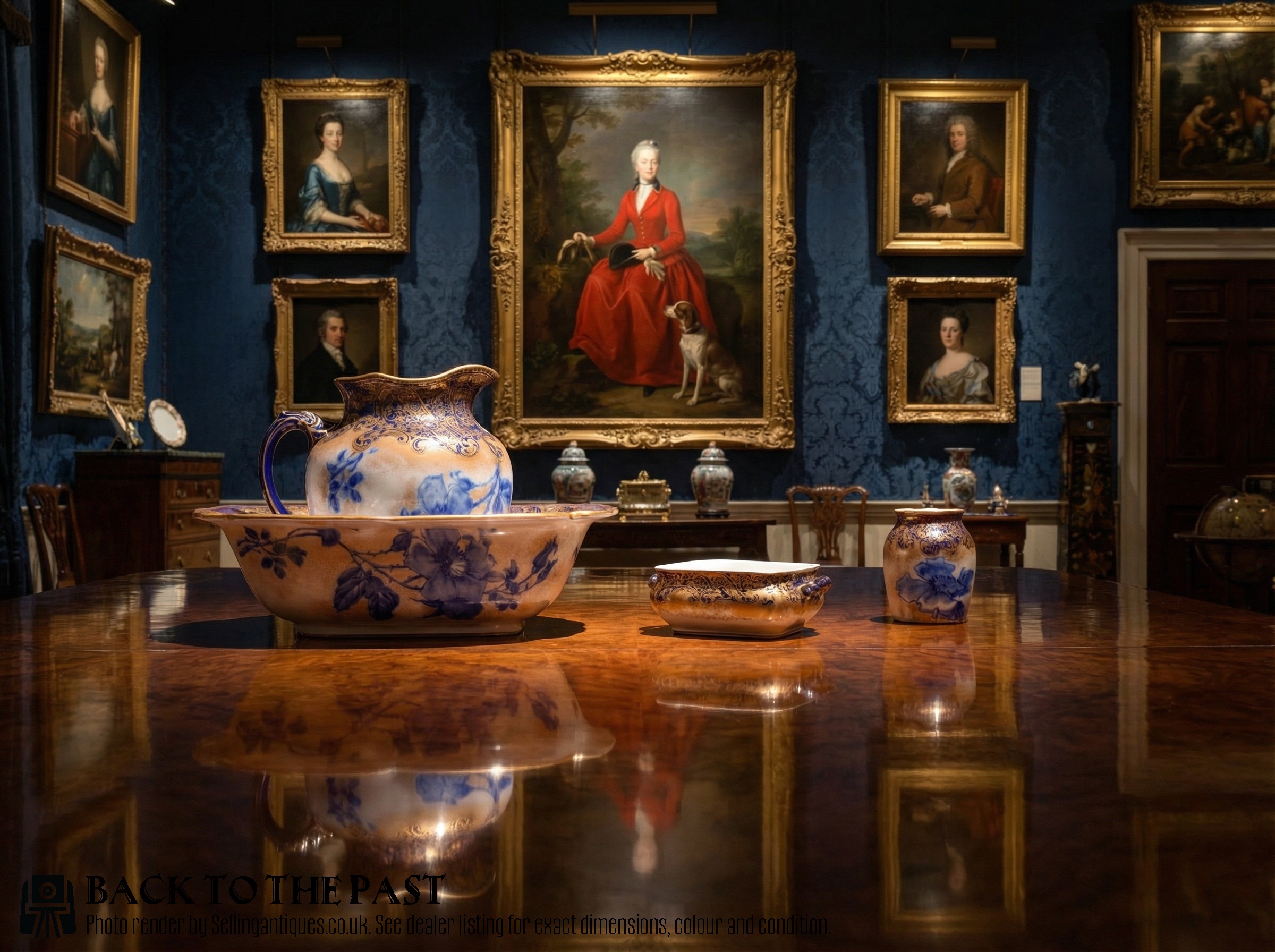
Antique Pottery Wash Bowl
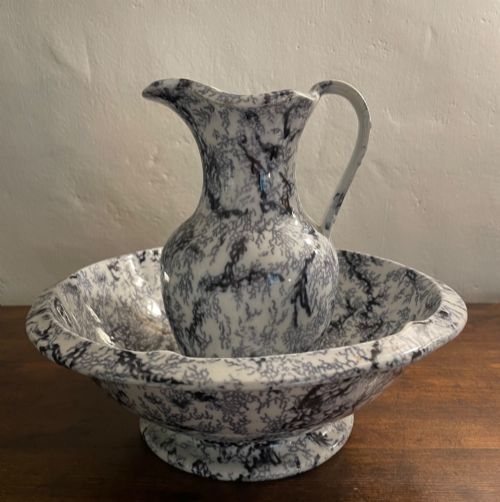
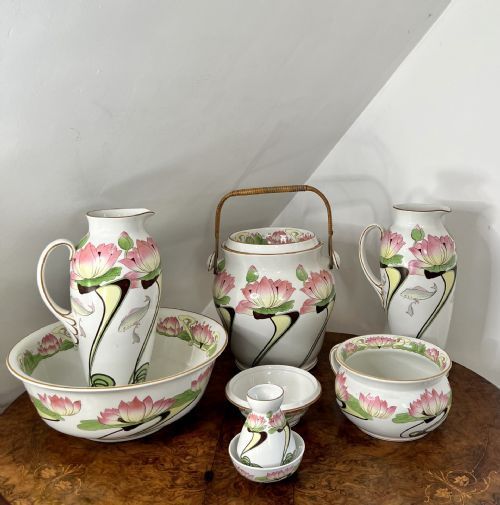
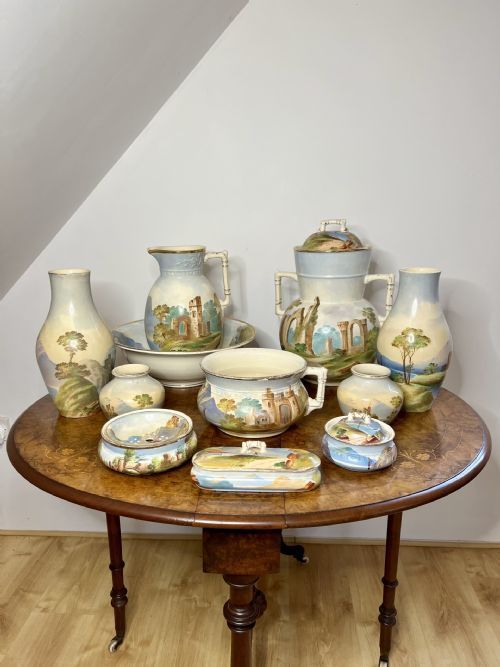
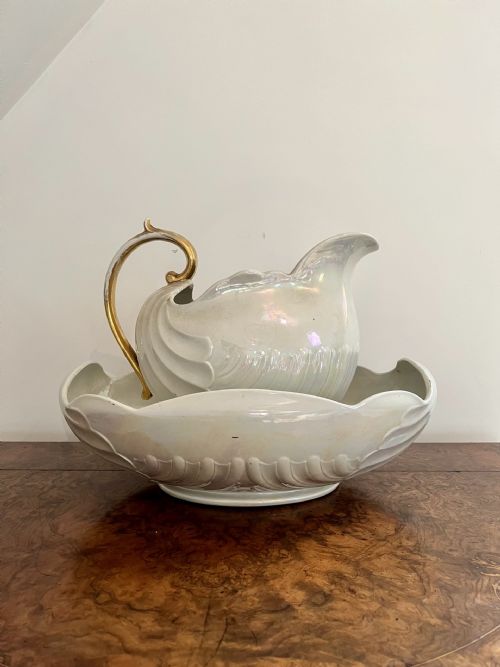
An antique pottery wash bowl is a domestic basin designed for personal washing before indoor plumbing became universal in homes. They appear here primarily as components of wash sets, paired with matching pitchers and jugs, or as standalone bowls and basins.
The selections span the nineteenth century, the Victorian era, the Edwardian period, and the eighteenth century. Forms range from utilitarian earthenware vessels to refined ceramic basins bearing transfer-printed patterns or coloured glazes.
Buyers encounter regional English earthenware, Welsh pottery, French provincial vessels, and occasional export pieces from other traditions. Each piece reflects the daily hygiene routines and decorative tastes of its original era.
How they were made
Potters shaped these vessels from earthenware, creamware, and terracotta using traditional throwing and moulding techniques. Workers then applied lead glazes, enamel decoration, or applied finishes to seal the porous ceramic body.
Many examples incorporate flow blue transfer printing, spongeware colour application, or crackle-glaze effects fired within kilns. Potters finished select bowls with gilt detailing or hand-painted motifs before final firing.
Listings feature earthenware, terracotta, and creamware spanning the eighteenth century through the Edwardian era, alongside Art Nouveau and Victorian styles.
What varies in quality
Quality in an antique pottery wash bowl rests on the clarity of the ceramic form and the execution of the glaze or pattern. Superior pieces display crisp transfer printing, even glaze coverage, and well-balanced proportions without distortion from the kiln.
The reputation of the maker and the completeness of matching sets also influence distinction. Pieces originating from notable potteries or retaining their original accompanying jugs and soap dishes demonstrate higher manufacturing ambition.
Mann & Co·Doulton Burslem·Verwood·Shelley
The Antique Pottery Wash Bowl Glossary
- Earthenware
- Porous pottery fired at lower temperatures, commonly used for utilitarian domestic vessels. It requires a glaze to hold water effectively.
- Creamware
- A refined light-coloured earthenware developed in the eighteenth century with a pale yellowish glaze. It provided a smooth surface for domestic ceramics.
- Flow Blue
- A transfer-printing technique where cobalt blue ink blurred slightly during firing into the surrounding glaze. This created a hazy, atmospheric depth on the ceramic surface.
- Spongeware
- Pottery decorated by dabbing pigment onto the ceramic body with a sponge or fabric pad. This method produced mottled, patterned surfaces popular in regional wares.
- Gilt
- A thin layer of gold applied to the ceramic surface for decoration. It highlights rims, handles, and painted motifs on finer pieces.
Antique Pottery Wash Bowl: Frequently Asked Questions
How were wash bowls used historically?
These bowls sat atop wooden washstands in bedrooms to hold water for morning and evening washing routines. Servants carried water in matching pitchers to fill the basin.
After use, the wastewater emptied into slop buckets kept underneath the stand. The set formed the centrepiece of personal hygiene before fitted bathrooms became standard.
How do I care for an antique pottery bowl?
Clean these ceramic vessels gently using warm water and mild soap, avoiding harsh scrubbing or abrasive scourers that might damage the historic glaze. Pat dry with a soft cloth rather than leaving them to air dry.
Display them on stable surfaces away from heavy foot traffic or areas prone to sudden temperature changes. Avoid using them for harsh daily utility to preserve the original finish.
Can I use an antique wash bowl for plants?
Many people repurpose these bowls as planters or decorative centrepieces for floral arrangements. The wide basin shape accommodates soil and foliage effectively.
Take care with moisture retention against aged ceramic and unglazed bases. Placing a protective liner inside helps prevent water damage to the historic material.
How do I distinguish Edwardian sets from Victorian ones?
Victorian wash sets often feature bolder colours, transfer-printed floral motifs, or rich patterns like Gaudy Welsh and flow blue. The ceramic forms tend to be heavier and more robust in construction.
Edwardian sets frequently lean towards lighter aesthetics, including Art Nouveau fluid lines or simpler creamware and white earthenware bodies. Makers during this later period often produced cleaner, more restrained bathroom suites.