

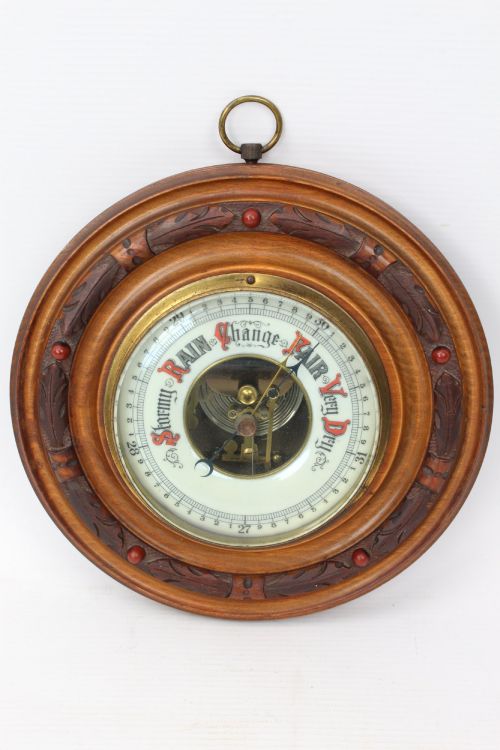
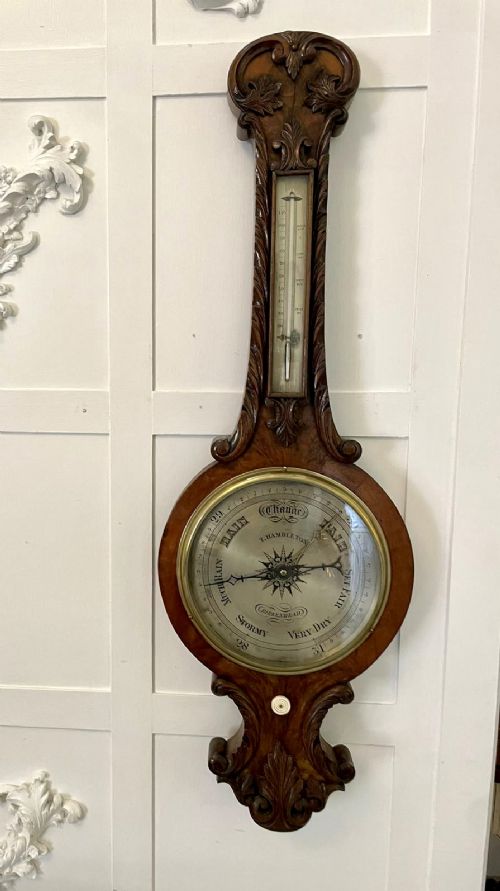
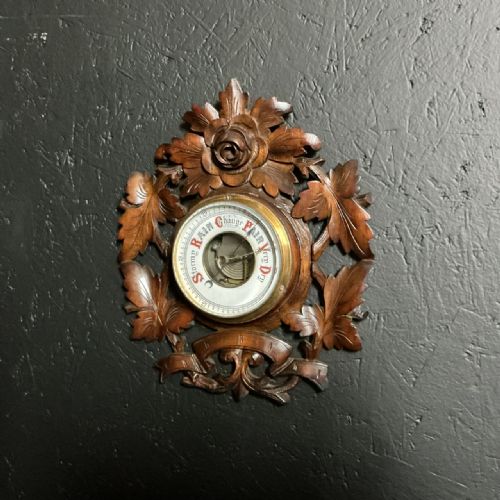

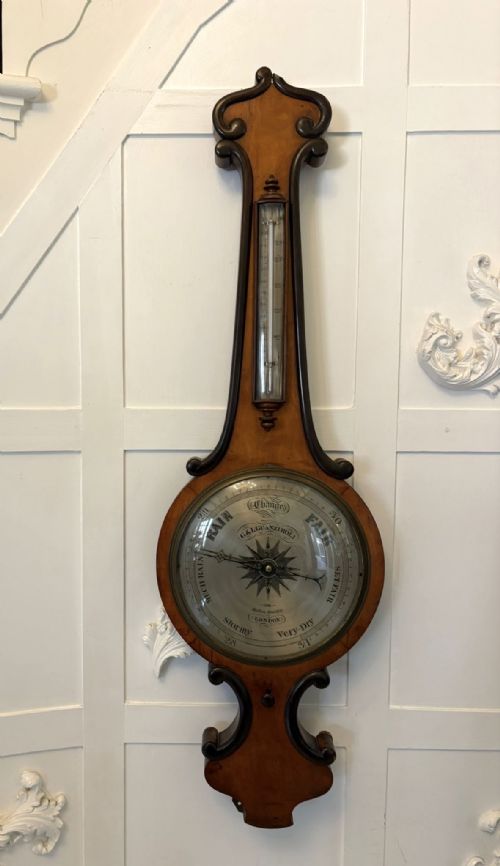


Victorian Walnut Weather Instrument
These Victorian walnut weather instrument examples combine reliable atmospheric tracking with the rich tones of burr and figured timber.
Victorian Walnut Weather Instrument
A victorian walnut weather instrument brings together functional nineteenth-century domestic science and decorative cabinetwork. Buyers searching for this phrase encounter wall barometers, wheel barometers, stick barometers, and barographs housed in rich timber cases.
The pieces on this page lean heavily towards Victorian and late-nineteenth-century British, American, and continental workshops. Banjo barometers and carved wall instruments predominate, reflecting the era's taste for domestic utility combined with elaborate wood carving.
Makers such as Negretti and Zambra and G & L Guanziroli represent the higher end of London instrument production seen here. Alongside these urban scientific pieces, continental Black Forest examples introduce deeply carved lindenwood and golden walnut naturalistic motifs.
Materials and construction
Cabinetmakers utilised solid walnut, burr walnut, and carved wood to house delicate mechanisms including glass barometer tubes, brass dials, and ceramic scales. The timber was frequently shaped into banjo frames, stick cases, or rectangular boxes for barographs.
Makers integrated mercury columns or aneroid movements alongside enamel or engraved brass dials. Intricate detailing often involved hand carving, particularly evident in the foliate and animal motifs of Black Forest and Scandinavian pieces.
Victorian Walnut Weather Instrument Retail Price Guide 2026
Typical asking prices for victorian walnut weather instrument among the pieces listed under this phrase on Sellingantiques today, from the lower quarter to the upper quarter. They describe what is for sale here now, not the wider market.
Listings feature 19th-century and Edwardian pieces, spanning decades from the 1860s through to 1900, alongside one earlier example.
Assessing quality and execution
The distinction between standard domestic weather pieces and superior examples lies in the crispness of the wood carving and the choice of veneer. Selected burr walnut grain patterns and deeply undercut foliage mark out the finer workshop productions.
Signed instrument maker dials carrying names like Negretti and Zambra elevate a piece beyond unsigned regional work. The precision of the engraved brass scales and the integration of secondary functions like thermometers complete the assessment.
G & L Guanziroli London·Negretti and Zambra London
The Victorian Walnut Weather Instrument Glossary
- Aneroid barometer
- An instrument that measures atmospheric pressure without liquids, using an expanding and contracting metal chamber. This movement drives the pointer across a dial.
- Stick barometer
- A tall, narrow instrument containing an open column of mercury to register atmospheric changes. These vertical designs are typically mounted on solid walnut boards.
- Banjo barometer
- A domestic wall instrument shaped broadly like a banjo, featuring a large dial at the base and a thermometer or hygrometer along the stem.
- Barograph
- A mechanical instrument that records barometric pressure continuously onto a paper chart over the course of a week. They are usually housed in glazed walnut cases.
- Burr walnut
- A prized timber harvested from walnut tree growths, displaying swirling and mottled grain patterns. It was frequently sliced into veneers for high-status instrument cases.
Victorian Walnut Weather Instrument: Frequently Asked Questions
How do I read a stick barometer?
Read the height of the mercury column against the scale to determine current atmospheric pressure. Rising levels typically indicate fair weather, while falling levels suggest rain.
Note any vernier scales attached to the glass tube, which allow for precise measurement readings down to fractions of an inch or millibar.
Where should I hang a wall barometer?
Mount the instrument on an interior wall away from direct sunlight, radiators, and heavy vibrations. Stable indoor temperatures ensure the internal metal mechanism or mercury responds accurately to natural atmospheric shifts.
Ensure the fixing is secure, as heavier carved walnut and glass cases require sturdy support on the wall.
What is the difference between an aneroid and a mercurial barometer?
Mercurial barometers rely on a column of liquid mercury balancing against air pressure in a glass tube. They represent traditional scientific methods common in mid-nineteenth-century stick designs.
Aneroid barometers use a sealed corrugated metal box that flexes with pressure changes, moving a mechanical pointer across a dial face without any liquid.
How do I care for a walnut instrument case?
Dust the wood gently with a dry, soft cloth and avoid applying modern chemical polishes or silicone sprays. Maintaining stable room humidity prevents the walnut veneer from lifting or cracking over time.
Check the glass bezel and dial face periodically to ensure they remain clean and free from interior moisture condensation.