

Victorian Walnut Tilt Top Table
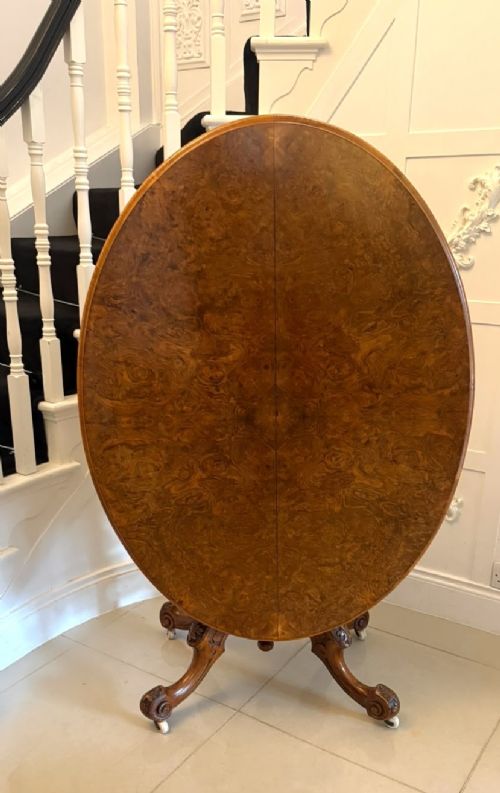
A victorian walnut tilt top table brings rich burr grain and folding practicality to a room.
Victorian Walnut Tilt Top Table
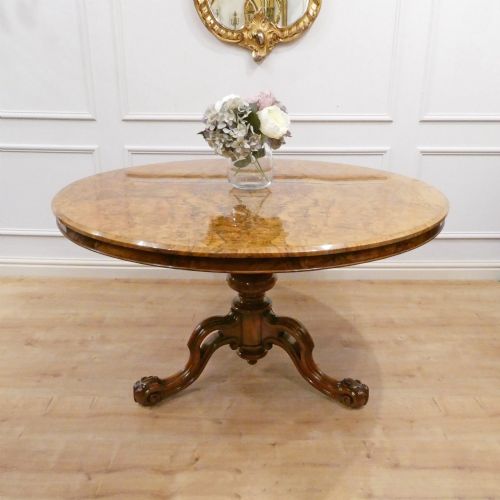
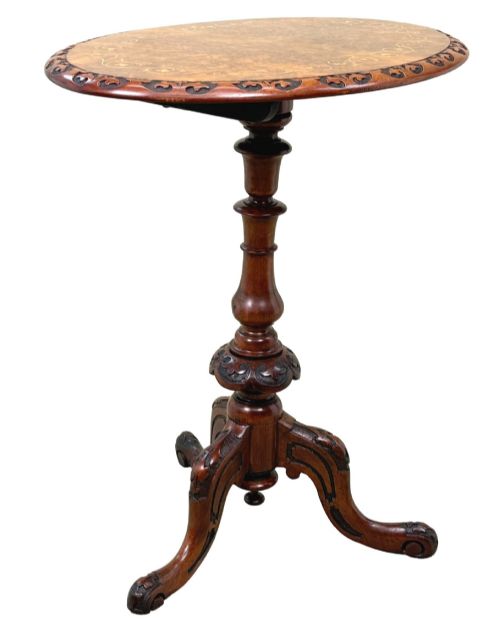
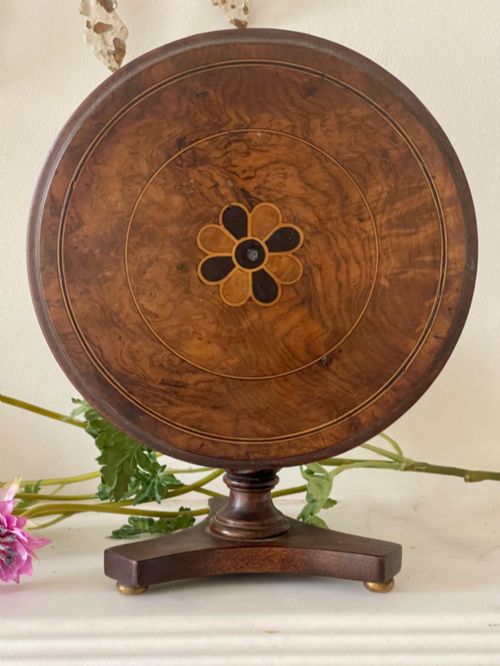
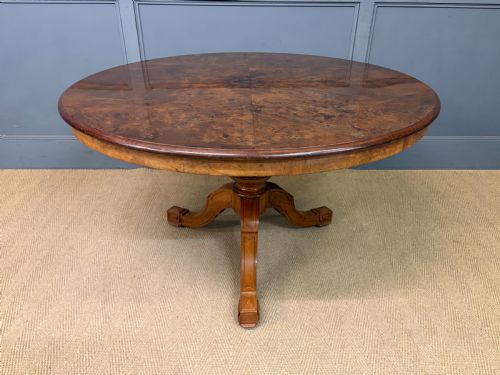
A victorian walnut tilt top table is typically encountered as an oval loo table, a breakfast table, or a smaller lamp and wine table dating from the nineteenth century. These items feature a mechanism that allows the timber top to pivot vertically when not in use, saving floor space in the parlour or drawing room.
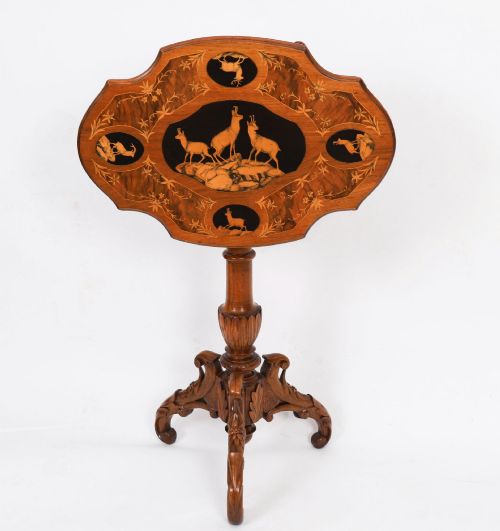
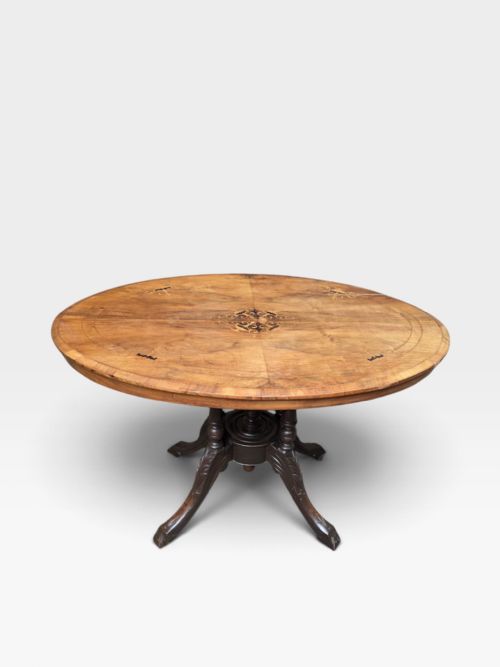
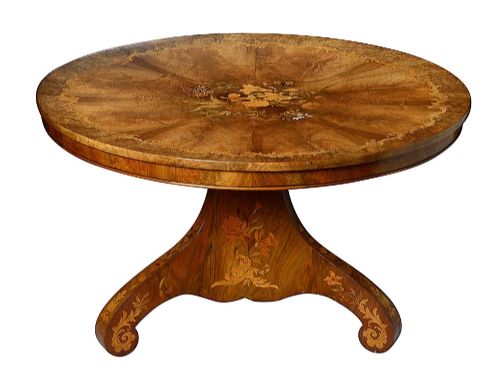
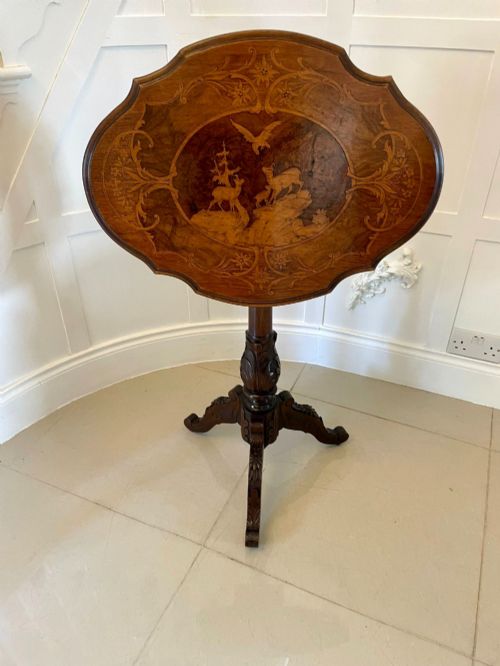
The material vocabulary centres firmly on walnut and burr walnut veneers, frequently enriched with marquetry, boxwood, and wood inlay. Forms range from compact occasional tripod stands to large six-seater dining tables supported by carved pedestals and quadrapod bases.
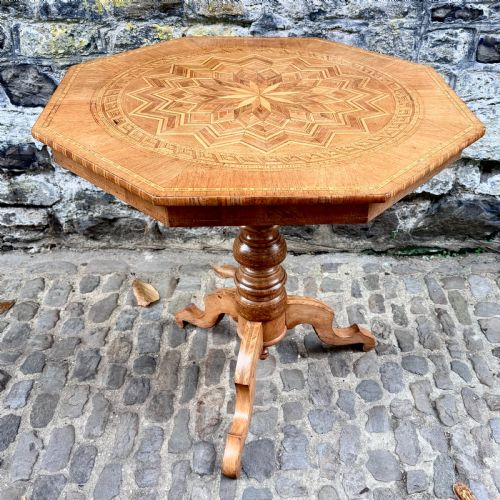
Makers and regional styles span standard Victorian production alongside specific expressions such as William IV, French Revival, Italian Sorrento, and Swiss Black Forest variants. The dominant forms seen across these listings are oval centre tables and occasional tables with pivoting mechanism tops.
Materials and construction
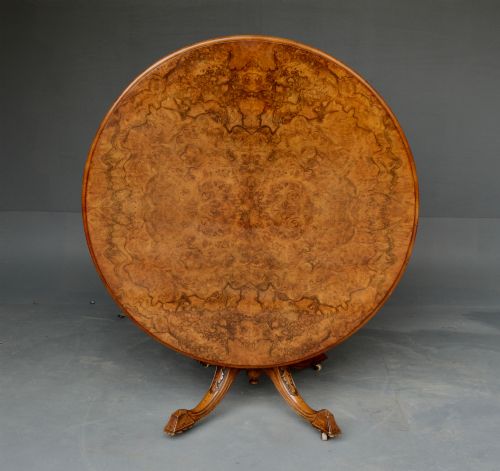
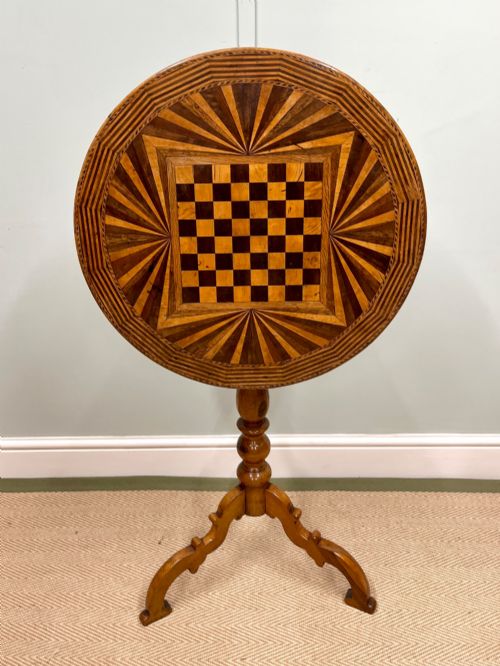
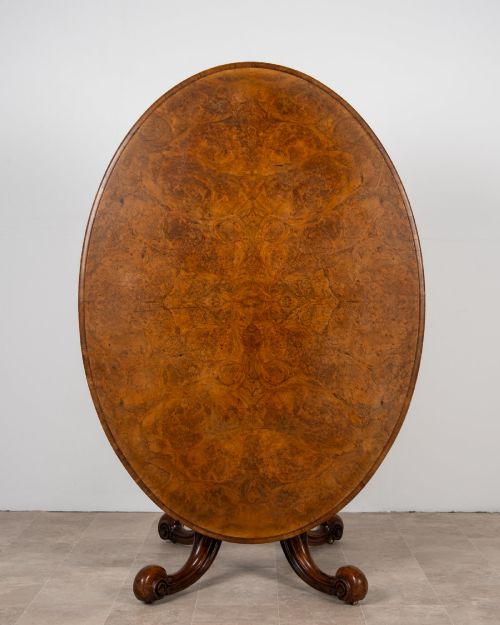
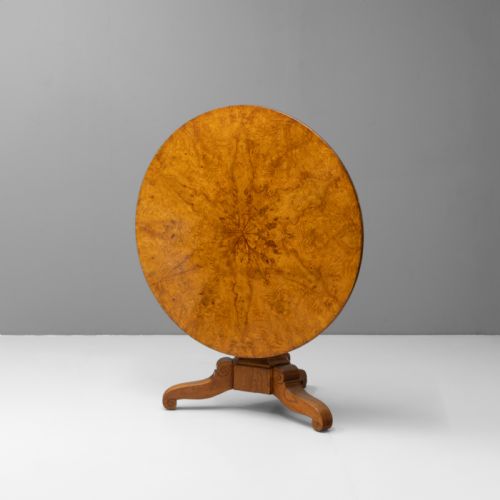
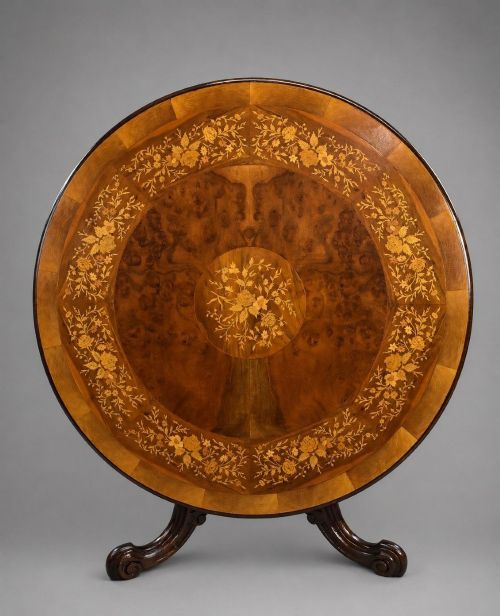
Cabinet makers utilised walnut and highly figured burr walnut veneers applied over solid secondary timbers to achieve deep, swirling grain patterns on the table surfaces. Marquetry and wood inlay, including boxwood, were meticulously cut and fitted into the top surfaces to form geometric or floral motifs.
The tilting mechanism relied on sturdy wooden or brass catches and pivot blocks housed beneath the top, connecting the surface securely to a central pedestal column. Bases were frequently carved from solid walnut, resting upon tripod legs or heavy quadrapod platforms.
Victorian Walnut Tilt Top Table Retail Price Guide 2026
Typical asking prices for victorian walnut tilt top table among the pieces listed under this phrase on Sellingantiques today, from the lower quarter to the upper quarter. They describe what is for sale here now, not the wider market.
The material record on this page shows a strong preference for walnut supported by brass hardware and boxwood stringing details.
Judging the execution
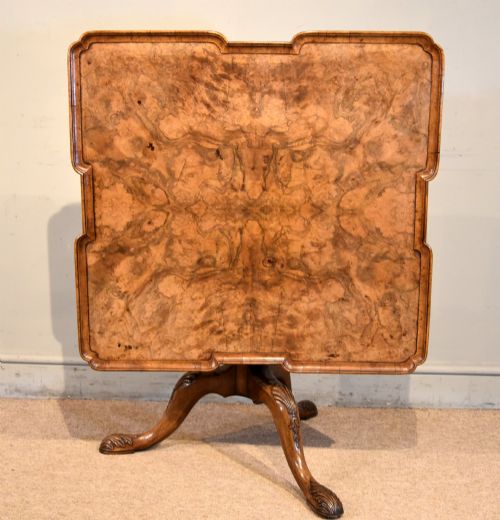
The distinction between standard examples and exceptional pieces rests upon the selection and matching of the burr walnut veneer. Superior items display symmetrical, highly figured grain patterns across the entire table top rather than mismatched sections of timber.
The intricacy and precision of the marquetry inlay also mark out superior work, where contrasting woods fit tightly without excessive filler. Additionally, the crispness of the hand-carving on the pedestal base and the smooth operation of the tilt mechanism reveal the original maker's skill.
Gillows·Edward Holmes Baldock
The Victorian Walnut Tilt Top Table Glossary
- Tilt top
- A table design featuring a hinged mechanism that allows the surface to pivot from horizontal to vertical. This clever function enabled tables to stand flat against a wall when not in use during the nineteenth century.
- Burr walnut
- A specialised timber cut from the abnormal growths or burls of walnut trees. It yields complex, swirling grain patterns highly prized for Victorian table tops.
- Marquetry
- The art of applying decorative pieces of veneer to a structural panel to form intricate pictures or patterns. Cabinet makers utilised various coloured woods to achieve floral and geometric designs.
- Loo table
- A large nineteenth-century centre table designed for evening games such as loo. These tables almost universally employed a tilting mechanism for convenient storage.
- Quadrapod base
- A heavy central pedestal supported by four feet or legs radiating outwards. This configuration provided necessary stability for large oval dining tables.
Victorian Walnut Tilt Top Table: Frequently Asked Questions
What is a tilt top table used for?
These tables served multiple functions in the Victorian home, acting as centre tables, breakfast tables, or lamp stands during daily life. The pivoting mechanism allowed the top to fold flat so the heavy furniture could be pushed to the edge of the room when floor space was required.
Today, they function well as occasional pieces in sitting rooms or libraries. Their dual nature means they remain practical decorative objects rather than purely static furniture.
How do I identify a Victorian walnut table?
Look for the distinctive rich brown tones and complex grain patterns characteristic of walnut and burr walnut veneers. Victorian examples often incorporate central pedestals with tripod or quadrapod carved bases and frequently feature delicate boxwood or marquetry inlay.
Construction methods from this era rely on solid secondary timbers beneath the veneers and traditional joinery techniques. Examining the underside often reveals the pivoting wooden block or brass hardware typical of the period.
What is a loo table?
A loo table is a large, typically oval table produced during the nineteenth century for the popular card game called loo. Because these tables occupied considerable space in the middle of a room, makers incorporated tilt-top mechanisms to clear the floor between gatherings.
They stand out for their generous proportions, fine burr walnut surfaces, and sturdy pedestal supports designed to withstand vigorous parlour games.
How do I care for a burr walnut table?
Keep walnut furniture away from direct sunlight and heat sources to prevent the delicate veneers from drying out or splitting. Gentle dusting with a dry, soft cloth is sufficient for routine maintenance.
Apply a microcrystalline wax occasionally to nourish the timber and protect the finish. Avoid placing damp items directly onto the polished wood surface.