
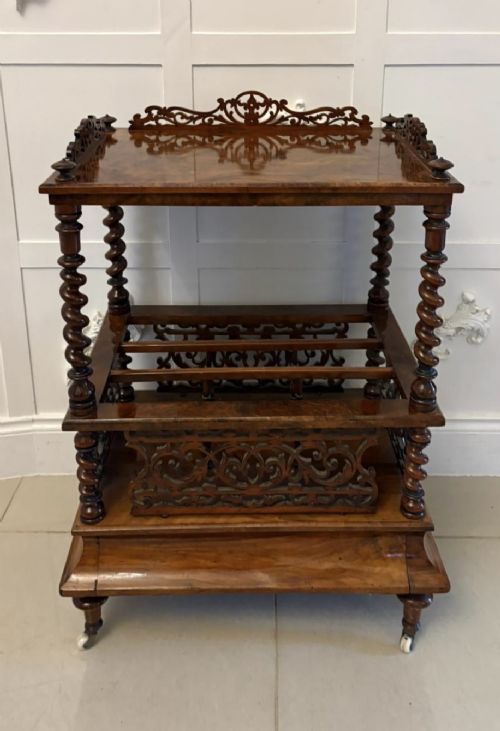
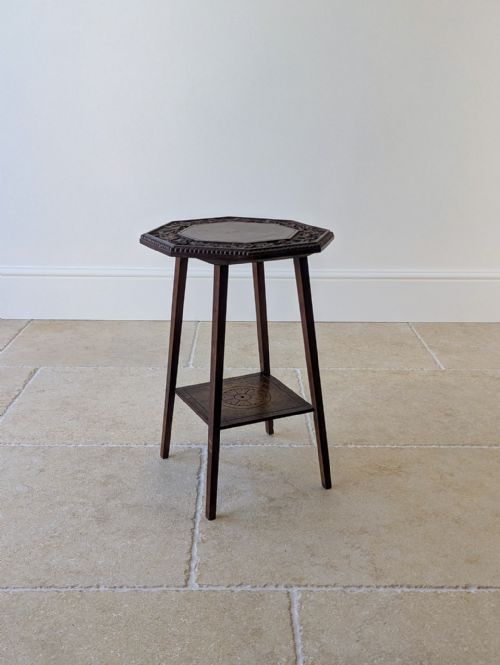
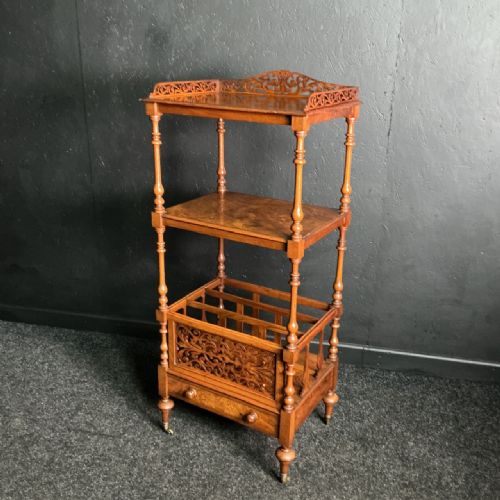
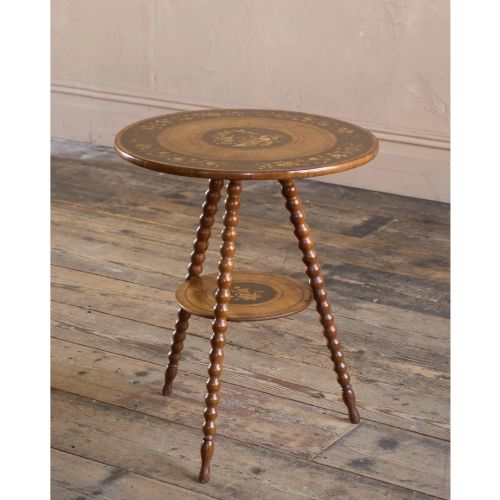

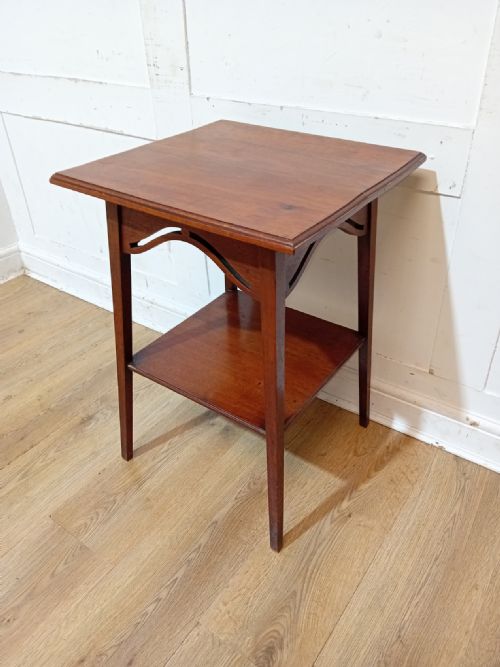
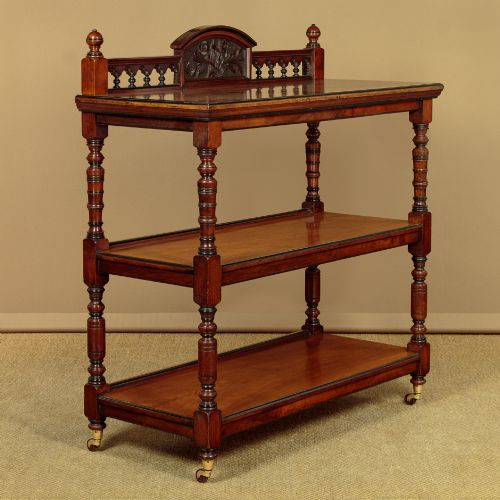
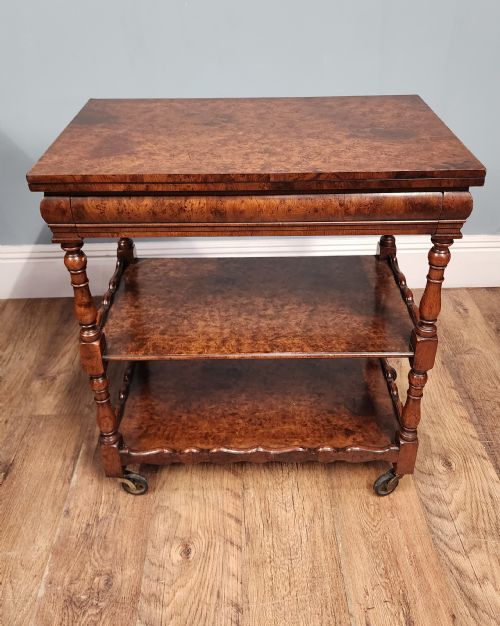
Victorian Walnut Tier Table
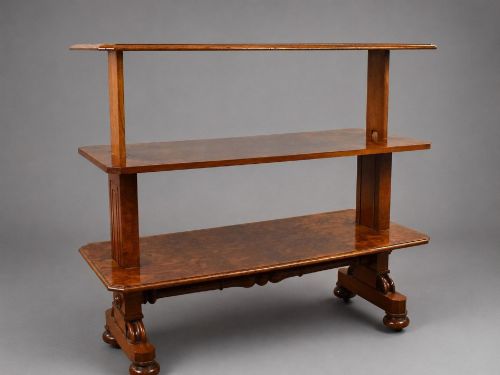
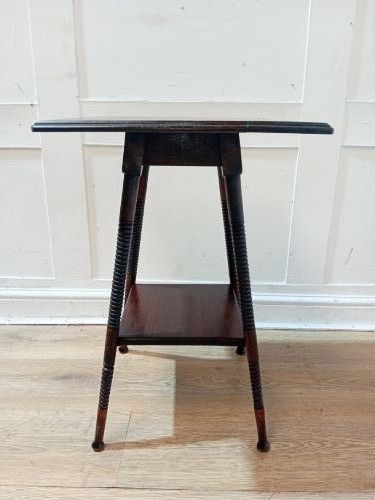
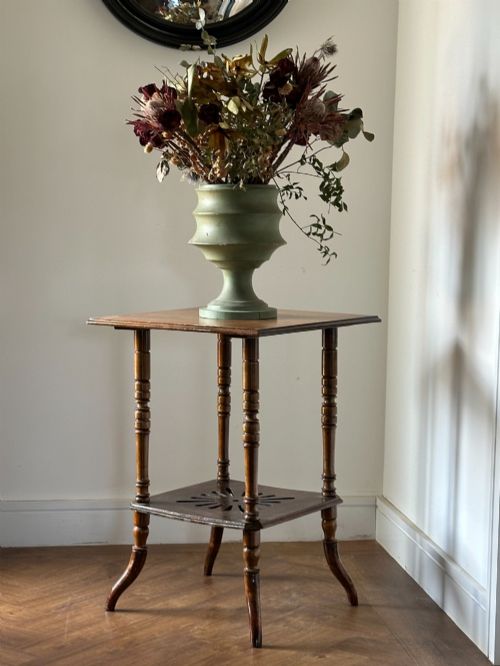
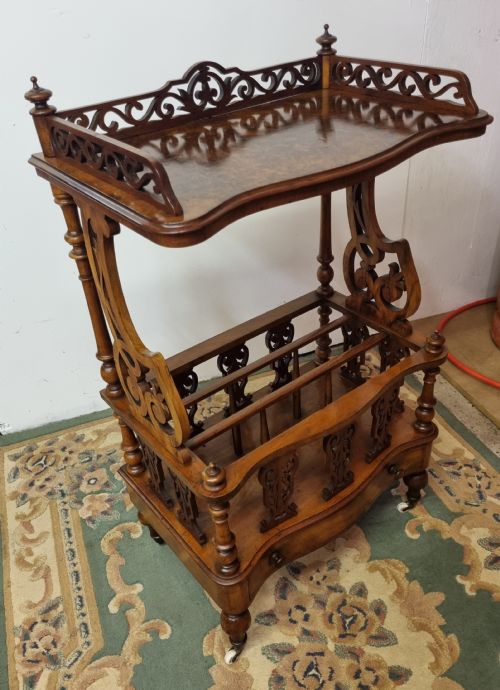
A victorian walnut tier table brings layered display space and rich figured wood to a room.
Victorian Walnut Tier Table
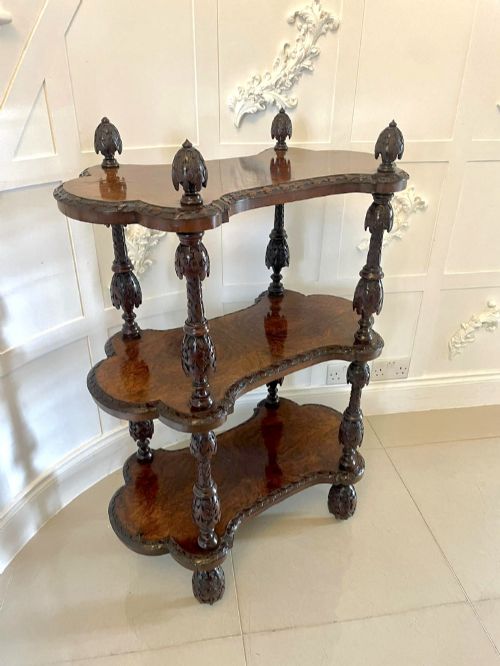
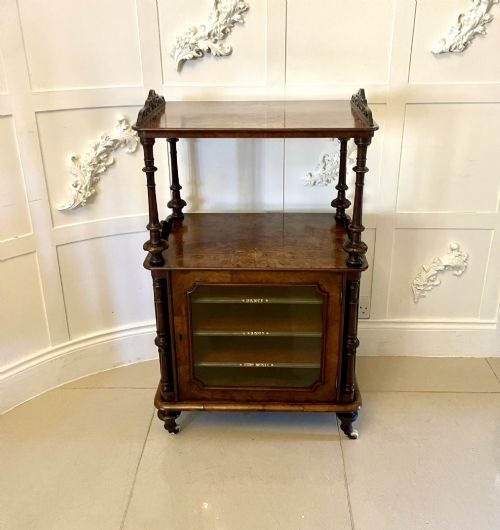
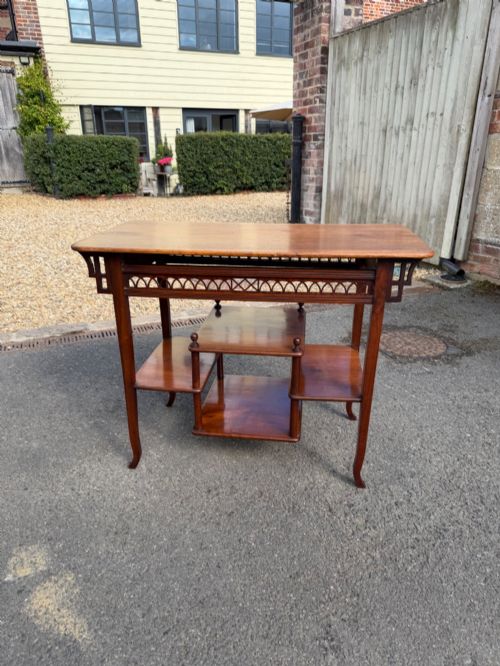
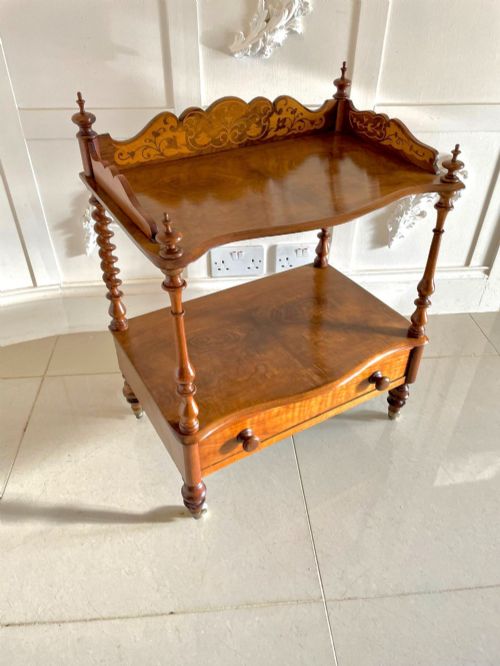
A victorian walnut tier table encompasses multi-level display stands, whatnots, and etageres designed for the nineteenth-century interior. These multi-tiered surfaces served to hold books, decorative objects, and lamps in principal rooms.
The selections available range from simple two-tier occasional tables to elaborate three-tier whatnots and dumbwaiters. Walnut and burr walnut dominate the forms, frequently enriched with marquetry inlay and brass mounts.
Makers produced these tiered tables across the nineteenth century, with specific examples reflecting Aesthetic Movement, Arts and Crafts, and French Revival styles. Buyers encounter both compact lamp tables and taller freestanding shelving units.
What varies in quality
The selection of timber underpins the distinction between standard production and exhibition pieces, with highly figured burr walnut and intricate marquetry marking superior examples. Grain alignment and the depth of polish reveal the maker's hand.
Joinery execution across multiple tiers and the quality of brass mounts or ceramic castors set finer examples apart. Attribution to notable workshops often aligns with superior structural crispness and refined carving.
Listings feature walnut, burr walnut, and ebonised wood across Victorian, Edwardian, and Aesthetic Movement periods.
William Birch·Gillows·Holland and Sons
The Victorian Walnut Tier Table Glossary
- Burr walnut
- A figured wood grain obtained from walnut tree growths, prized for its swirling patterns on table tops.
- Etagere
- A piece of furniture consisting of a set of open shelves for displaying small objects.
- Whatnot
- A tiered standing shelf unit used for books or ornaments in nineteenth-century interiors.
- Marquetry
- Decorative veneer applied in geometrical or pictorial patterns onto a furniture surface.
- Dumbwaiter
- A multi-tiered serving table or stand, sometimes fitted with revolving or adjustable shelves.
Victorian Walnut Tier Table: Frequently Asked Questions
Where were tier tables placed?
These tables stood in drawing rooms, libraries, and parlours as convenient surfaces for lamps, books, and decorative ceramics.
Their multiple levels allowed households to maximise display space without increasing the floor footprint.
How do I identify a burr walnut finish?
Burr walnut displays distinctive swirling, knotty grain patterns created from growth deformations on the tree.
Cabinetmakers sliced this timber into thin veneers to cover larger surfaces on table tops and shelves.
What is the difference between an etagere and a whatnot?
An etagere generally emphasises display with lighter framing and French-influenced decorative mounts.
A whatnot frequently functions as a sturdier multi-tiered shelving unit for books and general household objects.
How should I care for a walnut surface?
Keep these tables away from direct sunlight and steady heat sources to protect the delicate walnut veneer.
Apply a traditional wax polish periodically to maintain the natural lustre of the nineteenth-century finish.