

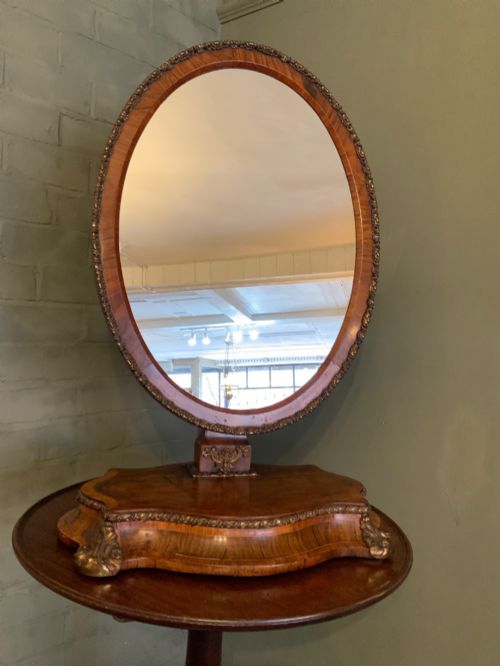


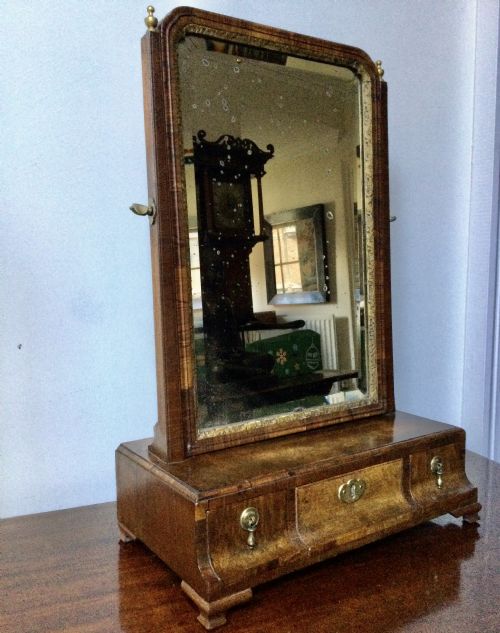


Victorian Walnut Swing Mirror
A victorian walnut swing mirror brings warmth and functional elegance to a dressing surface, offering a tiltable glass set within a rich timber frame.
Victorian Walnut Swing Mirror
A victorian walnut swing mirror stands as a classic dressing accessory designed for tabletop use or integration into a larger chest. These objects typically comprise an upright frame holding a pivoting glass plate supported by scrolling arms and a stable base.
The selections available range from simple rectangular or oval toilet mirrors to more elaborate bureau fitments and marquetry decorated designs. Examples span several decades of the nineteenth century alongside pieces referencing earlier Queen Anne and Georgian tastes.
How they were made
Cabinet makers utilised solid walnut and figured burr walnut veneers to construct the frames and supportive boxes, frequently incorporating brass adjustments and fixings. Ormolu mounts and painted wood details appear on select specimens to enhance the decorative finish.
The mirror glass itself rests within secure rebates, while the flanking uprights allow the angle of reflection to alter smoothly via wooden or metal pivots.
Victorian Walnut Swing Mirror Retail Price Guide 2026
Typical asking prices for victorian walnut swing mirror among the pieces listed under this phrase on Sellingantiques today, from the lower quarter to the upper quarter. They describe what is for sale here now, not the wider market.
Recorded periods span from mid eighteenth century interpretations down to early twentieth century French walnut variations.
What varies in quality
The degree of refinement in the timber figure and veneer selection dictates the visual appeal of a piece, with striking burr patterns sitting at the upper end of the scale. More sophisticated examples incorporate bureau compartments, trinket drawers or intricate marquetry work rather than simple standing frames.
Construction methods also separate standard production from superior craftsmanship, evident in the snugness of the joints and the weight of the supporting brass or ormolu elements.
The Victorian Walnut Swing Mirror Glossary
- Burr walnut
- A specialised timber cut from the warted growths of walnut trees, yielding highly ornamental swirling grain patterns. It was favoured by nineteenth century makers for high status furniture facades.
- Toilet mirror
- A smaller mirror designed to sit atop a dressing table, chest of drawers or washstand. These pieces often incorporate small drawers in the base for storing personal items.
- Ormolu
- Gilded bronze or brass applied as decorative mountings on furniture and frames. The technique adds metallic highlights to the dark timber surfaces.
- Marquetry
- The art of applying pieces of veneer to a structure to form decorative patterns or pictures. Victorian examples on this page utilise this technique for surface ornamentation.
- Bureau fitment
- A writing slope or small desk section incorporated into the base of the mirror stand. This dual purpose design provides storage and a writing surface.
Victorian Walnut Swing Mirror: Frequently Asked Questions
Where should I place a swing mirror?
These mirrors suit placement on a sturdy chest of drawers, a dedicated dressing table or a sideboard where they provide a functional reflective surface.
Ensure the supporting furniture matches the depth and weight of the mirror base to maintain stability during use.
How do the pivoting mechanisms work?
The glass frame hangs between two vertical uprights, secured by threaded brass screws or pins that pass through the arms into the side of the mirror.
Tightening these fixings holds the glass at the desired viewing angle while still permitting manual adjustment.
What is a bureau mirror?
A bureau mirror includes a small desk or compartment section built into the base beneath the pivoting glass plate.
This hybrid form allowed owners to store writing materials and small trinkets within the same compact footprint.
How do I care for walnut veneer?
Maintain walnut surfaces by dusting regularly with a soft, dry cloth and avoiding placement in direct sunlight or near heat sources.
Excessive moisture can damage the veneer, so use only specialist furniture wax sparingly if conditioning is necessary.