


Victorian Walnut Suite
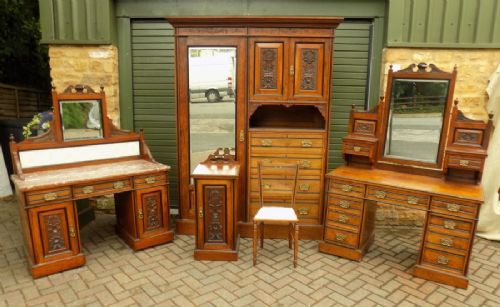
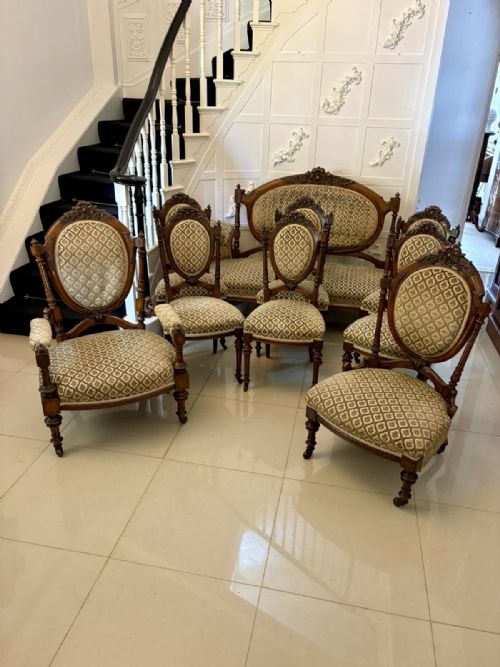
A victorian walnut suite brings together matching seating or bedroom furniture shaped from rich timber during the nineteenth century.
Victorian Walnut Suite
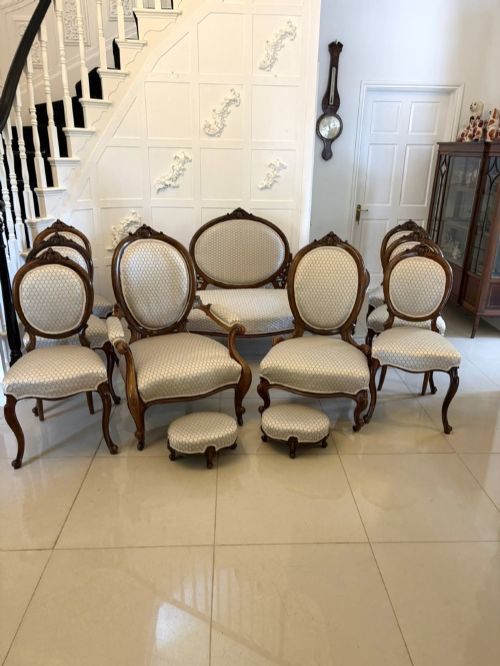
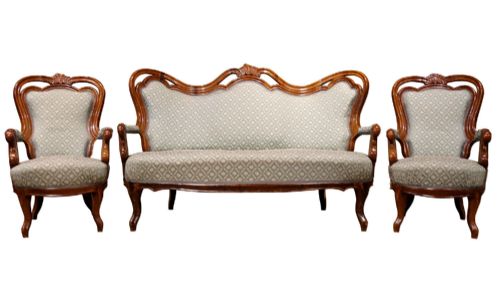
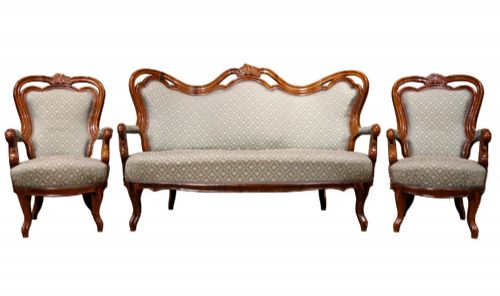
A victorian walnut suite comprises matched groups of furniture designed for the principal rooms of a house, spanning bedroom sets, dining sets, and expansive drawing room arrangements. Buyers encounter everything from compact three-piece salon groupings consisting of a settee and two chairs up to multi-piece collections containing sofas, armchairs, side chairs, and footstools.
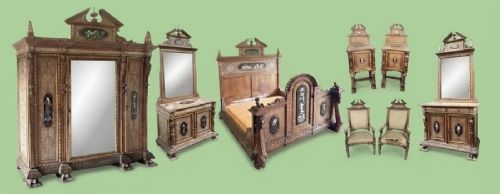
The evidence shows these groupings originate across the nineteenth century, including specific decades such as eighteen-fifty, eighteen-seventy-five, and eighteen-ninety. Bedroom suites incorporate functional pieces like wardrobes, mirror dressing tables, and chests of drawers alongside the timber framework. Meanwhile, parlour and drawing room configurations focus on social seating designed to impress visitors.
Stylistic influences vary significantly across the pieces, shifting from traditional Victorian designs to exuberant Rococo Revival curves. Other examples display exotic tastes through Moorish Islamic conversation seats or Egyptian Revival motifs, while burr walnut and showwood frames highlight the natural grain of the timber.
Materials and construction
Cabinet makers utilised solid walnut and burr walnut veneer over secondary timbers to construct the heavy frames of a victorian walnut suite. Showwood frames display intricate hand-carved details, often taking the form of floral motifs or lion paw feet on the seating elements.
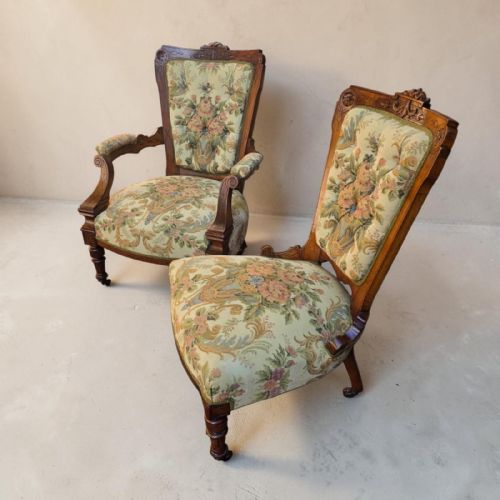
Upholstery forms an essential component of these groupings, employing traditional textiles such as velvet, damask fabric, and tapestry fabric. Many surviving pieces incorporate button-back upholstery, securing the fabric deeply into the padding to create characteristic geometric patterns.
Metal components appear selectively to add structural support or decorative contrast. Brass and ormolu mounts punctuate tables and cabinets, while internal hardware utilises iron and steel for hinges and drawer mechanisms.
Listings feature walnut, burr walnut, and ash, combined with velvet, damask, and tapestry textiles across the nineteenth-century periods.
Assessing quality
The calibre of a victorian walnut suite depends heavily on the ambition of the carving and the selection of the timber. Pieces utilising highly figured burr walnut or exhibition-quality craftsmanship stand apart from standard output through sculptural depth and refined proportions.
Completeness dictates much of the standing within the market, as larger multi-piece bedroom or drawing room suites surviving together retain greater integrity than dispersed sets. The harmony between the timber frames and the applied textile upholstery also dictates the visual cohesion of the ensemble.
Waring & Gillows·Gillow
The Victorian Walnut Suite Glossary
- Burr walnut
- Timber taken from the warted growths on walnut trees, yielding highly decorative swirling grain patterns. Cabinet makers prized this wood for veneering the most prominent surfaces of high-status furniture.
- Showwood
- Exposed timber framework on upholstered furniture where the polished wood forms part of the visual design. Carved showwood frames define the edges of many nineteenth-century salon chairs and sofas.
- Ormolu
- Gilded bronze mounts applied to furniture surfaces for decorative effect. These metallic embellishments appear frequently on mid-century tables and cabinet work.
- Rococo Revival
- A nineteenth-century design movement emulating the flowing asymmetrical curves and naturalistic motifs of the eighteenth century. This style accounts for the undulating frames seen on many parlour suites.
- Button-back
- An upholstery technique where buttons are pulled tightly through the padding and secured to the frame. This method creates deep tuasting and structured cushions.
Victorian Walnut Suite: Frequently Asked Questions
What pieces come in a salon suite?
A salon suite typically includes a settee alongside matching armchairs and side chairs designed for formal reception rooms. Larger configurations can expand to include footstools and multiple seating options.
These groupings provided coordinated seating for guests during Victorian social gatherings, ensuring aesthetic uniformity across the drawing room.
How do I care for walnut furniture?
Walnut furniture requires placement away from direct sunlight and extreme temperature fluctuations to prevent the timber and veneer from drying out. Regular dusting with a soft, dry cloth preserves the polished surface.
Harsh chemical cleaners should be avoided in favour of traditional beeswax applied sparingly to nourish the grain.
What is burr walnut?
Burr walnut is timber harvested from abnormal tree growths that produce dense, swirling patterns of grain. Craftsmen sliced this wood into thin veneers to adorn the front panels of cabinets and tabletops.
Its complex figuring made it the material of choice for high-end Victorian cabinet makers seeking a luxurious finish.
How do I identify a revival style?
Revival styles appropriate historical motifs, such as the sweeping asymmetric scrolls of Rococo Revival or the geometric patterns of Egyptian Revival. Makers in the nineteenth century reinterpreted these earlier aesthetics using contemporary manufacturing techniques.
Examining the carving style and structural timber helps place a piece within its specific revival movement.