


French Rococo Suite
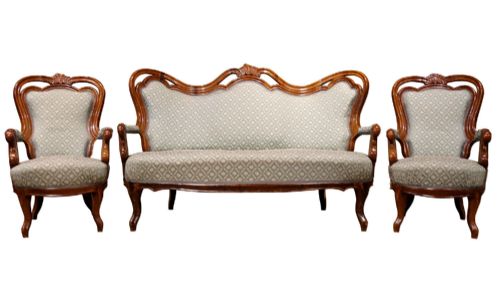
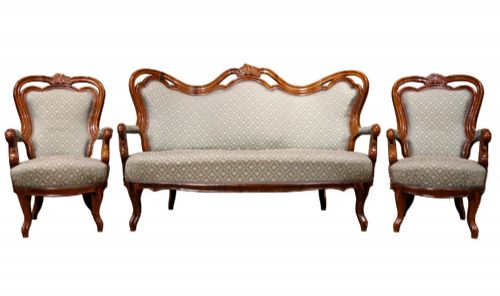
These french rococo suite examples are matched sets of revival seating and bedroom furniture designed to bring eighteenth-century Parisian elegance into nineteenth-century rooms.
French Rococo Suite
A french rococo suite encompasses matching groups of seating and bedroom furniture built across the nineteenth and early twentieth centuries in revival styles. Buyers encounter salon suites featuring small sofas and armchairs alongside bedroom suites containing beds and matching bedside cabinets.
The dominant forms span three-piece salon arrangements, multi-piece burr walnut bedroom sets, and giltwood daybeds designed for formal interiors. Walnut and giltwood serve as the primary structural woods across these seating and sleeping groups.
Origins trace principally to continental workshops producing pieces in the French Louis XV and Rococo revival idioms during the Victorian era and the decades following. These coordinated groupings provide a unified decorative scheme rather than isolated decorative items.
Materials and construction methods
Makers utilised solid walnut, pale walnut, and burr walnut as the primary timber frames, often pairing them with carved giltwood on formal salon suites. Beech also appears within structural framing alongside marble tops on associated bedroom pieces.
Carving defines the ornamentation, shaping the wood into asymmetric scrolls, floral motifs, and serpentine lines characteristic of the style. Upholstery incorporates traditional textiles, damask, and cane work set into the wooden frames.
Object types recorded in the inventory range from three-piece salon seating groups to complete multi-piece bedroom suites with matching cabinets.
Distinctions in craftsmanship
The depth and fluidity of the hand carving separate standard production from superior examples, as crisp floral and scroll work requires considerable skill. The selection of timber grain, particularly the use of figured burr walnut and marquetry, elevates the visual presence of bedroom suites.
Coherence within the suite dictates overall execution, ensuring that matching bedside cabinets, seating, and bedframes share identical decorative detailing and finish quality. Original textiles and undamaged gilt surfaces further distinguish the finest surviving suites.
The French Rococo Suite Glossary
- Rococo Revival
- A nineteenth-century design movement drawing inspiration from the flamboyant curves and asymmetric ornamentation of the mid-eighteenth-century French court. This aesthetic governs the carved frames and serpentine lines seen on salon and bedroom suites.
- Salon Suite
- A coordinated group of seating furniture intended for formal reception rooms, typically comprising a settee or small sofa paired with matching armchairs. These sets provide unified seating arrangements for entertaining.
- Giltwood
- Timber that has been coated with a thin layer of gold leaf or gilt paint to create a rich, metallic surface finish. It appears predominantly on formal French salon pieces and duchesse brisée daybeds.
- Bergère
- An enclosed upholstered armchair with wooden framing and upholstered sides, frequently integrated into nineteenth-century walnut seating groups. The design offers deep, comfortable proportions.
- Marquetry
- Decorative veneer work arranged in patterns or pictures on furniture surfaces using contrasting timbers. This technique decorates the panels of larger bedroom suites.
French Rococo Suite: Frequently Asked Questions
What pieces comprise a salon suite?
A salon suite typically consists of a small settee or sofa accompanied by matching armchairs designed in a uniform revival style.
These coordinated groupings were created to furnish formal reception rooms with matching woodwork and upholstery.
How do bedroom suites differ from salon sets?
Bedroom suites focus on sleeping quarters, incorporating bedsteads and matching bedside cabinets alongside larger storage or vanity furniture.
Salon sets are strictly dedicated to seating spaces like parlours and drawing rooms.
What woods were used for these suites?
Makers relied heavily on walnut, including pale walnut and burr walnut, alongside giltwood and beech for structural framework.
Marble tops and damask textiles frequently supplement the wooden construction.
How should I care for antique walnut furniture?
Keep wooden surfaces away from direct sunlight and excessive temperature fluctuations to prevent timber cracking and fading.
Apply suitable wax polishes sparingly and protect upholstered elements from heavy wear.