


Victorian Walnut Shelf
When you search for a victorian walnut shelf, you are looking at practical timber furniture designed to hold books and display ornaments.
Victorian Walnut Shelf
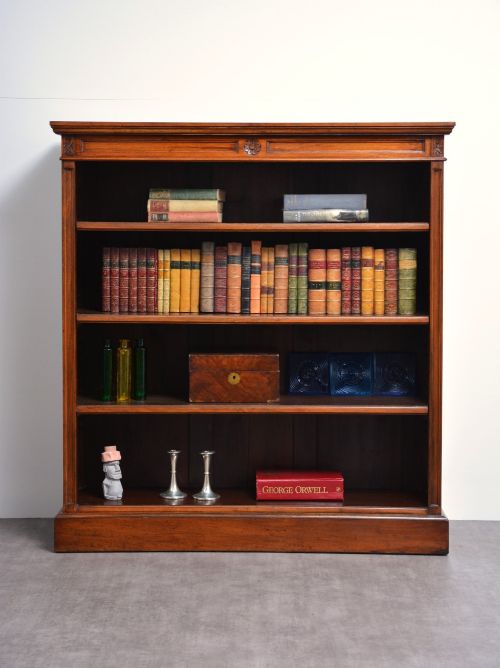
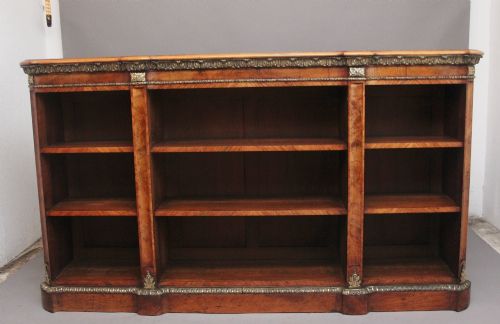
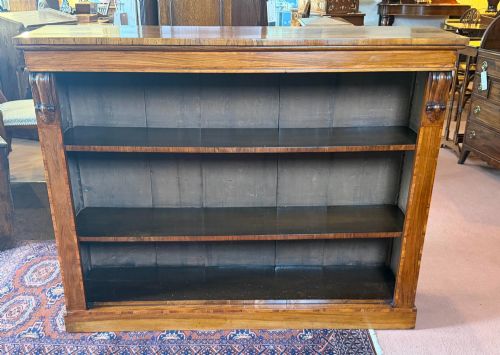
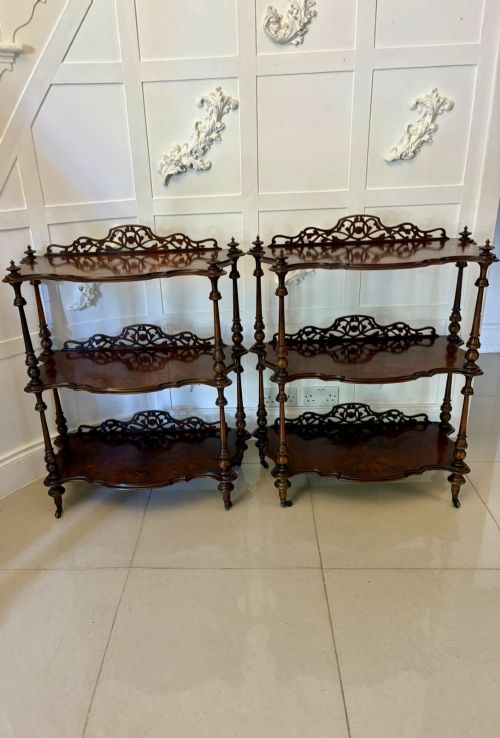
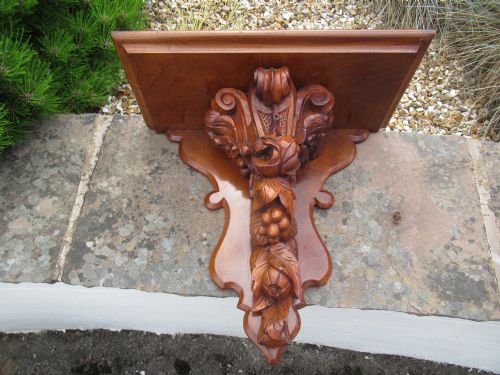
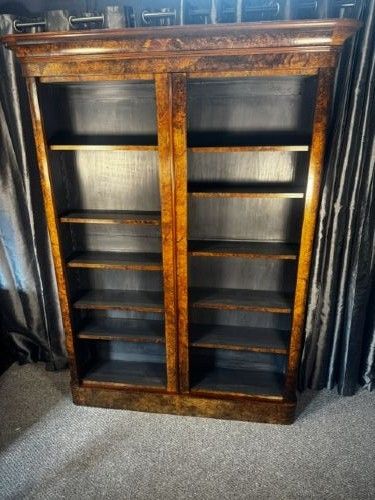
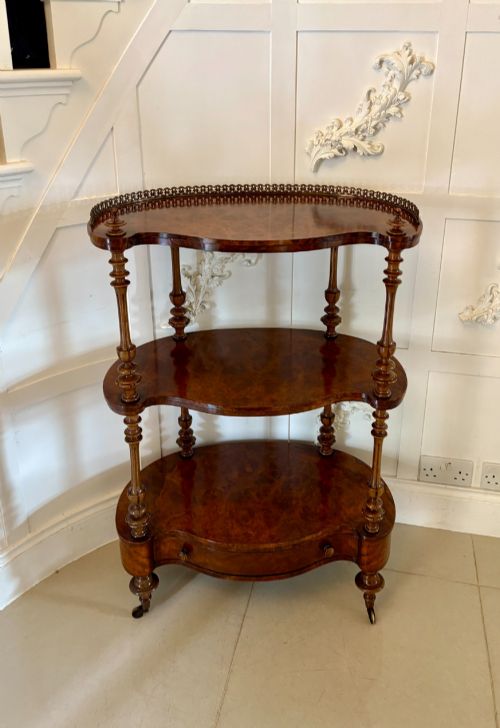
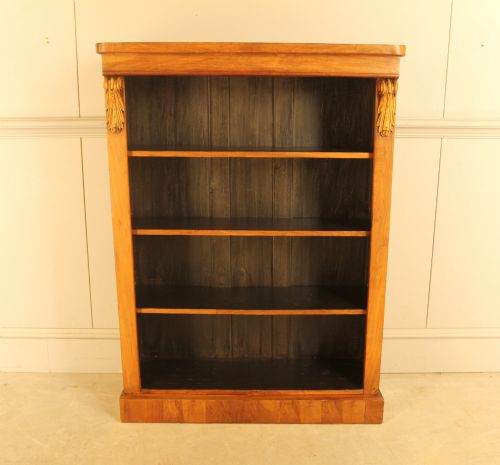
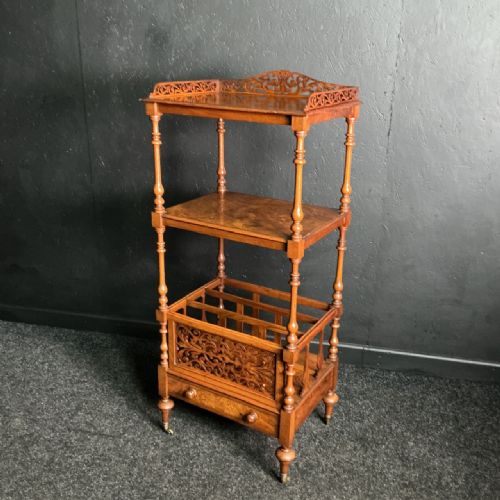
A victorian walnut shelf typically appears as an open bookcase, a multi-tiered whatnot, a corner bracket, or a hanging wall shelf. These items served domestic spaces across the nineteenth century for storage and display.
The evidence shows forms ranging from simple wall-mounted shelves to large breakfront bookcases and serpentine whatnots. Plain walnut and figured burr walnut are common across these functional formats.
Makers and workshops produced these pieces in styles spanning from William IV and Rococo Revival through to the Aesthetic Movement and Japonisme. They reflect the changing tastes of Victorian and later households.
How they were made
Cabinet makers utilised solid timber alongside walnut veneer and burr walnut to create patterned surfaces on carcases and shelves. The natural grain figure of the wood provided the primary decorative effect.
Ormolu mounts, brass details, gilt metal, and ebonised wood often accented the walnut structure. Glass panels and mirrored backs appeared in larger credenzas and display furniture.
Listings feature walnut timber alongside brass, glass, ormolu, and ebonised wood across Victorian, William IV, and Aesthetic Movement styles.
What varies in quality
The sophistication of the timber veneer work and the crispness of any carved details distinguish standard pieces from superior examples. Elaborate marquetry and matched burr walnut patterns elevate the status of a shelf or cabinet.
The inclusion of cast ormolu mounts, mirrored doors, and adjustable shelving systems indicates higher workshop standards. Construction depth and proportion dictate the overall presence of the piece in a room.
Johnstone and Jeanes·Gabriel Viardot·Gillows·JAS Shoolbred
The Victorian Walnut Shelf Glossary
- Burr Walnut
- A figured timber harvested from walnut tree growths, valued for its swirling grain patterns. It is frequently applied as a veneer on cabinet fronts and tabletops.
- Whatnot
- A set of open shelves supported by pillars or columns, used for displaying ornaments. These tiered stands appear in corner and freestanding formats.
- Ormolu
- Gilt bronze ornamentation applied to furniture. This decorative brass-alloy technique was common on mid-nineteenth-century cabinets and credenzas.
- Ebonised Wood
- Timber treated to imitate ebony. This dark finish was popular during the Victorian period, particularly in Aesthetic Movement and Japonisme designs.
- Credenza
- A low dining-room sideboard or cabinet, frequently featuring mirrored doors and ormolu mounts. Victorian iterations often incorporated extensive walnut veneer.
Victorian Walnut Shelf: Frequently Asked Questions
What rooms suit a victorian walnut shelf?
Hanging shelves and corner brackets fit easily into hallways, studies, or smaller bedrooms where floor space is limited. Larger bookcases and whatnots anchor larger living rooms or libraries.
Their warm timber tones coordinate well with both traditional and contemporary interiors. They provide functional surface area for books and decorative objects.
Were these shelves always wall-mounted?
The evidence includes both wall-mounted hanging shelves and heavy freestanding units like open bookcases and multi-tiered whatnots. Wall fixtures were designed to save floor space and display smaller collections of ornaments.
Freestanding pieces offered substantial storage for libraries and larger display requirements.
What styles influence these pieces?
The selection spans revival styles such as William IV, Rococo Revival, and Gothic, alongside late-period Aesthetic Movement and Japonisme influences. These design movements altered the proportions and decorative elements applied to the walnut carcases.
Earlier nineteenth-century pieces often relied on architectural lines, while later items embraced asymmetrical or Japanned details.