


Victorian Walnut Screen
A victorian walnut screen brings rich timber and tactile handwork to a room, functioning as both a decorative centrepiece and a practical guard against hearth heat.
Victorian Walnut Screen
When you search for a victorian walnut screen, you are looking at nineteenth-century household furnishings designed to shield inhabitants from the intense heat of an open fire or to divide a large interior. These pieces range from compact pole screens that sit on slender stands to multi-fold room dividers and substantial standing frames.
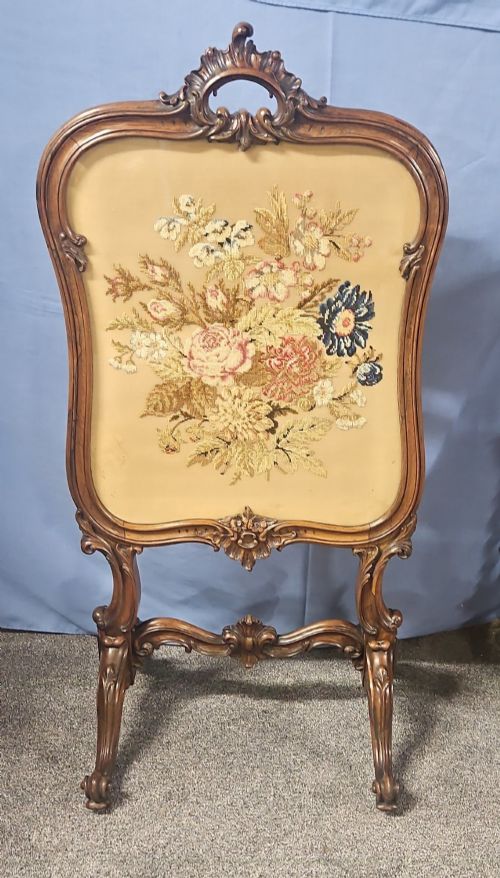
The version you are most likely to meet on this page is the standard fire screen, typically framed in rich dark timber and inset with a textile panel. These standing forms dominate the selection alongside taller folding room dividers and occasional pole screens.
Origins span English and French workshops, utilising the dense grain and deep warmth of walnut to anchor the needlework or glass panels within. The forms reflect both domestic utility and the decorative ambitions of the nineteenth century.
How they were made
Cabinet makers utilised solid walnut and carved hardwoods to construct sturdy frames, often incorporating adjustable brass fittings, hinges, and bronze mounts to allow movement. The structural timber provides a robust architecture designed to support heavy textile inserts.
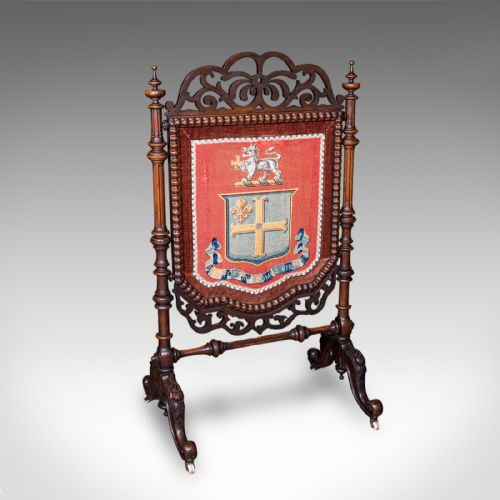
The central panels display considerable handwork, bringing together wool, silk, and needlepoint in pastoral scenes, armorial bearings, and tapestries. Etched glass also appears as an alternative insert, demonstrating varied workshop capabilities.
Listings demonstrate the extensive use of walnut, wool, and needlepoint across nineteenth-century forms, including pole screens, room dividers, and fire screens.
What varies in quality
The distinction between ordinary and superior pieces rests on the depth of the carving in the walnut frame and the fineness of the needlework panel. Finer screens exhibit crisp, hand-woven tapestry or detailed embroidery alongside well-proportioned turned or carved supports.
Materials create another tier of distinction, moving from standard woolwork panels to more complex pieces featuring etched glass, bronze hardware, or multi-fold configurations. The integration of mechanical adjustments, such as rising pole screens or folding wings, points to higher workshop standards.
The Victorian Walnut Screen Glossary
- Pole screen
- A small decorative panel mounted on a vertical wooden shaft with a tripod or weighted base, designed to be adjusted vertically to shield the face from a fireplace. It offers a neat movable barrier used primarily in sitting rooms.
- Needlepoint
- A type of canvas work embroidery executed with a yarn threaded through a stiff open-weave mesh. It forms the pictorial panels seen on many nineteenth-century firesides.
- Tapestry
- A form of textile art traditionally woven on a vertical loom, depicting pictorial scenes or heraldic motifs. These hand-woven panels provide the primary visual focus for standing frames.
- Armorial
- Relating to heraldry and family coats of arms, often embroidered onto textile panels to display lineage or allegiance. Such designs lend a formal and historical character to the screen.
- Rococo Revival
- A nineteenth-century design movement favouring exuberant, asymmetrical scrolls, naturalistic foliage, and flowing organic curves. This style appears frequently in the carved wooden frames of the period.
Victorian Walnut Screen: Frequently Asked Questions
What is a pole screen?
A pole screen is a compact nineteenth-century fireside accessory featuring a small decorative panel that slides up and down a vertical wooden shaft. It allowed occupants to protect their faces from the direct heat of an open coal fire.
The shaft typically stands on a tripod base or a weighted circular footing, making it easy to reposition around the hearth as needed.
How were these screens used?
These pieces served practical roles in nineteenth-century rooms by blocking radiant heat from the fireplace or creating private zones within larger living spaces. Folding versions also functioned as room dividers or vanity screens.
Beyond utility, they acted as decorative showcases for elaborate hand-stitched needlework and tapestry created by members of the household.
How do I care for walnut and needlework?
Keep walnut frames away from direct sunlight and extreme temperature fluctuations to prevent the timber from drying out or splitting. Dust the carved surfaces gently with a dry cloth.
Protect textile panels from prolonged exposure to light to preserve the colours of the wool and silk threads, and avoid using liquid cleaners on the fabric.
How do I tell a pole screen from a fire screen?
A pole screen is defined by its vertical central shaft and adjustable sliding panel supported by a small base. It is typically designed for an individual chair.
A fire screen is a wider, floor-standing frame with fixed feet or folding panels intended to cover the fireplace opening itself.