
Victorian Walnut Partners Desk
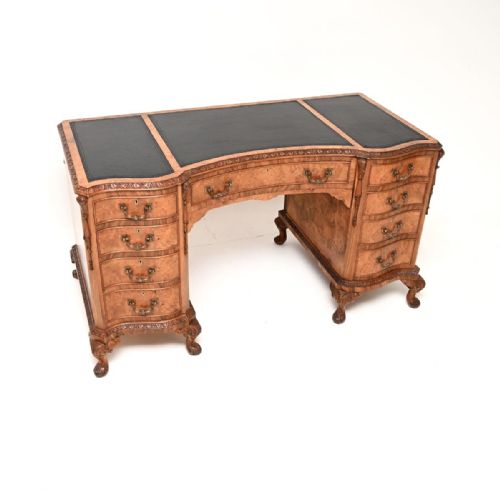
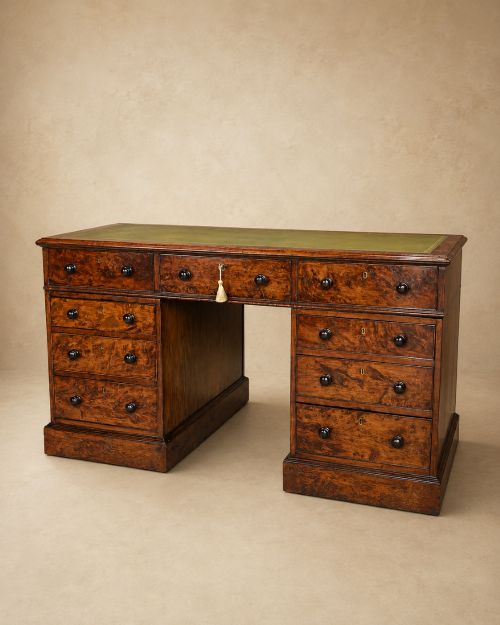
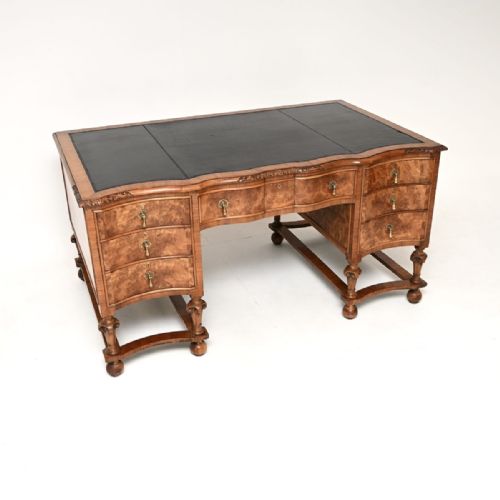
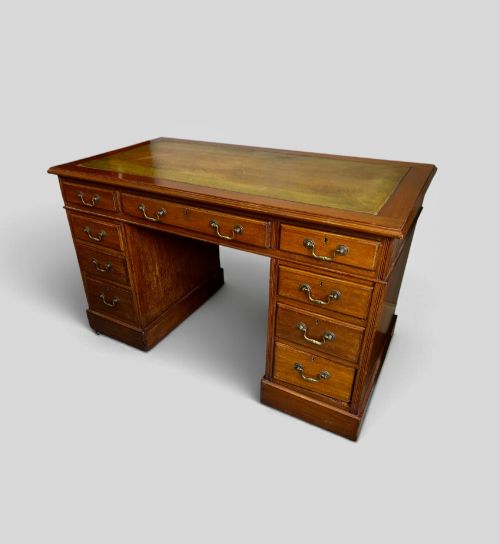
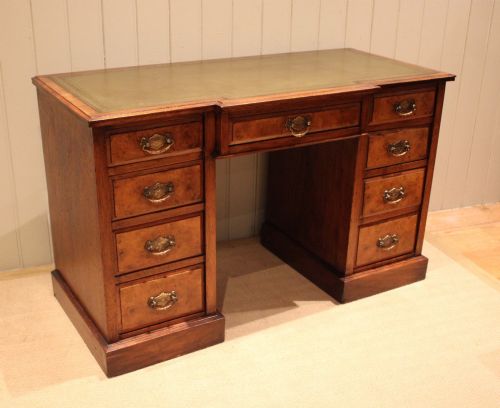
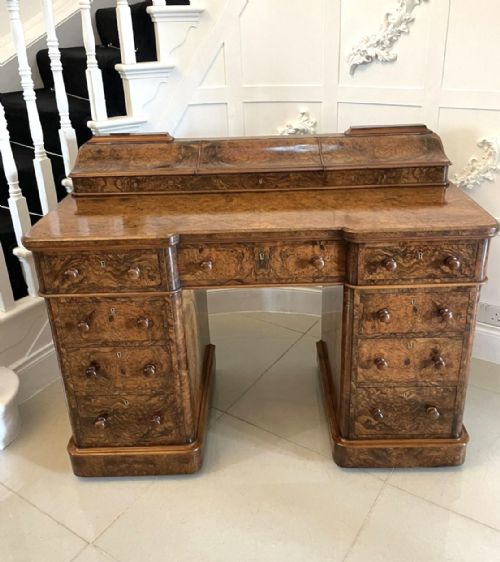
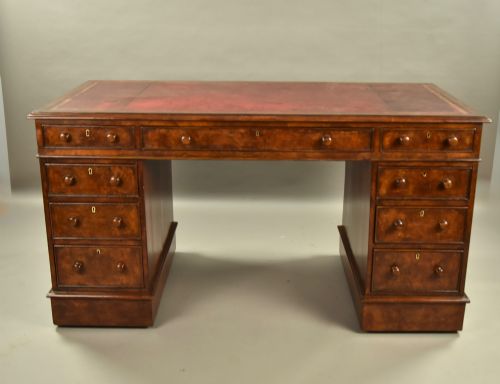
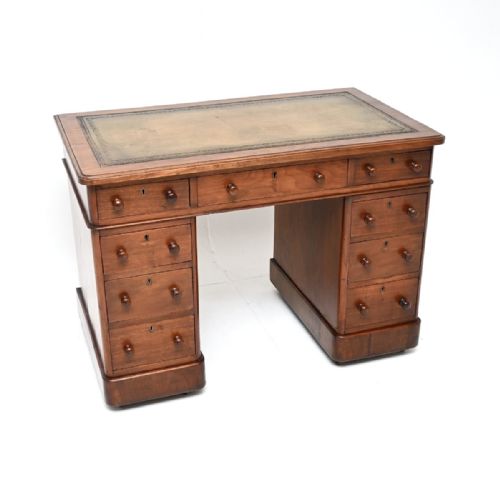
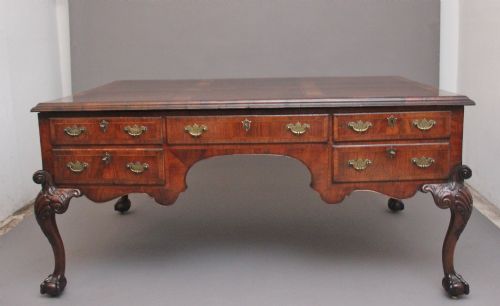
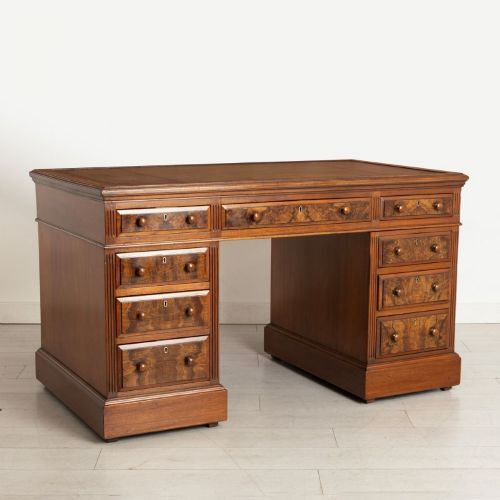
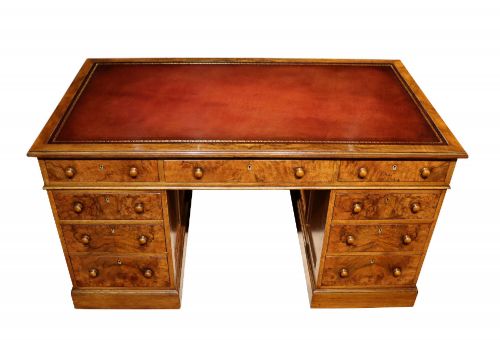
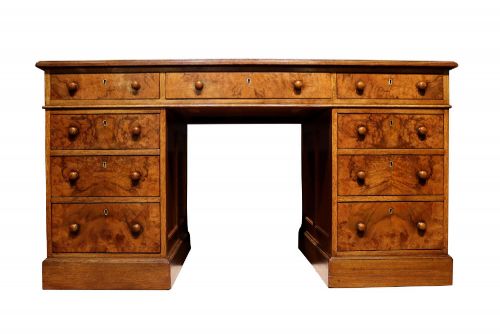
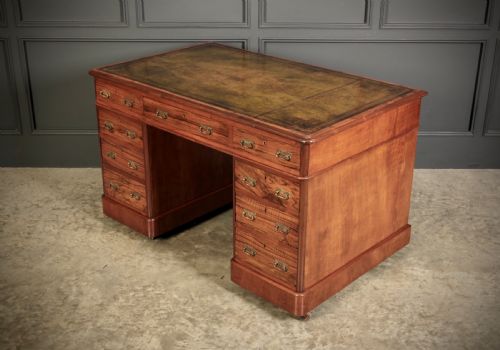
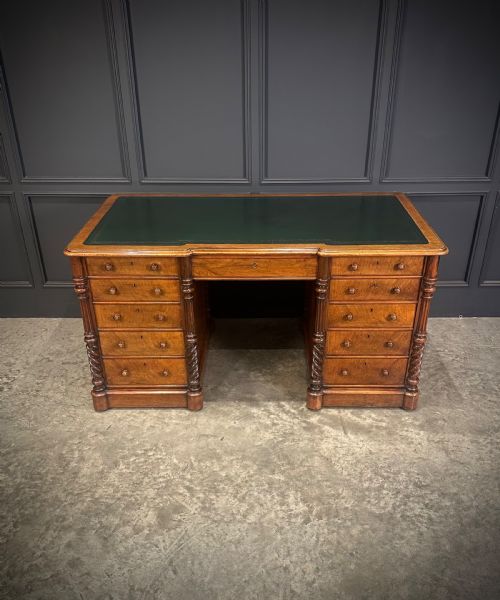
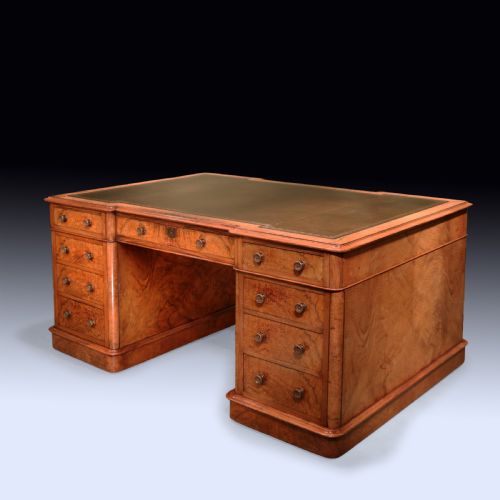
A victorian walnut partners desk provides dual workspaces with generous pedestals, offering grand proportions and rich timber figuring for a study or library.
Victorian Walnut Partners Desk
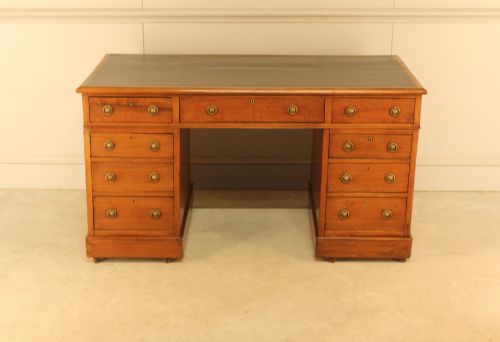
Most examples encountered here date from the nineteenth century, spanning periods from early Victorian decades up to nineteen hundred. These pieces range from standard pedestal desks to grand kneehole and freestanding writing tables.
Makers utilised various revival styles alongside standard Victorian aesthetics, incorporating Queen Anne, Chippendale, and Louis XVI details into the timber framework.
Materials and Construction
Makers selected walnut and burr walnut as the primary timber, often combining figured veneers with secondary woods such as oak and mahogany for structural stability within the drawers and internal framing. Brass hardware frequently secures the drawers and supports movement.
Surfaces received inset leather writing panels, bordered by decorative tooling. Cabinetmakers employed solid timber alongside precise veneering techniques to display the natural grain patterns of the walnut across large flat surfaces and curved pedestals.
The listings on this site feature nineteenth-century furniture utilising burr walnut, figured walnut, oak, mahogany, and brass.
Distinctions in Quality
Quality rests upon the selection of timber veneers and the depth of the burr figuring across the pedestals and top. Desks bearing maker attribution or provenance exhibit superior cabinetmaking, reflected in drawer construction and detailed carving.
Proportions and double-sided utility distinguish high-end examples from single-sided writing tables. The integration of solid secondary woods and original brass details further separates workshop production from standard commercial output.
Maple and Co·GILLOWS Lancaster·Edwards and Roberts·Bartholemew and Fletcher
The Victorian Walnut Partners Desk Glossary
- Partners desk
- A double-sided writing table designed with drawers and cupboards on both faces to accommodate two people working opposite each other.
- Burr walnut
- A decorative timber veneer harvested from the warted growths of walnut trees, displaying complex and swirling grain patterns.
- Pedestal desk
- A form comprising two separate banks of drawers supporting a single writing top.
- Kneehole
- The central recessed space beneath a desk top designed to accommodate the sitter's legs.
- Ebonised
- Wood treated with a chemical or finish to imitate ebony, creating a dense black appearance.
Victorian Walnut Partners Desk: Frequently Asked Questions
What is a partners desk?
A partners desk is a large double-sided writing table built with drawers and cupboards accessible from both the front and the back.
This configuration allowed two people, such as business partners or legal associates, to sit and work opposite each other at the same piece of furniture.
How do I care for the leather top?
Leather writing surfaces require gentle cleaning with a damp cloth and occasional treatment with appropriate leather dressings to prevent drying.
Avoiding direct sunlight and excessive heat preserves the suppleness of the hide and the gilt tooling along the borders.
Where should I place this desk?
Because these pieces are finished on all sides for dual usage, they sit best freestanding in the centre of a large study or library.
Allowing clear space around the pedestals gives proper access to the drawers and seating positions on both sides.
How do I identify a Victorian piece?
Nineteenth-century construction methods show hand-cut dovetails within the drawer boxes and the use of dense secondary timbers like oak and mahogany.
Stylistic cues include burr walnut veneers, brass drop handles, and period revival details corresponding to Victorian cabinetmaking.