


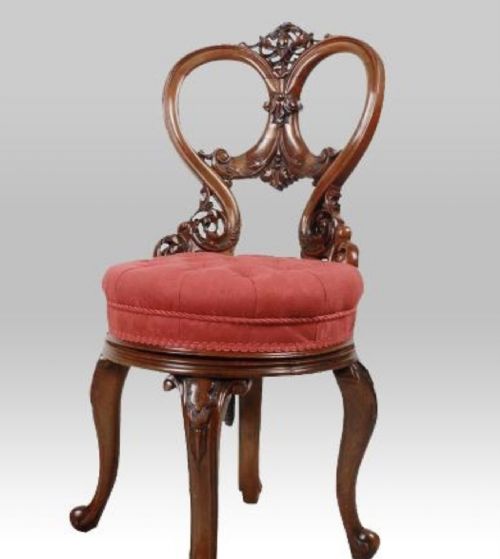


Victorian Walnut Music Stool
A victorian walnut music stool brings practical nineteenth-century engineering and rich timber grain together at the keyboard.
Victorian Walnut Music Stool
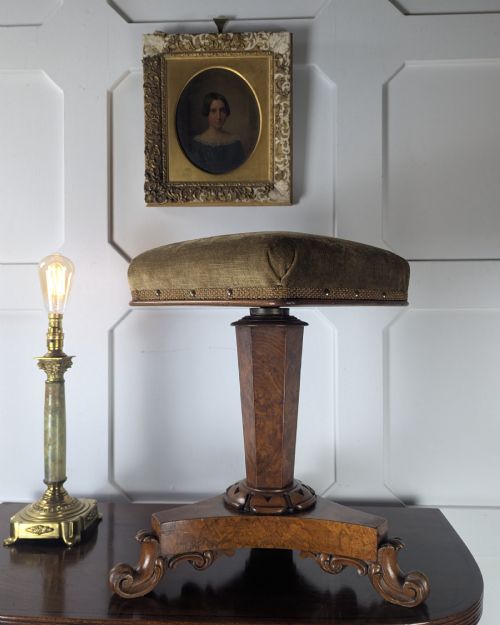
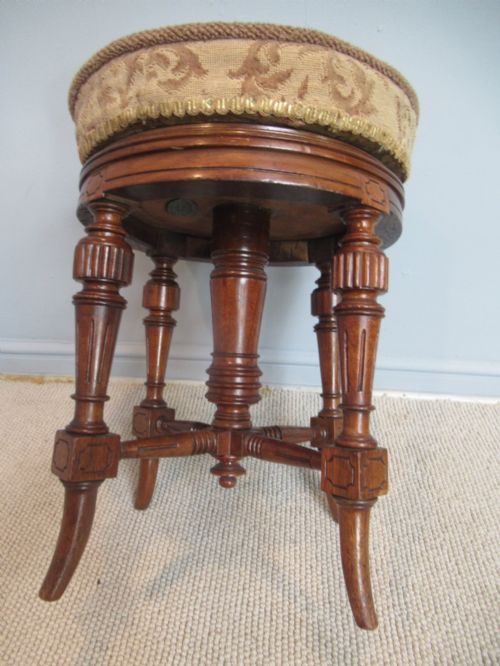
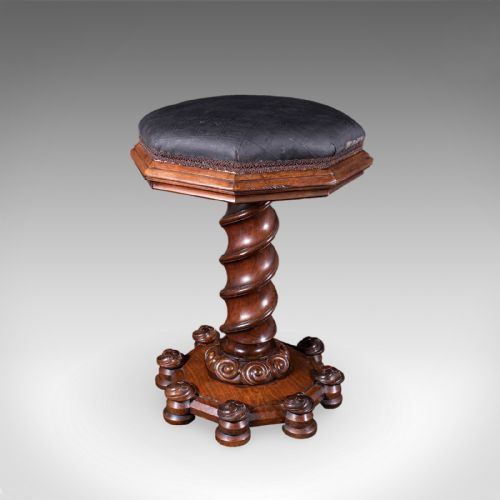
A victorian walnut music stool is a dedicated seat designed for musicians at the piano, organ, or harp, combining height adjustment mechanisms with sturdy timber frames. Buyers seeking these pieces will encounter rotating tops, rise-and-fall screws, and fall-front storage compartments originating from the nineteenth century.
The selections span revolving piano chairs, pedestal stools with tripod bases, and specialised variants like organist stools or Canterbury combinations. Walnut serves as the primary timber across these forms, often paired with carved details and upholstered seats.
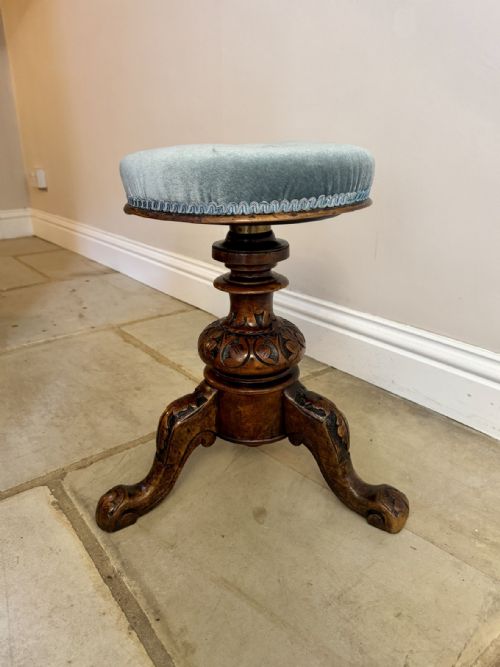
Most examples date from the mid-nineteenth century onward, featuring adjustable heights to suit players of stringed and keyboard instruments. Their forms range from simple revolving discs to elaborate carved tripod bases and stationary seats with internal lockers.
How they were made
Cabinetmakers built these seats using solid and figured walnut, shaping turned pedestals and carved legs that supported rising screw mechanisms. Iron and brass components operated the height adjustments, allowing the wooden seat platforms to elevate smoothly.
Upholstery completed the tops, utilising velvet, leather, and woven fabric stretched over padding to ensure comfort during long recitals. Marquetry inlay occasionally decorated the wooden seats, while fall-front compartments incorporated internal lockers for sheet music storage.
Some nineteenth-century musicians clearly enjoyed theatrical seating, as evidenced by Italian grotto stools carved with tumbling aquatic shells.
What varies in quality
The standard of carving distinguishes standard production from finer workshop output, particularly on pedestal columns and tripod feet. Crisp relief work and thoughtful proportioning in the walnut framing signal superior nineteenth-century craftsmanship.
Mechanism engineering also defines quality, where smooth operation of the adjustable screw or stable rotation of a swivel seat marks a higher grade of manufacture. Original upholstery materials and intact internal music lockers add further distinction to surviving examples.
Brooks
The Victorian Walnut Music Stool Glossary
- Revolving stool
- A seat featuring a central mechanism that allows the top to spin full circle for ease of movement at the keyboard. This type often utilises a threaded wooden or metal screw concealed within the column.
- Music riser
- An internal or external mechanism designed to elevate the seat height to accommodate different players. These operate through hand-cranked screws or rack-and-pinion systems.
- Canterbury stool
- A dual-purpose piece combining a padded music seat with upright partitions below for storing folios and sheet music. It represents a more elaborate form of nineteenth-century salon furniture.
- Grotto style
- A heavily carved aesthetic featuring shell and scroll motifs reminiscent of natural marine formations. It appears on select nineteenth-century revolving music seats.
- Tripod base
- A three-legged support structure commonly found on pedestal piano stools to ensure stability on uneven floorboards. The legs typically curve outward in cabriole or scroll forms.
Victorian Walnut Music Stool: Frequently Asked Questions
How do I adjust the height?
Most nineteenth-century examples adjust by simply turning the upholstered seat clockwise or anticlockwise to raise or lower the central wooden or metal screw.
Some variants use a side handle or internal mechanism to lift the platform before locking it into position.
Can I use it as a dressing table seat?
Yes, many period revolving stools served double duty at bedroom dressing tables as well as parlor pianos and music desks.
The adjustable height makes them particularly versatile for modern vanity spaces.
How do I care for the walnut wood?
Keep nineteenth-century walnut timber away from direct heat sources and strong sunlight to prevent the grain from drying out or fading.
Apply a traditional beeswax polish occasionally and buff gently with a soft cloth to maintain the finish.