





Victorian Walnut Dresser
A victorian walnut dresser brings rich timber figure and deep tone into a room, spanning forms from mirrored sideboards to tall chests.
Victorian Walnut Dresser
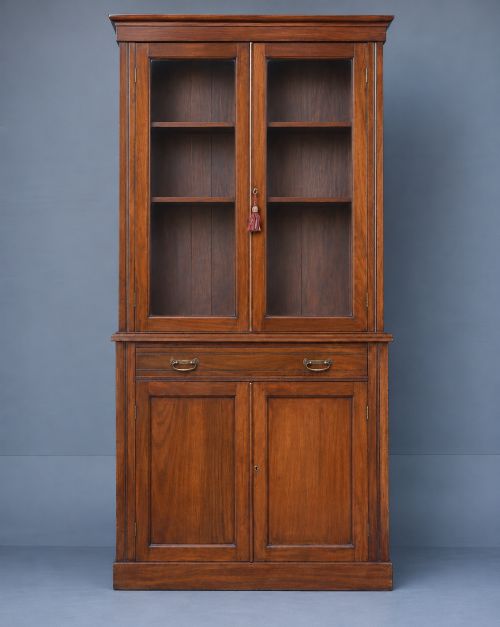
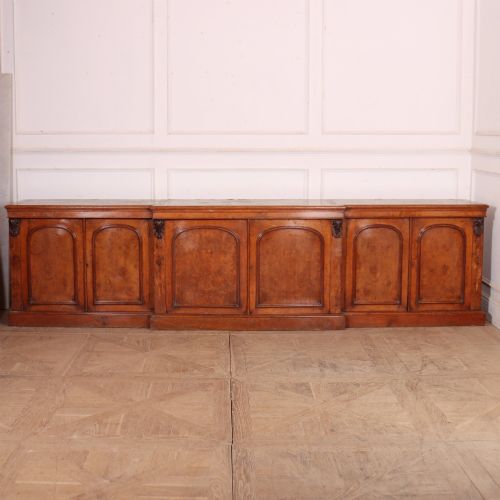
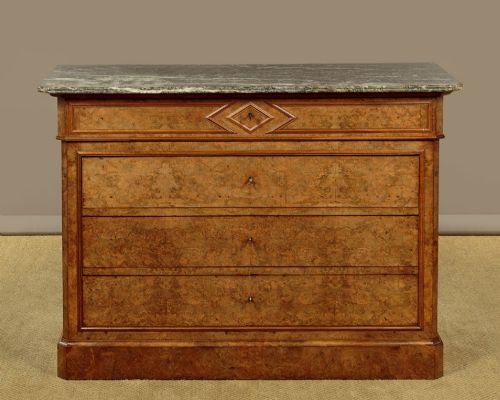
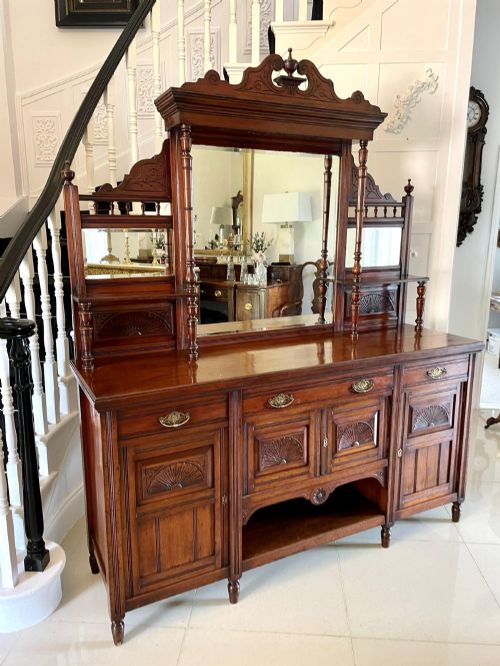
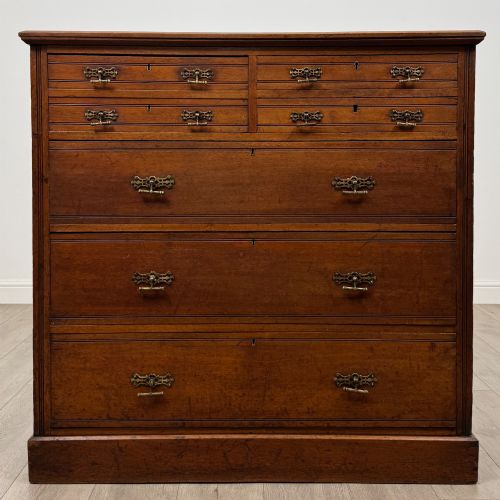
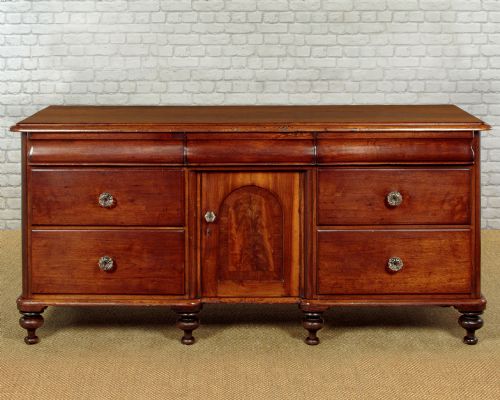
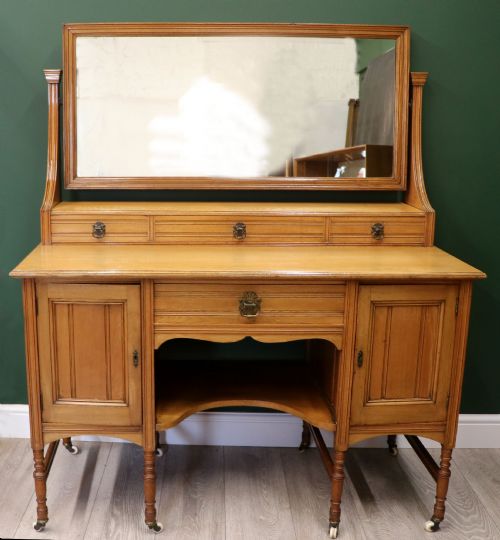
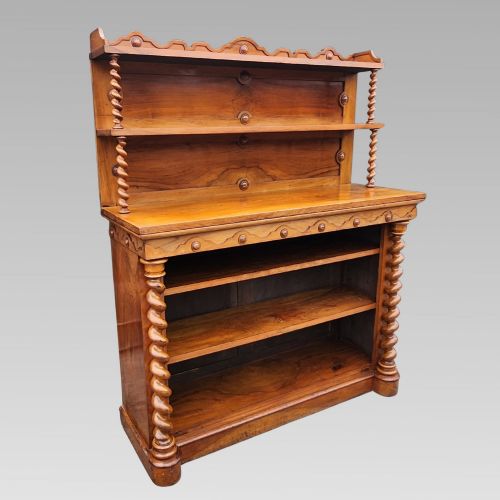
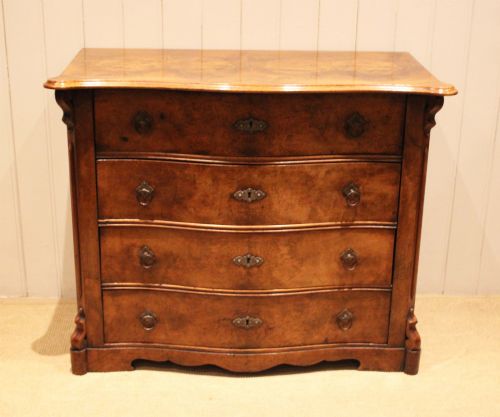
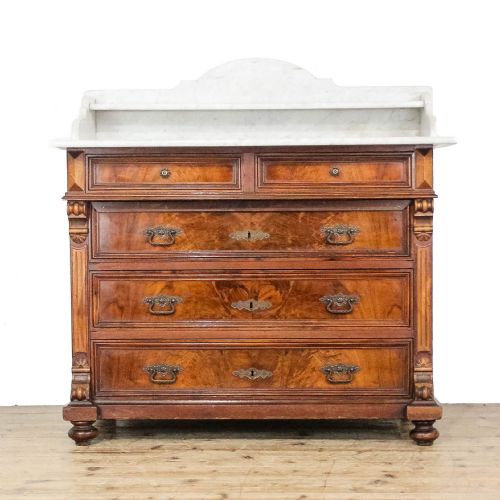
A victorian walnut dresser typically appears across this selection as a sideboard, a chest of drawers, a credenza, or a dressing table. The nineteenth century yields robust kitchen dressers, mirrored back sideboards, and tall chests of graduated drawers in both plain and highly figured timbers.
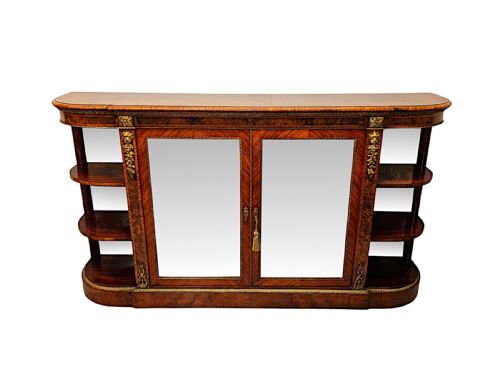
Makers and workshops of the period utilised local and imported varieties, leading to pieces ranging from country house side cabinets to sophisticated inlaid credenzas mounted in ormolu. Buyers encounter formats influenced by French revival styles, Arts and Crafts simplicity, and classic English proportion.
The objects serve varied domestic functions, functioning equally as dining room storage with surface display and as bedroom furniture equipped with locking drawers or pivoting mirrors.
Materials and Construction
Makers built these pieces using solid walnut and striking burr walnut veneers applied over secondary timbers such as pine or mahogany. Cabinet makers achieved deep decorative grain patterns by slicing thin burr layers, contrasting them with linear borders and occasionally incorporating satin walnut or fruitwood.
Mounts in brass, ormolu, and glass feature alongside inset marble tops on continental commodes and sideboard bases. Details like mother of pearl inlay, marquetry panels, and hand-carved mirror frames demonstrate nineteenth century joinery methods.
The listings feature walnut combined with brass, glass, ormolu, and marble across styles from the Victorian era through to the Edwardian period.
Assessing the Standard
Quality rests upon the selection of timber figure, particularly the liveliness of the burr walnut veneer and the matching of grain across drawer fronts and doors. Superior examples display careful timber choice that frames the entire facade with balanced symmetry.
Hardware integrity and the precision of internal drawer construction dictate the standing of a piece. Original brass mounts, well-fitted dust boards, and crisp carving distinguish workshop output from simpler utilitarian items.
Jas Shoolbred·Gillows·WC Burt
The Victorian Walnut Dresser Glossary
- Burr walnut
- A wood harvested from the abnormal growth of a walnut tree, yielding swirling, knotty grain patterns prized for cabinet veneers.
- Ormolu
- Gilded bronze mounts and decorative ornaments applied to furniture, common on mid to late nineteenth century credenzas and commodes.
- Wellington chest
- A tall, narrow chest of drawers secured by a single hinged locking stile that fastens down the right side.
- Credenza
- A low cabinet or sideboard, frequently featuring glass doors and decorative marquetry, used for display and storage.
- Marquetry
- The art of applying small pieces of veneer to form decorative patterns and pictures on furniture surfaces.
Victorian Walnut Dresser: Frequently Asked Questions
What is a victorian walnut dresser?
A victorian walnut dresser encompasses a wide grouping of nineteenth-century furniture including sideboards, chests of drawers, and credenzas made from walnut.
These pieces range from tall kitchen storage units and mirrored buffet sideboards to compact bedroom chests.
How do I date a walnut chest?
Dating relies on observing construction methods, timber choice, and stylistic cues such as applied ormolu mounts or carved mirror backs.
Mid-century items often show simpler lines, while later Victorian examples introduce elaborate marquetry and French revival influences.
Where were these pieces used?
They served as functional furniture throughout the home, from dining room sideboards displaying silver to bedroom chests holding garments.
Grand reception rooms housed glazed credenzas and mirror-backed cabinets for decorative display.
How do I care for burr walnut?
Burr walnut requires stable indoor humidity away from direct sunlight and heat sources to prevent timber shrinkage and veneer lifting.
Regular dusting with a soft dry cloth preserves the polished surface without building up excessive wax.