


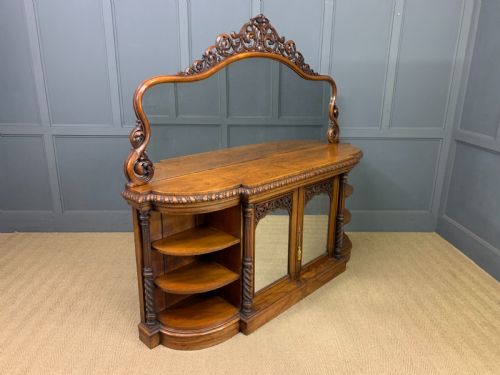


Victorian Walnut Chiffonier
When you search for a victorian walnut chiffonier, you are tracking down a low-level nineteenth-century sideboard designed for domestic display and storage.
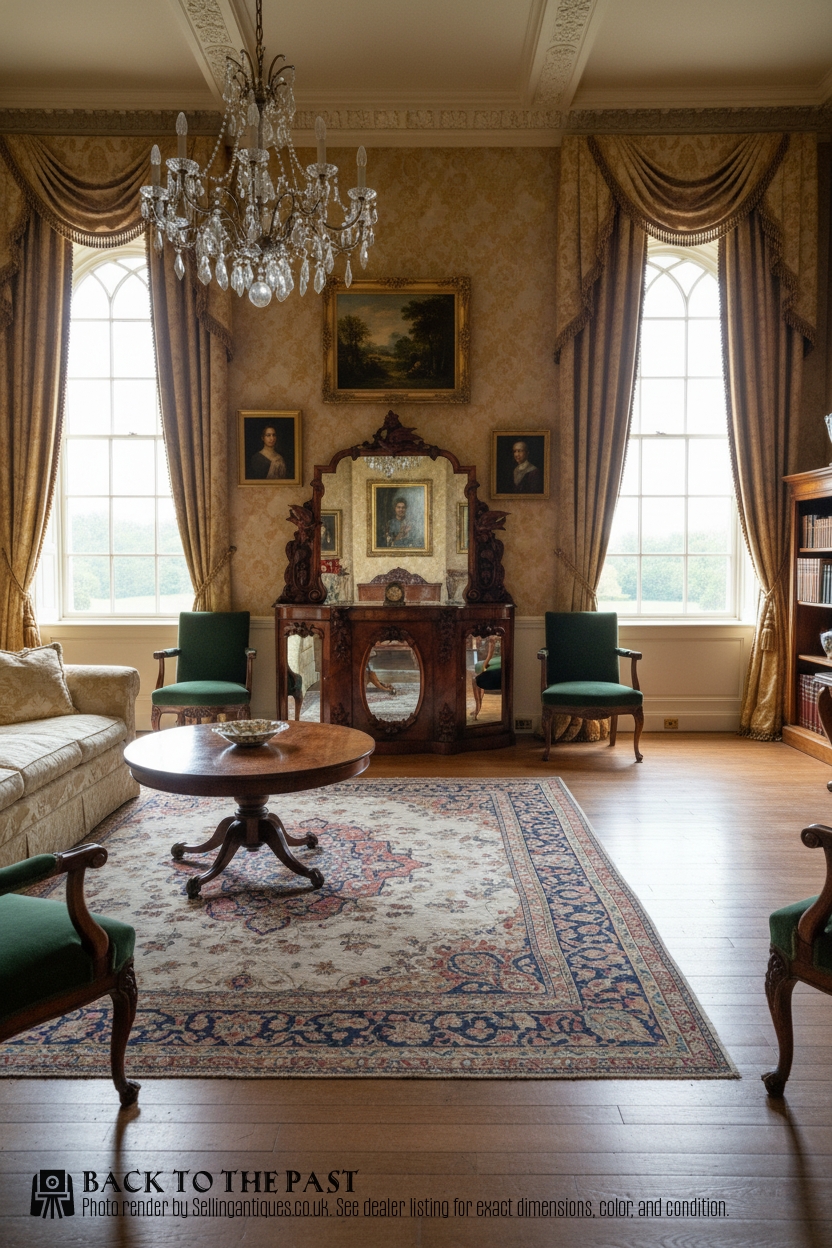
Victorian Walnut Chiffonier
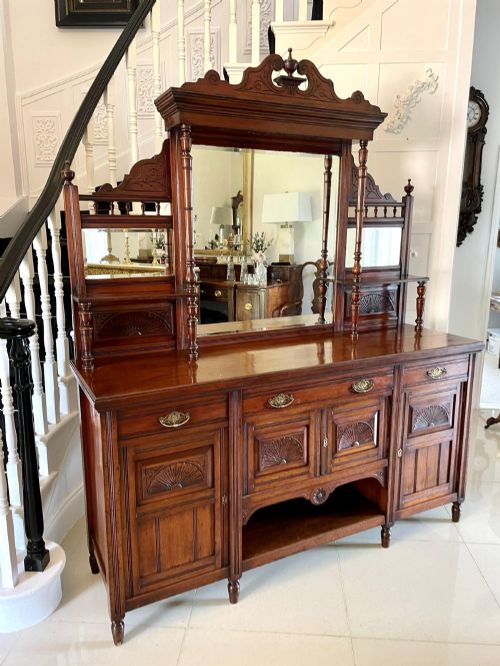
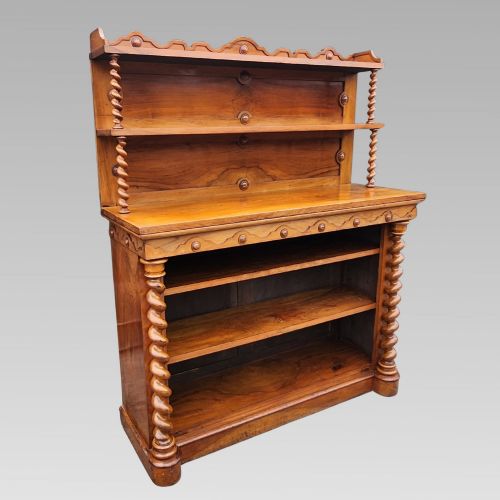
A victorian walnut chiffonier is a low sideboard or cabinet originating principally from the nineteenth century, most commonly encountered in Victorian incarnations built from the 1850s to the 1880s. These pieces often combine lower enclosed storage with upper shelves, mirrors or marble tops, serving both utility and display in the home.
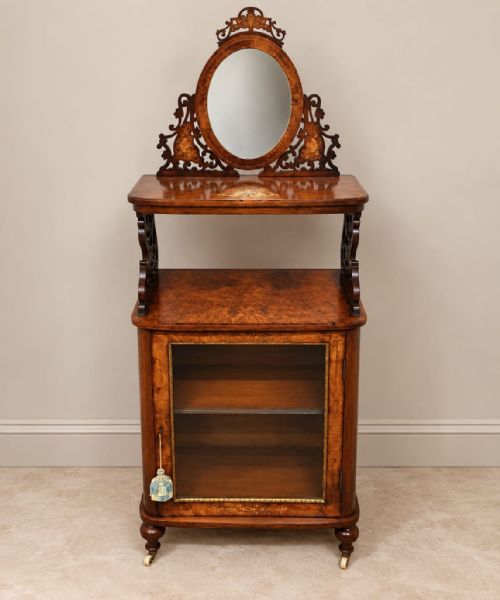
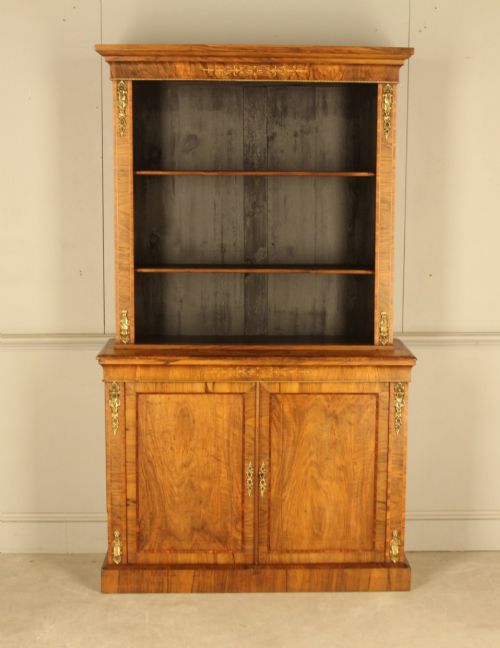
The form crosses paths with credenzas, side cabinets and sideboards in the historical record, sharing similar proportions and foundational designs. Walnut and burr walnut dominate the selection, frequently paired with inlaid marquetry, glass doors and brass mounts.
Examples stretch from plain timber bases to elaborate mirror-backed constructions featuring carved details and marble surfaces. Buyers encounter both compact cupboards and larger exhibition-grade pieces spanning the Victorian and Edwardian periods.
Assessing Quality
Quality rests upon the selection of timber veneers, where intensely figured burr walnut panels and precise marquetry inlay elevate a piece above plain carcases. The crispness of carved wooden details and the integration of mirror glass or marble tops also separate standard examples from finer commissions.
Joinery standards dictate the longevity of the cabinet, visible in the snug fit of doors and the handling of internal shelving and drawers. Pieces bearing maker attributions or exhibition labels demonstrate superior workshop provenance.
Victorian Walnut Chiffonier Retail Price Guide 2026
Typical asking prices for victorian walnut chiffonier among the pieces listed under this phrase on Sellingantiques today, from the lower quarter to the upper quarter. They describe what is for sale here now, not the wider market.
Design influences recorded across the inventory include the Aesthetic Movement, French Revival and Rococo Revival styles.
Gillows·James Plunckett Art Furniture Makers
The Victorian Walnut Chiffonier Glossary
- Burr walnut
- A figured timber veneer sliced from walnut tree growths, producing intricate and swirling grain patterns. It forms the primary decorative surface on many high-grade Victorian cabinets.
- Credenza
- A low dining room or parlour cabinet for serving and storage, frequently grouped alongside chiffoniers in nineteenth-century furniture categories.
- Ormolu
- Gilded bronze mounts applied to furniture for decorative effect, often highlighting corners, feet or door frames on mid-Victorian pieces.
- Marquetry
- Inlaid patterns of wood veneers and other materials arranged to form pictorial or geometric designs across the surface of a cabinet door or top.
- Chiffonier
- A low sideboard fitted with drawers and cupboards, sometimes supporting a mirror-backed superstructure for displaying ceramics or glassware.
Victorian Walnut Chiffonier: Frequently Asked Questions
What is a chiffonier?
A chiffonier is a low nineteenth-century cabinet combining enclosed cupboard storage below with shelving, mirrors or marble surfaces above.
Originally designed for the dining room or parlour, these pieces provided a compact surface for serving food or displaying ornaments.
How do I date my chiffonier?
Dating relies on examining the construction methods, timber choice, hardware and stylistic cues such as Victorian mirror backs or marquetry inlay.
Mid-nineteenth century pieces often feature heavy burr walnut veneers and classical revival carvings, while later Victorian and Edwardian versions lean towards lighter inlaid designs.
Where should I place a chiffonier?
These low cabinets suit dining rooms, hallways or living spaces where surface display and closed storage are both required.
Their restrained depth allows them to sit comfortably against walls without dominating the floor area of a room.
What is burr walnut?
Burr walnut is a decorative wood veneer harvested from tree burls, yielding dense, swirling grain patterns.
Cabinet makers valued this timber for creating striking visual focal points on the doors and primary panels of high-status furniture.