
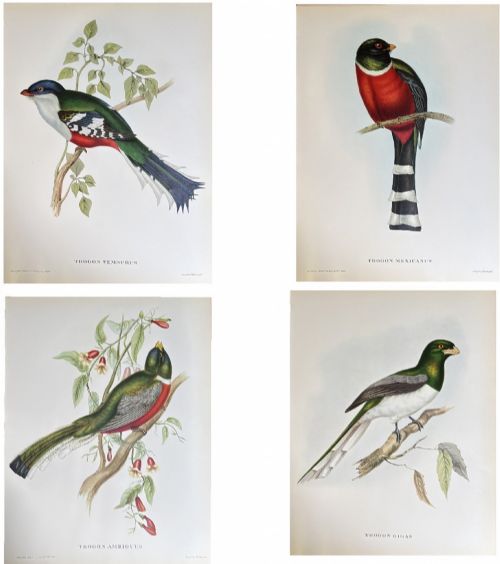
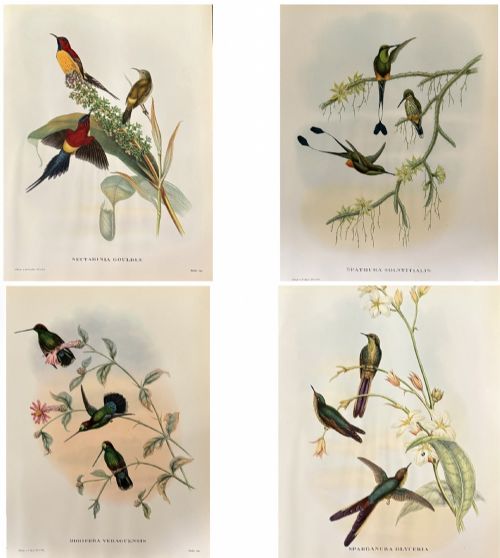
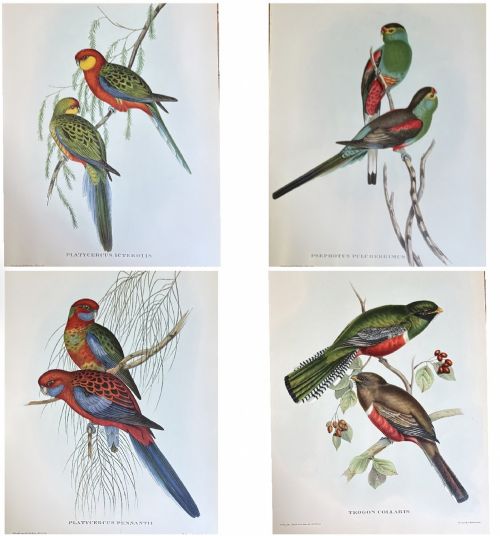
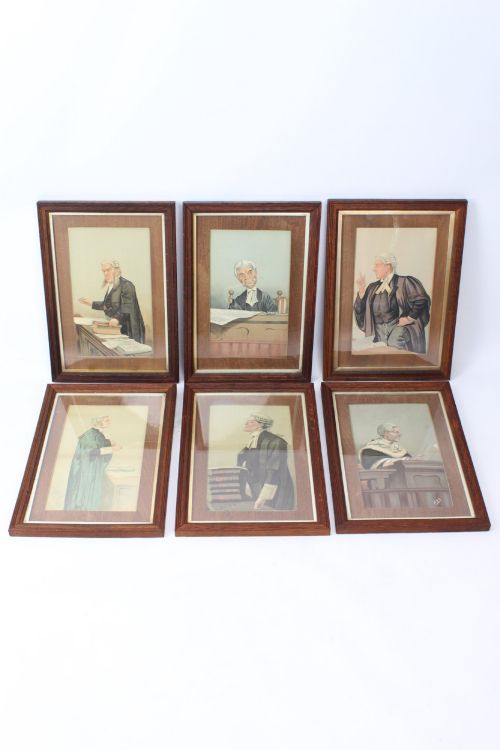




Victorian Wall Art Set
A victorian wall art set brings grouped visual interest to a room through matched frames and coordinated imagery.
Victorian Wall Art Set
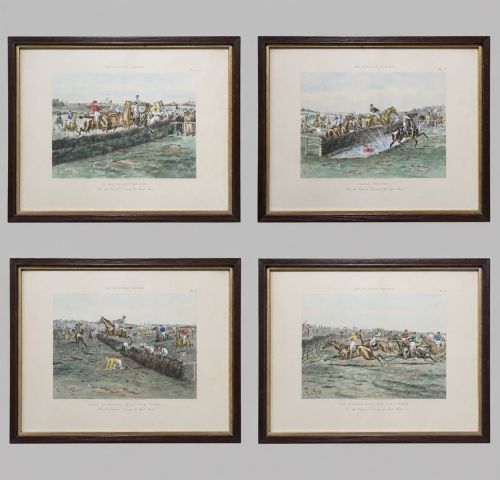
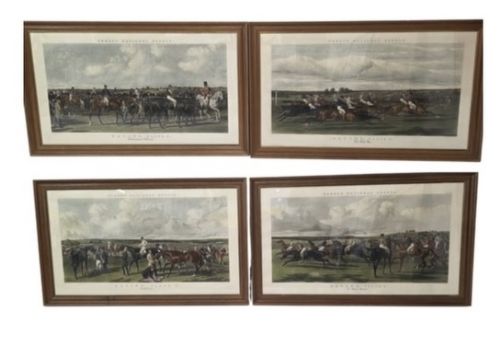
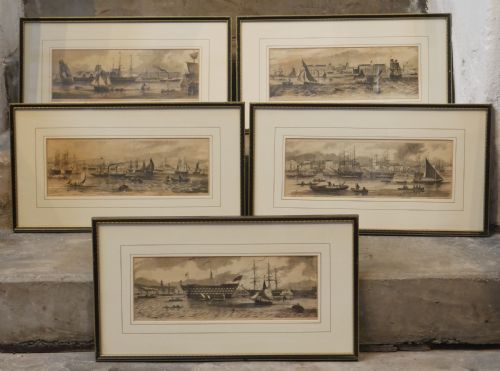
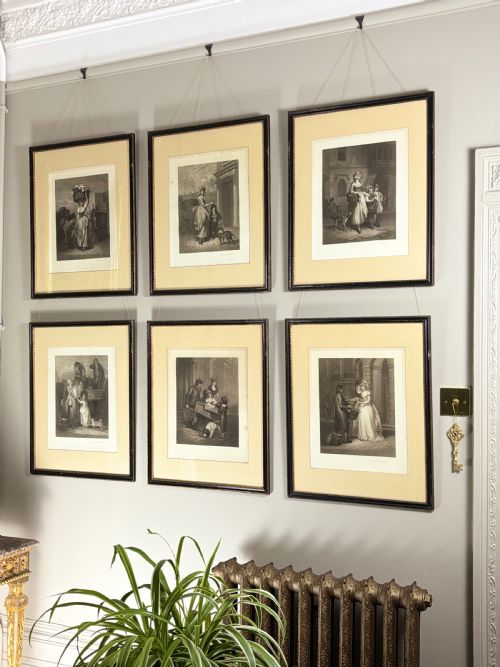
A victorian wall art set comprises multiple framed pieces sharing a common theme, medium, or period aesthetic. Buyers searching for a victorian wall art set typically encounter framed prints, engravings, and watercolours grouped in numbers ranging from pairs up to series of eight or nine.
The subjects span natural history including birds and botanical specimens, sporting scenes of horse racing and cock fighting, and satirical character portraits. These multi-part groups offer a cohesive display solution designed to be hung together on a single wall.
Origins stretch across the nineteenth century into the Edwardian era, incorporating British natural history illustrations, theatrical prints, and landscape views. The grouping preserves the original context in which these prints were published or collected.
Materials and Techniques
Paper forms the primary surface for these prints, engravings, and watercolours, often housed within wooden frames finished with gilt wood, gold leaf, or plain oak. Hand-colouring frequently enhances engraved lines using watercolour pigments applied directly to the sheet.
Printmaking methods include mezzotint, lithography, and aquatint, capturing fine detail from original drawings or paintings. Glazing with glass protects the paper surfaces from environmental damage while retaining the legibility of ink and wash mediums.
Listings feature paper, glass, wood, gilt wood, ink, watercolour, oak, and gold leaf across nineteenth-century and Edwardian periods.
Judging Quality
Quality rests upon the crispness of the impression from the printing plate and the precision of any hand-applied colour work. Early strikes or impressions pull sharper detail from plates before wear softens the engraved lines.
The integrity of the accompanying framing materials, whether original gilt wood or period oak, contributes to the overall cohesion of the group. Sets that retain their full complement without replacement sheets or mismatched frames maintain greater visual harmony.
George Finch Mason·Thomas G Appleton·Edward Stodart·Jonathan Couch·John Curtis·William Swainson·Edward Lear
The Victorian Wall Art Set Glossary
- Aquatint
- A printmaking technique that produces tonal areas resembling watercolour washes. It was frequently utilised for reproducing sporting and landscape paintings.
- Mezzotint
- A printmaking process of the intaglio family where the plate is roughened to achieve deep shadows and subtle gradations of light. It was widely used for portraiture.
- Lithography
- A planographic printing process based on the repulsion of oil and water, enabling the reproduction of illustrations and plans. Coloured versions often used multiple stones.
- Engraving
- A method of cutting design lines directly into a metal plate using a sharp tool. This technique yields precise, durable lines suited to botanical and natural history subjects.
Victorian Wall Art Set: Frequently Asked Questions
How should I hang a matched set?
Arrange the framed pieces with consistent spacing at eye level to maintain the visual balance established by the original grouping.
Keep the centre point of the entire arrangement unified rather than treating each frame in isolation.
Are these prints hand coloured?
Many nineteenth-century botanical, bird, and shell prints feature delicate hand-applied watercolour over printed outlines. Artisans added these washes by hand in workshops following the initial printing process.
Examining the surface under magnification reveals the subtle brushstrokes characteristic of manual tinting.
How do I care for antique paper art?
Protect framed paper works by positioning them away from direct sunlight to prevent fading of the inks and watercolours. Maintain stable indoor humidity levels to avoid warping the paper or damaging the wooden frames.
Ensure the glass is clean and check that the backing boards remain secure.
What defines a complete set?
A complete set retains all the original constituent prints published together as a series, such as a sequence of four sporting scenes or a group of botanical specimens. Preserving the full number ensures the intended narrative or cataloguing sequence remains intact.
Loss of individual pieces alters the balance of the display.