

Victorian Velvet Accent Chair
A victorian velvet accent chair brings rich texture and period silhouette into a room, offering both decorative presence and comfortable seating.
Victorian Velvet Accent Chair
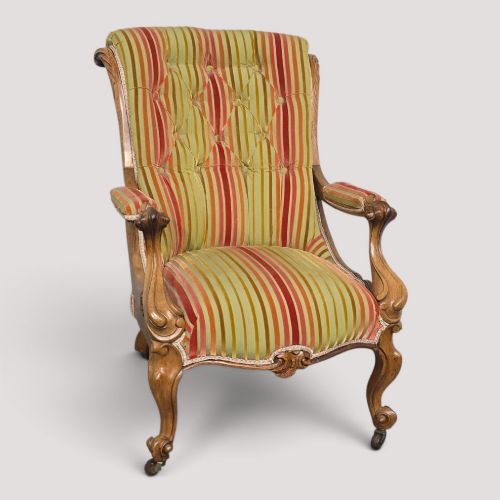
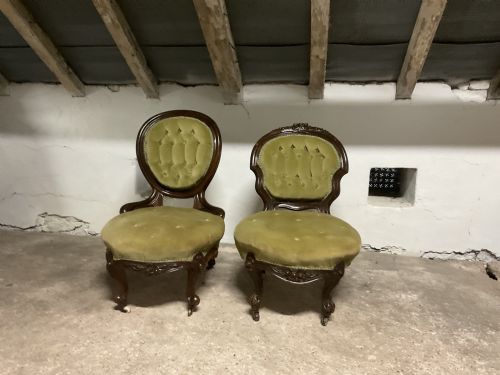
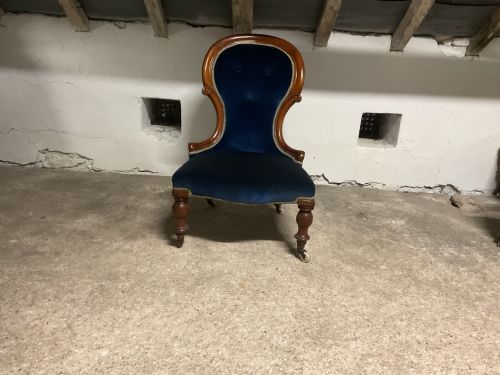
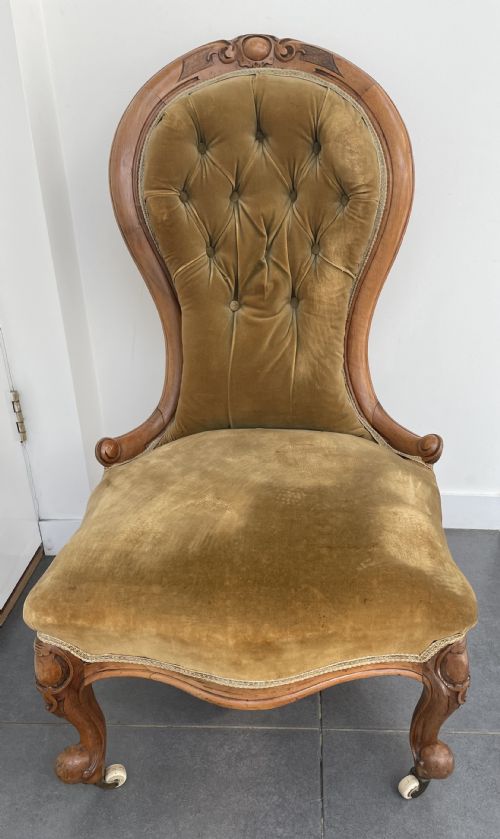
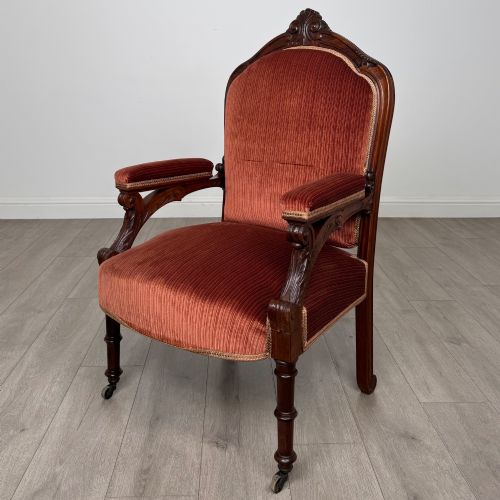
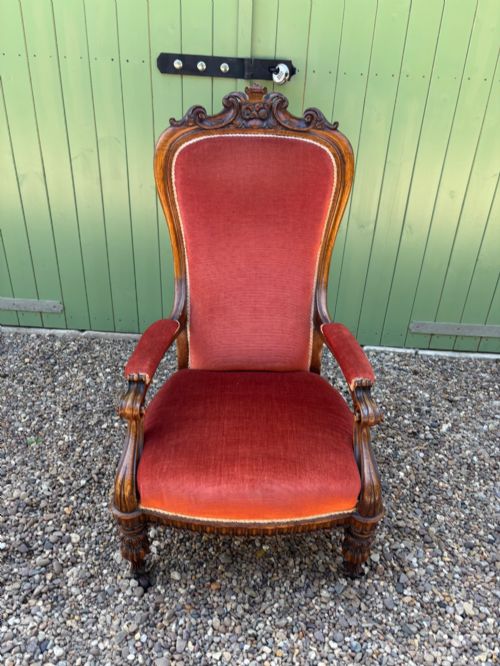
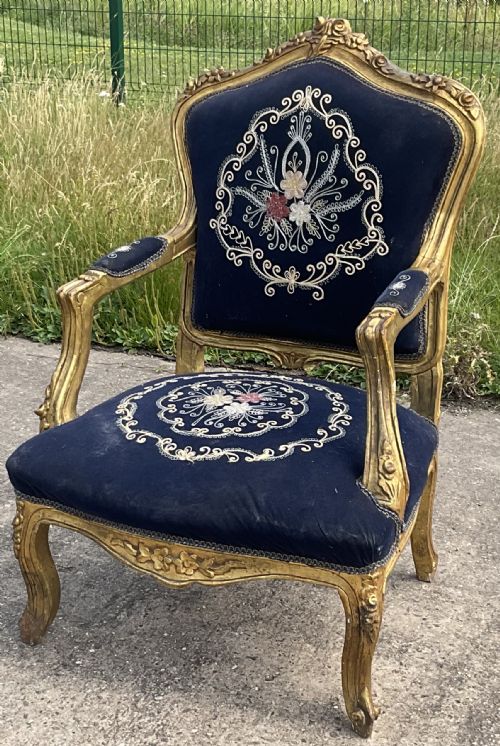
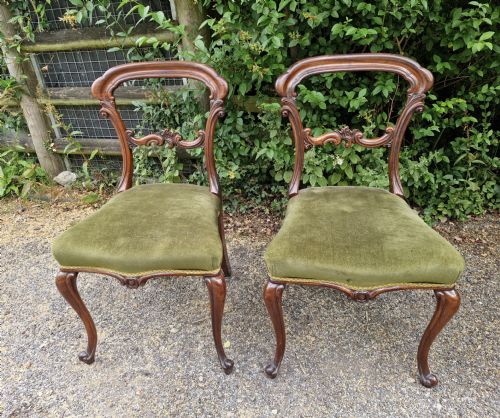
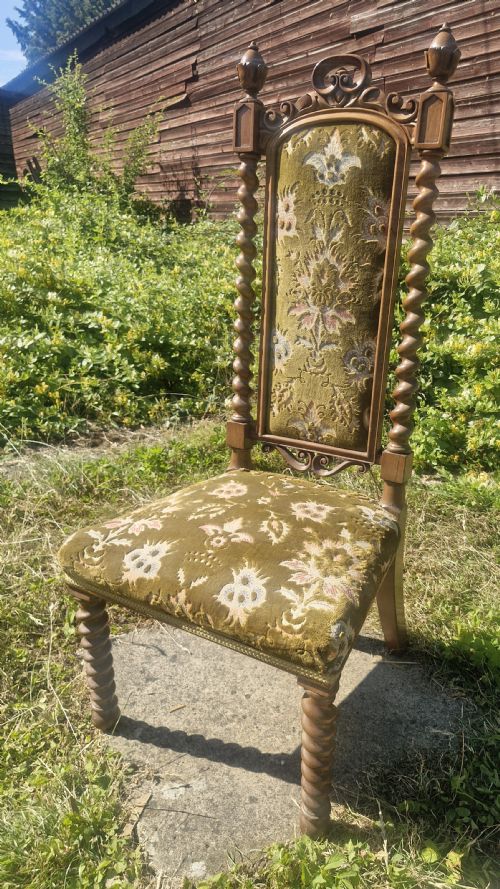
A victorian velvet accent chair encompasses a variety of seating forms, most frequently appearing on this page as nursing chairs, bedroom chairs, and occasional armchairs. These pieces span the nineteenth century, including specific periods such as the Regency and Edwardian eras, alongside stylistic revivals.
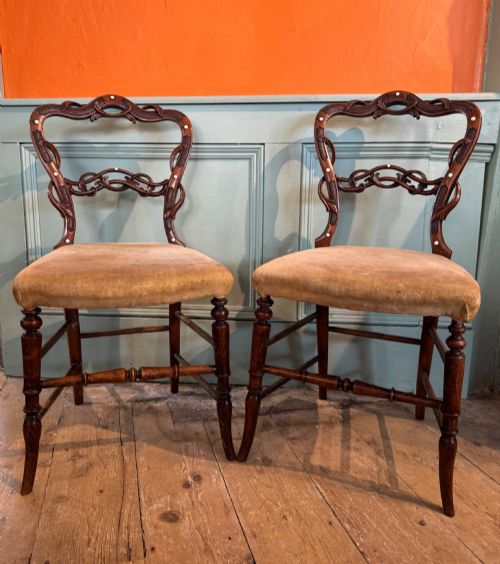
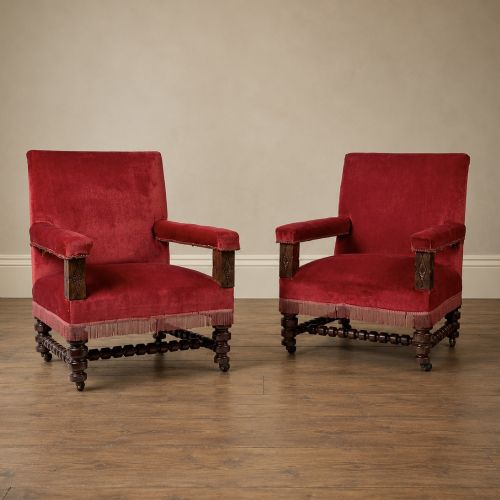
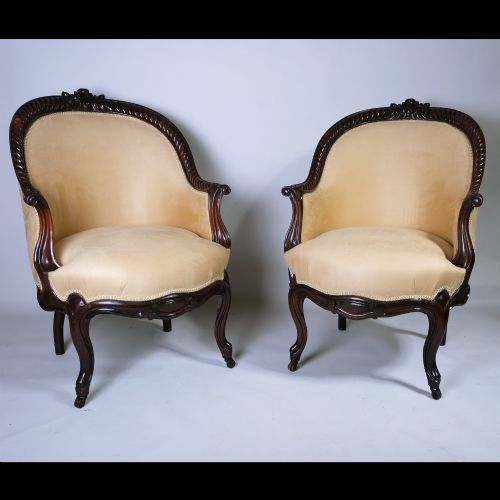
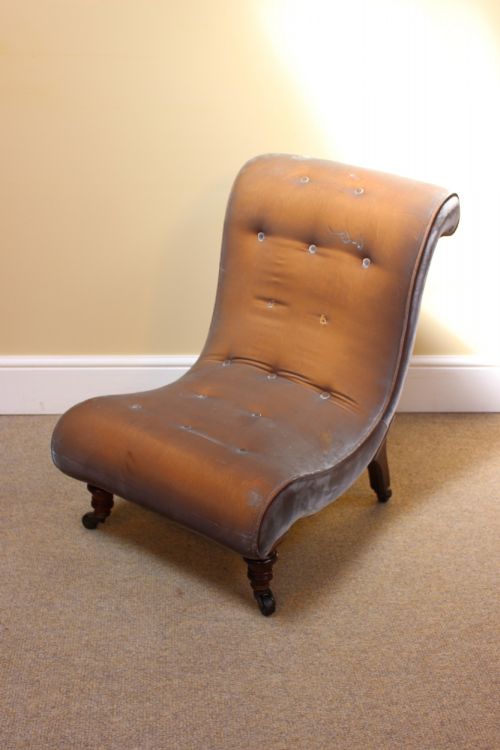
The frames take multiple structural forms, ranging from low fireside chairs and slipper chairs to larger library armchairs and open arm designs. Walnut, mahogany, and rosewood serve as the primary timber frames, paired with velvet upholstery that varies from plain fabrics to patterned designer textiles.
How they were made
Frames are constructed from hardwoods such as mahogany, walnut, rosewood, and oak, frequently shaped with carved details, barley twist supports, or scroll-carved backs. Joinery reflects traditional nineteenth-century cabinet-making methods, utilising solid timbers alongside veneered surfaces on select decorative elements.
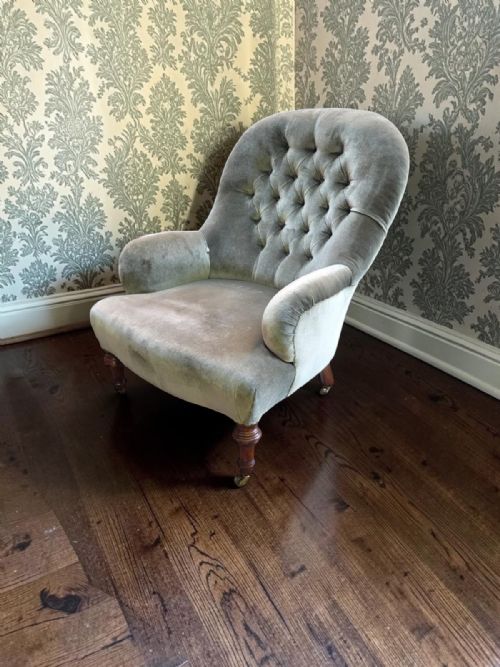
Upholstery relies on traditional stuffing and springing techniques beneath velvet coverings, occasionally featuring button-backed detailing. Brass castors and ceramic components frequently appear on the feet of larger armchairs and occasional seating.
What varies in quality
Quality rests in the crispness of the timber carving and the structural integrity of the hardwood frame, distinguishing simple utility seating from finely articulated parlour pieces. The execution of scrollwork, barley twists, and applied mouldings demonstrates the original maker's hand.
The standard of upholstery work and the grade of velvet contribute significantly to the finished object. Period-appropriate fabrics or high-end designer textiles elevate the presentation of the frame while maintaining historical sympathy.
Hampton and sons pall mall
The Victorian Velvet Accent Chair Glossary
- Nursing chair
- A low-seated armchair historically designed for nursing infants, featuring a low profile that makes it a popular choice for modern bedrooms.
- Spoon back
- A padded chair back shaped like the bowl of a spoon, curving inward to fit the contours of the sitter's spine.
- Cabriole leg
- A furniture leg that curves outward and then tapers inward, typically ending in a pad or scroll foot.
- Button back
- An upholstery technique where buttons are pulled deep into the padding to create a uniform diamond pattern.
- Fauteuil
- An open-armed upholstered armchair with exposed wooden framing, originating in French furniture design.
Victorian Velvet Accent Chair: Frequently Asked Questions
What is a nursing chair?
A nursing chair is a low-seated Victorian armchair originally built to make holding infants more comfortable.
Today, their compact proportions make them well suited as accent seating in bedrooms or smaller sitting rooms.
How do I identify a Victorian chair?
Victorian chairs show distinct stylistic markers such as spoon backs, button upholstery, and carved walnut or rosewood frames.
They also span specific revival styles ranging from Gothic to Carolean influences.
Where should I place an accent chair?
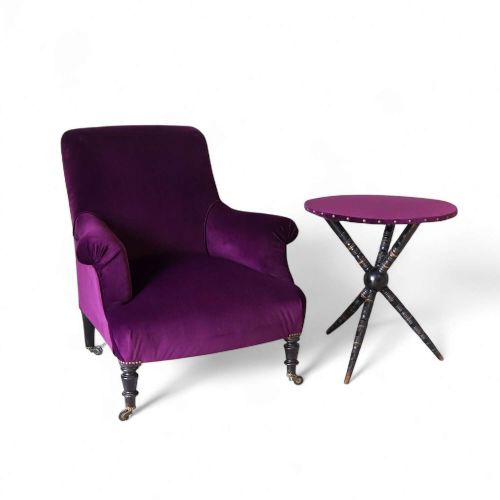
An accent chair works effectively in a corner, beside a fireplace, or paired with a small table.
Their decorative velvet upholstery allows them to contrast or complement existing room colours.
What woods were used for frames?
Cabinet makers predominantly utilised dense hardwoods including mahogany, walnut, and rosewood for these frames.
Oak and goncalo alves also appear among the listed pieces.