


Victorian Vanity Scent Bottle
A victorian vanity scent bottle brings the tactile luxury of the nineteenth-century dressing table into your hands through glass and silver.
Victorian Vanity Scent Bottle
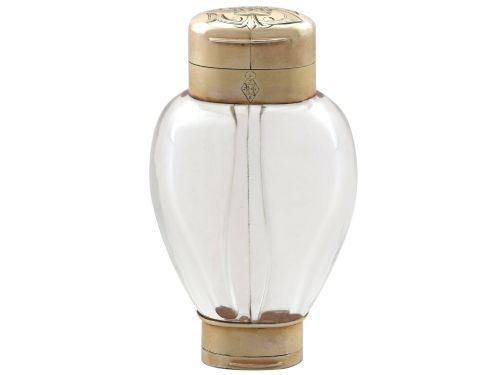
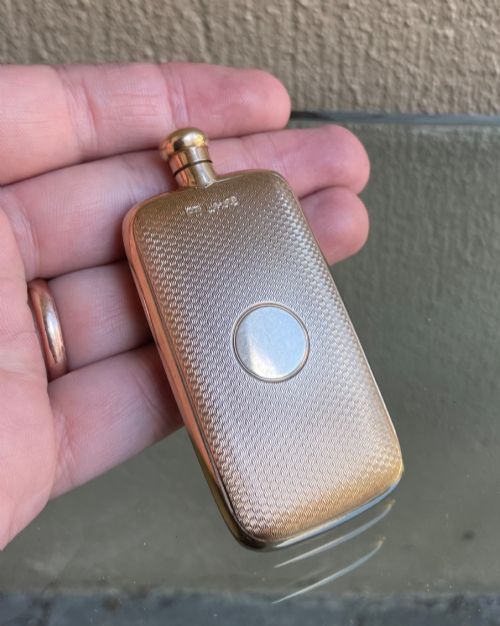
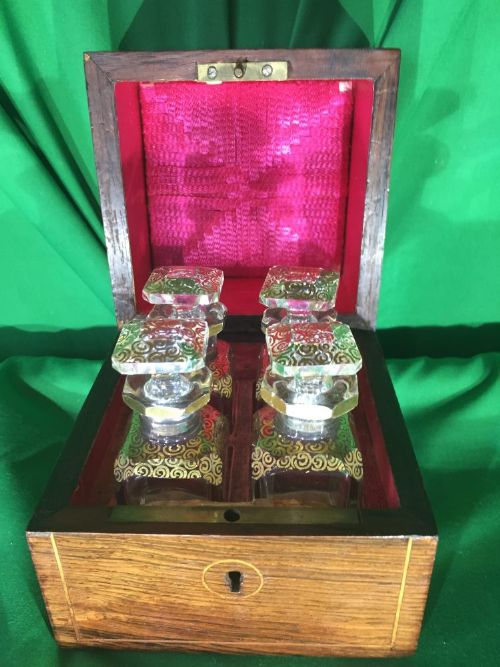
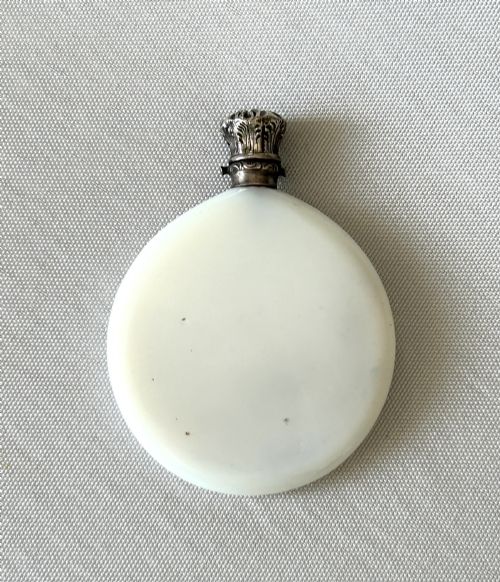
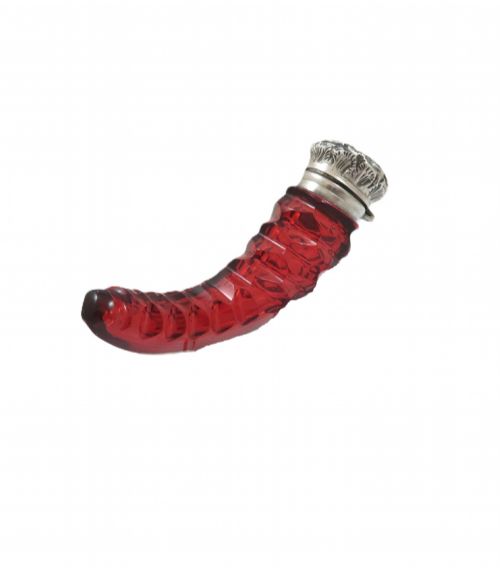
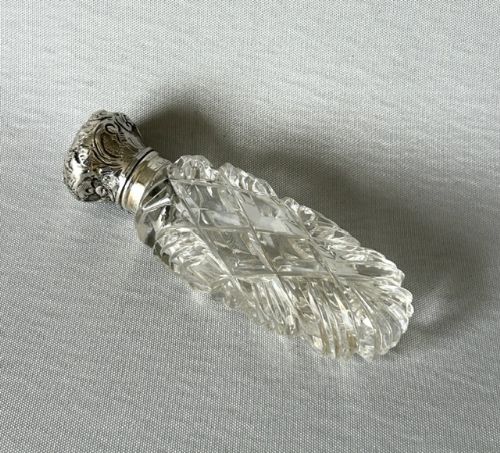
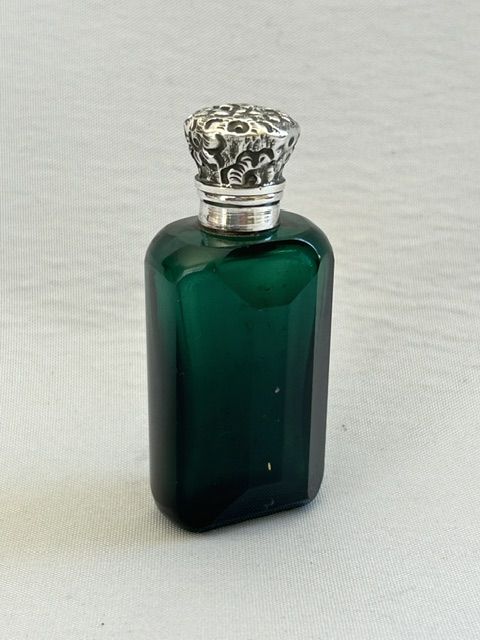
When you search for a victorian vanity scent bottle, you encounter small personal containers designed to hold perfumes and volatile salts for daily toilet use. These items appear frequently on this page as individual pocket flasks or housed within fitted wooden caskets alongside matching companions.
The objects span varied configurations, including cylindrical cut glass vessels, mounted glass eggs, and multi-piece travelling sets intended for carriage. Makers also produced these pieces in specialised formats such as small vinaigrettes with internal pierced grilles for aromatic vinegar.
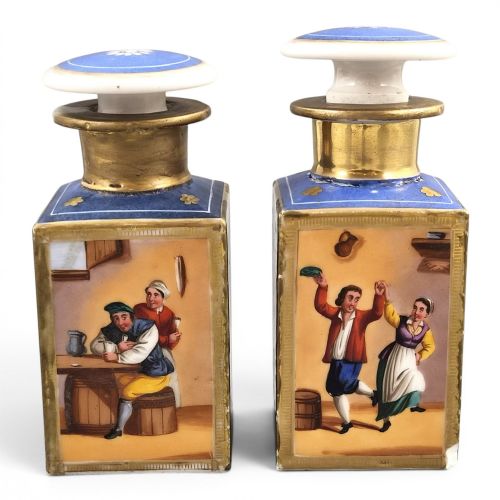
Most examples originate from the Victorian period, supplemented by Edwardian productions and nineteenth-century French variants incorporating ormolu and coloured glass. Buyers select these items for their intricate metalwork and the rich hues of their glass bodies.
Materials and Construction
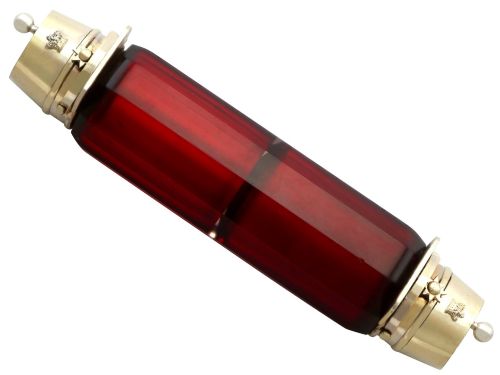
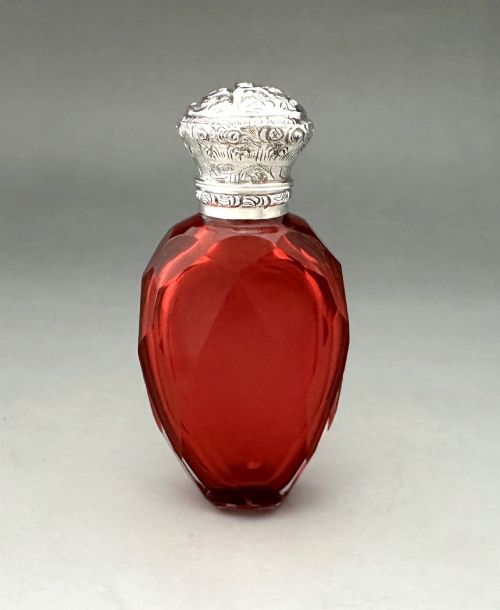
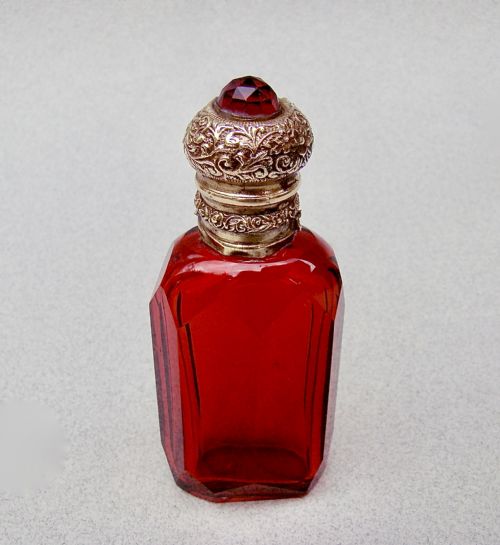
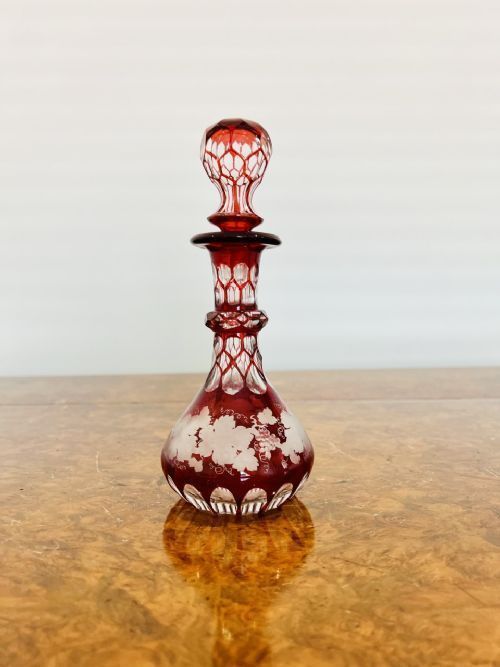
Makers shaped these containers using heavy lead glass and cut crystal, alongside coloured varieties like cranberry, ruby, opaline, and vaseline glass. Artisans often cased or overlaid the glass bodies with contrasting layers before cutting geometric patterns through the surface.
Mounts, collars, and hinged lids were fashioned from sterling silver, silver gilt, and brass, frequently secured with cork or ground glass stoppers. Wood species such as walnut, rosewood, and coromandel formed the outer shells of the fitted caskets lined with velvet.
French workshops integrated ormolu mounts and intricate murrine glass techniques, while English silversmiths added embossed decoration and hallmarked silver collars to the glass necks.
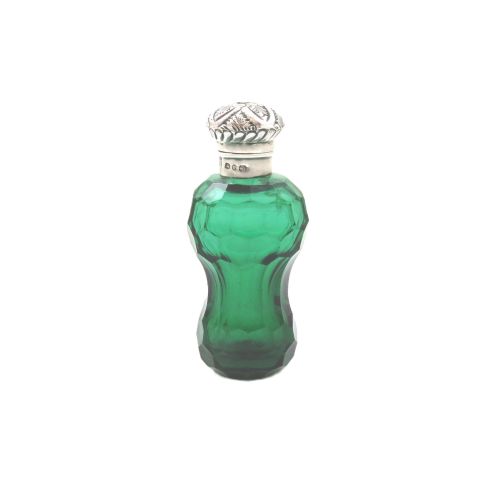
Listings demonstrate a prevalence of sterling silver collars paired with cranberry, ruby, and green cut glass dating from the 1870s to the 1890s.
Evaluating Quality and Craftsmanship
The distinction between tiers of quality rests upon the depth of the glass cutting and the precision of the silver mounts. Finer pieces display crisp facets on heavy crystal and tightly closed silver hinges that seal the bottle securely.
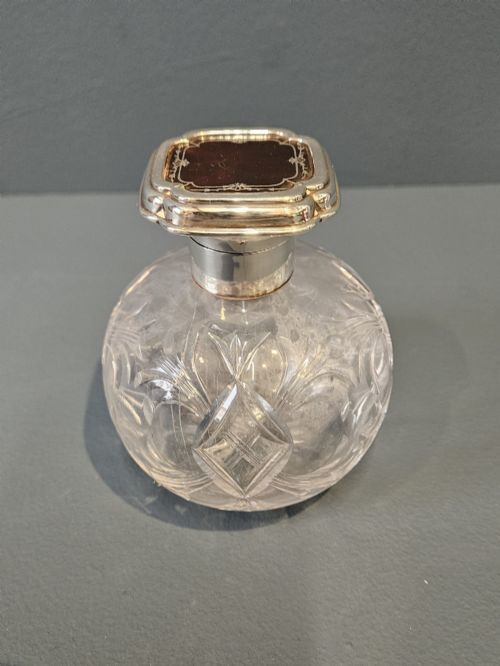
Material complexity elevates a piece, as seen in examples combining tortoiseshell, silver, and cut glass rather than plain glass alone. The integration of specialised glass types like Clichy canes or layered overlay glass indicates higher workshop skill.
Condition of the interior stopper and the structural integrity of any enclosing rosewood or coromandel box heavily influence the standing of an individual piece.
Horton And Allday·Edward Smith·Jacob Petit·Franchini And Bigaglia
The Victorian Vanity Scent Bottle Glossary
- Vinaigrette
- A small ornamental box or bottle containing a sponge soaked in aromatic vinegar. These items feature a hinged pierced internal grille.
- Opaline Glass
- An opaque or translucent silicate glass developed in shades of white, blue, or green. It mimics the appearance of natural opal and was widely used in nineteenth-century vanity items.
- Ormolu
- Gilded bronze or brass mounts applied to decorative objects. This technique provided ornamental borders and stands for glass bottles.
- Cranberry Glass
- A rich red transparent glass coloured with gold chloride during melting. It appears frequently in nineteenth-century scent containers.
- Murrine
- Coloured glass canes fused together and sliced crosswise to reveal patterns. Venetian and French makers utilised this technique for decorative effects on small vessels.
Victorian Vanity Scent Bottle: Frequently Asked Questions
What is a victorian vanity scent bottle used for?
These vessels held liquid perfumes, toilet waters, and aromatic vinegars for personal freshening. Ladies carried them in pockets or travelling cases during the nineteenth century.
They also served as permanent dressing table accessories, displayed in matching pairs or fitted velvet boxes alongside other vanity items.
How do I date a victorian scent bottle?
Silver mounts on English pieces often bear assay office hallmarks and date letters that pinpoint the exact year of manufacture. Stylistic shifts in glass colours and box woods provide broader chronological markers.
For instance, vibrant cranberry and vaseline glass combined with sterling silver typically point towards the later decades of the nineteenth century.
Are scent bottles and perfume bottles different?
The terms are largely interchangeable among collectors, though historic usage sometimes separated solid stoppered bottles from spray atomisers. Most antique examples on this page rely on ground glass stoppers or screw caps rather than modern atomiser pumps.
Both designations refer to personal containers designed to preserve volatile fragrances.
How should I clean my antique scent bottle?
Dust glass and silver surfaces gently with a soft, dry cloth to preserve existing patination and delicate metalwork. Avoid submerging fitted wooden caskets or velvet linings in water.
Harsh chemical polishes should be kept away from silver collars to prevent damage to adjacent glass or tortoiseshell elements.