



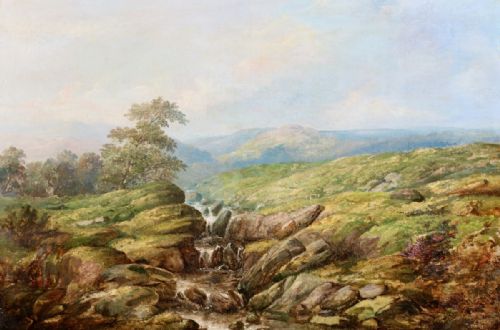


Victorian Valley Artwork
These pieces of victorian valley artwork capture the picturesque scenery of nineteenth-century rivers and hills.
Victorian Valley Artwork
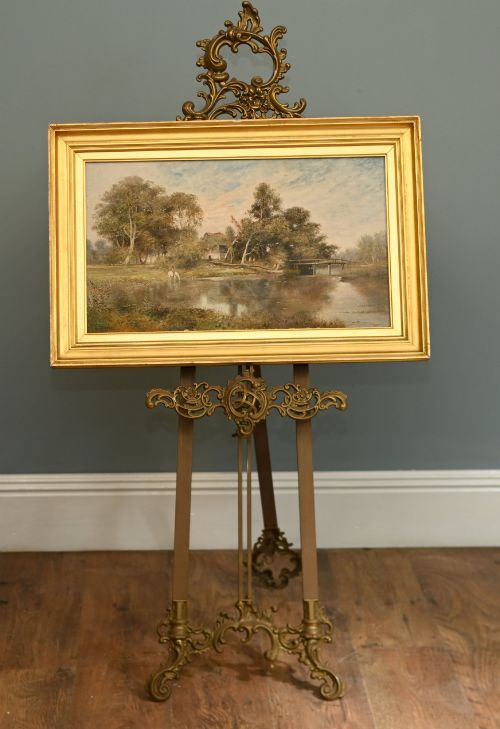
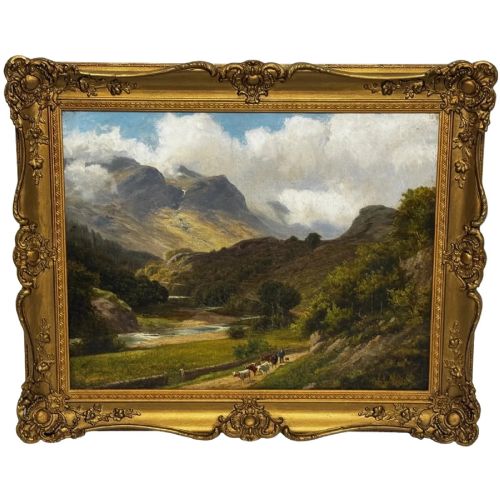
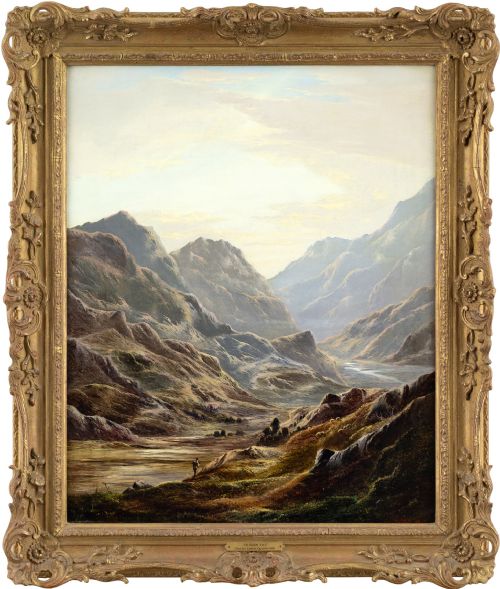
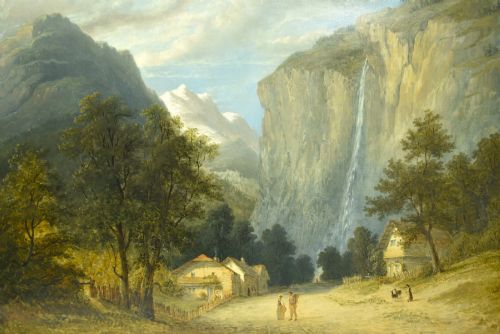
Victorian valley artwork encompasses nineteenth-century paintings depicting rural landscapes, rivers, and mountainous terrain. The selection on this page focuses heavily on oil paintings and watercolours showing locations such as the Thames Valley, Welsh valleys, and Scottish glens.
The objects take the form of framed wall art created during the Victorian period and surrounding decades. Buyers encounter both intimate watercolours on paper and larger oil paintings executed on canvas.
Makers and artists documented in these pieces range from professional Royal Academicians to regionally known painters. The subjects lean towards pastoral scenes, riverbanks, and dramatic valley topography.
Materials and Techniques
The works utilise traditional media including oil paint applied to canvas and watercolours applied to paper. Canvases are frequently housed in gilt wood frames that complement the painted compositions.
Artists employed layered brushwork to build depth in landscapes, capturing light on water and foliage. Paper watercolours rely on washes and fine pencil underdrawings to define architectural and natural details.
Materials documented across the pieces include canvas, paper, oil paint, watercolour, and gilt wood.
Factors of Quality
Quality in these landscape paintings rests upon the artist's handling of perspective, light, and atmospheric depth. Superior examples demonstrate confident brushwork and a balanced composition that draws the eye into the valley floor.
The condition of the canvas or paper surface, along with the preservation of the original pigments, determines the visual strength of the piece. Framing also contributes, as period gilt wood frames add integrity to the presentation.
Frederick Richard Lee·Cornelius Pearson·Harold Lawes·Charles Leslie·William Mellor
The Victorian Valley Artwork Glossary
- Oil on Canvas
- Pigments mixed with a binder applied to stretched woven fabric. This medium allowed artists to work with rich textures and deep colour saturation.
- Watercolour
- Pigments suspended in a water-soluble base applied to paper. It produces translucent effects suited to atmospheric valley light and skies.
- Gilt Wood
- Timber carved and coated with a thin layer of gold leaf or metallic paint. It frames many nineteenth-century paintings to enhance their visual weight.
- Pastoral
- A genre of art depicting peaceful rural life and idealized country landscapes. These scenes often feature rivers, grazing animals, and quiet cottages.
- Romanticism
- An artistic movement emphasising emotion, individualism, and awe of nature. This sensibility informs the dramatic mountain and valley views.
Victorian Valley Artwork: Frequently Asked Questions
What subjects appear in these valley paintings?
The subjects include British and European river valleys, mountain ranges, and rural villages. Artists painted specific locations such as the Thames Valley, Welsh riverbanks, and Scottish glens.
Many compositions feature figures in the foreground, livestock, or local architecture alongside natural topography.
How do I care for antique oil and watercolour paintings?
Oil paintings on canvas require stable indoor humidity and protection from direct sunlight to prevent cracking. Watercolours on paper are particularly sensitive to light and should be hung away from direct exposure.
Both mediums benefit from professional framing using conservation-grade materials to seal the back and protect against dust.
How can I tell a watercolour from an oil painting?
Oil paintings display a textured surface where thick paint sits visibly on woven canvas. They usually possess a glossy or semi-matte varnish layer.
Watercolours present a flat, matte appearance on paper behind glass, showing delicate washes rather than raised brushstrokes.
What framing is typical for these pieces?
Many nineteenth-century works are housed in decorative gilt wood frames that reflect the aesthetic of the period. These frames often feature moulded plaster ornamentation finished in gold leaf.
Some pieces retain their original maker or framer stamps on the reverse of the wooden stretcher bars.