
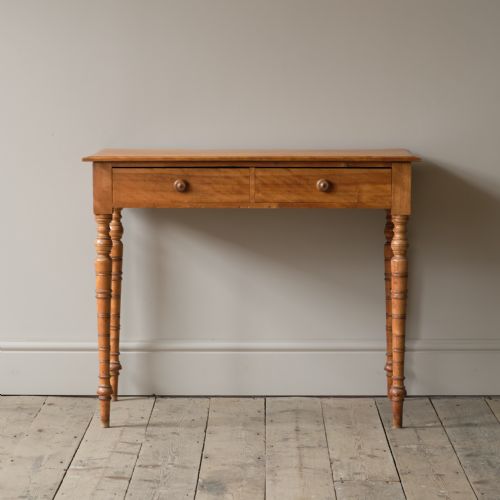
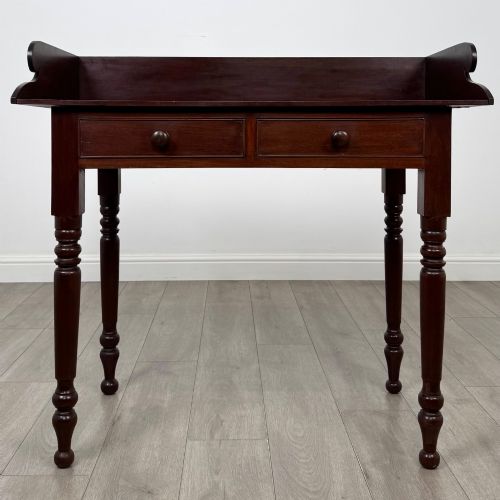
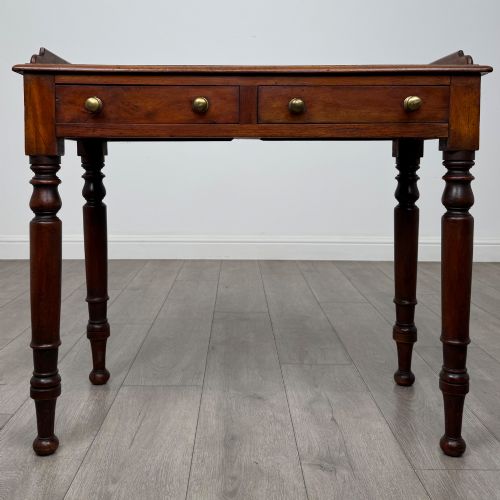
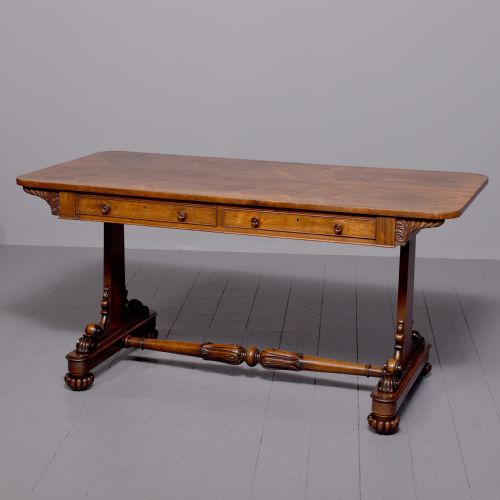
Victorian Two Drawer Table
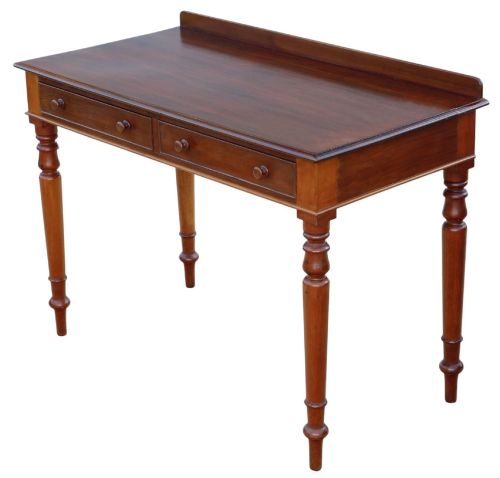
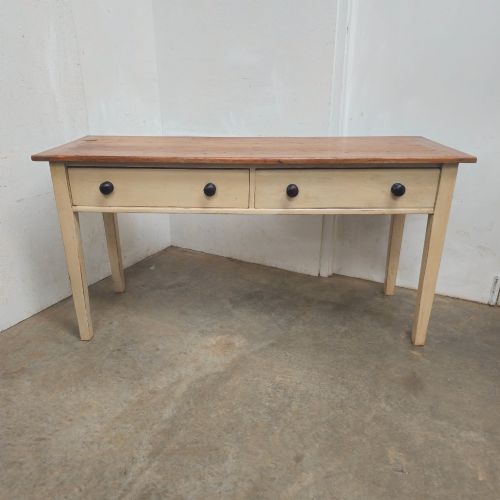
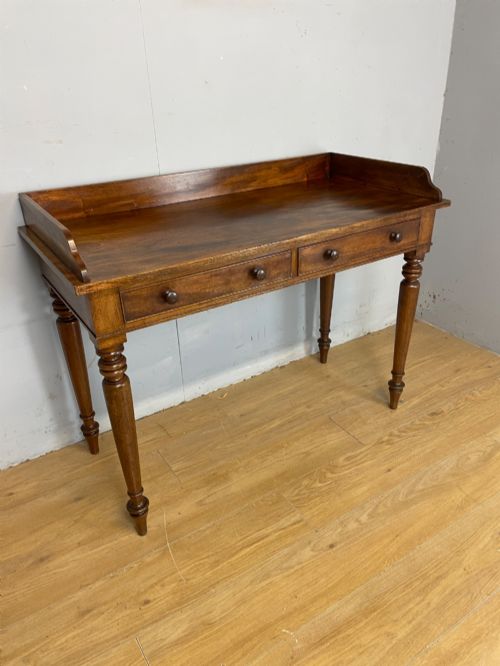
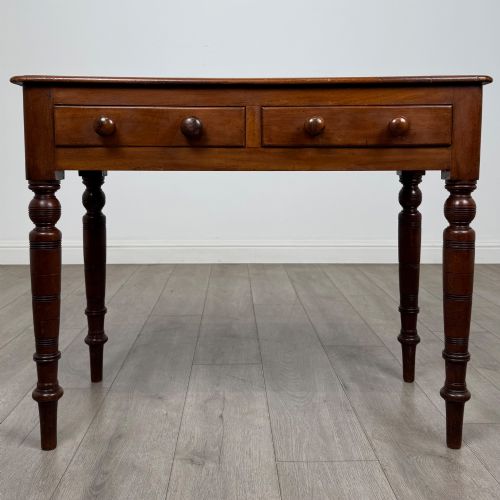
A victorian two drawer table brings domestic utility and nineteenth-century craftsmanship into a modern interior.
Victorian Two Drawer Table
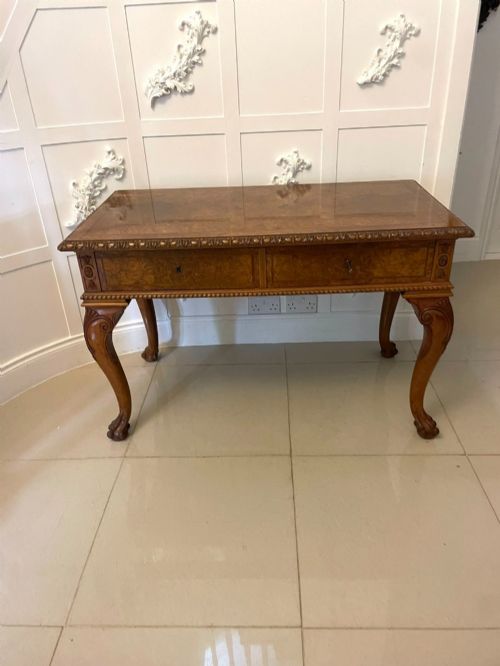
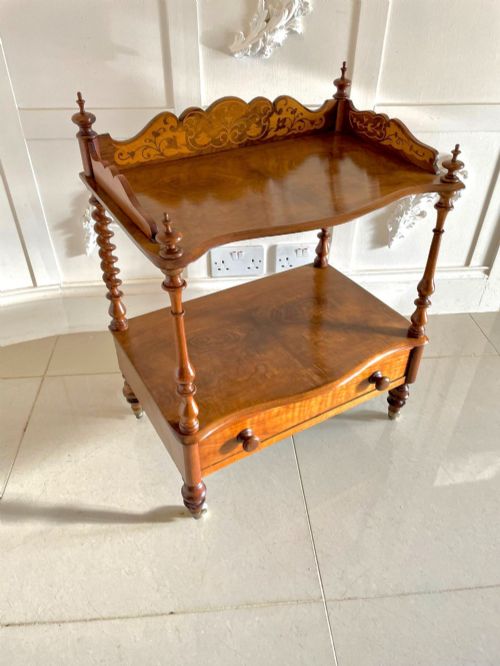
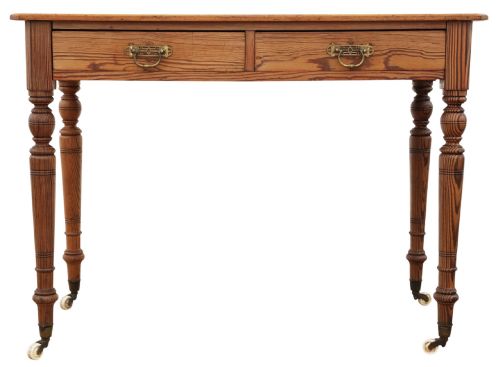
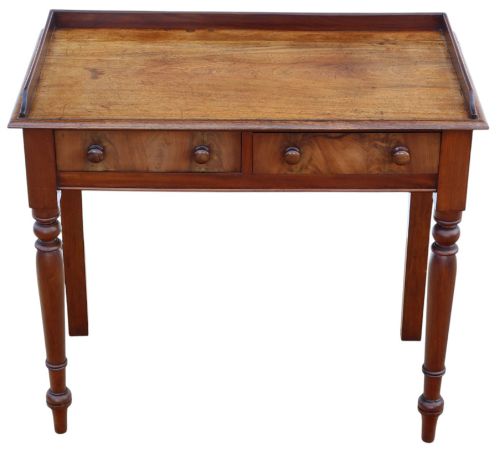
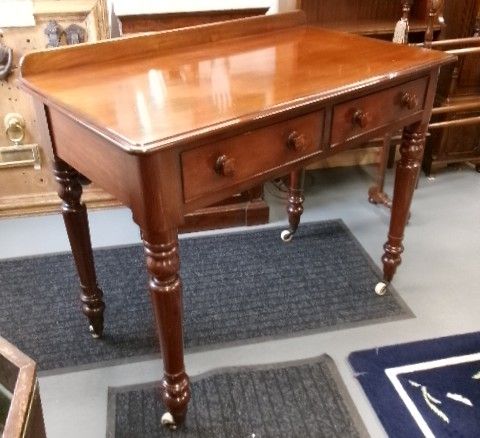
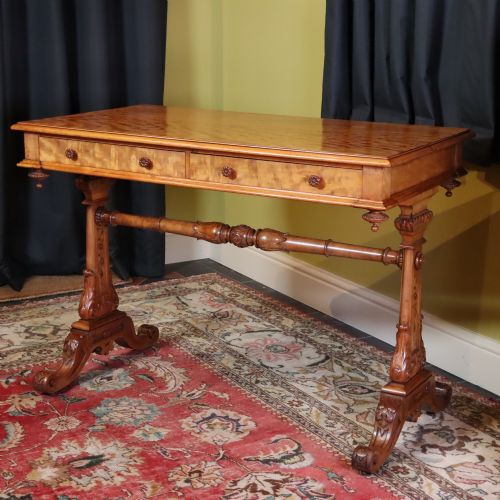
A victorian two drawer table encompasses writing desks, side tables, and console tables designed for functional utility across nineteenth-century interiors. These pieces appear most frequently in mahogany, though examples in pine, walnut, and satinwood also emerge regularly.
The layout almost invariably pairs a rectangular top with a twin-drawer configuration beneath the frieze, serving as compact workstations or hall furniture. Side tables and writing tables dominate the available range, often featuring turned tapering legs or reeded supports.
Makers adapted these proportions for varied rooms, producing library tables, dressing tables, and smaller drop-flap work tables. Buyers select them for their adaptable footprint and practical storage capacity.
Materials and construction
Cabinet makers relied heavily on solid and veneered timbers, selecting dense woods like mahogany, rosewood, and walnut alongside lighter alternatives such as birch, ash, and pine. Timber selection dictated the character of the piece, with flame mahogany and burr walnut reserved for high-status reception rooms.
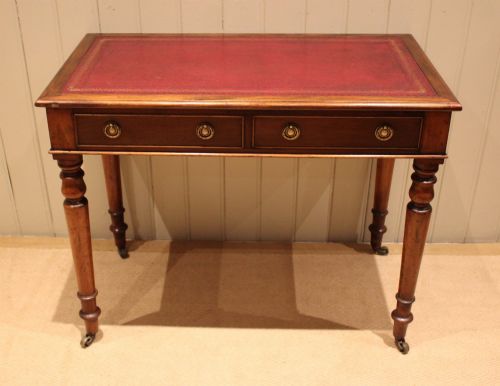
Secondary materials played a crucial structural role, incorporating brass handles, tooled leather inserts for writing surfaces, and pine drawer linings joined with hand-cut dovetails. Legs were frequently turned on a lathe, carved, or reeded to match prevailing tastes of the 1850s and 1860s.
Victorian Two Drawer Table Retail Price Guide 2026
Typical asking prices for victorian two drawer table among the pieces listed under this phrase on Sellingantiques today, from the lower quarter to the upper quarter. They describe what is for sale here now, not the wider market.
Some nineteenth-century writers hid secret compartments behind the twin drawers for storing love letters and postage stamps.
Distinguishing quality
The distinction between standard utility items and superior examples lies in timber selection and secondary detailing. Finely figured veneers, book-matched grains, and inlaid crossbanding elevate a simple side table into a focal piece.
Structural integrity and hardware refinement separate workshops of note from provincial joinery. Original brass pulls, finely cut dovetail joints, and well-executed reeding or carving indicate superior construction standards.
Heal and Son·W Williamson and Sons·J A Mein Edinburgh·Mein of Kelso
The Victorian Two Drawer Table Glossary
- Frieze
- The horizontal band situated directly beneath the table top where the two drawers are housed. This architectural element often carries decorative mouldings or inlay.
- Dovetail
- A traditional interlocking woodworking joint used to construct sturdy drawer boxes. Hand-cut variations indicate earlier nineteenth-century production methods.
- Reeded
- A decorative moulding comprising parallel convex half-round strips carved directly into the legs. This finish is frequently encountered on pieces dating from the mid-nineteenth century.
- Tooled leather
- A writing surface inset into the timber top, decorated with gilt or blind-stamped borders. It provides a durable platform for correspondence.
- Crossbanding
- A decorative border of veneer laid around the perimeter of the table top so that the grain runs perpendicular to the main panel. This technique frames the primary timber.
Victorian Two Drawer Table: Frequently Asked Questions
How were these tables used?
Nineteenth-century households utilised these pieces primarily for correspondence, household administration, and bedside storage. Writing tables accommodated inkwells and papers, while side tables functioned as display surfaces in hallways and drawing rooms.
The inclusion of twin drawers allowed owners to keep writing implements and personal effects neatly organised out of sight. Their modest scale ensured they could fit easily into parlours, bedrooms, and libraries.
Can I use one as a desk?
Many examples function effectively as compact writing desks, particularly those originally designated as writing or library tables. They offer adequate surface area for modern laptops and paperwork.
Buyers should verify the clearance beneath the frieze and drawers to ensure comfortable legroom when sitting down. Leather-inset tops provide an ideal writing surface without requiring an additional desk blotter.
How do I date an antique table?
Dating relies on observing structural characteristics, timber choices, and leg styles recorded across the nineteenth century. Pieces from the 1850s and 1860s frequently exhibit fiddle-back mahogany, reeded legs, and rosewood veneers.
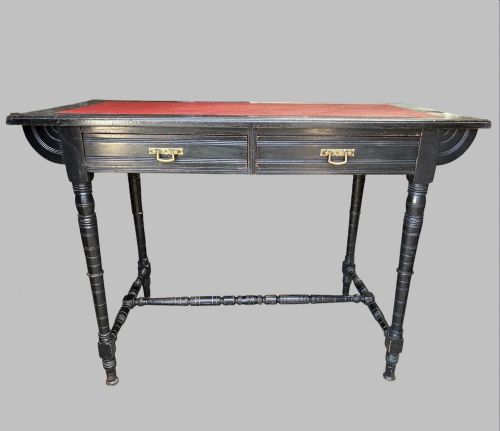
Later Victorian examples from the 1880s and 1890s introduce ebonised finishes, satin walnut, and Arts and Crafts influences. Drawer construction details, such as the regularity of hand-cut dovetails, also offer chronological clues.
Where should I place it at home?
A twin-drawer table suits entrance halls, living rooms, and bedrooms due to its shallow depth and twin storage compartments. Freestanding console versions work well behind sofas or against prominent hallway walls.
Writing variants adapt easily to home office corners or quiet reading spaces. Their finished backs occasionally allow them to sit away from the wall in open-plan settings.