

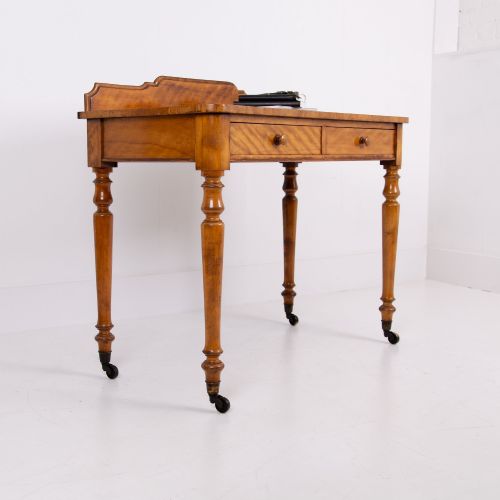
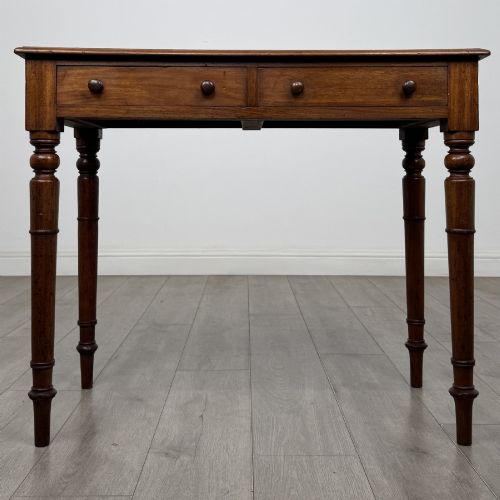
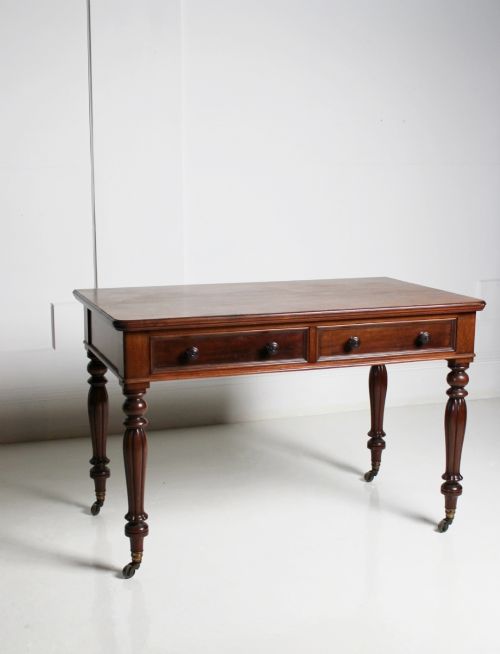
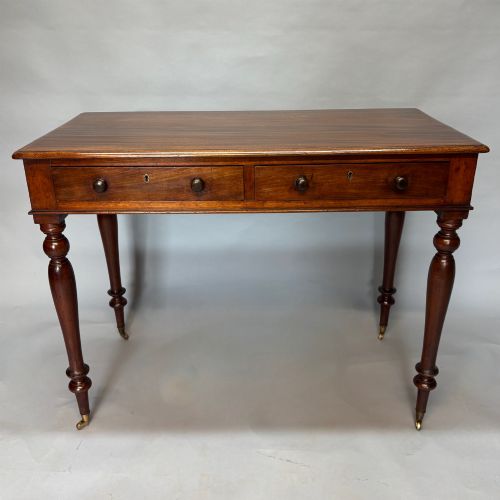
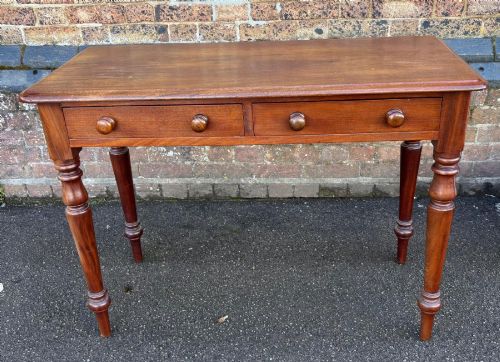
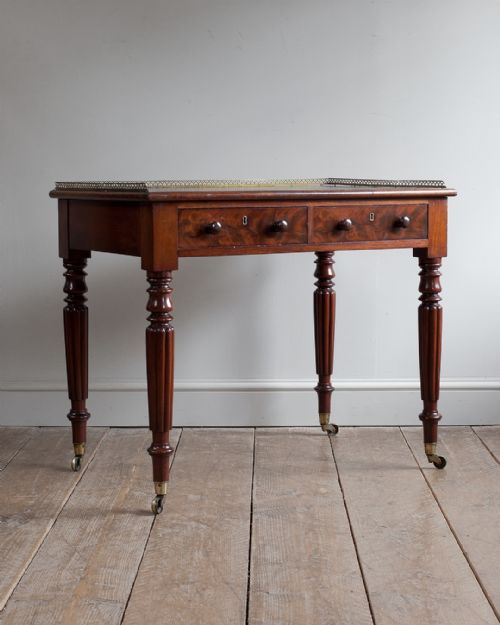
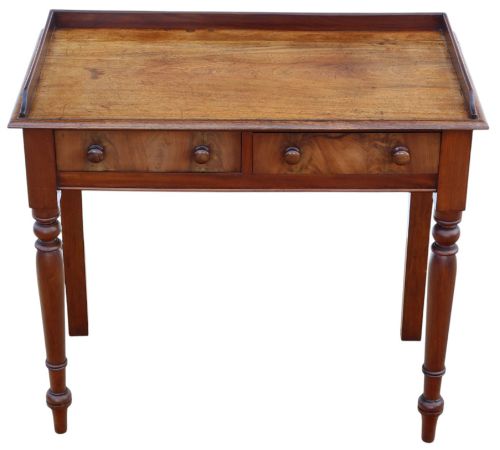
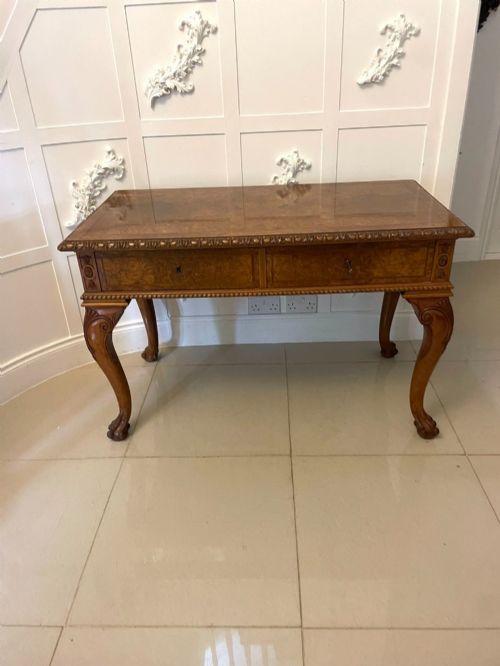
Victorian Two Drawer Side Table
A victorian two drawer side table brings practical surface space and neat storage together in timber like mahogany, walnut, or pine.
Victorian Two Drawer Side Table
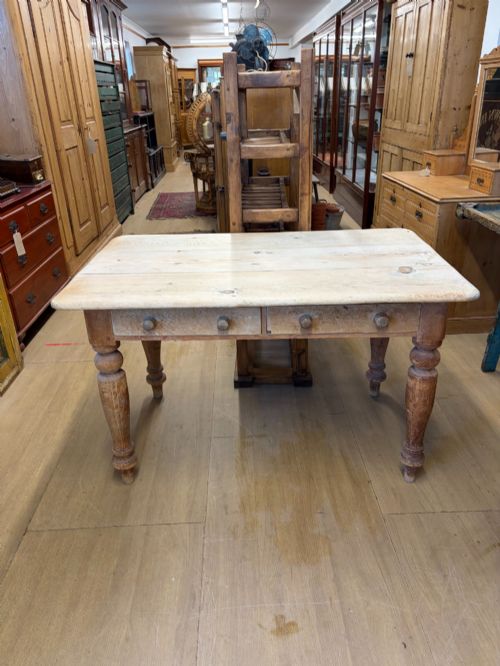
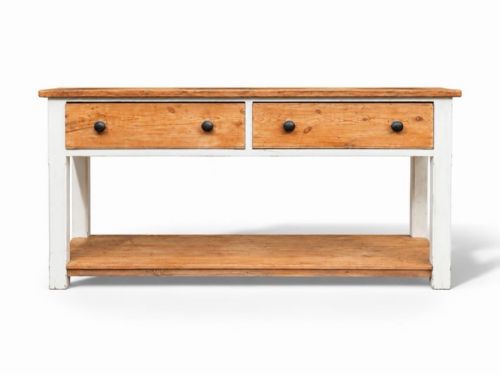
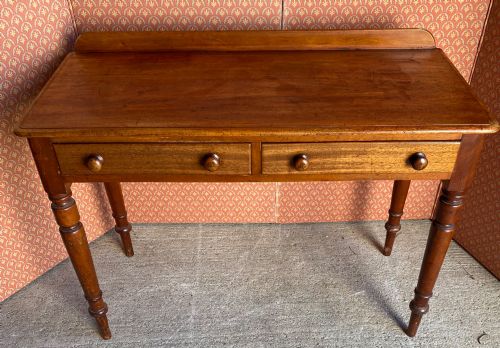
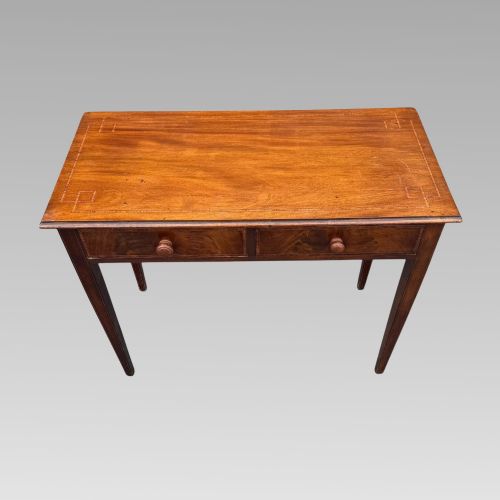
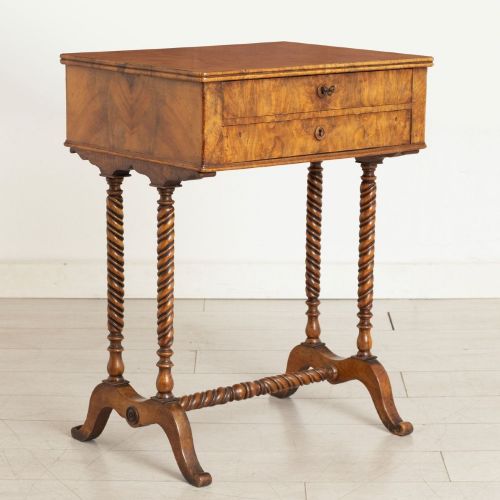
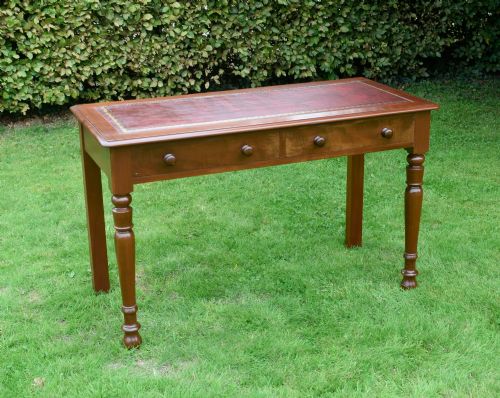
A victorian two drawer side table combines a compact rectangular top with a pair of frieze drawers beneath, designed for everyday utility in a hallway, library, or bedroom. You will encounter these pieces most frequently in mahogany or pine, dating from the mid to late nineteenth century.
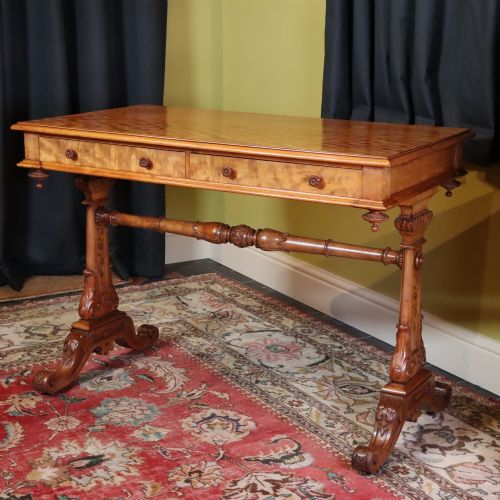
The form often doubles as a writing table or small desk, featuring turned legs or slender supports that reflect styles from plain country scrub tops to finely inlaid satinwood and burr walnutveneered surfaces.
Originating across the nineteenth century, these tables range from utilitarian pine workshop pieces to polished mahogany library desks bearing maker stamps from firms in Edinburgh and Guildford.
Materials and construction
Cabinet makers utilised solid timbers like mahogany, oak, and pine for structural integrity, frequently applying decorative veneers of burr walnut, satinwood, or rosewood to drawer fronts and tops.
Drawer construction relied on hand-cut dovetails and solid secondary woods, paired with turned wooden knobs or cast brass drop handles.
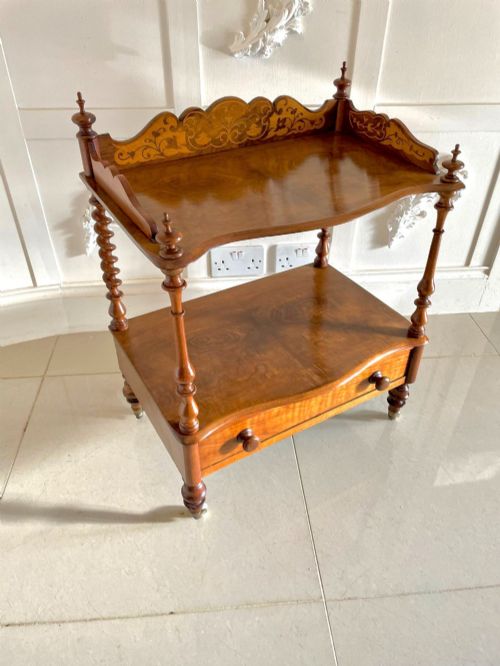
Surface treatments included wax polishing and leather inserts for writing surfaces, while stylistic details such as satinwood inlay, raised galleries, and shaped aprons added refinement.
Victorian Two Drawer Side Table Retail Price Guide 2026
Typical asking prices for victorian two drawer side table among the pieces listed under this phrase on Sellingantiques today, from the lower quarter to the upper quarter. They describe what is for sale here now, not the wider market.
Some nineteenth century writers clearly had messy desks, as many surviving tables feature ink-stained drawer interiors from leaky quill pens.
Assessing quality and craftsmanship
Quality reveals itself in the selection of timber figures, where richly grained burr walnut or figured mahogany distinguishes high-end pieces from plain pine utilities.
Superior examples exhibit precise joinery, such as fine dovetails on drawer boxes and seamless veneer work without lifting or patch repairs.
The presence of documented maker marks or integrated design elements like inlaid satinwood banding elevates a piece from standard utilitarian furniture to a workshop-attributed object.
Howard And Sons·W Williamson And Sons·J A Mein Edinburgh Cabinet Maker
The Victorian Two Drawer Side Table Glossary
- Frieze drawer
- A drawer integrated into the horizontal band directly beneath the tabletop. These hold small writing materials or household items.
- Burr walnut
- Timber harvested from walnut tree growths that produces intricate, swirling grain patterns. Cabinet makers prized this veneer for luxury tabletops.
- Scrub top
- An unfinished wooden tabletop designed for rigorous cleaning in a kitchen or pantry setting. It appears frequently on country pine furniture.
- Raised gallery
- A low wooden upstand fitted to the rear and sides of a table top. This prevented items from rolling off the surface.
- Satinwood
- A pale, hard timber from tropical trees with a lustrous, reflective grain. It was often used for decorative banding or entire fine tables.
Victorian Two Drawer Side Table: Frequently Asked Questions
What were these tables used for?
These tables served multiple functions across the nineteenth century, acting as writing desks in libraries, dressing tables in bedrooms, or side consoles in hallways.
The twin drawers provided convenient storage for correspondence, stationery, or household keys while keeping the surface clear for daily tasks.
How do I date a nineteenth century table?
Dating relies on observing construction methods, timber choices, and stylistic cues present in the piece. Earlier examples often feature deeper mahogany tones and simpler turned legs, while later decades embraced aesthetic movement influences or lighter satinwood.
Secondary woods inside the drawers and the style of brass hardware also offer clues to the exact manufacturing decade.
Where should I place one at home?
A compact table fits easily into narrow hallways as a console piece or against a living room wall beneath a mirror or lamp. Their shallow depth allows them to sit comfortably in bedrooms as small desks or dressing surfaces.
Ensure you measure the available floor space and chair clearance if you plan to sit at the table regularly.
How do I care for antique wood surfaces?
Maintain polished wood by dusting gently with a dry cloth and applying natural beeswax periodically to nourish the timber. Avoid placing tables near direct heat sources or in strong sunlight to prevent the wood or veneer from drying and cracking.
Use coasters or pads under any objects placed on the surface to protect the polish from moisture.