
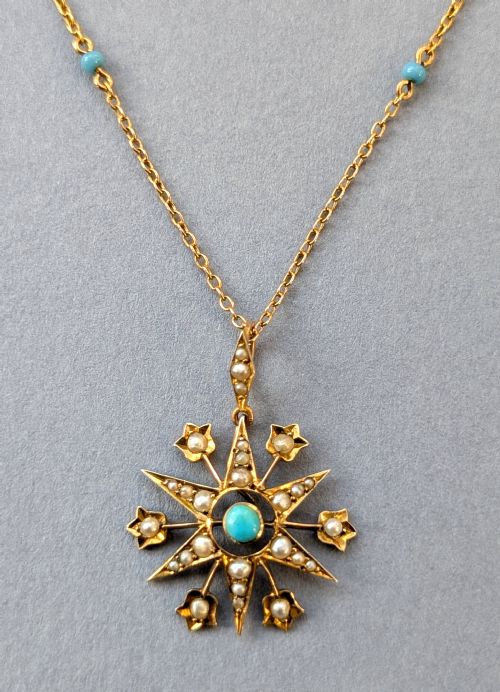


Victorian Turquoise Necklace
A victorian turquoise necklace brings together vibrant blue stones and rich gold work in pieces designed to catch the eye.
Victorian Turquoise Necklace
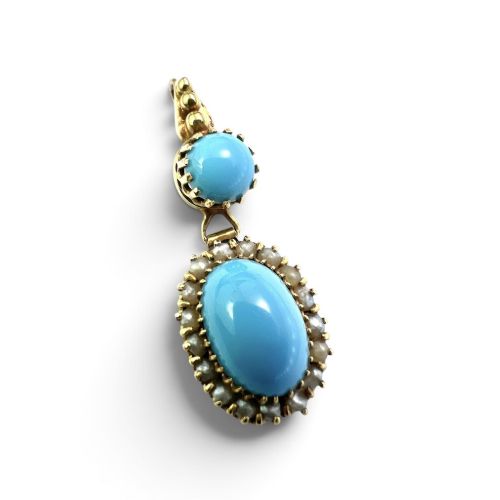
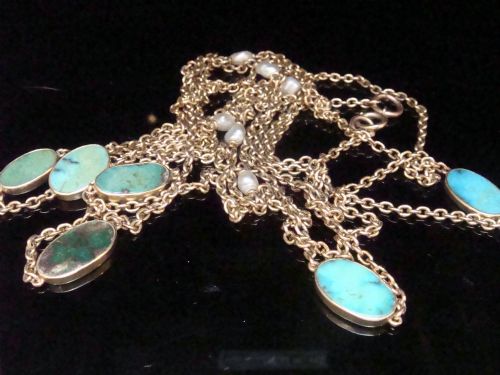
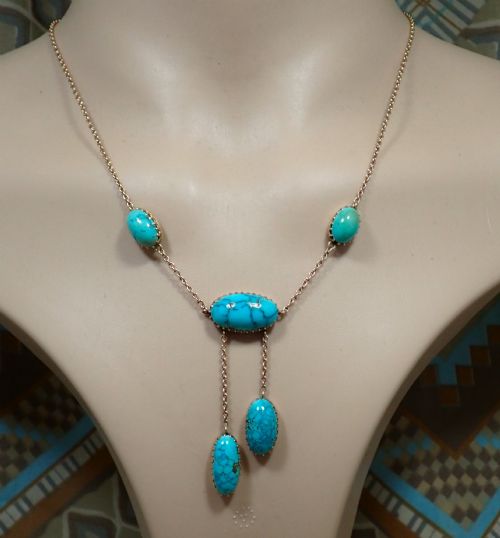
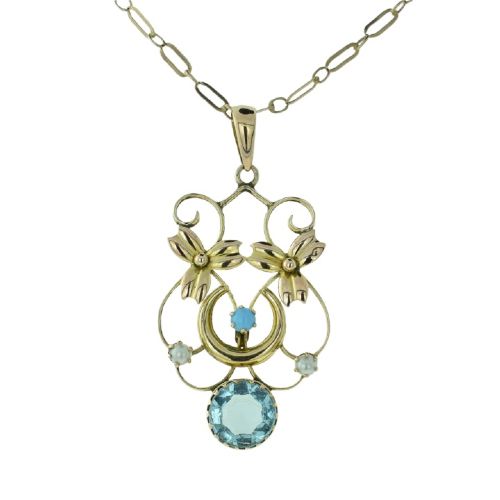
When you search for a victorian turquoise necklace, you encounter pendant designs, longuard chains, and festoon arrangements created during the nineteenth century. These items range from delicate star pendants to substantial chains incorporating pearls, diamonds, and silver elements.
The pieces on this page heavily feature Victorian and Edwardian examples alongside Ottoman revival and Arts and Crafts styles. You meet many gold settings, predominantly in nine carat and fifteen carat, alongside silver and pearl combinations.
Pendants often double as brooches, and long chains come equipped with dog clips or clasp sets. The selection spans standard throat-length necklaces to exceptionally long guard chains reaching over seventy centimetres.
How they were made
Goldsmiths utilised nine carat, fifteen carat, and eighteen carat yellow and rose gold, frequently pairing the metal with silver for gemstone settings. Natural turquoise stones and pearls, including seed pearls, form the primary decorative elements across pendants and chains.
Craftsmen built complex links such as trombone patterns and oblong designs to support long guard chains and festoons. Gemstones including diamonds, blue topazes, and white sapphires appear alongside matrix turquoise within star, cross, and double heart motifs.
Victorian Turquoise Necklace Retail Price Guide 2026
Typical asking prices for victorian turquoise necklace among the pieces listed under this phrase on Sellingantiques today, from the lower quarter to the upper quarter. They describe what is for sale here now, not the wider market.
Listings span periods from early Victorian to the 1930s, incorporating gold, silver, pearls, and diamonds.
What varies in quality
The calibre of metalwork dictates much of the distinction between pieces, particularly where hand-formed filigree, Etruscan revival granulation, or complex chain links are concerned. Heavier gauge golds and substantial carat weights elevate the stature of a pendant or longuard chain.
Stone selection creates further differentiation, with uniform turquoise colouration and well-matched natural pearls commanding greater attention. The inclusion of certified diamonds or well-executed stylistic revivals, such as Ottoman or Egyptian designs, marks out superior examples.
Murrle Bennett
The Victorian Turquoise Necklace Glossary
- Longuard chain
- An exceptionally long neck chain, often measuring over fifty inches, designed to be doubled or tripled around the neck. These pieces frequently incorporate dog clips for securing watches or pendants.
- Festoon necklace
- A decorative collar featuring a central drop or a series of draped chains and swags suspended across the chest. Makers often construct these with silver gilt or gold.
- Matrix turquoise
- Turquoise stone that retains portions of its host rock webbed through the blue material. This creates a distinctive network pattern across the face of the gem.
- Dog clip
- A spring-loaded swivel clasp attached to long chains that allows the wearer to securely fasten pendants or pocket watches. It forms a practical component of many Victorian guard chains.
- Etruscan revival
- A design movement inspired by ancient archaeological finds featuring granulation, wirework, and geometric gold patterns. This style appears frequently on mid-nineteenth-century pendants and brooches.
Victorian Turquoise Necklace: Frequently Asked Questions
How do I wear a longuard chain?
These lengthy chains allow you to double them over your head for a layered look or loop them multiple times around the neck. You can also attach a pendant to the dog clip as a focal point.
Their substantial weight keeps them hanging securely without requiring complex fastenings throughout the day.
Can these pendants double as brooches?
Many Victorian and Edwardian pendant designs incorporate hidden pin mechanisms on the reverse. This dual functionality allowed historical owners to pin the ornament to clothing or suspend it from a chain.
You simply release the safety catch to switch between wearing the piece as a necklace or fastening it to a lapel.
What is Ottoman revival style?
Ottoman revival jewellery draws upon traditional Middle Eastern ornamentation popularised during the late nineteenth century. These pieces utilise silver and gold with distinct regional motifs.
Such designs offer a different aesthetic from standard British floral patterns while maintaining the era's fondness for turquoise.
How do I care for antique turquoise?
Turquoise is a porous gemstone that reacts poorly to moisture, chemical cleaners, and prolonged direct sunlight. You should wipe the stones gently with a soft dry cloth after wearing.
Keep the necklace away from perfumes and cosmetics to preserve the blue hue and prevent discolouration of the material.