



Victorian Turned Treen
Victorian turned treen gathers the small domestic utensils and turned wooden objects shaped on the lathe during the nineteenth century.
Victorian Turned Treen
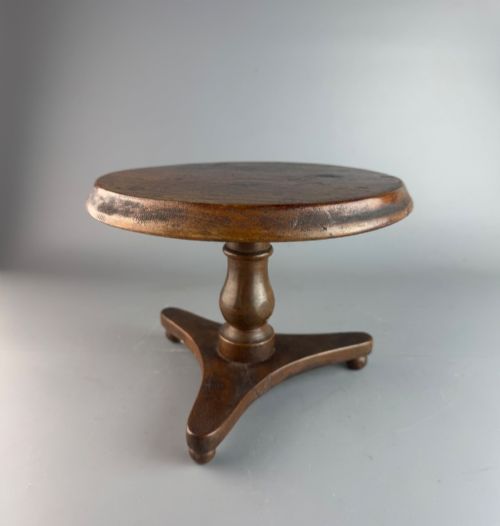
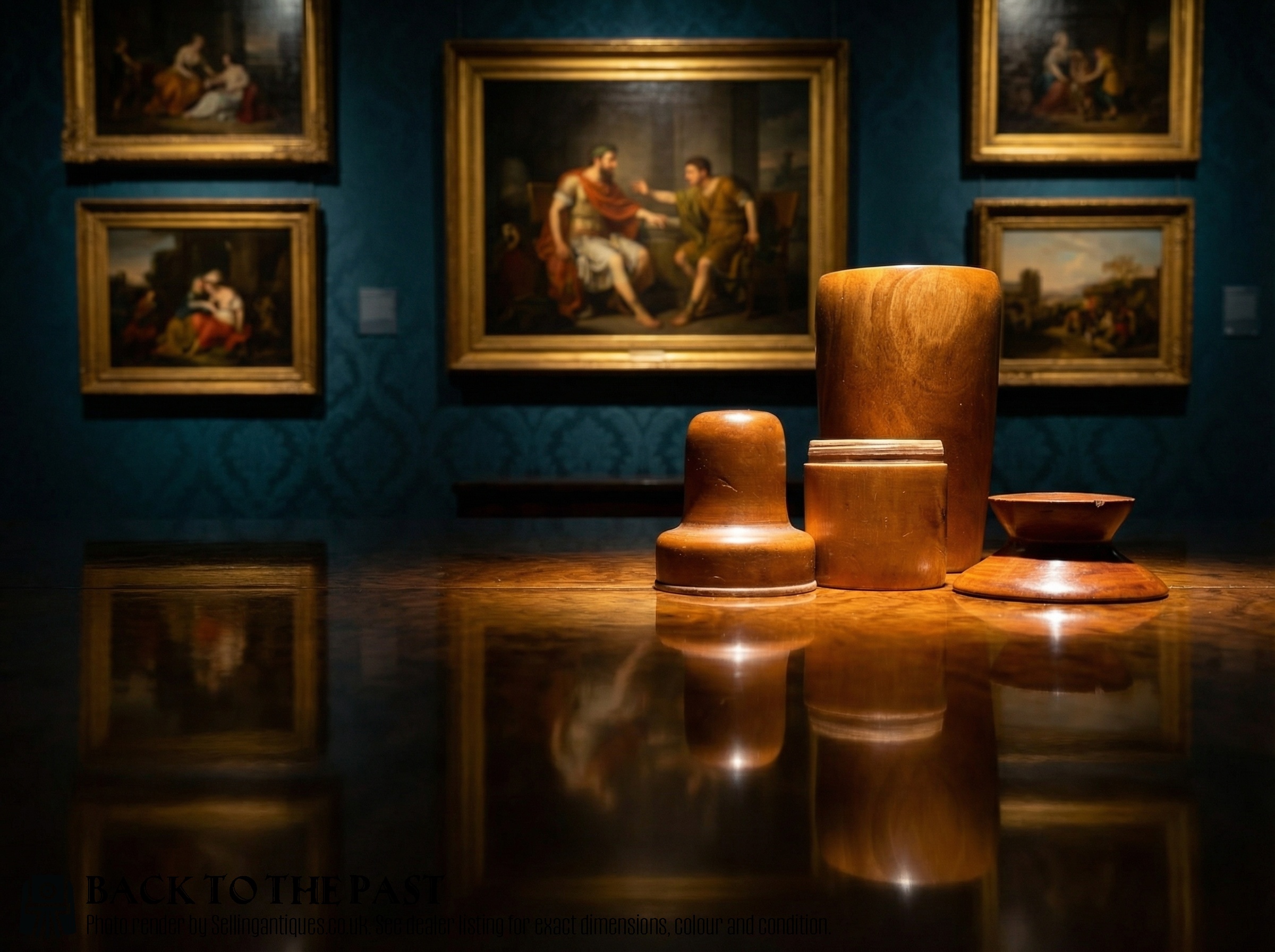
Victorian turned treen covers a diverse array of utilitarian wooden items produced primarily in the nineteenth century, ranging from household containers to personal accessories. Buyers searching for Victorian turned treen encounter objects shaped on a lathe, including spice towers, dairy bowls, candlesticks, and small boxes.
The objects on this page largely originate from the nineteenth century, including specific dates such as 1850, 1860, 1870, 1880, 1890, and 1900, alongside items attributed to the Georgian period. Forms span kitchenalia, games like puzzle balls and bilboquet, and medical items such as stethoscopes and pill rounders.
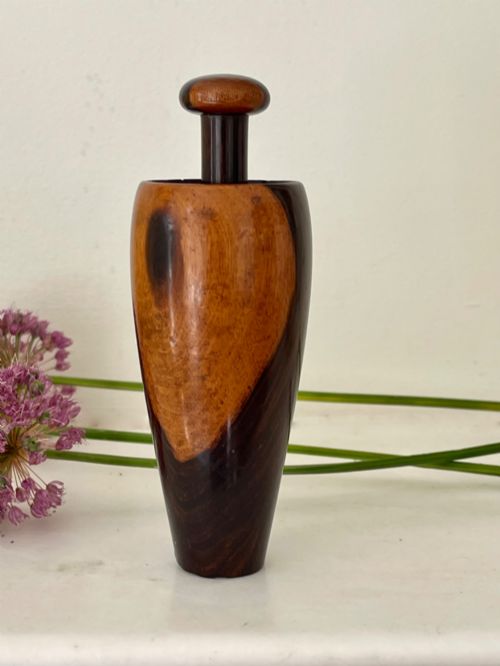
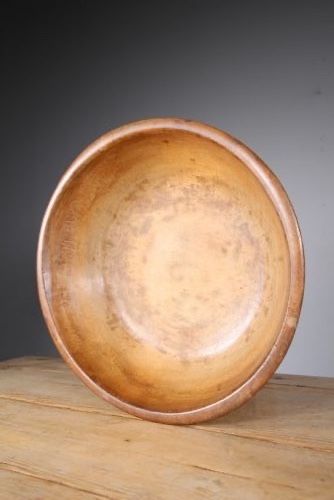
Domestic vessels dominate the selection, with sycamore dairy bowls, lignum vitae string barrels, and boxwood containers appearing frequently. These pieces reflect everyday rural and household life through turned construction methods.
Materials and Turning Techniques
Craftsmen utilised dense hardwoods suited to lathe work, prominently selecting boxwood, lignum vitae, walnut, sycamore, mahogany, fruitwood, and yew wood. Lignum vitae provided the necessary weight for items like mortars, pestles, and candlesticks.
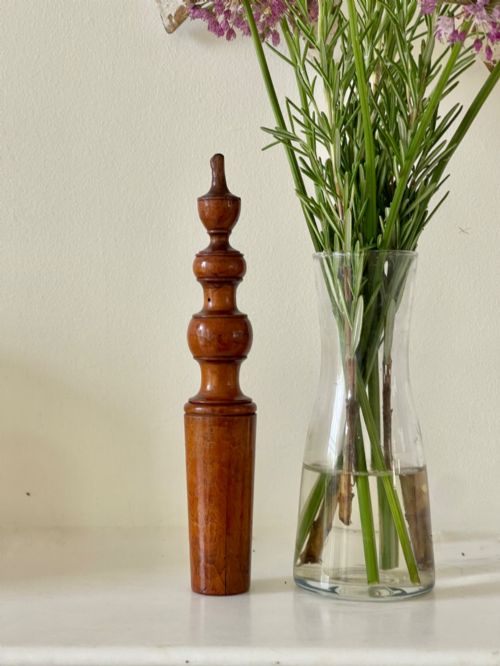
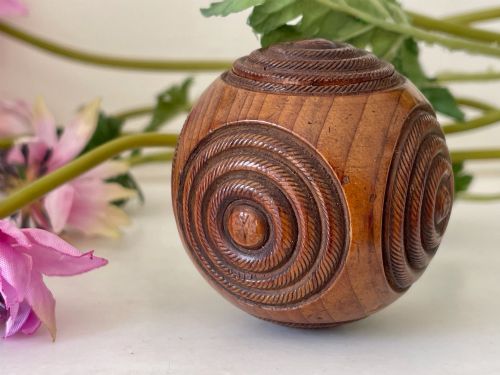
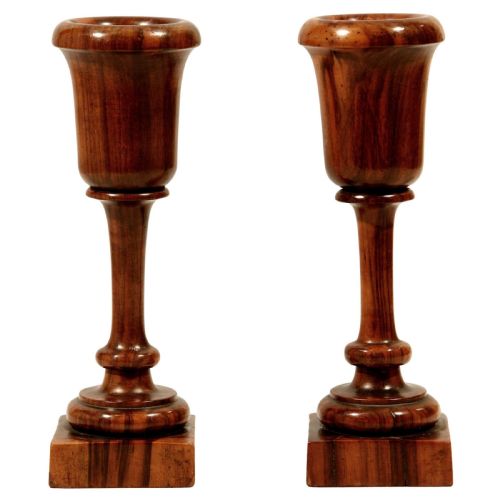
Objects were shaped using a lathe to achieve precise circular symmetry, as seen in turned goblets, capstan salts, and tiered spice towers. Grain alignment and careful turning allowed items like nested containers and intricate puzzle balls to function as intended.
Listings feature items from the 19th century, 1850, 1860, 1870, 1880, 1890, 1900, and the Georgian period.
Distinctions in Quality
Quality rests upon the crispness of the lathe turning, the preservation of original form, and the tactile depth of the surface finish. Pieces retaining rich patination from decades of handling demonstrate superior historical survival compared to stripped or heavily sanded examples.
Ingenuity of design elevates certain objects, such as multi-tiered spice towers and complex puzzle balls, above standard utility vessels. The choice of timber also dictates standing, with dense exotic woods like lignum vitae prized for precision turned items.
The Victorian Turned Treen Glossary
- Treen
- Small handmade wooden domestic objects. The term derives from the old English word for tree.
- Lignum Vitae
- An exceptionally heavy and dense exotic hardwood. Makers utilised its weight and durability for items requiring stability such as mortars and candlesticks.
- Sycamore
- A light-coloured domestic hardwood commonly used for dairy bowls and kitchen containers. Its clean grain made it hygienic for food preparation.
- Spice Tower
- A multi-tiered turned container used for storing various spices. Sections typically screw or fit tightly together vertically.
- String Barrel
- A turned wooden container designed to hold a ball of twine with a dispensing hole in the lid.
Victorian Turned Treen: Frequently Asked Questions
What is Victorian turned treen?
Victorian turned treen encompasses small utilitarian wooden items shaped on a lathe during the nineteenth century. These objects served everyday domestic, professional, and recreational purposes.
Examples include dairy bowls, spice towers, string holders, and small games. They reflect the high standard of domestic woodworking and lathe work from the period.
How were these wooden items used?
These objects fulfilled practical roles in nineteenth-century households, kitchens, and shops. They stored food, spices, and string, or served as personal pocket items.
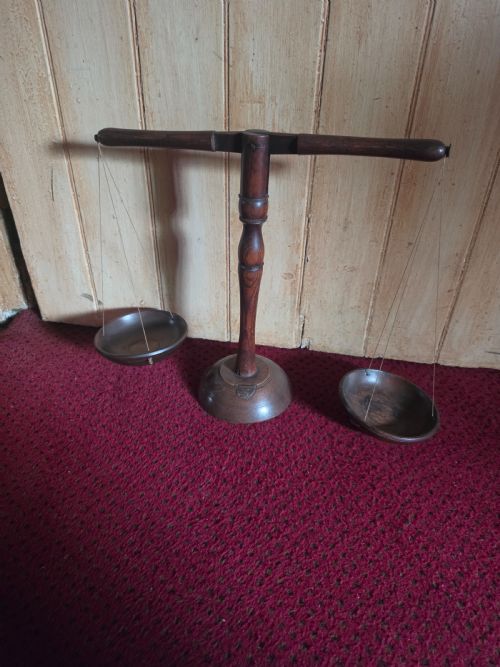
Other pieces had specific professional uses, such as apothecary pill rounders, medical stethoscopes, and weighing scales. Many items combined daily utility with neat mechanical designs.
What woods are commonly found?
Makers selected dense native and exotic hardwoods capable of holding fine turned details. Boxwood, sycamore, walnut, and mahogany appear frequently across the pieces.
Heavy woods like lignum vitae were chosen for items requiring stability, while fruitwoods and sycamore suited kitchen bowls and dairy equipment.
How do I care for antique treen?
Antique treen requires stable indoor humidity away from direct heat sources and sudden temperature changes. Excessive dryness can cause old timber to split.
Maintenance involves occasional light dusting with a dry cloth to preserve the historic surface and accumulated patination. Avoid applying modern varnishes or heavy oils.