



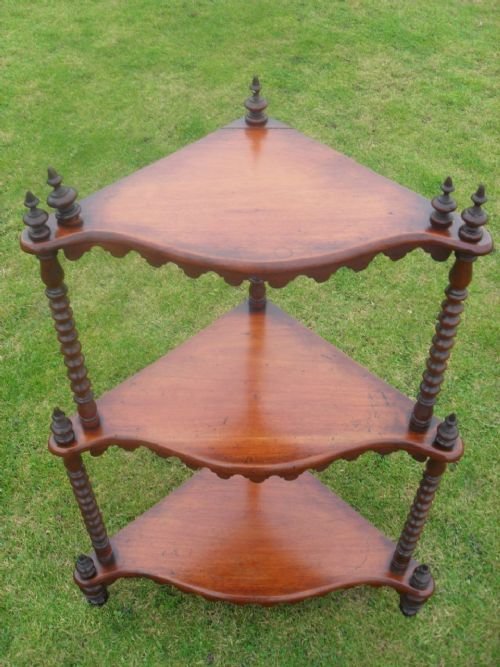
Victorian Turned Spindle Stand
These Victorian turned spindle stand examples are robust multi-tiered furniture pieces offering practical display space.
Victorian Turned Spindle Stand
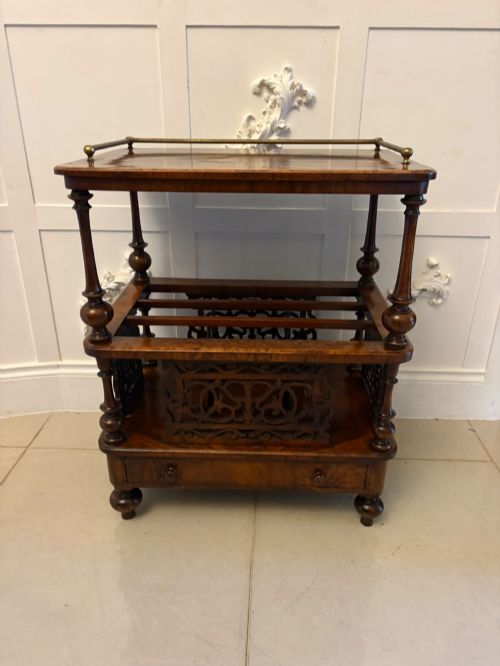
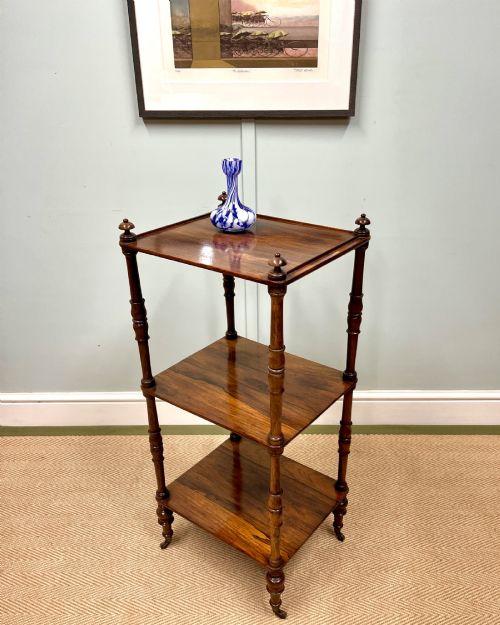
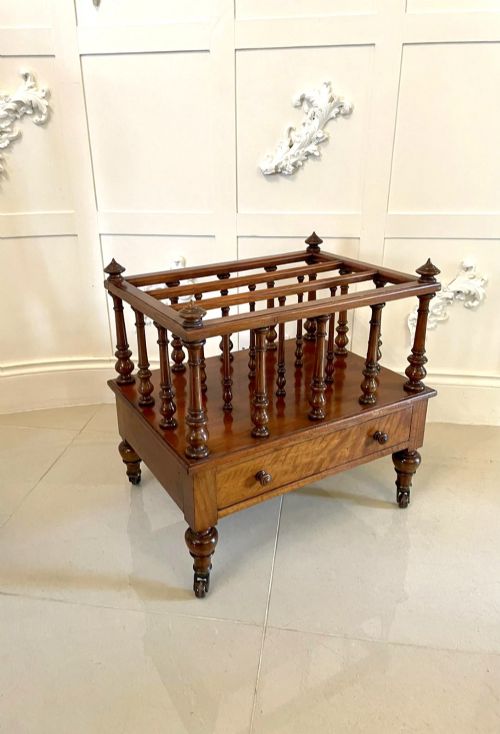
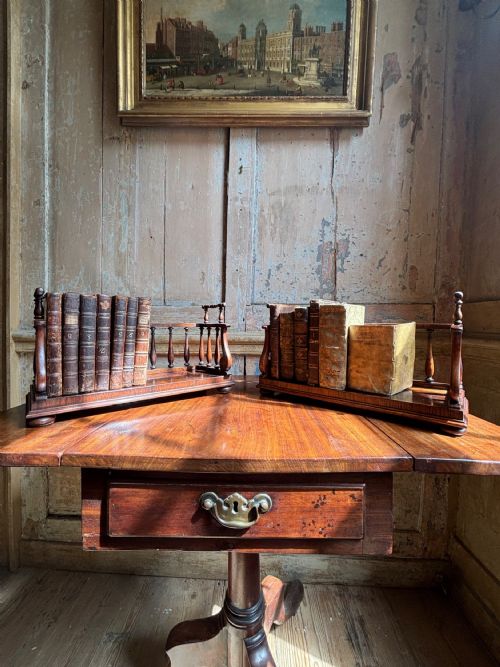
Buyers seeking a Victorian turned spindle stand encounter multi-tiered furniture types such as whatnots, canterburys, and book stands dating principally from the nineteenth century. These items serve as compact display units and storage holders within domestic interiors.
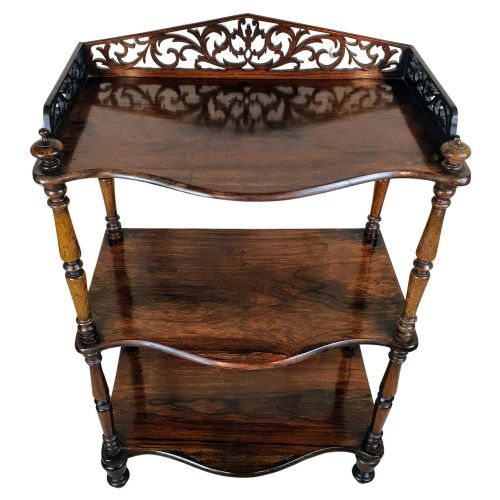
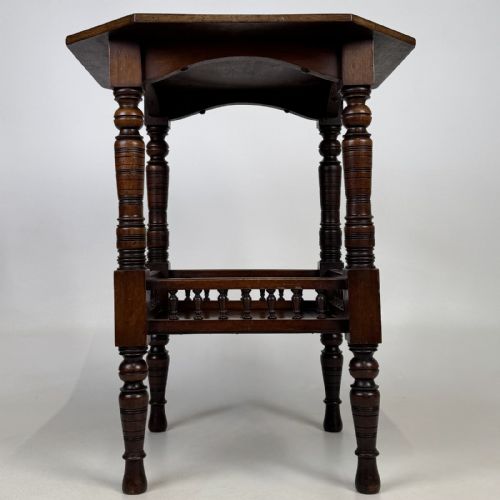
The pieces on this page span several decades of the nineteenth century alongside earlier Georgian and Regency influences. They appear in forms ranging from three-tier wooden étageres to magazine racks and occasional tables.
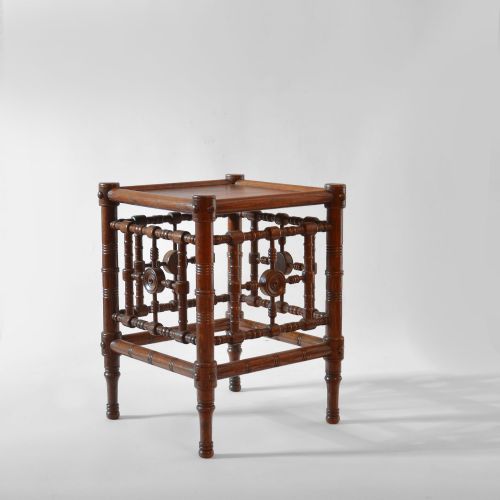
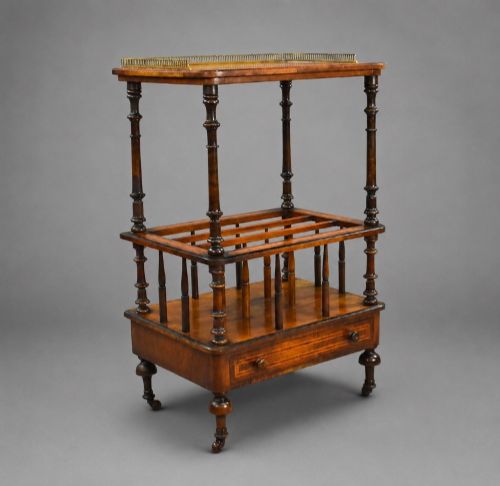
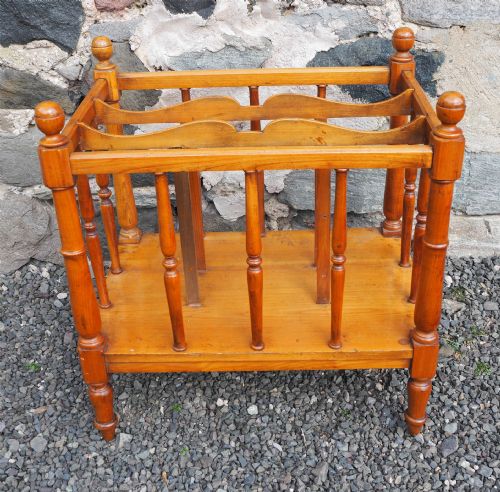
Many incorporate turned woodwork and spindles to divide open tiers or support upper shelves. Such designs reflect broader nineteenth-century aesthetic movements and cabinet-making traditions.
Materials and construction methods
Construction relies heavily on traditional cabinet timbers including mahogany, walnut, rosewood, and fruitwood. Selected examples utilise ebonised wood finishes or burr walnut veneers to achieve specific decorative effects.
Individual structural components such as vertical spindles and legs are shaped on a lathe. These turned elements are joined to horizontal shelves and compartment dividers using traditional woodworking joints.
Victorian Turned Spindle Stand Retail Price Guide 2026
Typical asking prices for victorian turned spindle stand among the pieces listed under this phrase on Sellingantiques today, from the lower quarter to the upper quarter. They describe what is for sale here now, not the wider market.
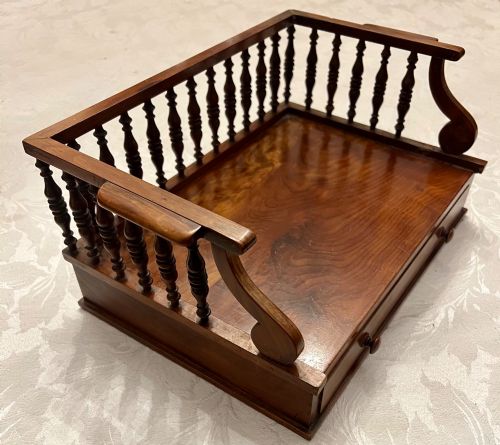
One piece includes an integrated cellarette for hiding your secret stash of nineteenth-century spirits.
Distinctions in construction and material grade
The quality of these stands depends upon the selection of timber veneers and the precision of the turned spindle work. Higher-grade examples display carefully figured wood grain and well-executed joinery.
Attribution to known makers or distinctive stylistic movements elevates the standing of individual items. Simpler utility pieces contrast with elaborately detailed designs incorporating integrated drawers or ceramic elements.
Edwards and Roberts·Shoolbred
The Victorian Turned Spindle Stand Glossary
- Canterbury
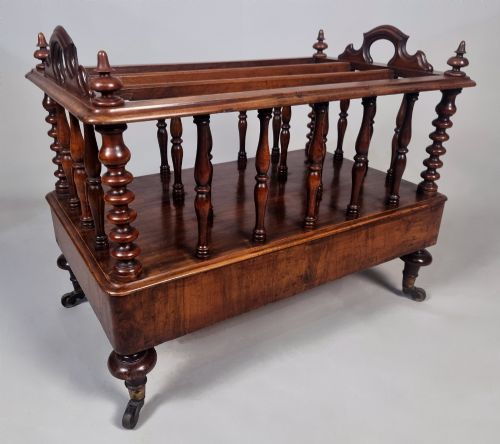
- A low multi-partitioned stand designed for holding sheet music, books, or magazines, often fitted with a small lower drawer. This form frequently incorporates turned vertical supports.
- Whatnot
- An open-shelved piece of furniture used for displaying ornaments and books across multiple tiers. It is also known historically as an étagère.
- Ebonised
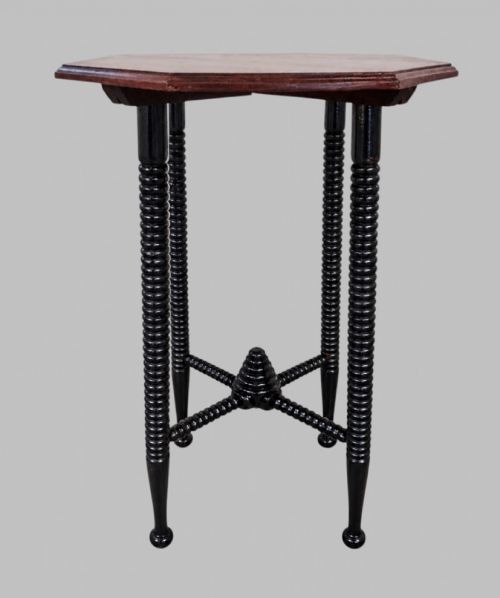
- Wood stained or painted black to imitate the appearance of ebony, a technique popular during the nineteenth century. This finish often appears on Aesthetic Movement and Anglo-Moorish items.
- Burr walnut
- Timber taken from the burl growth of a walnut tree, exhibiting intricate, swirling grain patterns. Cabinet-makers used veneers of this wood for decorative surface panels.
Victorian Turned Spindle Stand: Frequently Asked Questions
What is a nineteenth century whatnot used for?
These tiered stands were originally intended for displaying ornaments, books, and small decorative objects in principal rooms.
Today, they function similarly in modern interiors as practical display units that occupy minimal floor space while providing multiple open shelves.
How do you identify a Victorian canterbury?
A canterbury is recognised by its upright divisions designed specifically to hold magazines, folios, or music sheets. Many feature lower drawers and are supported by turned wooden legs or castors.
Examples from this period frequently utilise walnut or mahogany timber construction.
What woods were used for these stands?
Cabinet-makers relied primarily on hardwoods such as mahogany, walnut, rosewood, and fruitwood. Burr walnut and ebonised finishes also appear across the selection.
Some pieces incorporate supplementary materials like ceramic or brass details.
How do you tell different nineteenth century periods apart?
Stylistic indicators help separate Regency and early nineteenth century pieces from later Victorian designs. Aesthetic Movement and Anglo-Moorish influences typically point towards the later decades of the century.
Construction techniques and specific wood veneer choices also provide chronological clues.