


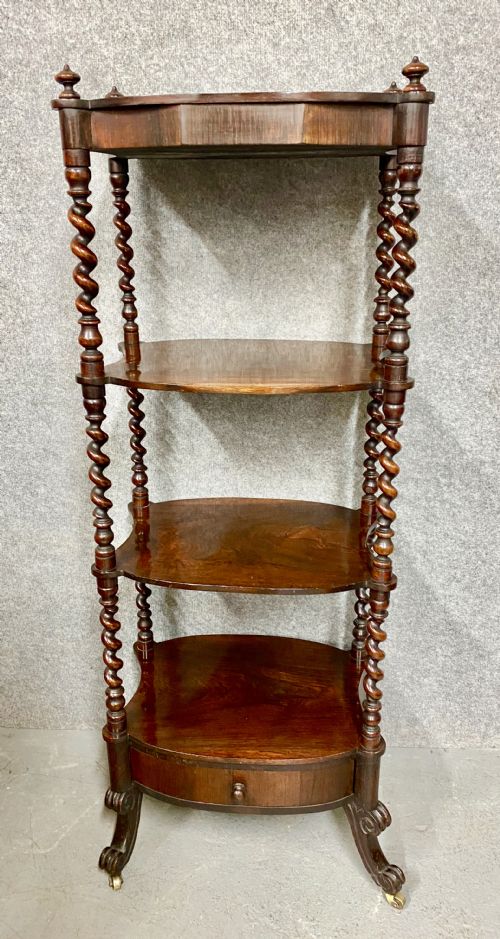
4 Tier Shelving Unit
A 4 tier shelving unit provides open display and storage across four distinct levels, drawing on historical designs in mahogany, walnut, and oak.
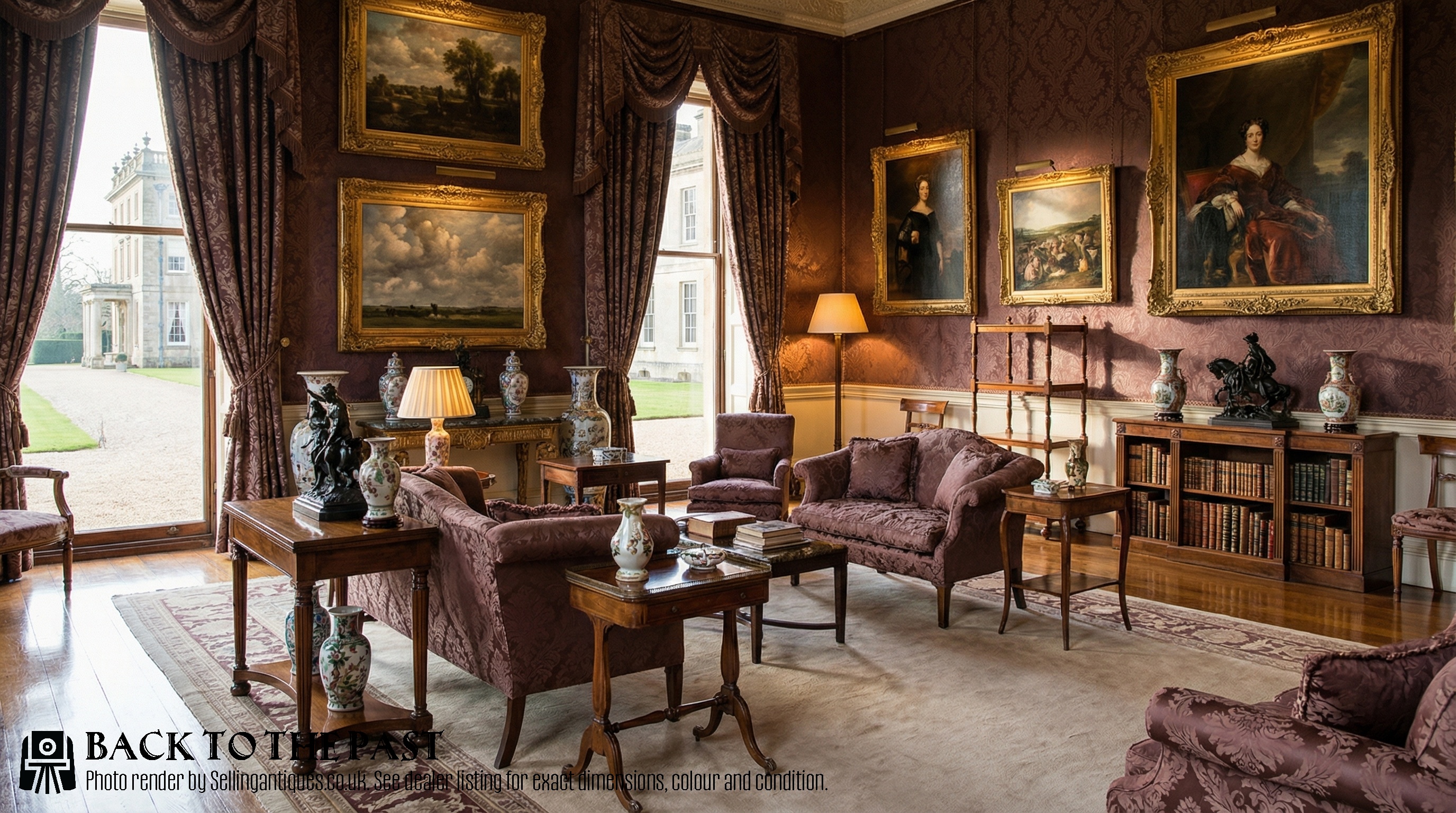
4 Tier Shelving Unit
A 4 tier shelving unit brings multi-level display into domestic spaces through forms historically known as whatnots, etageres, and open bookcases. These pieces serve to hold books, ceramics, and ornaments across stacked tiers supported by uprights.
The versions most commonly met span the 19th century and Edwardian periods, utilising timbers such as mahogany, walnut, and oak. Pieces emerge in styles ranging from Regency and Victorian to Arts and Crafts and rustic country.
Materials and construction
Cabinet makers constructed these units using solid hardwoods and decorative veneers, notably burr walnut, mahogany, rosewood, and oak. Carpenters paired these primary timbers with secondary woods for internal elements and backs.
Construction techniques involve traditional joinery, turned columns, barley twist supports, and brass castors for mobility. Finer examples incorporate inlaid details, carved crests, and polished brass fittings to accentuate the tiered form.
Some Victorian whatnots roll around on original brass castors, ready to follow the sunlight across the parlour floor.
Judging quality and execution
Quality reveals itself in the selection of timber figures, such as the richness of burr walnut grain or the depth of polished mahogany. Superior examples display crisp turning on upright supports and precise joinery where shelves meet uprights.
The refinement of brass castors, subtle inlay work, and overall structural balance separate standard utilitarian pieces from exceptional display furniture.
The 4 Tier Shelving Unit Glossary
- Whatnot
- A freestanding piece of furniture with multiple tiers used for displaying ornaments and books. It gained popularity during the 19th century.
- Etagere
- A French term for an open display shelf unit. These pieces typically feature several levels supported by slender columns.
- Waterfall bookcase
- A tiered shelving unit where each successive shelf steps back from the one below. This creates a cascading profile.
- Burr walnut
- A highly figured timber taken from the wart or burl of the walnut tree. Cabinet makers prized it for decorative veneer work.
4 Tier Shelving Unit: Frequently Asked Questions
What is a 4 tier shelving unit used for?
These units serve to display books, decorative objects, and collections across four stacked levels.
Historically placed in reception rooms and libraries, they organise items while keeping them visible.
How do I identify a Victorian shelving unit?
Victorian pieces often feature darker timbers like walnut and mahogany, alongside turned supports or barley twist columns.
Many examples from this period incorporate decorative carving or burr walnut veneers.
Are these units freestanding or wall-mounted?
The majority of these pieces are freestanding furniture designed to stand against walls or in room corners.
Some historical variants are specifically constructed as hanging shelves for wall mounting.
What timber was used for these shelves?
Cabinet makers utilised a range of hardwoods including mahogany, walnut, oak, and rosewood.
Pine appears in simpler country pieces, while exotic woods like padauk feature in Anglo-Indian examples.