

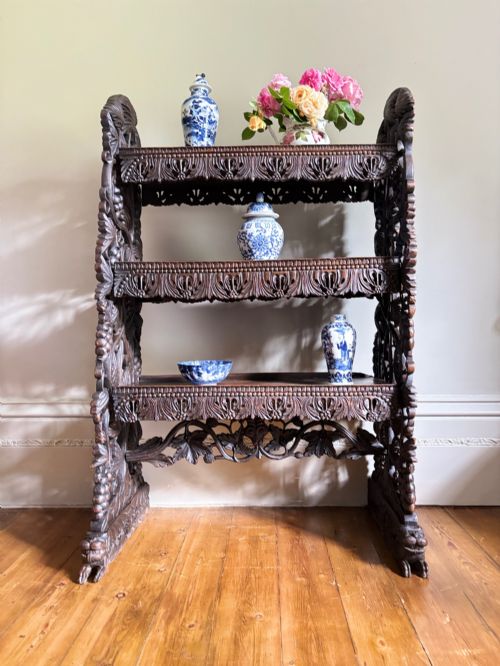
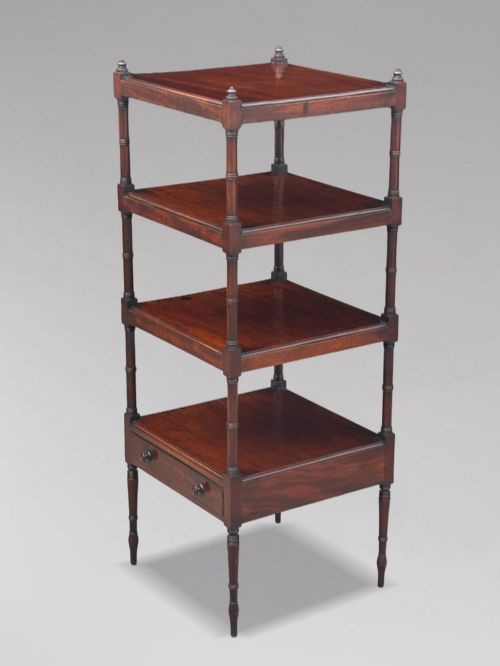
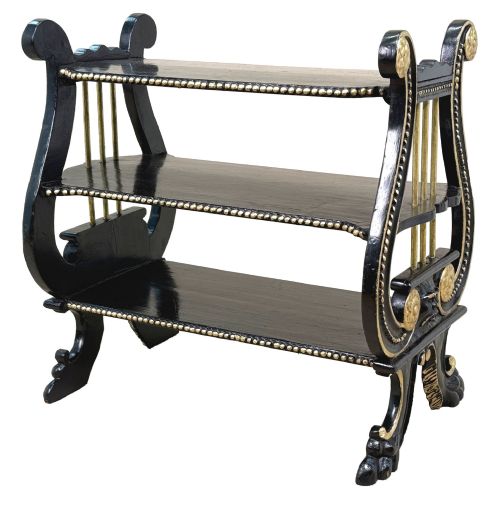

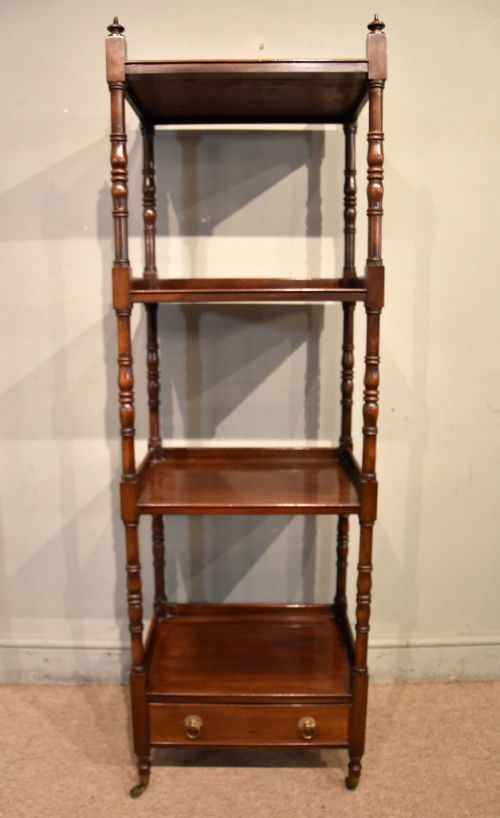
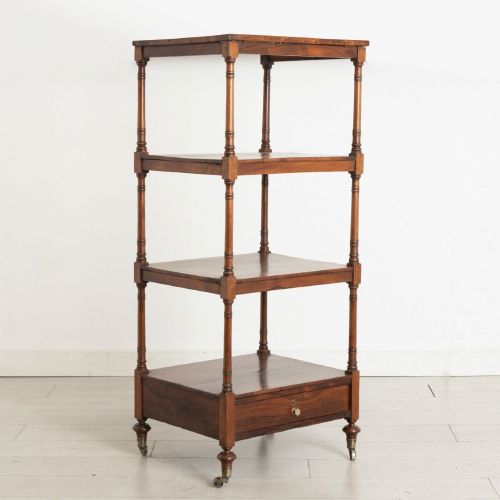
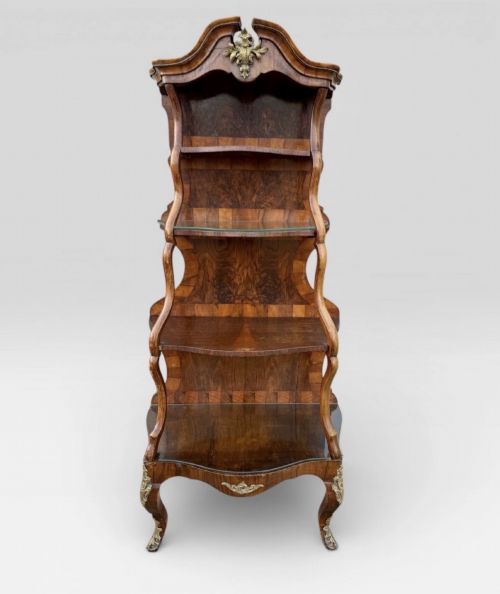


19th Century Whatnot Shelf
A 19th century whatnot shelf is a multi-tiered display stand created to hold books, ceramics and decorative objects in period interiors.
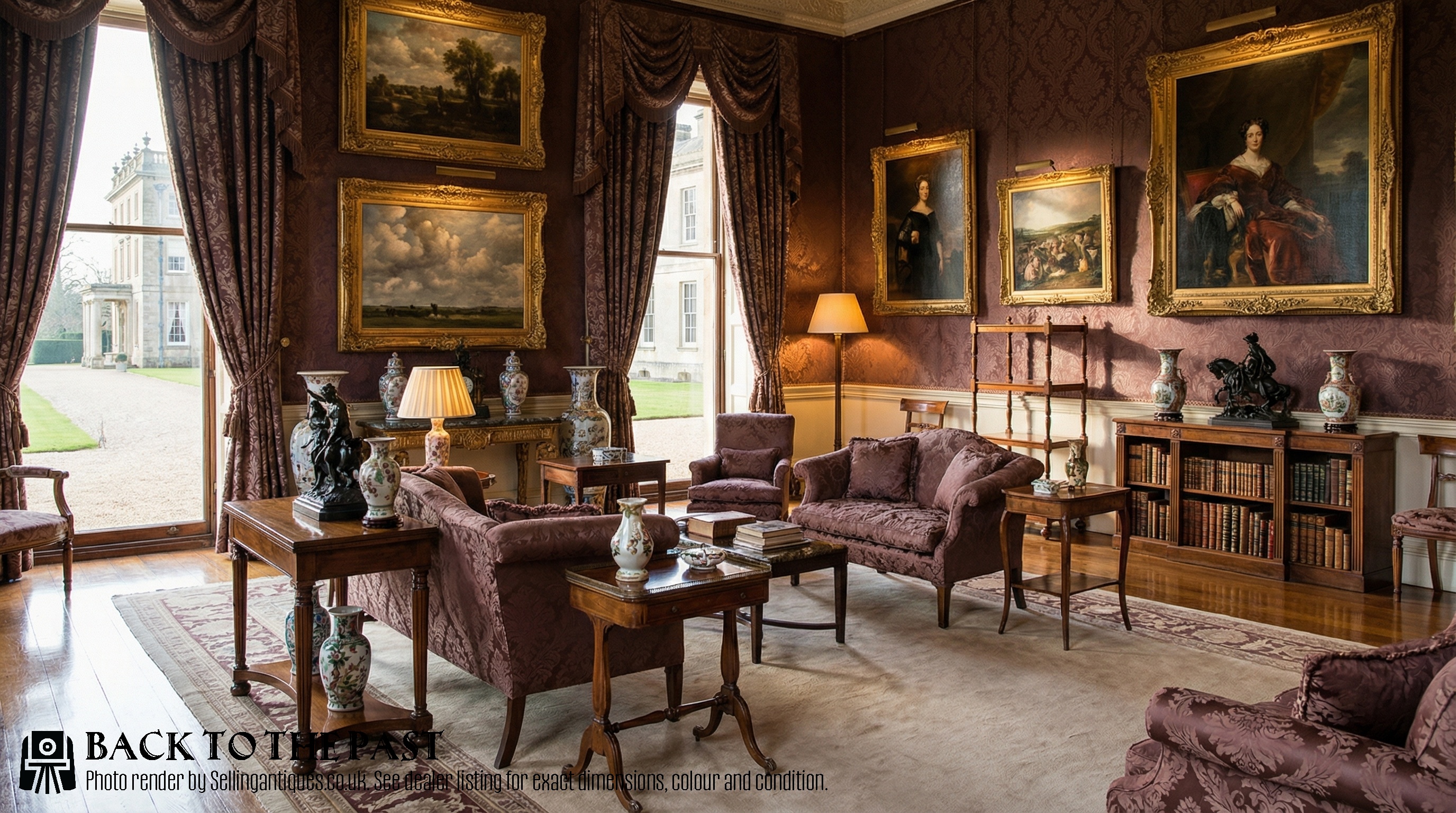
19th Century Whatnot Shelf
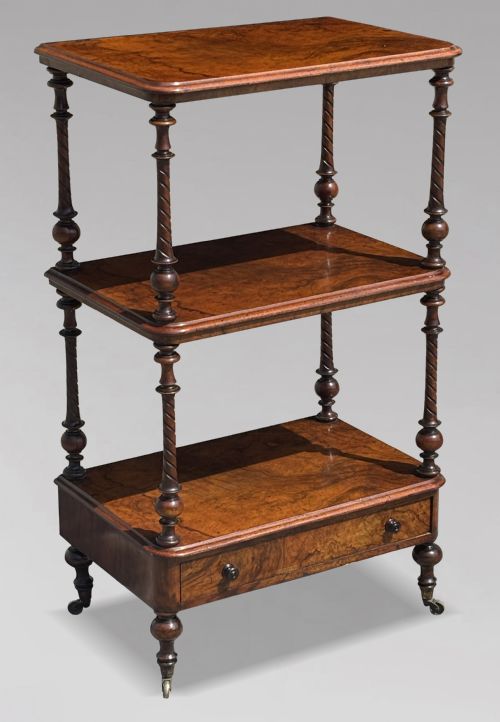
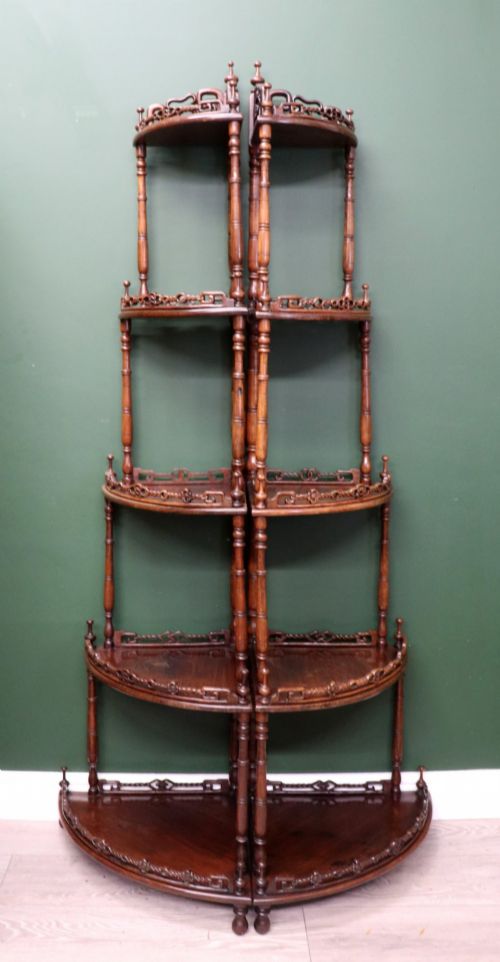
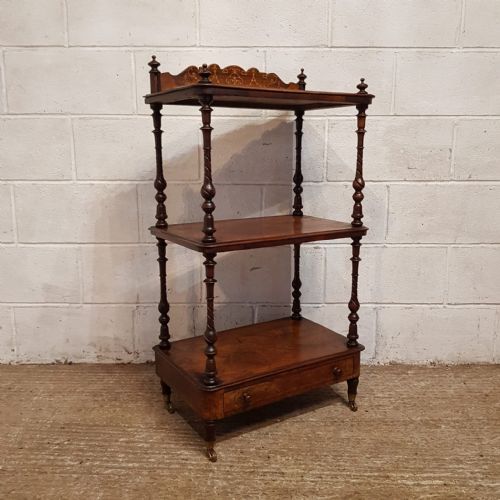
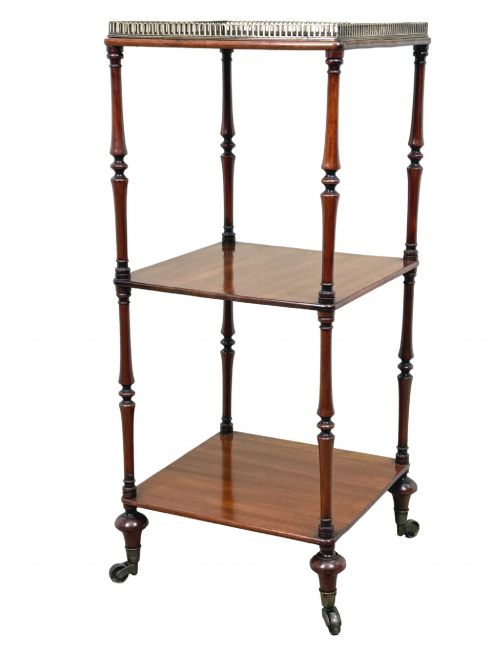
A 19th century whatnot shelf brings multiple open tiers together in upright formats designed to maximise display space in parlours and drawing rooms. These tiered stands appear primarily as rectangular multi-shelf units or space-saving corner shelves.
Makers produced these pieces across the Georgian, Regency and Victorian periods, incorporating functional additions such as music stands, drawers, cellarettes and lower cabinets. Surviving examples reflect the shifting domestic requirements of the nineteenth century through open bookshelves and enclosed display cases.
The most common versions met on this page span the Victorian era and the earlier Regency and George IV periods, constructed in timber and configured with three or four distinct tiers.
Materials and Construction
Cabinet makers utilised dense hardwoods including mahogany, rosewood and walnut, frequently selecting figured veneers such as burr walnut and birdseye maple for visible surfaces. Ebonised wood and parcel gilt variations also appear among later Victorian pieces.
Structural elements frequently incorporate brass fittings and castors to support the stacked platforms, whilst glass panels feature in cabinet doors on hybrid bookcase variants. Turned upright supports divide the tiers, secured with traditional joinery.
Listings demonstrate timber variations spanning mahogany, rosewood, walnut, burr walnut, birdseye maple and ebonised wood across the nineteenth century.
Judging Quality
Gradations in quality depend on the selection of timber veneers and the crispness of turned supports or carved details. Pieces with dense burr walnut or figured mahogany demonstrate greater care in material preparation.
Gillows
The 19th Century Whatnot Shelf Glossary
- Whatnot
- A piece of furniture consisting of a set of open shelves for displaying small objects. These tiered stands emerged in the late eighteenth century and remained popular throughout the nineteenth century.
- Etagere
- A French term for a piece of furniture with a series of open shelves for displaying ornaments. The form shares functional similarities with the English whatnot.
- Canterbury
- A low stand with partitioned sections for sheet music, books or portfolios. When combined with a whatnot, the piece integrates storage below open display tiers.
- Cellarette
- A lockable container or cabinet for holding bottles of wine, occasionally incorporated into the lower section of nineteenth century stands. This addition provided concealed storage within the display unit.
- Dumb Waiter
- A tiered serving stand used in dining rooms for holding dishes. Selected nineteenth century examples share the multi-tiered stacking construction seen in display pieces.
19th Century Whatnot Shelf: Frequently Asked Questions
What is a whatnot shelf?
A whatnot shelf is a piece of nineteenth-century furniture featuring multiple stacked tiers designed to hold ornaments, books and small decorative objects.
Cabinet makers produced these stands in various shapes, including rectangular units and triangular formats built to fit into room corners.
How do I style a whatnot shelf?
These pieces suit modern interiors as open shelving units for books, ceramics and trailing plants in living spaces.
Their narrow footprint allows them to function effectively in hallways or corners where floor space remains limited.
How to tell Victorian and Regency periods apart?
Regency and George IV examples frequently utilise rich mahogany or rosewood with restrained classical lines and delicate turned supports.
Victorian pieces often employ burr walnut or ebonised wood alongside more robust proportions and varied tier configurations.