


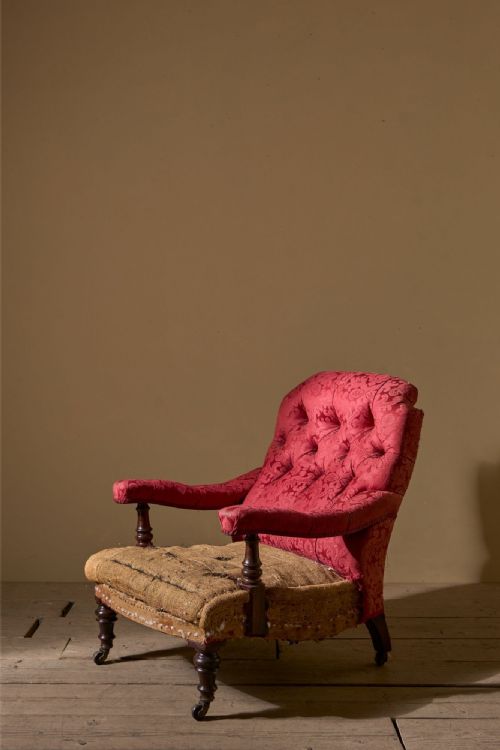
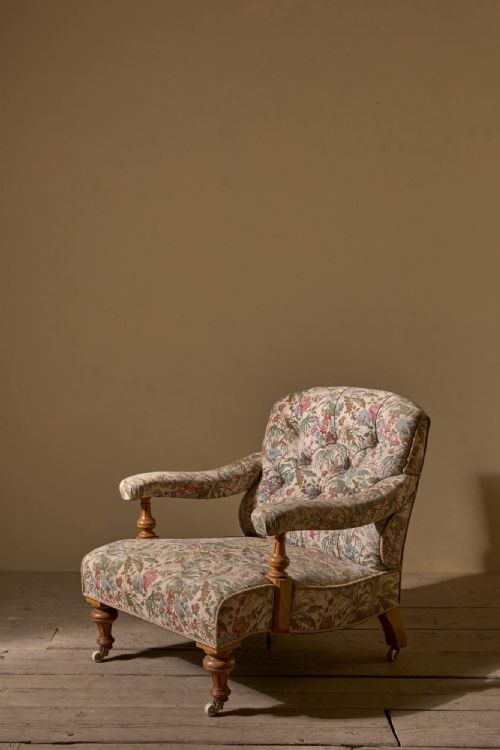
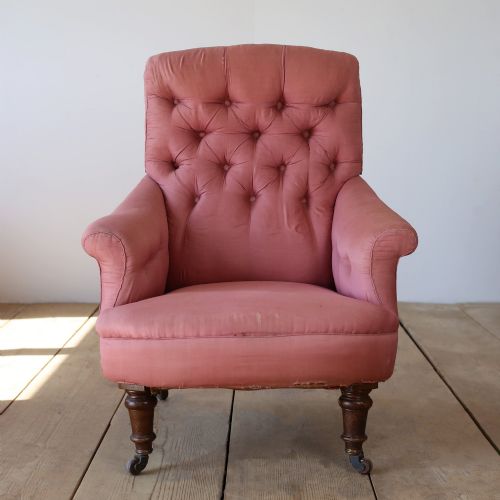
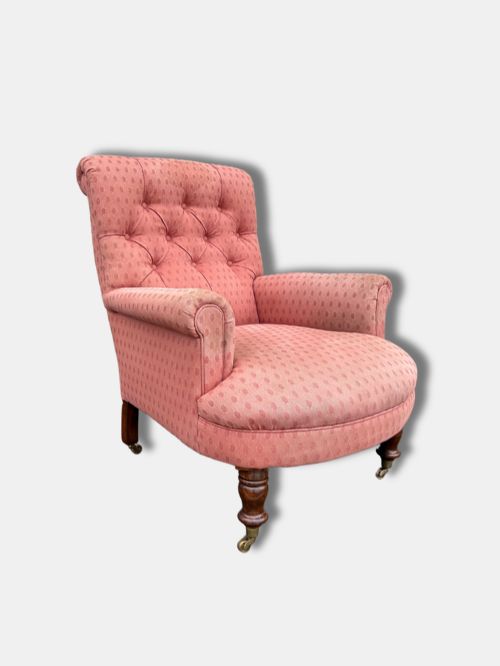
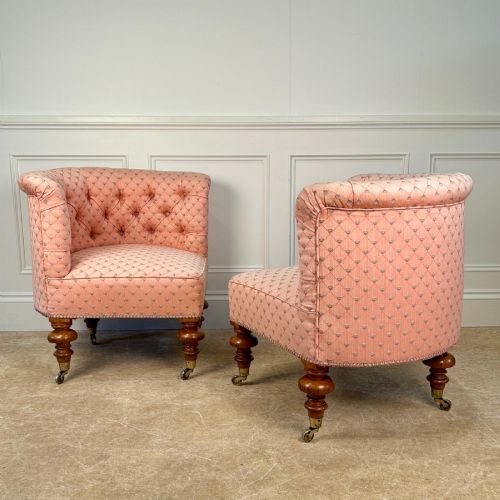
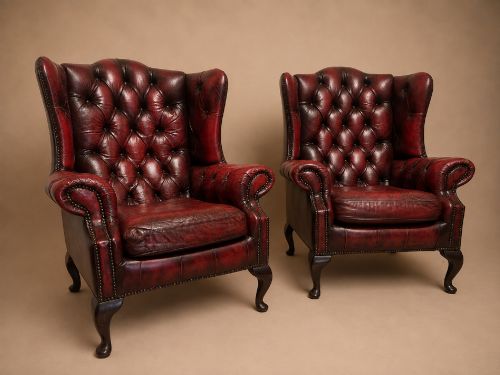
Victorian Tufted Armchair
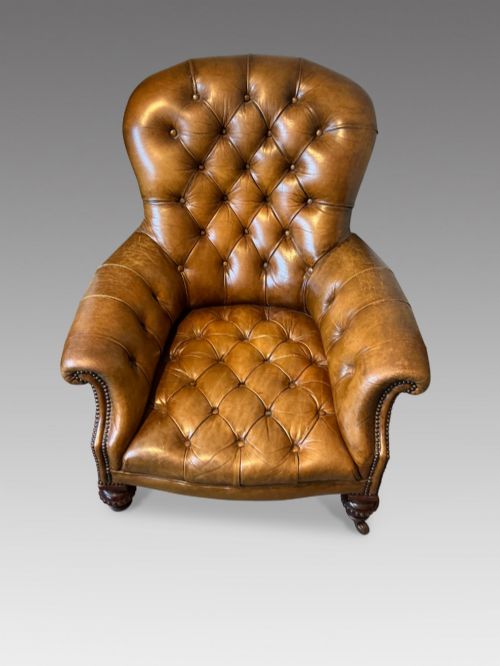
A victorian tufted armchair offers deep buttoned comfort and robust period character, anchoring a study or drawing room with distinctive nineteenth-century presence.
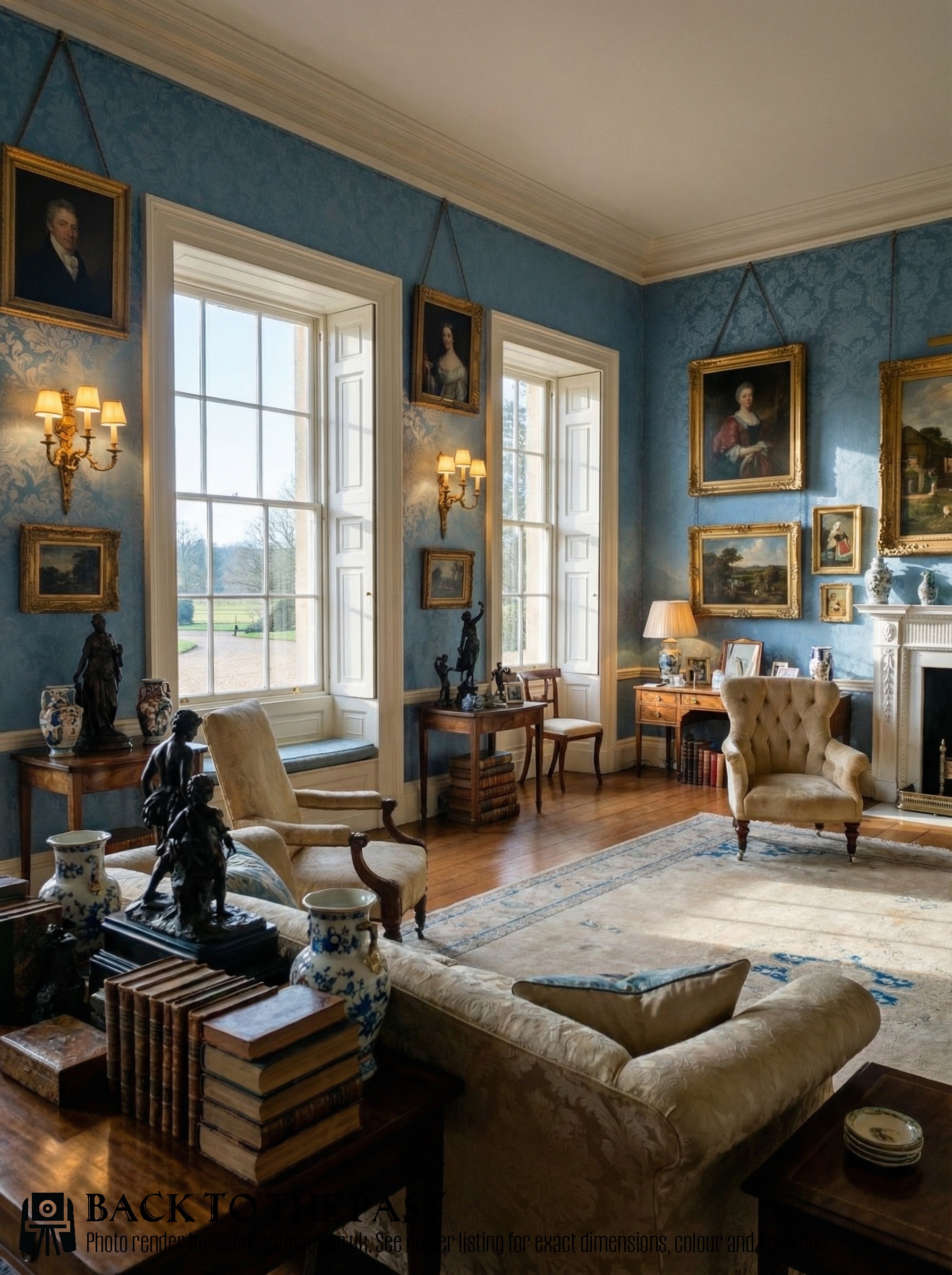
Victorian Tufted Armchair
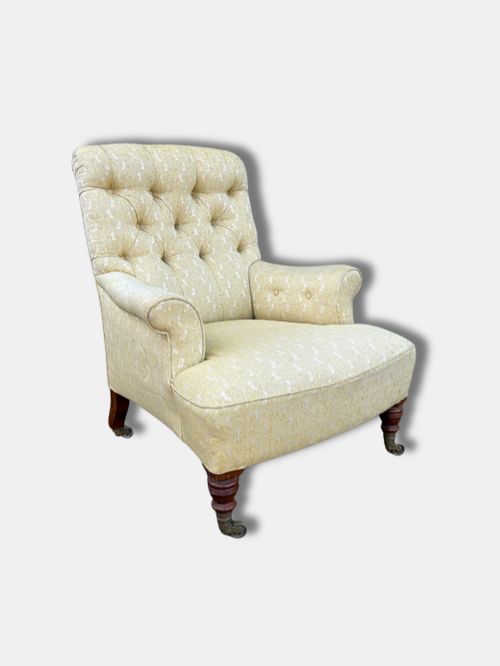
A victorian tufted armchair brings deep buttoning and generous proportions to domestic seating, originating principally from the nineteenth century. These pieces appear frequently as library armchairs, button back armchairs, and club armchairs designed for sustained comfort.
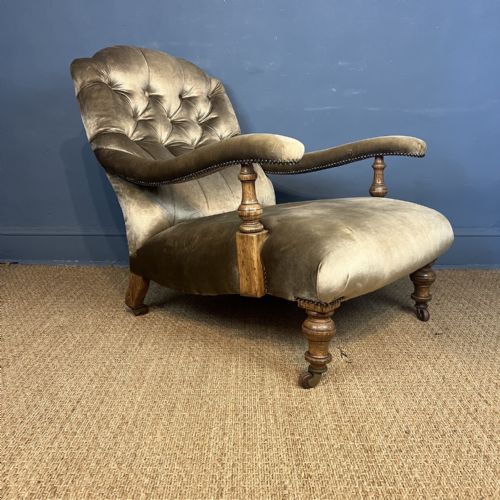
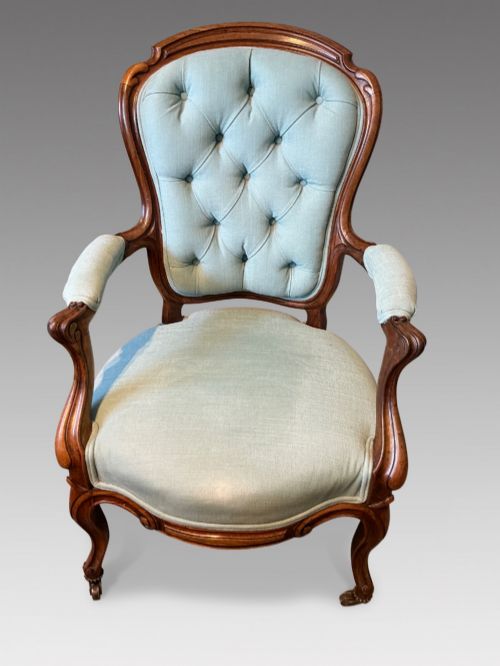
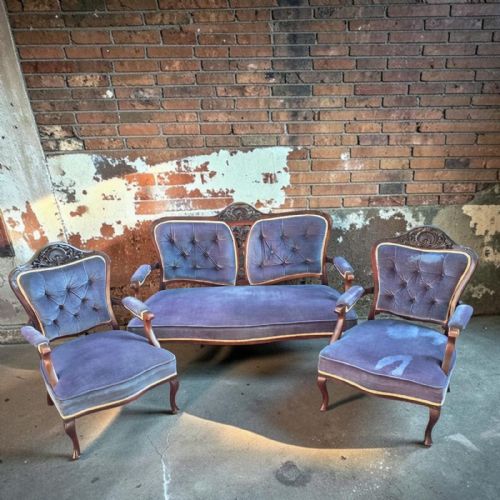
The selections on this page span the Victorian era alongside related nineteenth-century iterations, featuring styles such as French Napoleon III, Rococo Revival, and the Aesthetic Movement. Makers like Howard and Sons and Holland and Sons emerge among the high-backed and low-slung forms.
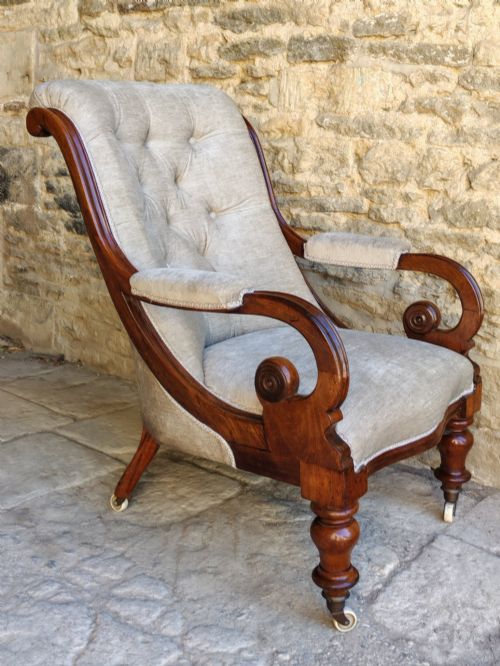
Makers utilised sturdy woods like mahogany, walnut, and oak to build the frames, then layered them with fabric, velvet, leather, and hessian. Brass castors and detailed carving frequently complete the construction.
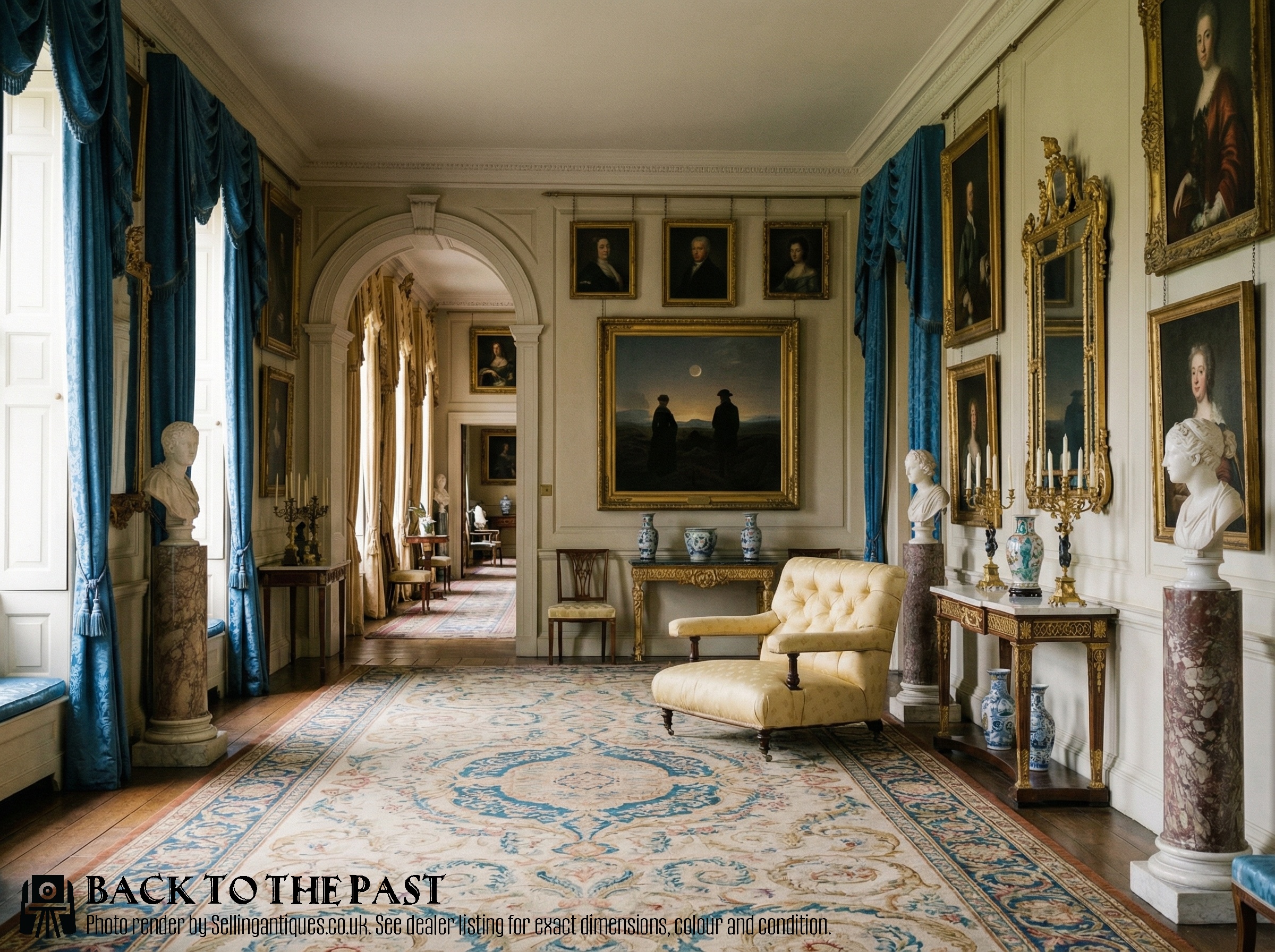
How they were made
Craftsmen shaped solid frames from dense timbers including mahogany, walnut, oak, and rosewood, often applying carved details or polished finishes. These robust skeletons support the heavy upholstery beneath.
Makers applied traditional stuffing and covered the frames in leather, velvet, fabric, and hessian, securing the materials with deep buttoning. Brass hardware such as castors and reading stands finished the functional elements.
Victorian Tufted Armchair Retail Price Guide 2026
Typical asking prices for victorian tufted armchair among the pieces listed under this phrase on Sellingantiques today, from the lower quarter to the upper quarter. They describe what is for sale here now, not the wider market.
Listings feature nineteenth-century seating built from mahogany, walnut, and oak, upholstered in leather, velvet, and hessian.
What varies in quality
The standard of timber and the complexity of the frame construction distinguish workshop output, with dense hardwoods like walnut and mahogany offering superior longevity. Maker attribution, such as pieces bearing the mark or style of Howard and Sons, elevates the standing of individual chairs.
The execution of the buttoning and the choice of covering materials dictate the visual refinement of the seating. High-grade leather and rich velvet upholstery require precise hand-work that separates standard domestic chairs from finer salon examples.
Howard and Sons·Holland and Sons·Shoolbred
The Victorian Tufted Armchair Glossary
- Button back
- A method of upholstery where buttons are pulled tight through the padding to form a geometric diamond pattern. This technique secures the deep stuffing and creates the signature tufted texture.
- Chesterfield
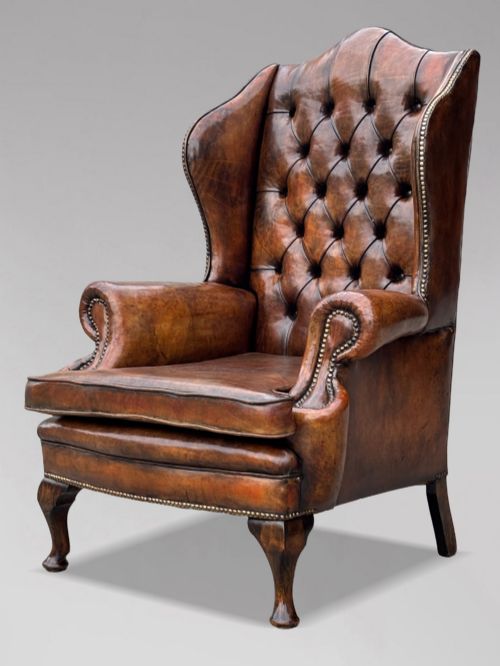
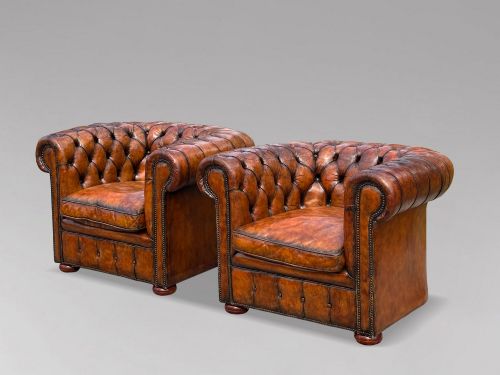
- A heavy club or wing armchair style characterised by deep buttoning and rolled arms. These pieces are traditionally upholstered in dark leather.
- Spoon back
- An open armchair design featuring an oval backrest shaped like the bowl of a spoon. This form gained popularity during the mid-nineteenth century in walnut and rosewood.
- Wingback
- An armchair featuring protective side panels attached to the backrest. These wings historically blocked draughts in period rooms.
- Aesthetic movement
- A late nineteenth-century design style prioritising artistic expression and simple forms. Pieces from this movement often display distinctive leg turnings and proportions.
Victorian Tufted Armchair: Frequently Asked Questions
How do I identify a Victorian tufted armchair?
Look for deep buttoning on the backrest, sturdy timber frames in mahogany or walnut, and traditional nineteenth-century proportions. These chairs often feature brass castors or turned wooden legs.
Evidence on this page shows styles ranging from simple library chairs to elaborate button back armchairs by makers such as Howard and Sons.
Where should I place a library armchair?
These large-scale chairs suit studies, libraries, and drawing rooms where deep seating provides comfort for reading. Their substantial presence anchors a room alongside desks or bookshelves.
Many examples include leather upholstery and wooden frames that complement traditional architectural interiors.
What is the difference between club and wing chairs?
Club armchairs offer low, deep seating with rolled arms and buttoned leather, designed for relaxed lounging. Wing chairs feature high backs with protective side panels intended to retain heat.
Both forms appear across nineteenth-century English and Scottish country house interiors.
How do I care for leather upholstery?
Maintain antique leather by keeping it away from direct sunlight and heat sources that dry out the hide. Regular dusting and appropriate conditioning help preserve the supple finish.
Many nineteenth-century brown and green leather chairs survive precisely through attentive historic maintenance.
Are these chairs suitable for daily use?
Nineteenth-century seating was built with dense hardwood frames and robust stuffing to withstand heavy daily domestic wear. Their durable construction makes them practical for modern sitting rooms.
Checking the internal hessian and upholstery stability ensures they remain comfortable for everyday seating.