


Victorian Trunk Stand
These Victorian trunk stand pieces combine sturdy timber frames with practical elevated designs, offering a distinct blend of period utility and decorative presence.
Victorian Trunk Stand
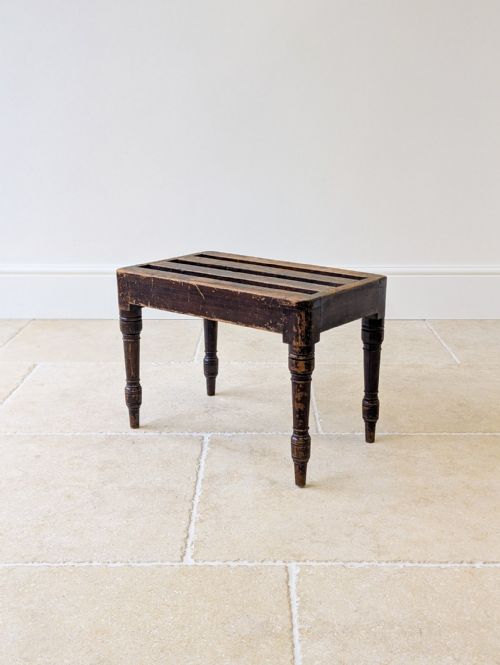
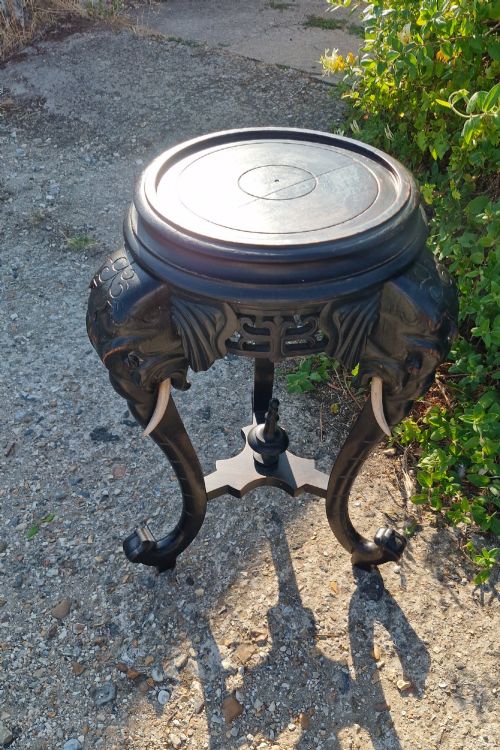
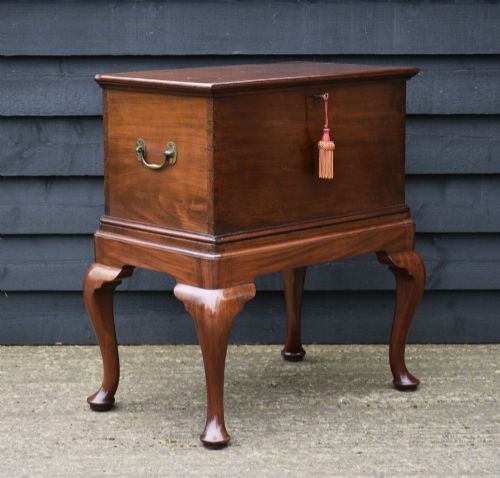
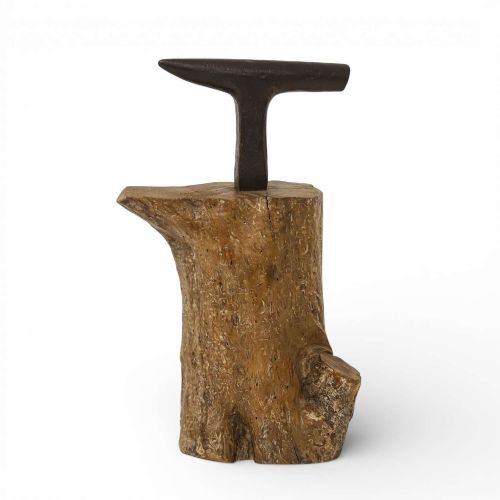
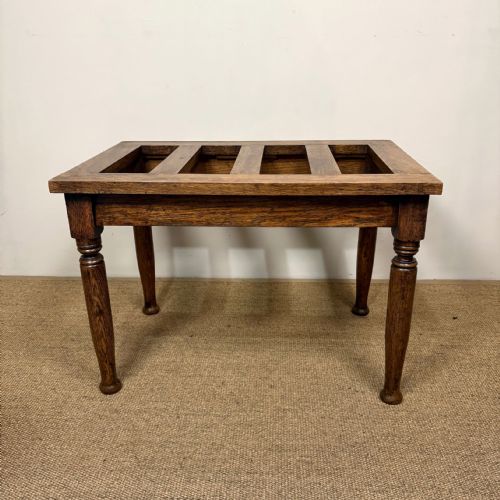
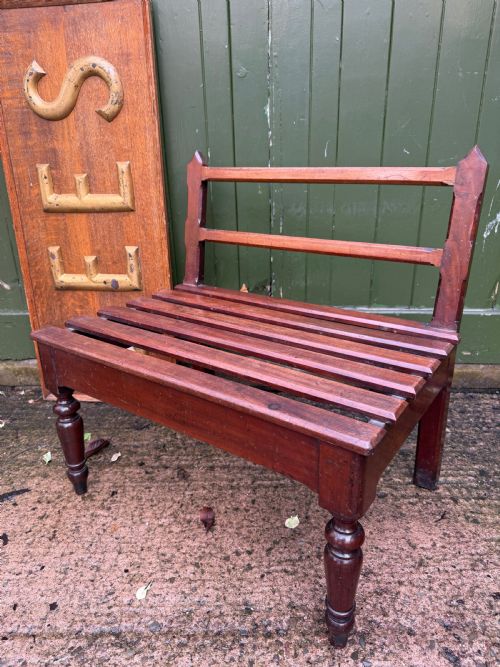
A victorian trunk stand serves to elevate luggage and chests, bringing heavy travel pieces to a convenient height for daily use. The examples seen on this page span the nineteenth century, encompassing utilitarian luggage racks alongside more ornate trunk on stand configurations.
Materials and Construction
Makers utilised durable hardwoods such as mahogany, teak, and oak to construct these functional frames. These timbers provided the necessary strength to support heavy leather or canvas trunks without twisting under pressure.
Joinery methods varied according to the intended use, ranging from robust pegged joints on rustic pine and fruitwood examples to folding webbing supports on conventional luggage racks. Brass hardware frequently appeared on campaign styles, offering reinforced corners and secure fastening points.
Listings feature nineteen-century pieces constructed from mahogany, teak, pine, ash, and iron.
Assessing Quality
The distinction between ordinary utility pieces and finer examples rests upon the selection of timber and the refinement of the turned or carved supports. Superior pieces display carefully figured mahogany or ash, clean joinery, and well-executed structural details like raised rear upstands.
Proportion and stability dictate the standing of a piece within the range. Refined items maintain balanced dimensions and retain their original folding mechanisms or hardware, whereas simpler vernacular items rely purely on rustic heft and straightforward construction.
Brown and Lamont·James Wood·Aitchison of Glasgow·Sam Robson
The Victorian Trunk Stand Glossary
- Luggage stand
- A low wooden frame designed to hold a travelling chest or suitcase off the floor. These items typically feature sloped tops or webbing straps.
- Trunk on stand
- A storage chest paired with a dedicated matching or associated base frame. This configuration raises the storage compartment to a comfortable height.
- Campaign chest
- A modular piece of furniture made for military officers on the move. These items feature recessed brass handles and sectional construction for easy transport.
- Upstand
- A vertical barrier rising from the rear edge of a stand. This feature prevents luggage or items from sliding backward against a wall.
- Vernacular
- Furniture made by local craftspeople for practical everyday use rather than high-style urban production. These pieces often employ regional woods like fruitwood or pine.
Victorian Trunk Stand: Frequently Asked Questions
What is a Victorian trunk stand used for?
These pieces were originally designed to hold travel trunks off cold bedroom floors, allowing travellers to pack and unpack their belongings without bending down. Today, they function well as luggage racks in guest rooms or as low display surfaces.
Their sturdy timber frames and elevated platforms make them adaptable for holding blankets, large trays, or decorative objects in modern interiors.
How do I distinguish between a luggage stand and a trunk on stand?
A luggage stand typically consists of an open wooden frame with webbing straps or crossbars specifically intended to support a separate suitcase. In contrast, a trunk on stand incorporates an enclosed chest permanently or semi-permanently mounted upon a raised base.
The former focuses on folding portability, while the latter serves as a substantial piece of stationary bedroom furniture.
What woods were commonly used for these stands?
Nineteenth century makers utilised a range of timbers depending on the intended destination and function of the piece. Mahogany, teak, and oak appeared frequently in formal domestic and campaign settings, offering durability and moisture resistance.
Softer woods like pine and beech served utilitarian purposes, often receiving painted finishes or waxed treatments for everyday wear.
How do I care for antique wooden stands?
Maintain these wooden surfaces by keeping them away from direct heat sources and dramatic humidity fluctuations, which can cause timber to split. Regular dusting with a dry cloth and occasional application of appropriate wax will preserve the finish.
Avoid placing damp items directly onto untreated wooden slats to prevent water marking.