

Victorian Tripod Tea Table
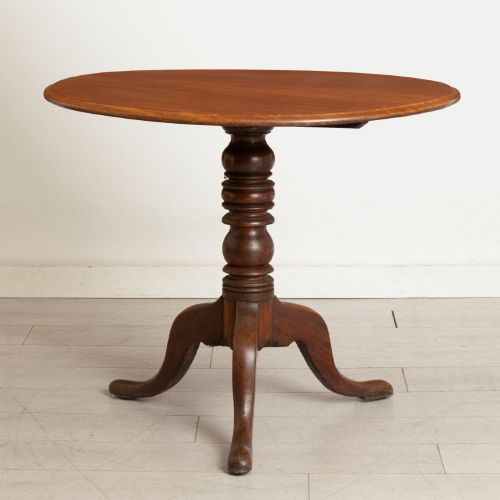
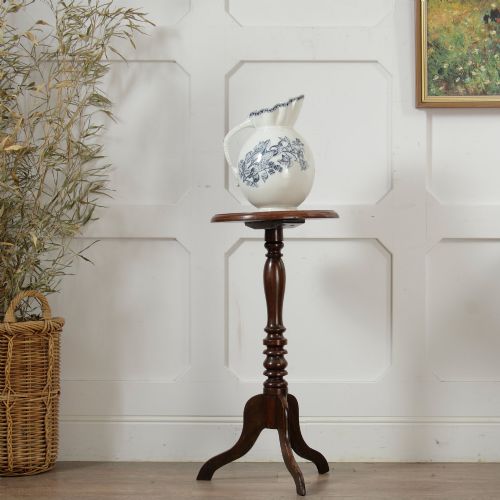
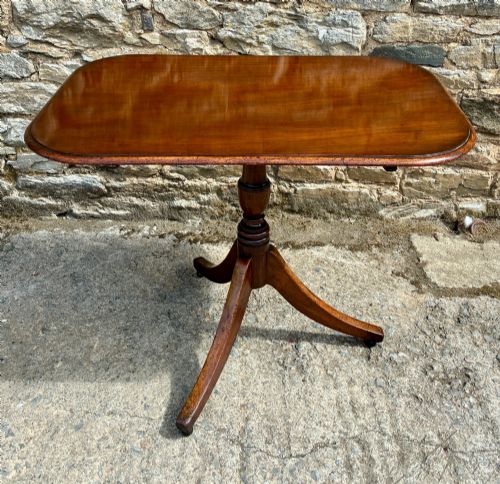
A victorian tripod tea table balances a circular top on a three-legged pedestal, offering a practical surface with portable convenience.
Victorian Tripod Tea Table
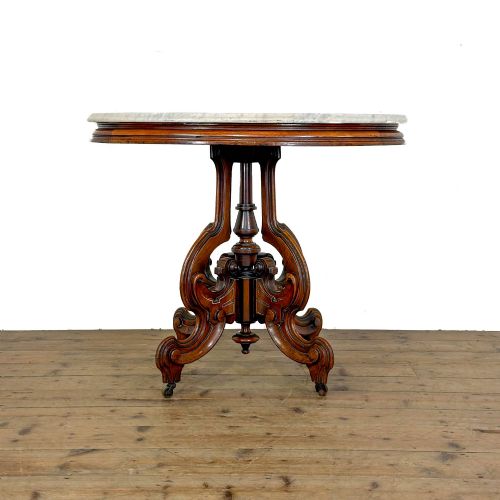
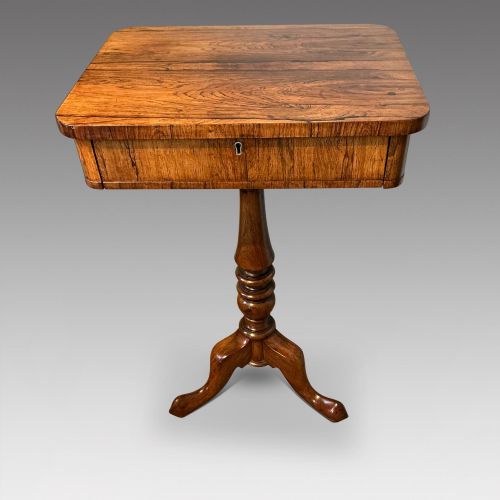
A victorian tripod tea table appears in various forms, most commonly as a pedestal piece designed for occasional use or beverage service. These items emerge from the nineteenth century, including specific dates such as eighteen fifty, eighteen sixty, eighteen eighty, and eighteen ninety.
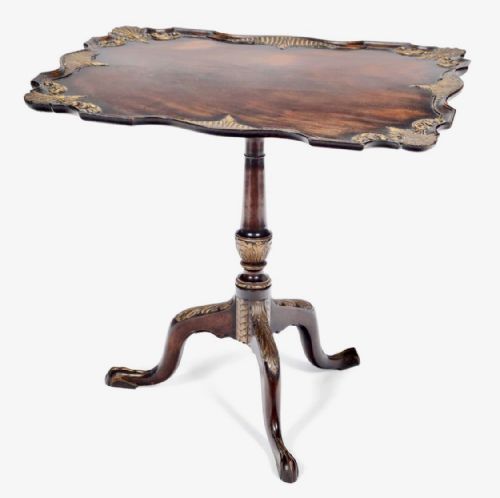
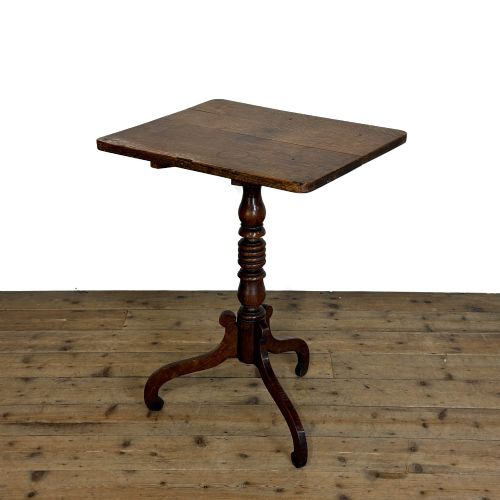
Makers constructed these objects using diverse woods, encompassing mahogany, walnut, burr walnut, oak, pine, birch, rosewood, padouk, and papier mâché. Styles span from standard Victorian and Regency to Chippendale Revival, Anglo-Burmese, Anglo-Indian, and Georgian Revival.
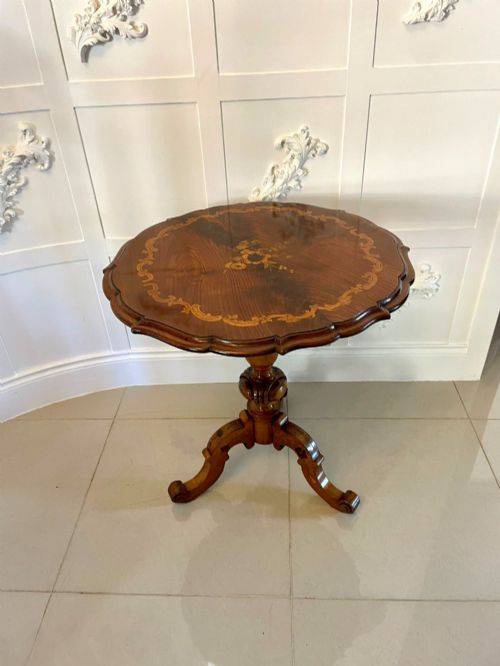
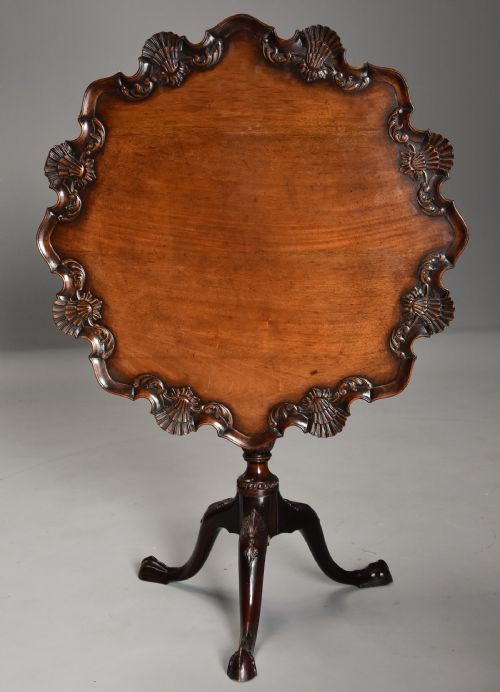
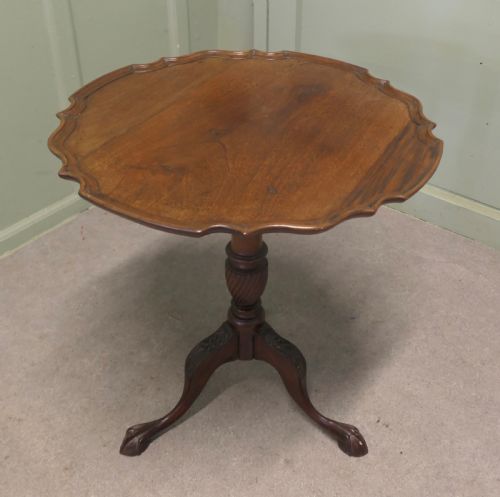
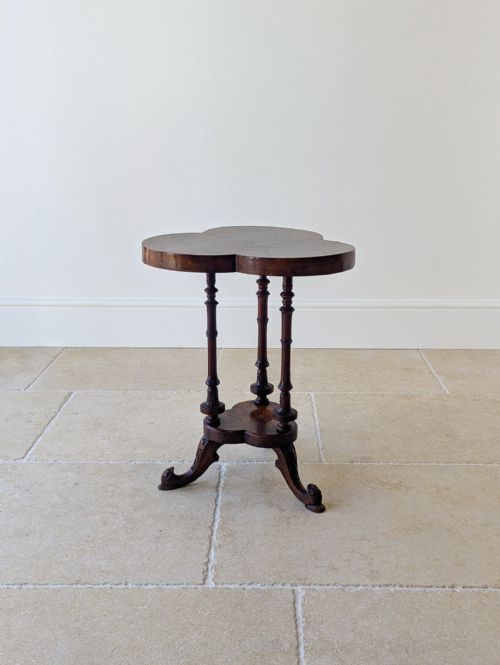
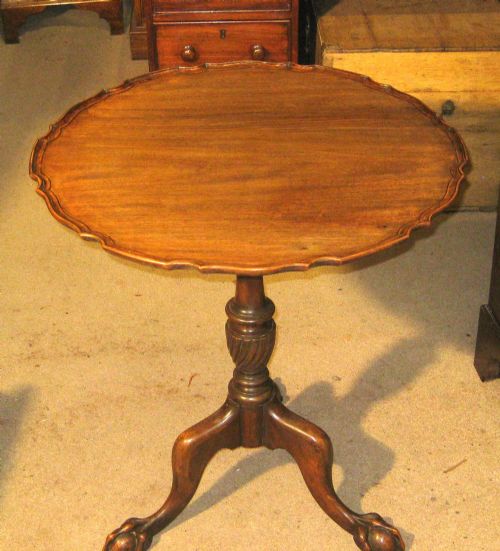
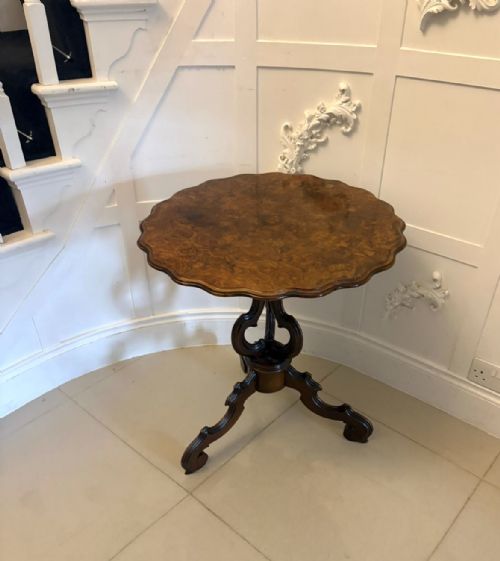
Formats range from standard round dish-topped variants and piecrust edges to clover-shaped, trefoil, and scalloped designs. Many examples feature tilt-top mechanisms allowing the surface to fold vertically when not in use.
Materials and construction
Cabinetmakers utilised solid timbers and veneers, combining mahogany, walnut, and oak with decorative elements like marquetry inlay and mother of pearl. Turning lathes shaped the central pedestals and legs, while joinery techniques secured the tilting mechanisms and pillar supports.
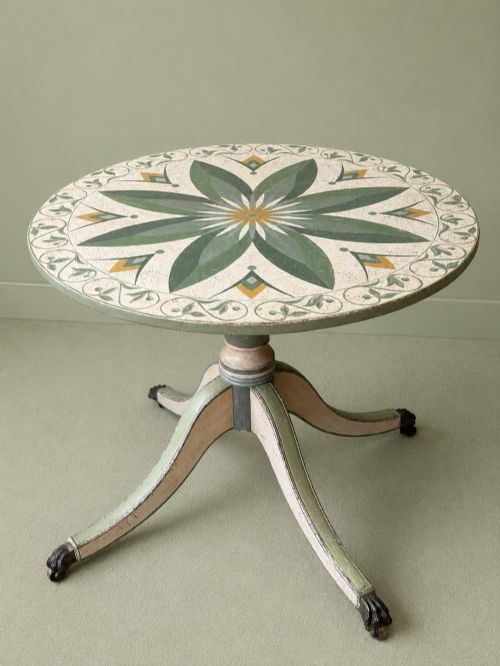
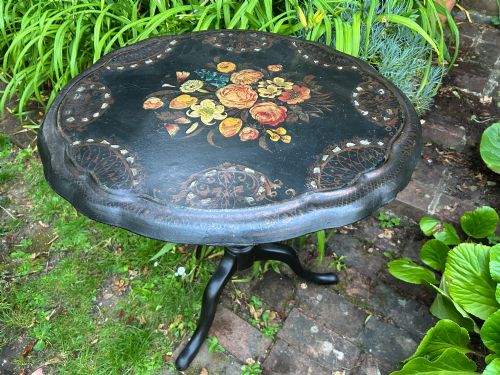
Surface finishes include hand-painted floral decorations, japanning, parcel gilding, and ebonising applied over wood or papier mâché bases. Carved detailing appears on specific regional pieces, notably Anglo-Indian padouk and Burmese items.
One exceptional painted table carries a direct link to Osbourne House and Queen Victoria herself.
Judging execution and design
Distinction across the range rests on the crispness of carved details, the complexity of inlay work, and the selection of figured timbers like burr walnut or pollard oak. Superior examples display balanced proportions between the top and the supporting tripod legs.
The integrity of the tilt-top mechanism and the snugness of the central pillar joint dictate mechanical success. Painted or decorated surfaces differ according to the fineness of the brushwork and the preservation of the original pigments.
The Victorian Tripod Tea Table Glossary
- Tilt top
- A hinged table surface that rotates to a vertical position for storage against a wall. This mechanism allowed owners to clear floor space easily in smaller rooms.
- Tripod base
- A pedestal support resting on three splayed legs. This configuration prevents wobbling on uneven floorboards.
- Marquetry
- Decorative veneer work forming intricate patterns using various coloured woods. Artisans fitted these thin pieces precisely into the primary surface.
- Teapoy
- A small pedestal table or box originally used for storing and serving tea. Nineteenth-century examples often incorporate elaborate carving or compartments.
- Piecrust edge
- A raised, carved tabletop border shaped in undulating curves. Cabinetmakers carved this profile directly from the solid timber edge.
Victorian Tripod Tea Table: Frequently Asked Questions
What is a victorian tripod tea table used for?
These tables served primarily for holding tea services, drinks, or lamps in nineteenth-century drawing rooms and parlours. Their portable nature allowed servants to move them about the house as needed.
Today, they function well as bedside surfaces, lamp tables, or accent pieces beside seating. The tilt mechanism also permits compact storage against a wall.
How do I identify a tilt top mechanism?
A tilt top incorporates a wooden catch or brass latch beneath the surface that releases the tabletop to pivot upright. When unlocked, the surface swings ninety degrees to rest flat against the central pillar.
This clever design saved valuable floor space when the furniture was not actively in use for dining or writing.
What woods were used for these tables?
Cabinetmakers relied heavily on native and imported timbers, selecting mahogany and walnut for standard production. Burr walnut and pollard oak provided highly figured grain patterns for decorative surfaces.
Regional variations introduced exotic woods like padouk in Anglo-Indian pieces, alongside pine and birch in simpler country furniture.
Are all these tables from the Victorian era?
While the majority date from the Victorian period and the nineteenth century, the listings include related pieces from the Regency era, Edwardian times, and early twentieth century. Stylistic revivals also spanned multiple decades.
Makers frequently borrowed earlier Georgian and Chippendale aesthetics, creating revival pieces alongside contemporary Victorian designs.