


Victorian Treen Novelty Box
These Victorian treen novelty boxes are small wooden containers carved into imaginative everyday shapes that collectors prize for their tactile folk art charm.
Victorian Treen Novelty Box
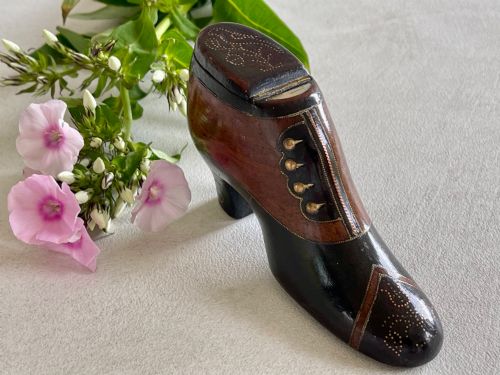
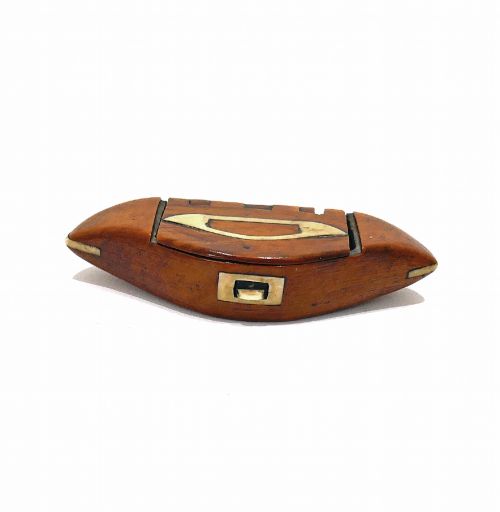
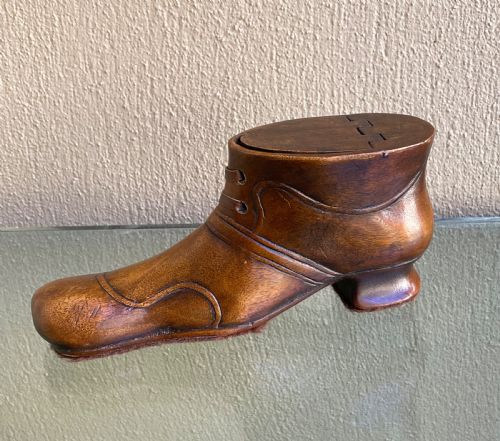
When you search for a Victorian treen novelty box, you encounter small turned and carved wooden objects shaped as shoes, feet, bottles, shuttles, and hands holding snuff. These miniature containers served practical daily uses in domestic settings.
The versions you are most likely to meet on this page span the 18th century, Georgian, Victorian, and Edwardian periods. They take the form of snuff boxes and kitchenalia items fashioned from timber.
Makers shaped these pieces with whimsical intent, turning mundane items like footwear and wine bottles into functional receptacles. Each box reveals the playful imagination of period carvers working in wood.
Materials and construction
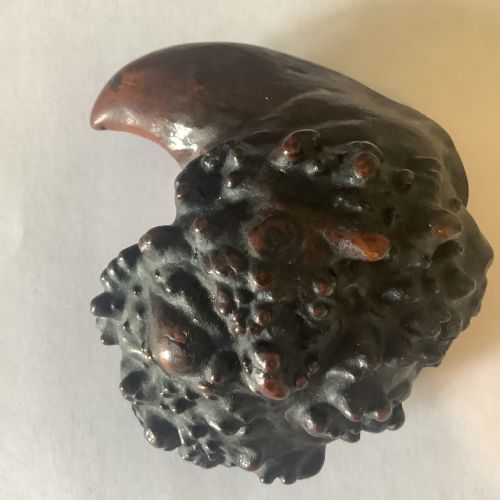
Carvers fashioned these objects from fruitwood, burr walnut, hardwood, and various timbers, often incorporating bone inlay, metal, and glass details. The natural grain of the wood determines the surface pattern.
Artisans employed hand-carving and turning techniques to shape natural pieces of wood into recognizable forms such as open-toed shoes and hands. Some examples feature detailed pictorial additions or precise date inscriptions.
One miniature shoe box even doubles its capacity with a sneaky double-opening design.
Assessing quality and character
Quality rests upon the crispness of the carving and the clever utilisation of the natural wood grain, particularly in burr walnut examples. Finer pieces display confident sculptural forms without loss of detail.
The integration of secondary materials like bone inlay and metal mounts elevates a piece above simpler turned items. Depth of character and distinct sculptural presence separate standard utility boxes from superior folk art examples.
The Victorian Treen Novelty Box Glossary
- Treen
- Small handmade wooden domestic objects. This term derives from the old English word for tree.
- Snuff box
- A small container used to hold powdered tobacco. These boxes often feature tight-fitting lids to keep the contents dry.
- Fruitwood
- Dense timber derived from fruit-bearing trees such as apple or pear. Carvers favoured it for fine detail work.
- Burr walnut
- Wood taken from a walnut tree growth featuring swirling grain patterns. It creates highly decorative patterned surfaces.
- Folk art
- Utilitarian items decorated or shaped by traditional craftsmen rather than professional artists. These pieces reflect regional vernacular styles.
Victorian Treen Novelty Box: Frequently Asked Questions
How were novelty snuff boxes used?
These boxes held dry snuff, a powdered tobacco that users inhaled or placed against the gums. The snug lids prevented moisture from ruining the contents.
Owners carried them in pockets or displayed them on tabletops as conversation pieces. Their whimsical shapes provided amusement during social gatherings.
What woods appear in these boxes?
Carvers utilised fruitwood, burr walnut, and various dense hardwoods. Some pieces incorporate natural knots and burls to enhance the visual texture of the wood.
Secondary materials like bone and metal frequently appear as decorative inlays or hinges. Each timber choice influenced the final sharpness of the carved details.
How do I date antique treen?
Dating relies on material wear, tool marks, and stylistic clues within the carving. Georgian and 18th-century pieces often display hand-turned construction and specific folk motifs.
Victorian and Edwardian examples may feature stamped dates, bone inlays, or distinct naturalistic forms. Comparing the joinery and timber type helps establish the era of manufacture.