


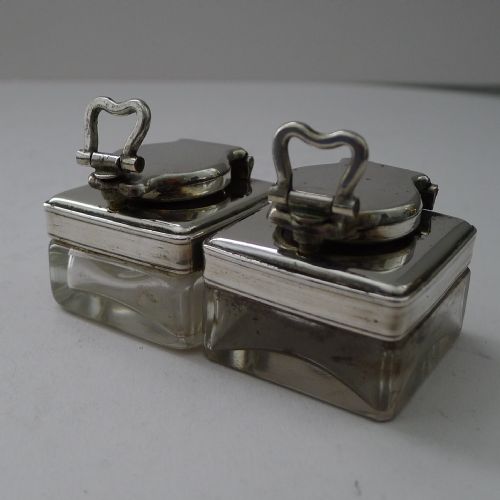

Victorian Travelling Desk
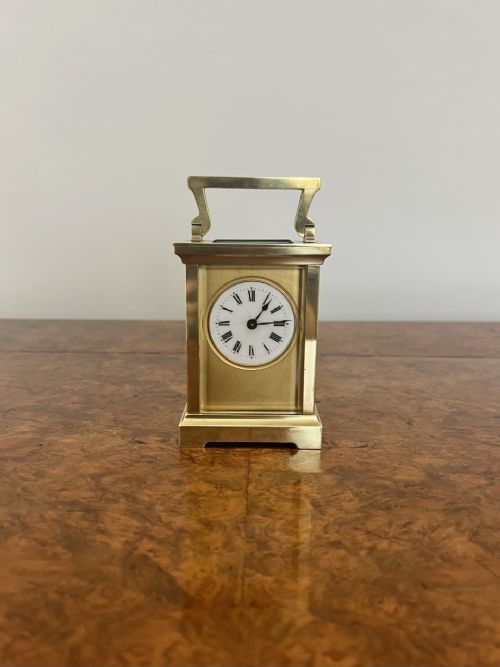
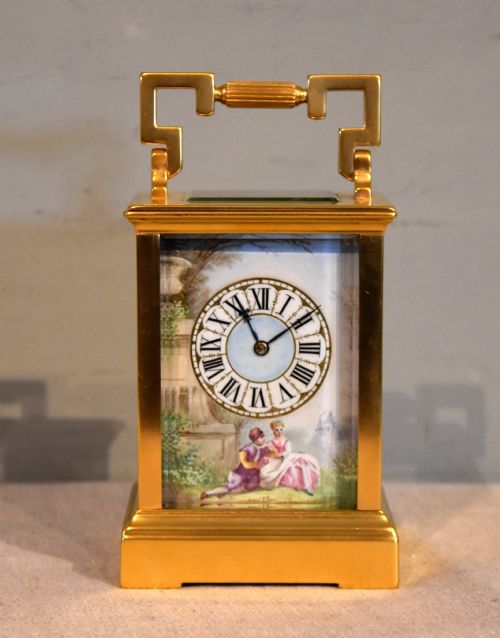
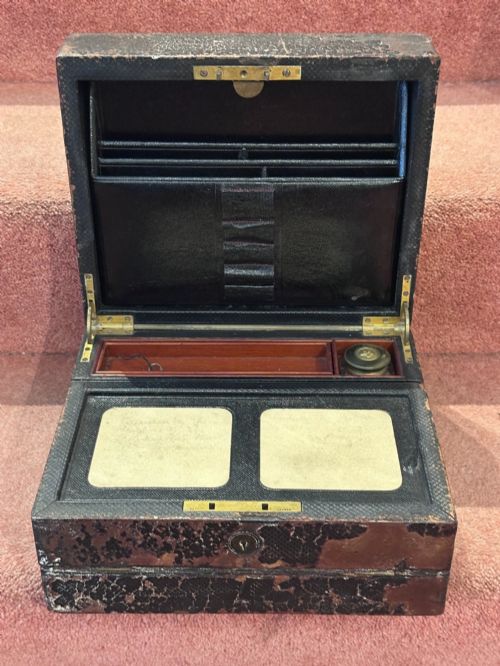
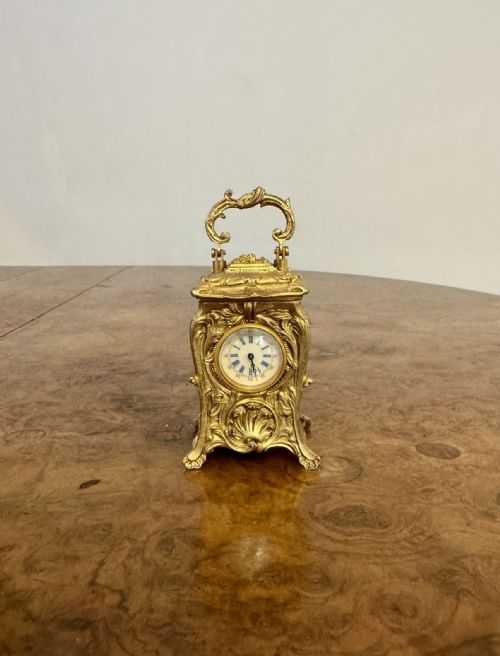
These victorian travelling desk items combine portability with utility, offering brass-bound mahogany writing boxes, campaign chests, and heavy brass carriage clocks made for life in transit.
Victorian Travelling Desk
When you search for a victorian travelling desk, you encounter a mix of portable writing slopes, campaign chests, and brass-mounted carriage clocks designed for mobility during the nineteenth century. The selection ranges from fitted mahogany writing boxes to travel inkwells, leather-bound writing sections, and robust wooden campaign desks.
Most pieces date from the Victorian era and the broader nineteenth century, with French makers also strongly represented through carriage clocks and desk accessories. These items were built to withstand the rigours of travel while maintaining a refined appearance in temporary quarters or carriages.
Materials and construction
Makers utilised dense timbers such as mahogany, walnut, and tiger oak to construct durable shells for writing slopes and campaign chests. These wooden bodies were frequently reinforced with brass corners, straps, and flush-fitting handles to protect the edges from knocks during transport.
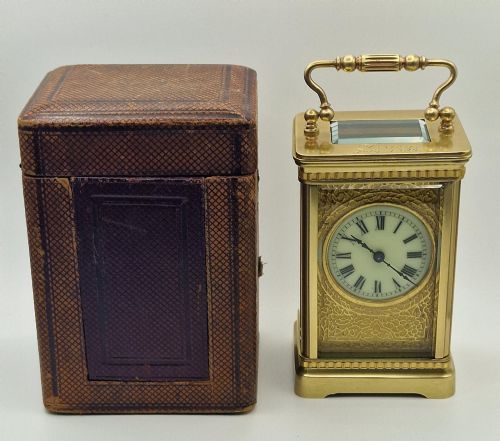
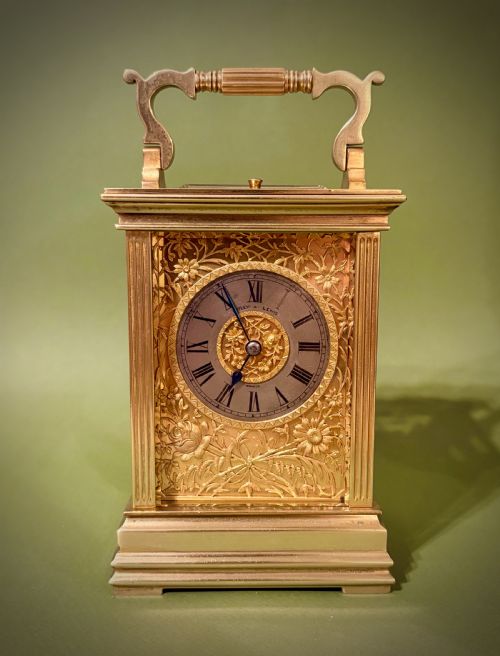
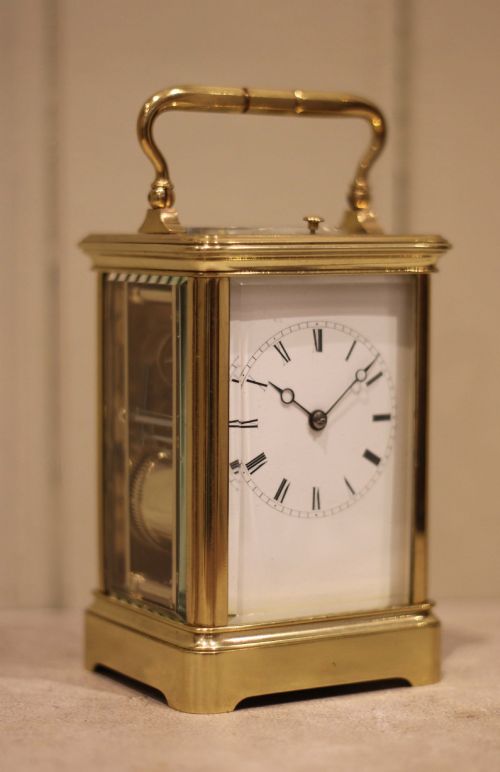
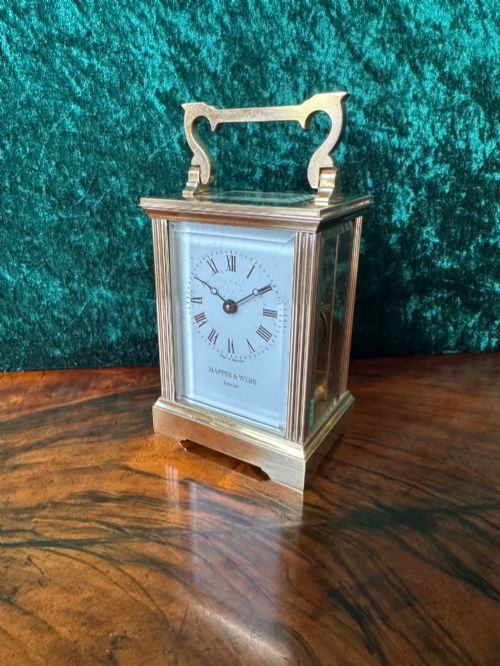
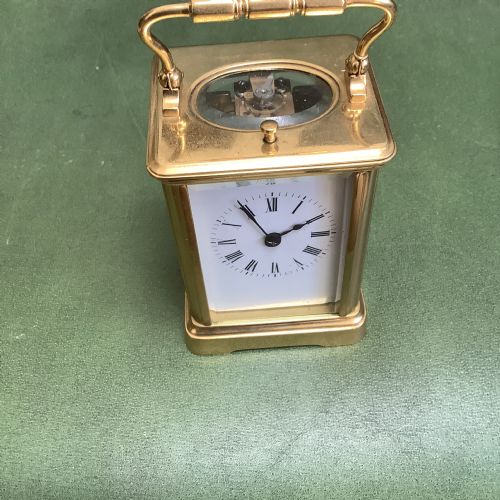
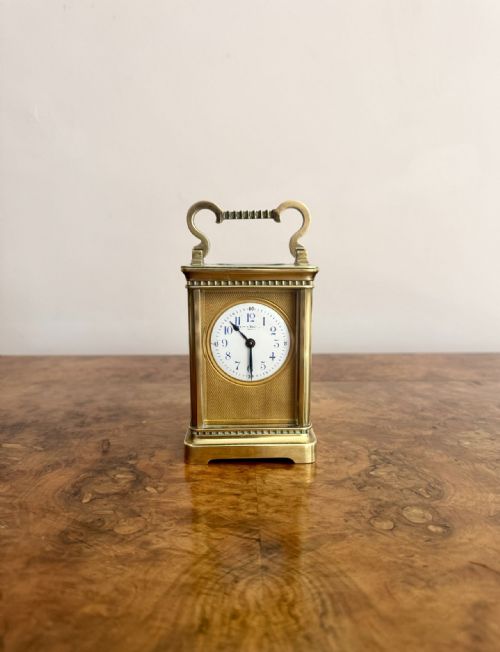
Carriage clocks and desk accessories rely on heavy cast brass, gilt brass, and polished glass cases enclosing complex mechanical movements. Interior fittings combine leather surfaces, silver plating, and enamel dials to organise writing instruments and timepieces securely.
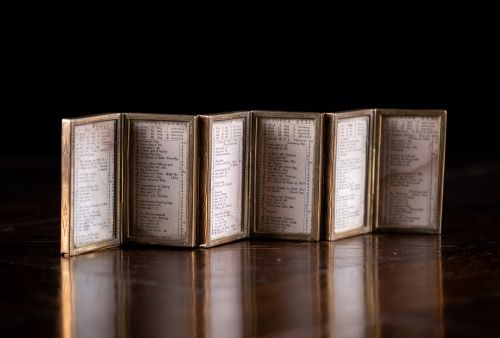
Miniature glass almanacs were bound in six-fold brass mounts so travellers could check the calendar without unfolding a bulky broadsheet.
Evaluating the pieces
Quality reveals itself in the crispness of brass engraving, the tightness of joint construction, and the presence of fully working mechanical movements with repeating functions or alarms. Plain wooden surfaces contrast with intricately engraved gilt cases and porcelain-mounted dials.
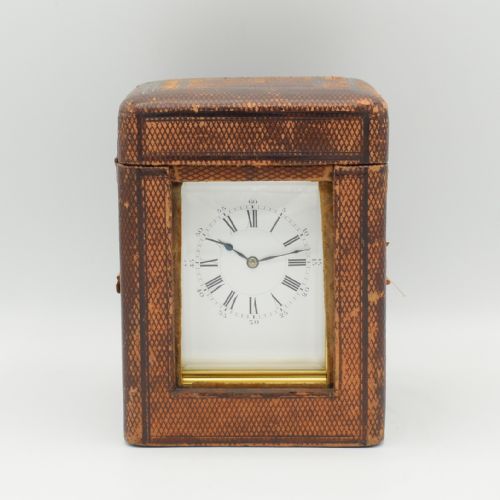
The degree of original preservation distinguishes standard examples from exceptional ones, particularly when fitted leather interiors, travel cases, and original keys survive intact.
Henri Jacot·Mappin and Webb·Pickford of London·Drocourt Paris·Antoine Redier of Paris·Duverdrey and Bloquel·Latshea and Sons Edinburgh·Jane Brownett Alexander Jones London
The Victorian Travelling Desk Glossary
- Campaign chest
- A modular set of drawers designed to separate into sections for military transport. These units use recessed brass handles and corner brackets to prevent damage.
- Carriage clock
- A portable spring-driven timepiece developed for travellers in the nineteenth century. They usually feature brass and glass glazed cases and often include striking or repeating mechanisms.
- Writing slope
- A portable box with a slanted writing surface that folds flat. Inside, compartments store stationery, inkwells, and pens.
- Gorge case
- A specific stepped brass frame style common on nineteenth-century French carriage clocks. The design provides structural strength while housing glass panels.
Victorian Travelling Desk: Frequently Asked Questions
What is a campaign desk?
A campaign desk is a portable wooden writing table built in sections with recessed brass hardware, designed for easy disassembly and transport by travellers or military officers.
These desks often feature folding stands and secret drawers to secure documents while on the move.
How do carriage clock movements work?
Carriage clocks use a spring-driven mechanism rather than hanging weights, allowing them to keep time while being moved.
Many examples include escapements visible through glass panels and striking or repeating trains that sound the hours and quarters.
What materials were used for travelling desks?
Travelling desks were primarily constructed from durable hardwoods like mahogany, walnut, and tiger oak to resist warping and impact during transit.
They incorporate brass corners, leather writing surfaces, and glass inkwells framed in silver plate.
How do I care for a Victorian travelling desk?
Keep wooden surfaces nourished with appropriate wax and protect leather inserts from excessive dryness or direct sunlight.
Metal components such as brass straps require gentle cleaning to preserve their natural finish without removing historical patination.