


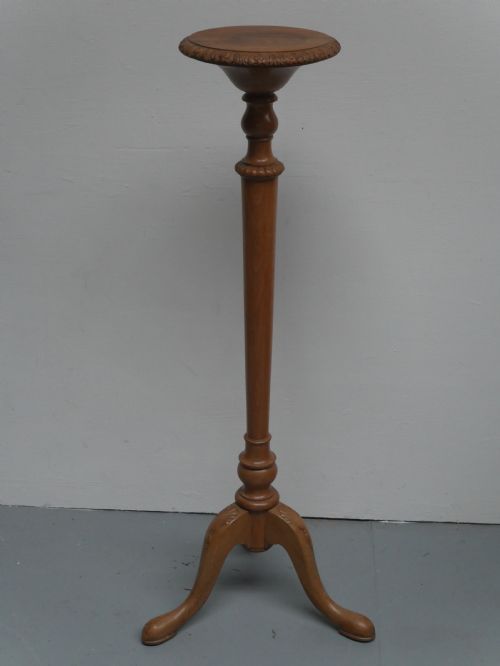

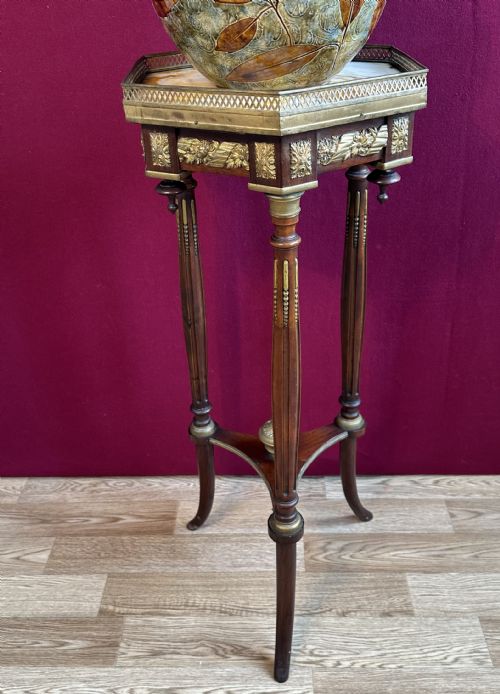


Victorian Torchere Pedestal
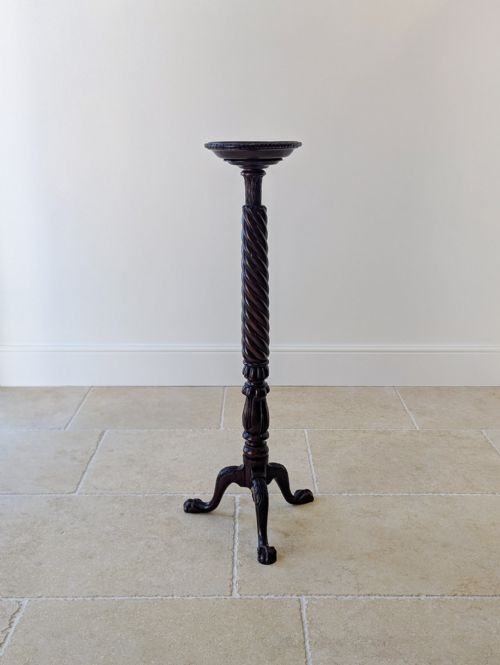
A victorian torchere pedestal elevates a bust, plant or lamp, bringing height and structural form to a room.
Victorian Torchere Pedestal
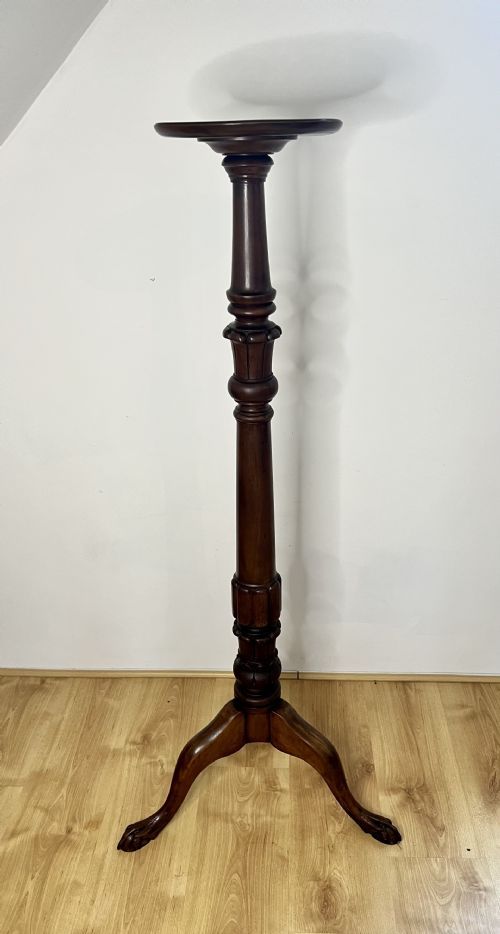
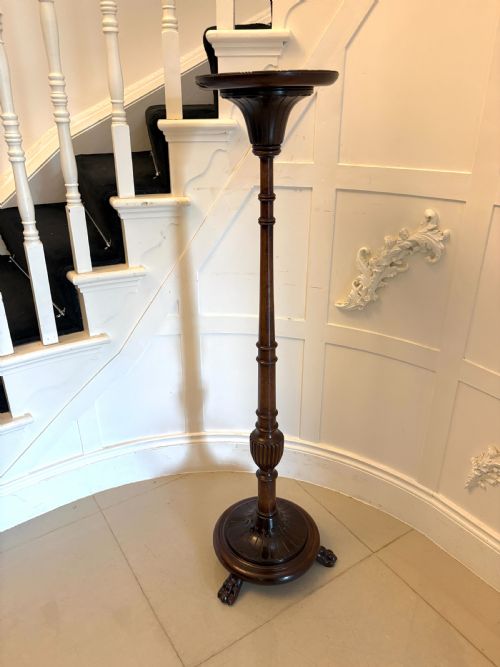
A victorian torchere pedestal is a tall, slender stand designed to display decorative objects such as plants, urns, lamps or busts. These pieces take the form of columns, pillars and tripod stands that use vertical space to draw the eye upward in a room. Mahogany, walnut and oak appear frequently among the listings, alongside diverse stylistic revivals from the nineteenth century.
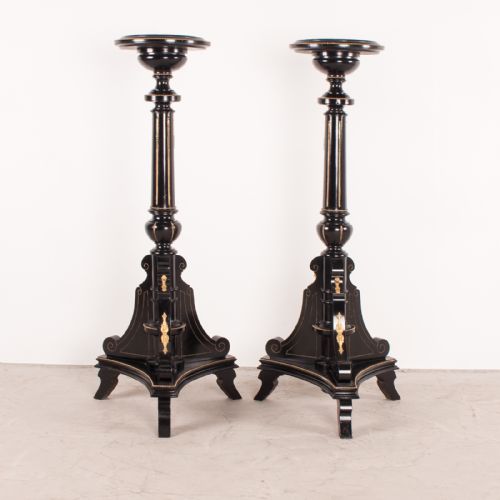
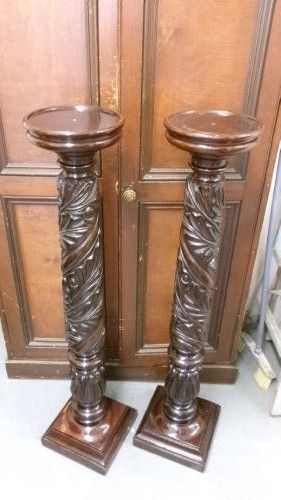
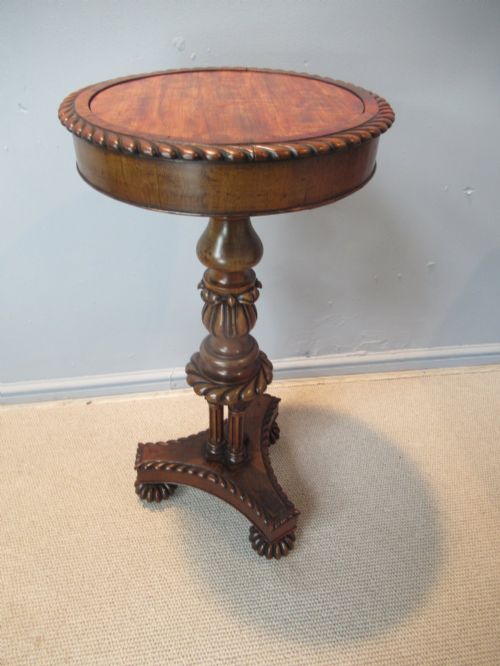
The versions most commonly met on this page are carved mahogany and walnut columns dating from the Victorian era. Many serve double duty as plant stands or jardiniere supports, while others feature classical or figural carving like caryatids and Blackamoor figures. Pair formats surface alongside single tall columns, reflecting the original domestic layouts of country houses and parlours.
How they were made
Cabinet makers utilised dense hardwoods including mahogany, walnut, rosewood and oak to achieve the structural stability required for tall, narrow supports. These woods were often turned on a lathe to create spiral pillars or fluted columns, then finished with hand carving.
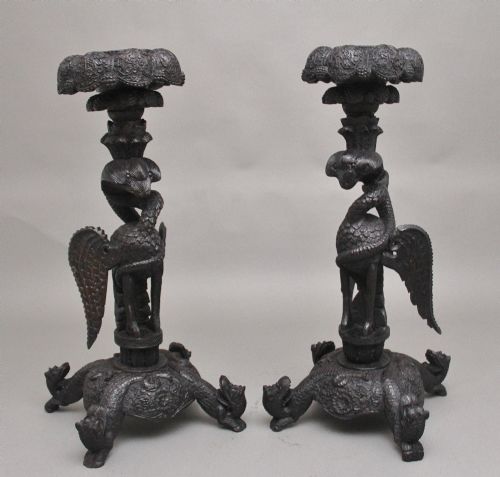
Decorative embellishments relied on contrasting materials such as brass, ormolu, onyx and ebonised wood to accent the primary timber structure. Surfaces received French polishing or lacquer work, particularly on pieces influenced by the Aesthetic Movement or Anglo-Indian traditions.
Keep an eye out for crouching figures and winged griffins holding up your houseplants.
What varies in quality
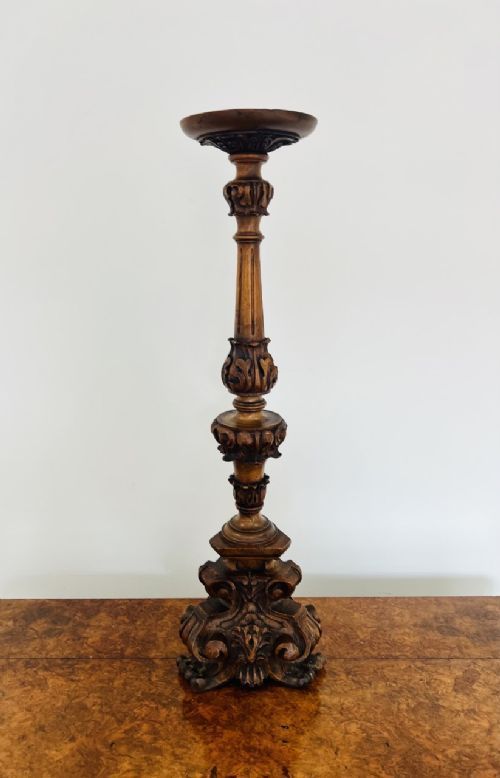
The depth and crispness of the hand carving dictate the standing of a pedestal, separating mass-produced items from superior workshop output. Crisp acanthus leaves, deep relief figural work and precise turning indicate skilled labour.
Choice of timber grain and structural integrity also divide the range, as heavier solid hardwoods command greater presence than lighter softwood cores. Bases that remain steady under heavy marble or bronze mounts show sound original construction.
Shoolbred
The Victorian Torchere Pedestal Glossary
- Torchere
- A tall stand or pedestal originally designed to hold a candle or torch. Modern usage applies the term to any slender column used for display.
- Jardiniere
- An ornamental pot or stand for holding plants and flowers. These often sit atop a tall pedestal column.
- Caryatid
- A sculptured female figure serving as an architectural support instead of a column. They appear carved into the stems of nineteenth-century stands.
- Ebonised
- Wood stained or painted to imitate ebony. This dark finish was popular in nineteenth-century decorative arts.
- Ormolu
- Gilded bronze mounts applied to furniture and stands. They provide metallic contrast against dark timbers.
Victorian Torchere Pedestal: Frequently Asked Questions
What is a victorian torchere pedestal used for?
These tall stands provide an elevated platform for displaying decorative items such as table busts, urns, lamps and potted plants. Their slender footprint allows them to occupy corners or empty wall spaces without crowding a room.
Historically, they functioned to hold lighting sources or showcase prized collection pieces at eye level. Today, they serve a similar purpose in domestic interiors, adding vertical interest and focal points.
How do I choose the right height?
Height selection depends entirely on the object you intend to place on top and the scale of the surrounding furniture. Taller columns suit larger rooms with high ceilings or heavy display items like heavy bronze busts.
Lower stands work well beside seating areas or in tighter spaces where an overextended column might look unbalanced. Review the listed dimensions carefully against the item you plan to mount.
How can I tell the period apart?
Nineteenth-century pieces often display hand-carved details, dense primary timbers and traditional joinery methods. Revival styles ranging from Gothic to Chippendale provide clues through specific ornamentation motifs.
Later Edwardian or twentieth-century examples frequently show lighter construction or alternative finishes like lacquer. Comparing the secondary woods and wear patterns helps confirm the age of the column.