
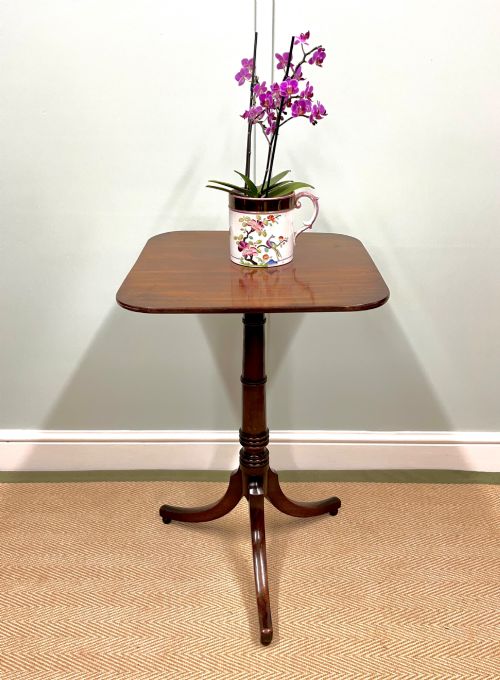
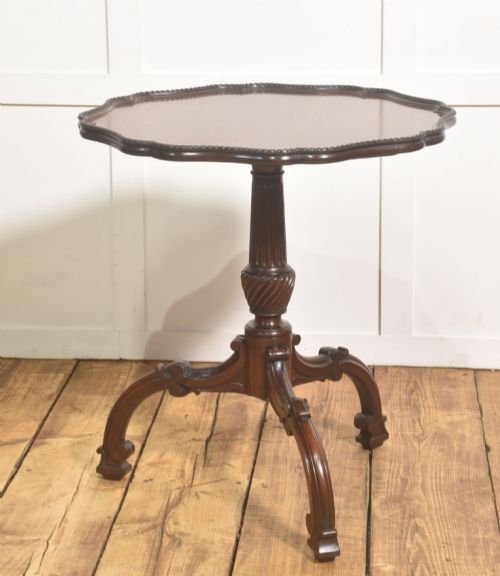
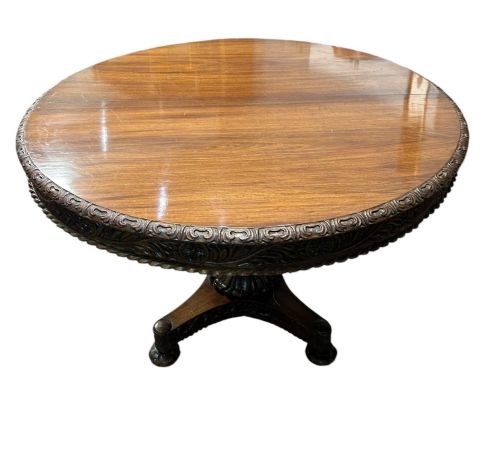
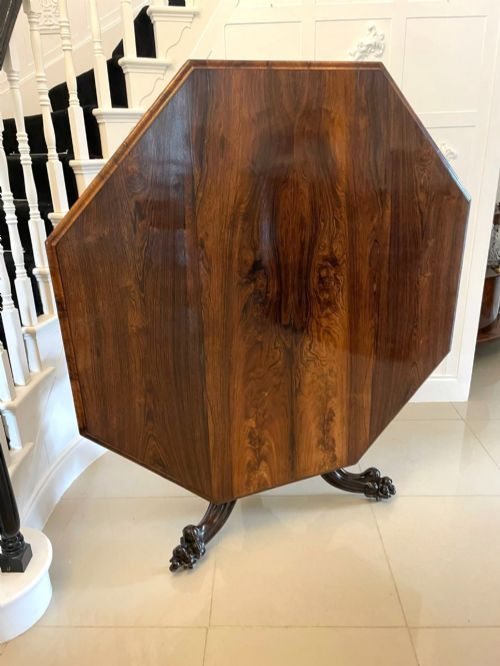
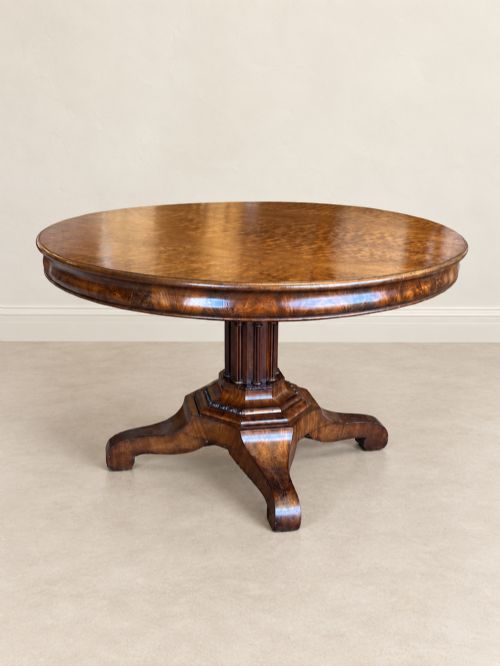
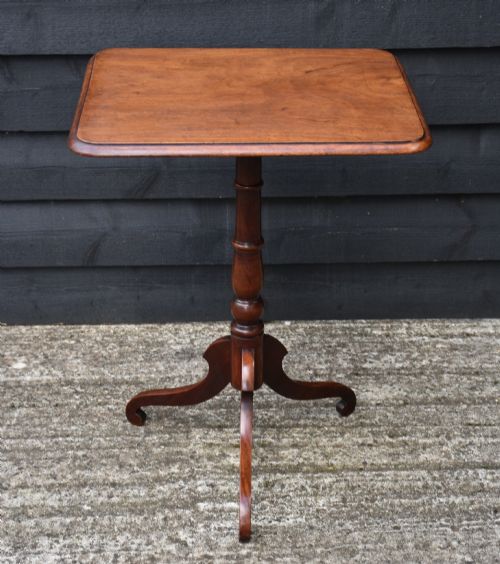
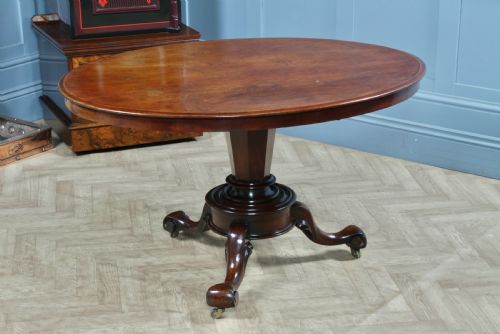
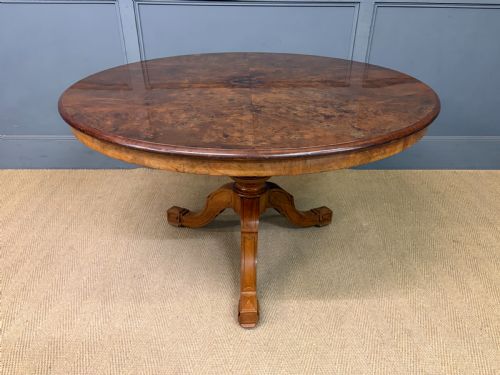
Victorian Tilt Top Pedestal Table
A victorian tilt top pedestal table combines clever engineering with rich timber, saving space when not in use.
Materials and construction
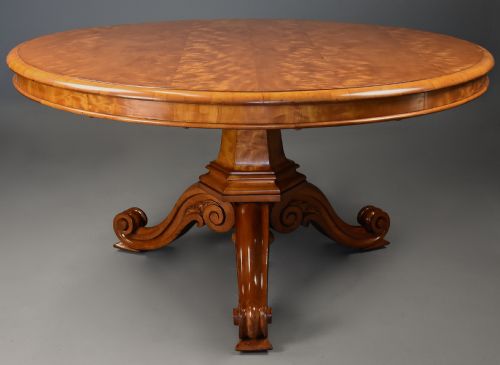
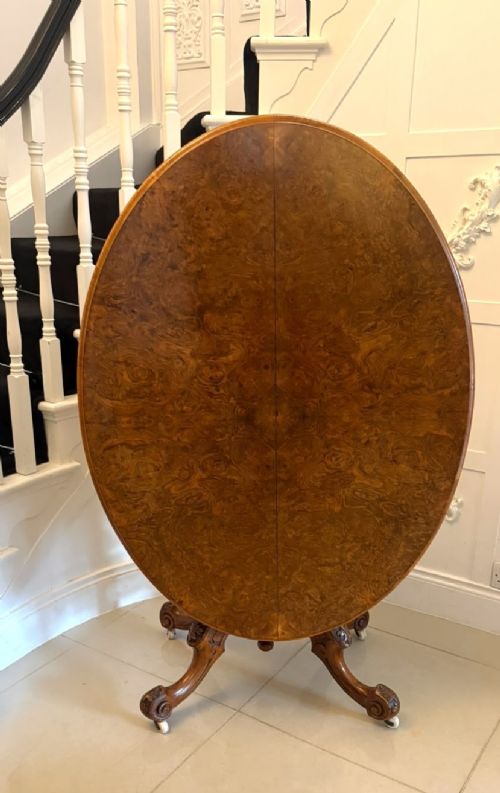
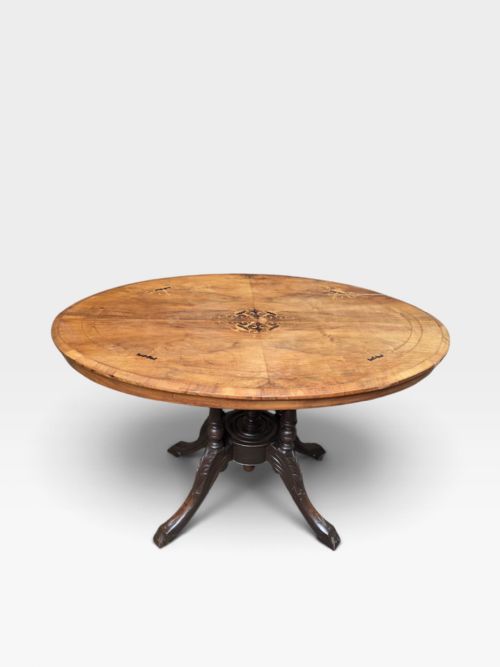
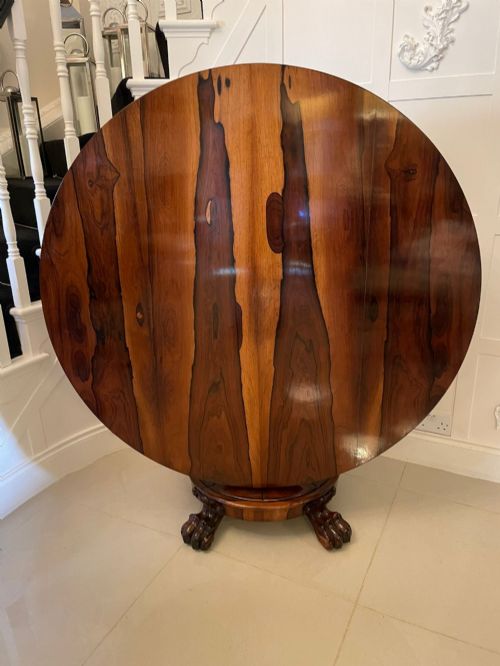
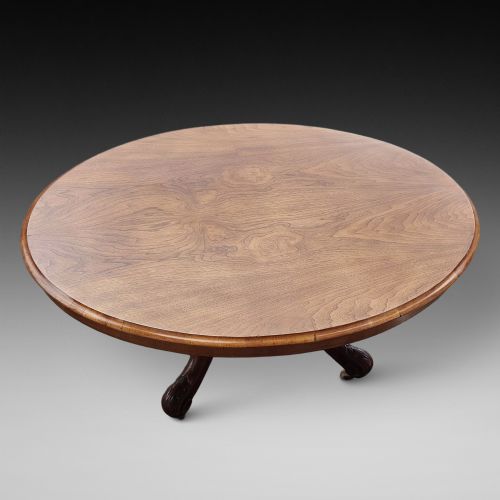
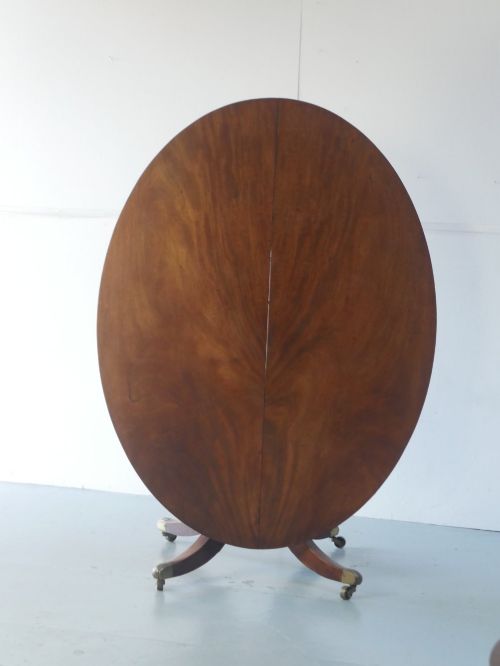
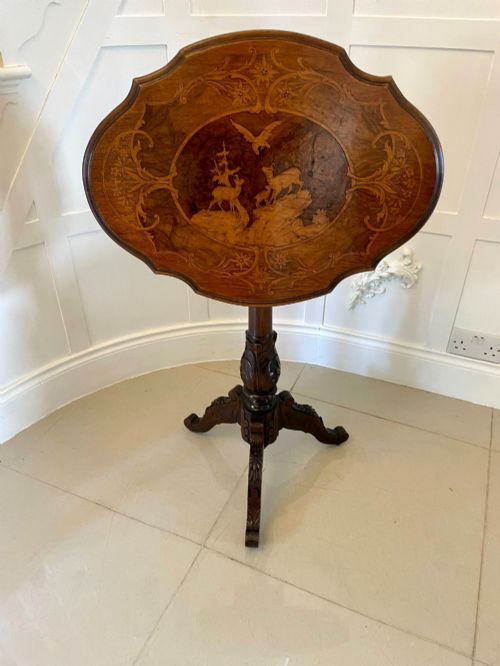
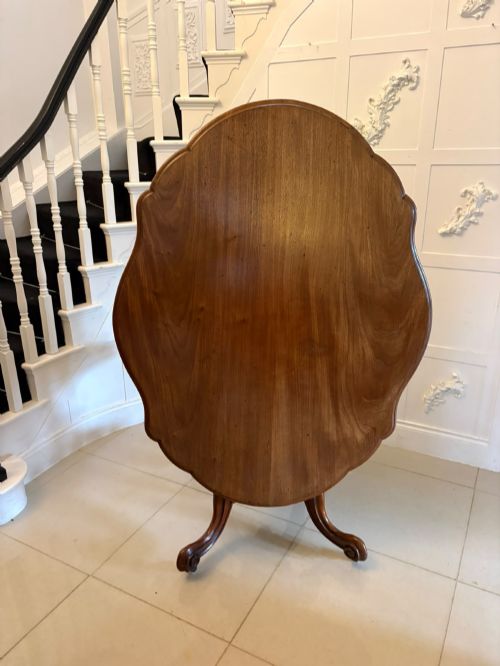
Cabinet makers utilised dense hardwoods such as mahogany, walnut, burr walnut, and rosewood, applying them as solid timbers or finely figured veneers over secondary woods. Boxwood inlay, marquetry, and paint further decorated the surfaces of these circular and oval tops.
Support structures rely on heavy turned and carved pillars set onto tripod, quadrapod, or plateau bases, fitted with brass mechanisms or iron catches to release the pivoting top.
Judging quality
The distinction between standard utility items and exceptional pieces lies in the choice of timber figure, such as burr walnut or highly grained mahogany, and the crispness of hand-carved details on the pedestal base. Elaborate marquetry work, boxwood stringing, and solid rosewood components elevate the standing of a piece.
Structural integrity depends on the precision of the tilt mechanism and the stability of the central column where it joins the feet, ensuring the top rests completely flat when lowered.
The inventory records pieces built from mahogany, walnut, burr walnut, rosewood, and oak, spanning the Regency, William IV, and Victorian eras.
Gillows
The Victorian Tilt Top Pedestal Table Glossary
- Tilt top
- A table mechanism allowing the surface to pivot ninety degrees for compact storage. This clever feature permitted tables to stand against walls when not in use.
- Pedestal base
- A single central column supporting the table top, resting on tripod legs, a quadrapod base, or a solid platform. It frees up floor space around the seating area.
- Loo table
- A large round or oval Victorian table designed for card games and social gatherings. These tops frequently tilt to save space in the drawing room.
- Marquetry
- Decorative patterns formed by fitting together small pieces of wood veneer. Craftsmen used contrasting timbers like boxwood and walnut to create intricate floral or geometric designs.
- Tripod base
- A support structure featuring three legs radiating from the base of the central column. This configuration maintains stability on uneven nineteenth-century floors.
Victorian Tilt Top Pedestal Table: Frequently Asked Questions
How do I use a tilt top table?
Release the brass catch or wooden toggle underneath the surface to pivot the top into a vertical position. This allows the table to be pushed neatly against a perimeter wall when the room needs floor space.
Lower the top back to the horizontal position and secure the latch before placing items on the surface. Ensure the mechanism locks firmly to prevent accidental movement during use.
What is a loo table?
A loo table is a nineteenth-century multi-purpose table sized for entertaining, dining, or playing card games such as loo. They feature large circular or oval tops supported by heavy carved pedestals.
Because these tables measure larger than standard wine or lamp tables, their tilting mechanism was essential for clearing the centre of the drawing room between gatherings.
How can I tell the period?
Examine the secondary timbers, the style of carving on the pedestal, and the specific decorative techniques applied to the surface. Earlier Regency and William IV pieces often display clean mahogany lines, while high Victorian examples favour burr walnut, heavy carved quadrapod bases, and marquetry.
Construction methods inside the pedestal pivot box also help date the piece, as metal catches evolved from simple wooden pins and brass thumbscrews during the nineteenth century.
Can these tables hold heavy items?
Solid mahogany and rosewood examples provide sturdy support for daily dining and heavy lamps, provided the central column and feet remain tightly joined. Tripod wine tables suit lighter items like glasses and books rather than heavy porcelain.
Check that the pivot block beneath the top makes full, flush contact with the top of the pedestal column to distribute weight evenly.