

Victorian Tiered Shelf Unit
A victorian tiered shelf unit brings vertical display and rich timber grain to a room, offering multiple levels for books and ornaments.
Victorian Tiered Shelf Unit
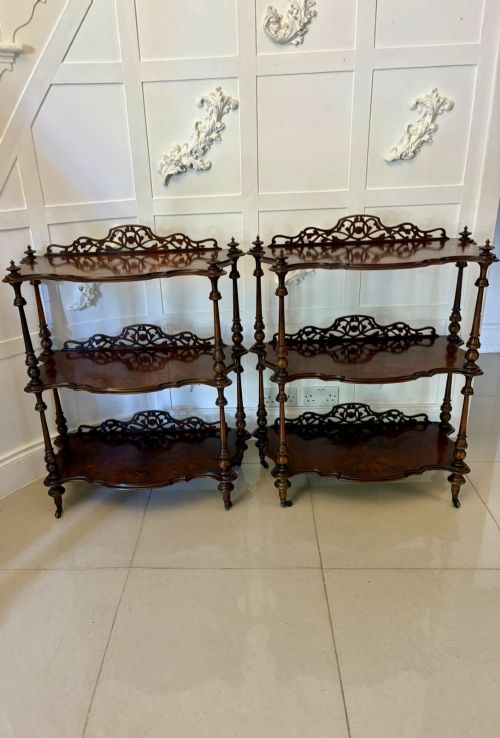
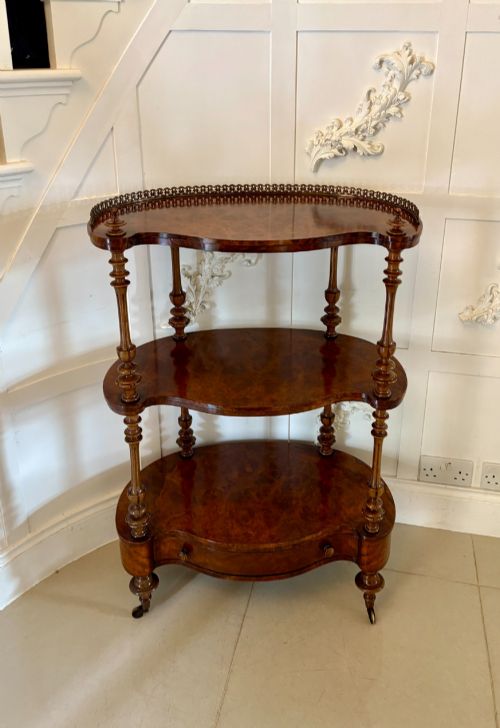
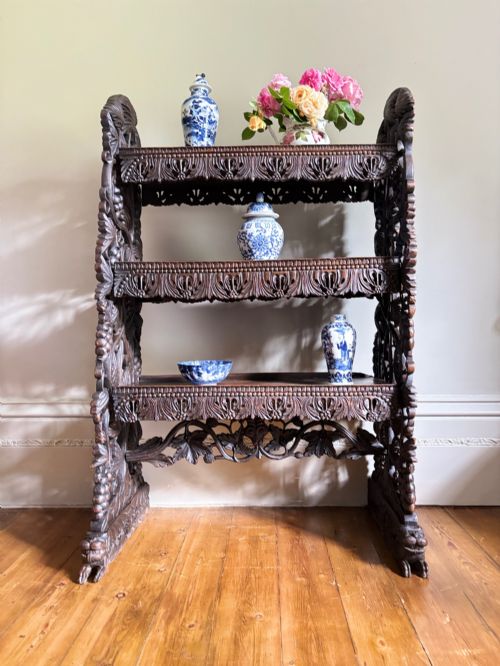
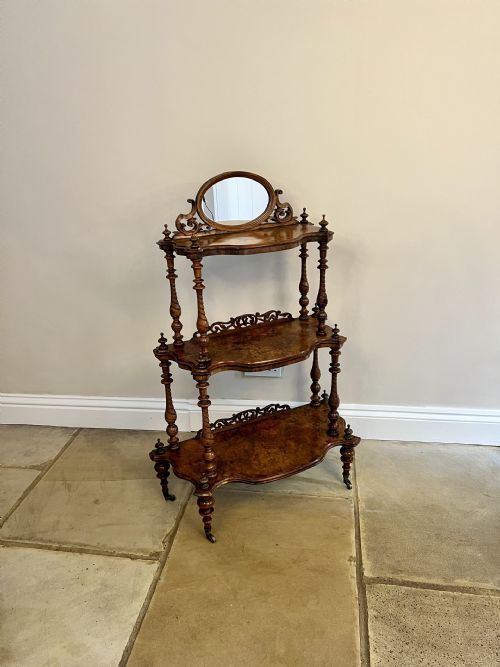
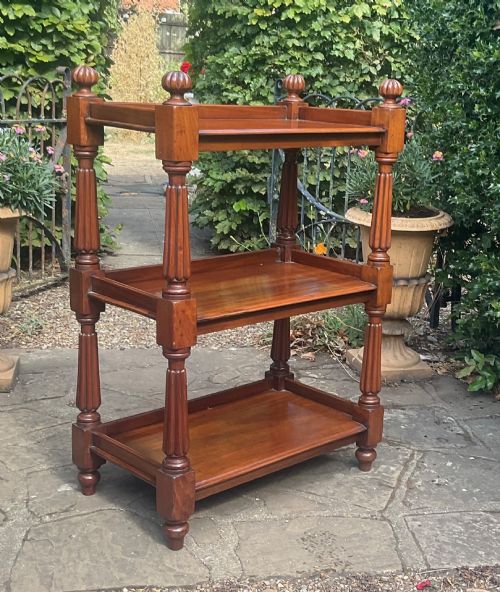
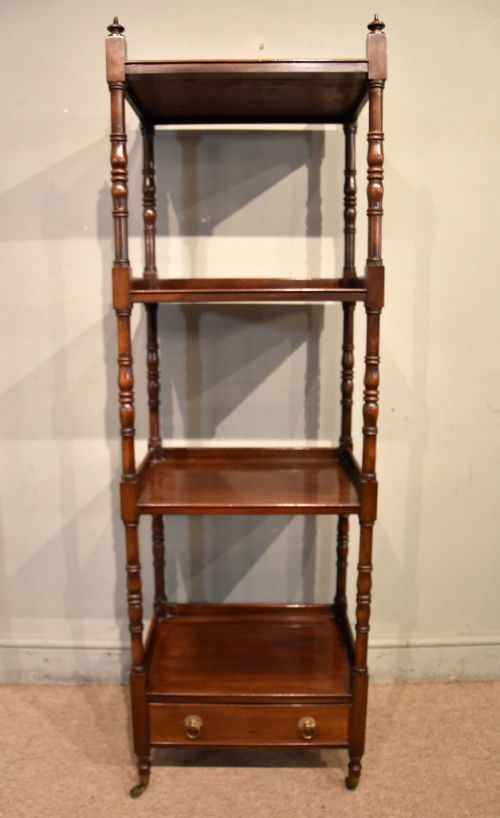
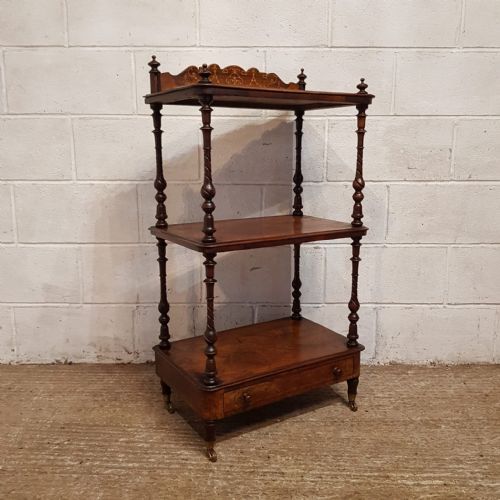
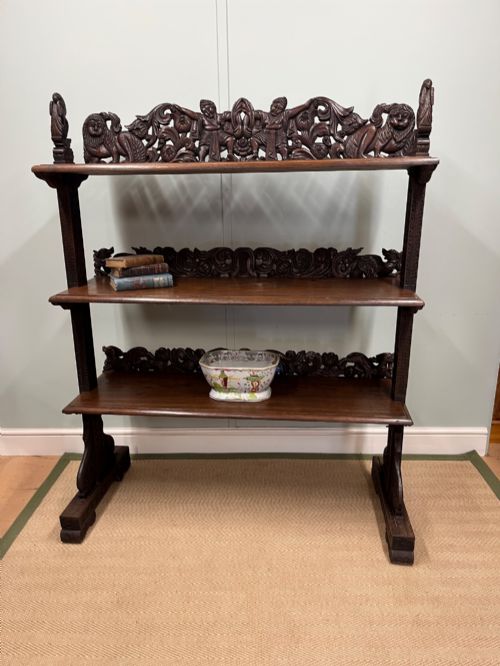
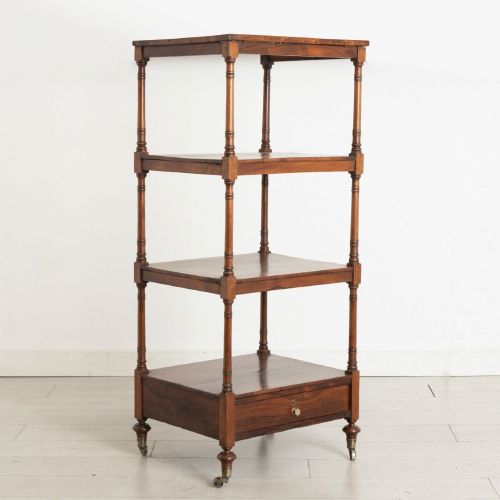
A victorian tiered shelf unit functions as a multi-level display piece, commonly known as a whatnot, étagère, or freestanding buffet. These pieces provide open platforms arranged vertically to hold books, ceramics, and decorative objects.
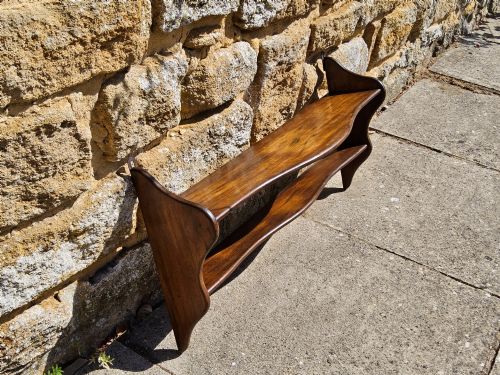
The selections on this page span the nineteenth century, including specific dates from eighteen fifty to nineteen hundred, alongside Edwardian and Regency examples. Forms range from corner units and hanging wall shelves to large freestanding pieces with multiple tiers.
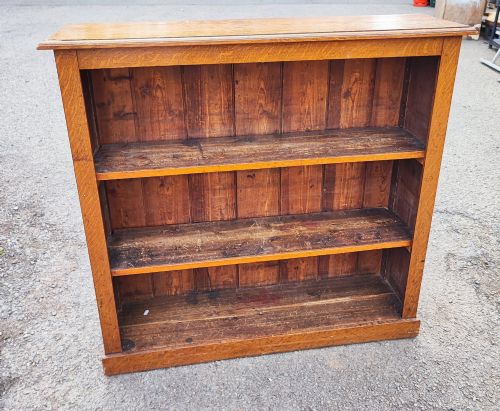
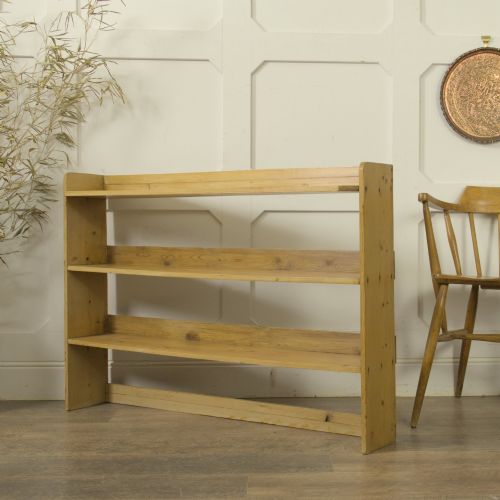
Walnut, mahogany, and rosewood dominate the freestanding designs, while pine and oak appear frequently in wall-hanging and bookcase formats. Burr walnut and figured walnut provide decorative grain patterns across many of the central standing pieces.
Materials and construction
Cabinet makers utilised dense hardwoods such as mahogany, walnut, and rosewood for freestanding tiered shelves, often selecting burr veneers to create figured surfaces on top tiers and panels. Secondary timbers like pine appear in structural components and backing boards.
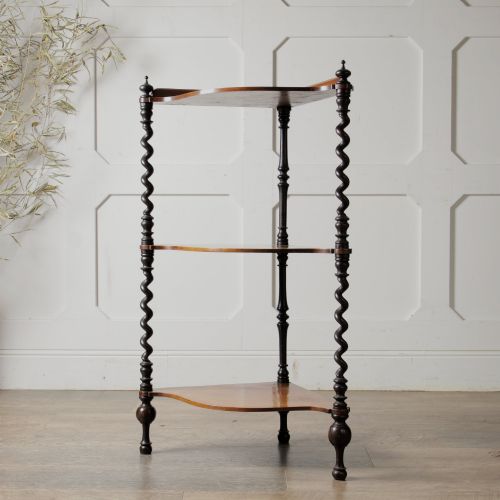
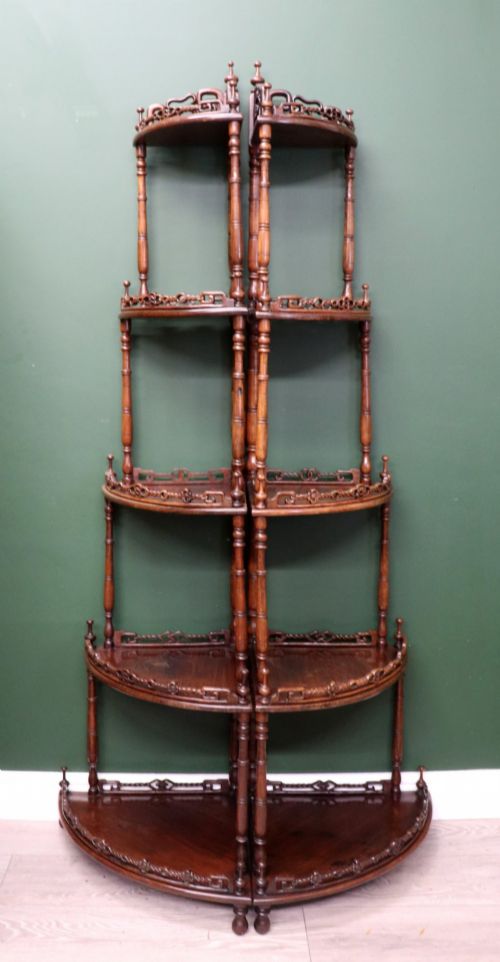
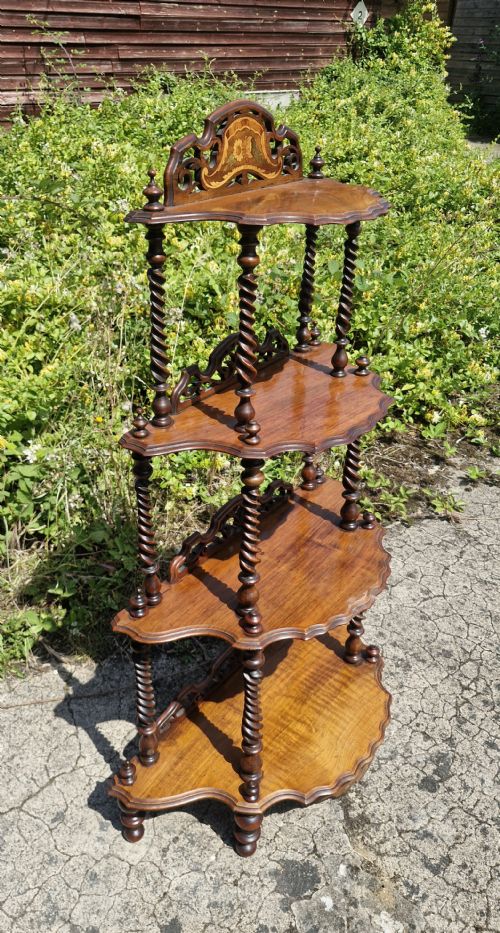
Joinery methods include turned columns, barley twist supports, and fret-cut sides, which elevate individual platforms above one another. Many freestanding units incorporate original castors to allow smooth movement across the floor.
Listings feature woods spanning mahogany, walnut, rosewood, burr walnut, oak, pine, teak, and padauk across nineteenth-century periods.
Distinctions in quality
The choice of timber grain dictates visual appeal, with figured burr walnut and rich rosewood commanding attention above standard pine or plain oak. Finely turned columns, carved fretwork, and serpentine shapes separate elaborate exhibition pieces from simpler utilitarian shelving.
The Victorian Tiered Shelf Unit Glossary
- Whatnot
- A freestanding piece of furniture featuring multiple open shelves for displaying ornaments or books. These units became popular during the nineteenth century for parlour and drawing-room use.
- Étagère
- A set of open shelves or tiers designed for displaying small objects. This French term often applies to graceful, multi-tiered stands made from fine hardwoods.
- Buffet
- A tiered shelving unit or sideboard used for holding tableware or decorative items. Examples in this category often feature low proportions and multiple open tiers.
- Burr walnut
- A prized wood veneer harvested from the warted growths on walnut trees. It yields complex, swirling grain patterns highly valued by Victorian cabinet makers.
- Barley twist
- A carved wooden support column shaped into a spiral twist. This decorative turning style appears frequently on nineteenth-century shelf uprights.
Victorian Tiered Shelf Unit: Frequently Asked Questions
What is a tiered shelf unit used for?
These units serve as vertical display spaces for books, ceramics, and ornaments in a room. Multiple open platforms allow items to be arranged cleanly without taking up excessive floor space.
Freestanding versions sit against walls or in corners, while hanging variations mount directly to wall surfaces. They offer practical storage alongside decorative presentation.
How do I identify a Victorian whatnot?
Victorian whatnots typically feature three or more stacked wooden tiers supported by turned columns, pillars, or barley twist uprights. Walnut, mahogany, and rosewood are the primary timbers used during this period.
Many examples include low drawers beneath the shelves or rest on small castors. The styling often incorporates subtle carving or fret-cut woodwork along the edges.
Are these shelves sturdy enough for heavy books?
Most tiered shelf units are built to hold decorative objects, ceramics, and moderate quantities of books. Freestanding hardwood versions offer solid support across their platforms.
Lighter wall-hanging shelves or pine bookcases suit smaller volumes and ornaments. Checking the joints and upright supports ensures each tier remains secure.
Where should I place a corner whatnot?
A corner whatnot fits neatly into unused room angles, making efficient use of awkward spaces. These triangular units provide vertical display height without projecting into the main floor area.
They pair well with traditional seating arrangements or dark timber furniture. Placing them away from direct sunlight protects the polished wood finishes.
What is the difference between an etagere and a whatnot?
An etagere is typically a lighter, more decorative set of open shelves derived from French furniture traditions. A whatnot is often a sturdier English equivalent used for general display.
In practice, nineteenth-century makers and modern dealers often use both terms interchangeably for multi-tiered stands. The timber choice and column design remain the primary stylistic markers.