




Victorian Tier Sideboard
These pieces combine tiered display with practical storage, and a victorian tier sideboard anchors a dining room with robust timber and tiered presence.
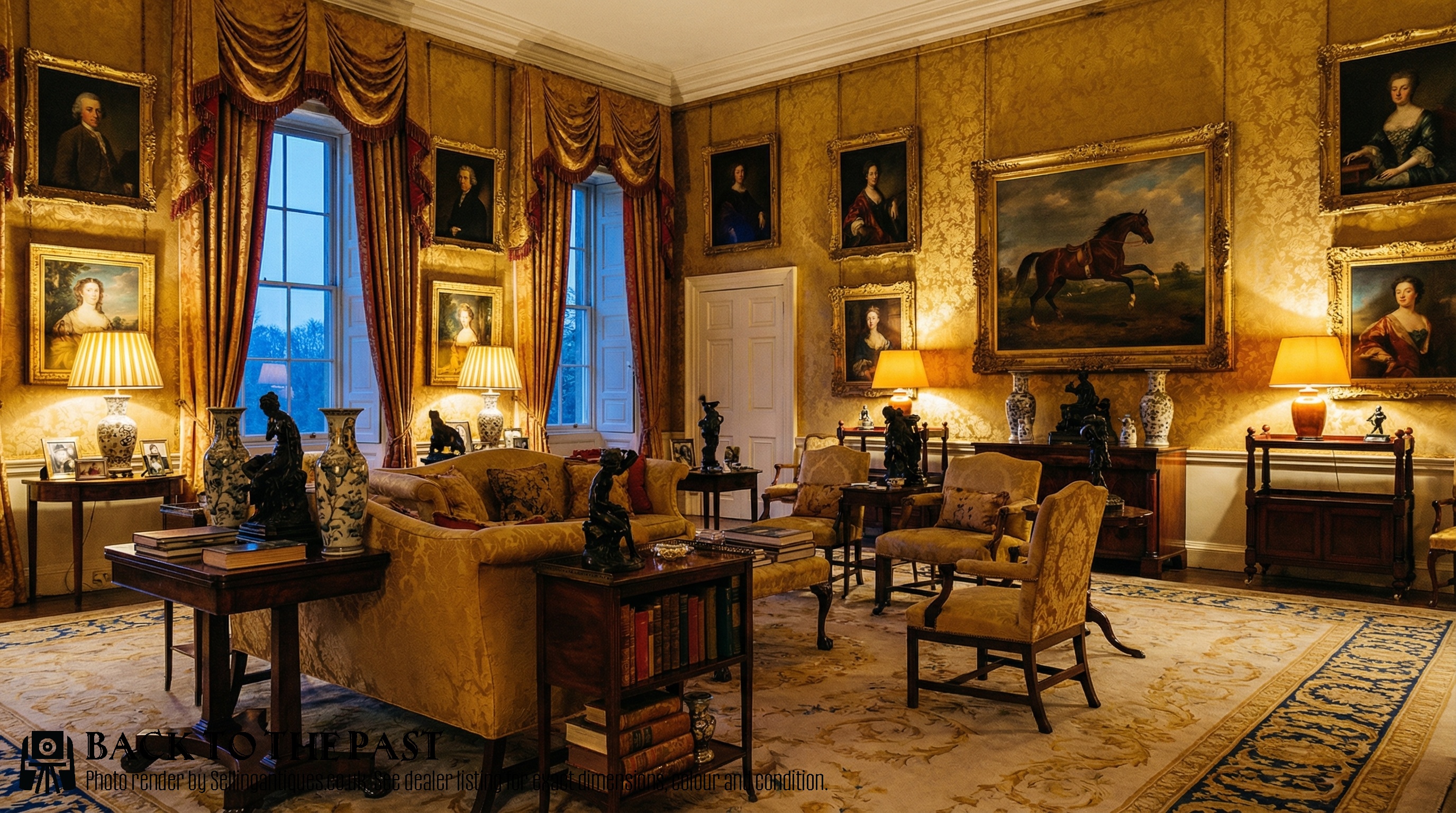
Victorian Tier Sideboard
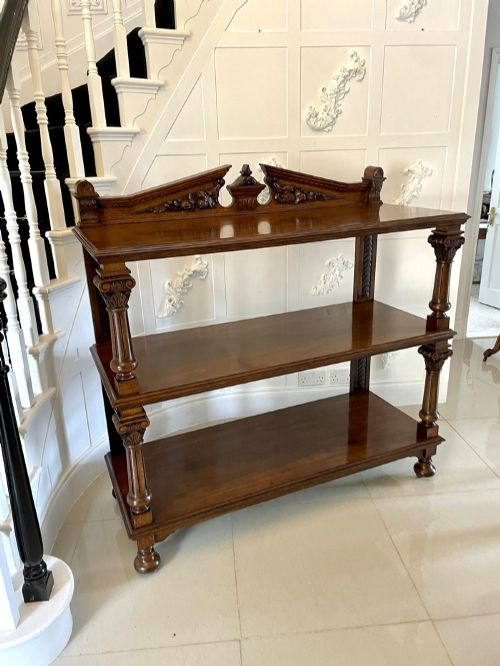
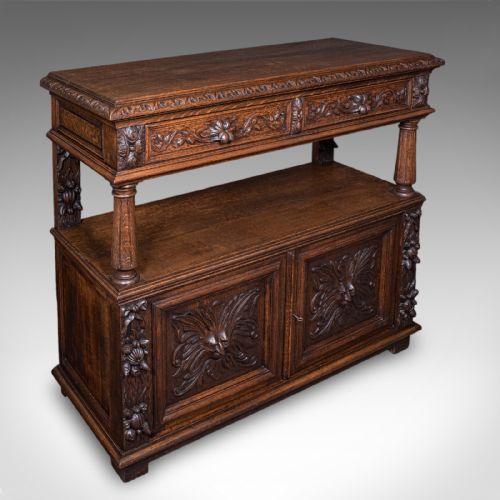
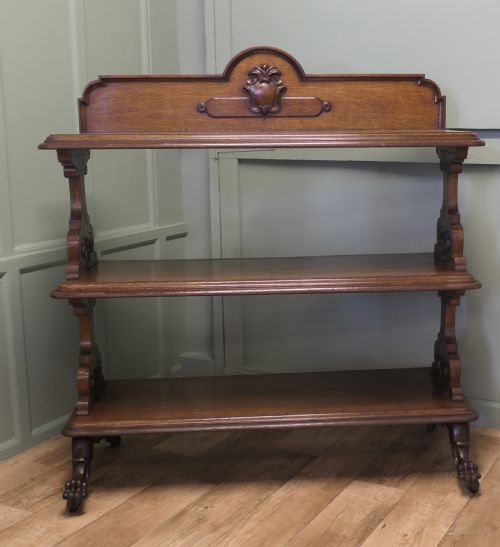
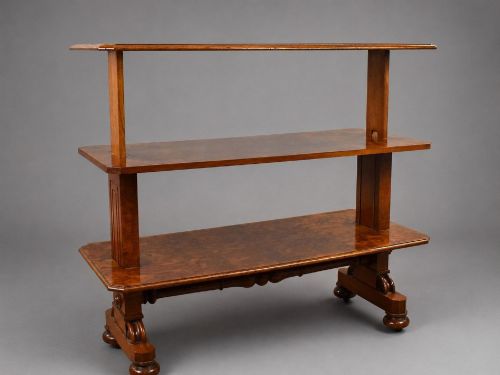
A victorian tier sideboard serves as a substantial dining room piece, combining a lower cabinet or serving surface with one or more upper display shelves. These multi-level constructions are frequently encountered as buffets, dumbwaiters, and chiffoniers.
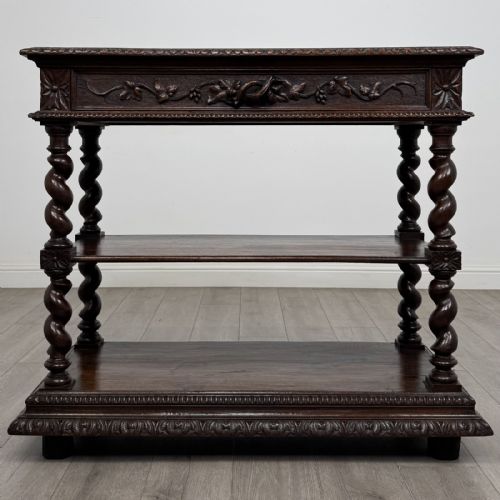
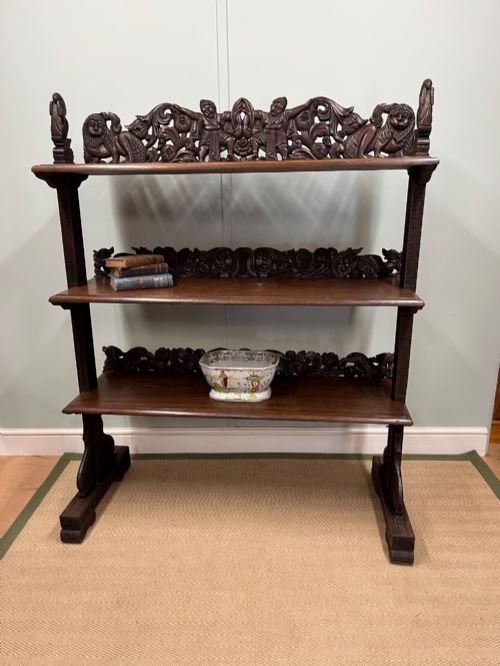
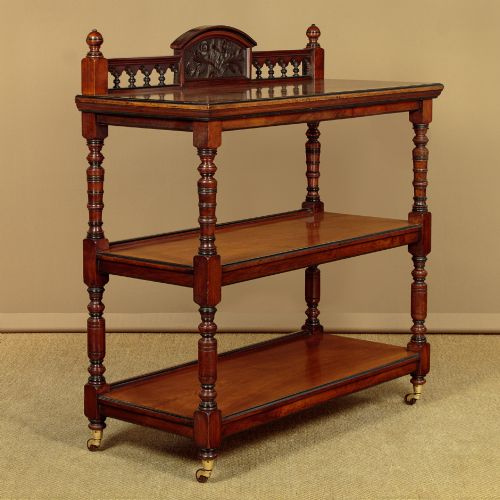
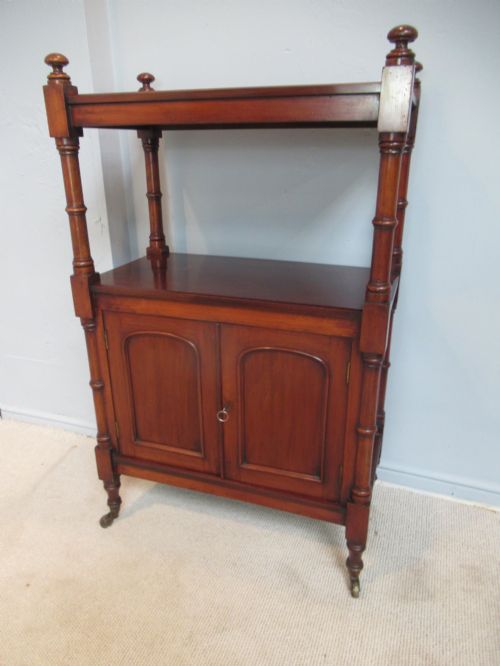
The layout typically incorporates heavy timbers and stepped shelving designed for serving and displaying plate. The selection ranges from compact two-tiered mahogany chiffoniers to towering three-tiered oak buffets carrying carved details.
How they were made
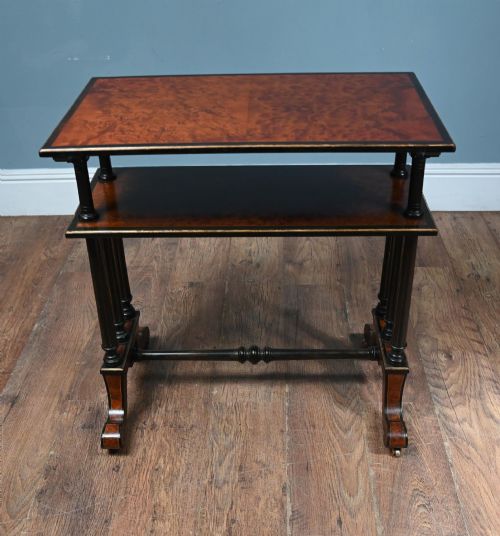
Cabinet makers utilised dense hardwoods including mahogany, oak, and walnut, frequently selecting figured veneers or burr walnut for decorative surfaces. These timbers were joined using traditional methods and often mounted on original castors for mobility.
Carving and turnings defined the decorative vocabulary, manifesting in gothic motifs, aesthetic movement lines, or profuse foliate relief work. Secondary woods like pine appear in internal framing and backing boards.
Victorian Tier Sideboard Retail Price Guide 2026
Typical asking prices for victorian tier sideboard among the pieces listed under this phrase on Sellingantiques today, from the lower quarter to the upper quarter. They describe what is for sale here now, not the wider market.
Listings feature 19th century and Victorian periods alongside Edwardian examples, constructed in mahogany, oak, walnut, and pine.
What varies in quality
Quality rests upon the selection of timber and the crispness of the carving rather than the mere presence of decoration. Figured mahogany and burr walnut display superior natural grain patterns that elevate the visual weight of the piece.
Structural integrity and original elements dictate distinction, separating standard utility pieces from finely detailed cabinet work. The depth of relief in carved oak elements and the retention of original brass hardware or castors signal higher craftsmanship.
Gillows of Lancaster and London
The Victorian Tier Sideboard Glossary
- Dumbwaiter
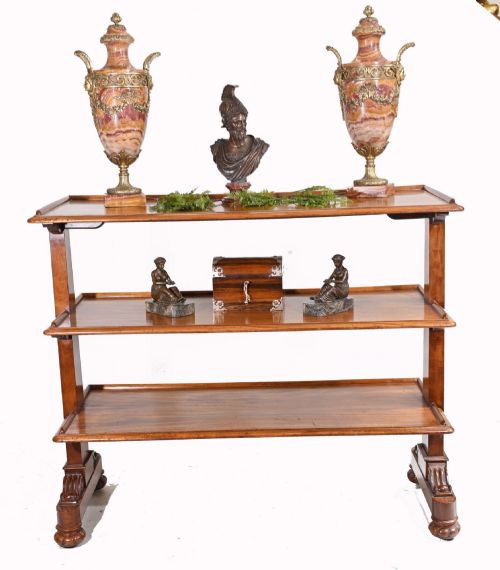
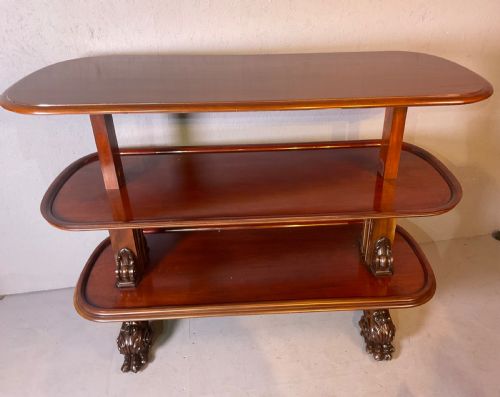
- A multi-tiered serving piece with shelves supported on turned columns, used for holding dishes during meals. These items often feature pivoting or fixed tiers in mahogany or oak.
- Chiffonier
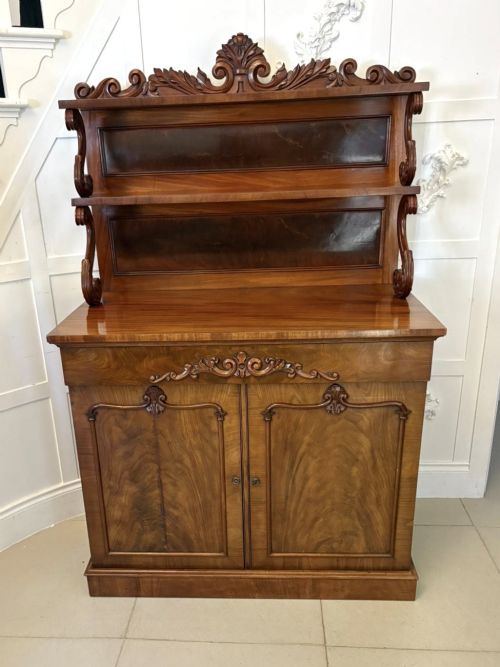
- A compact sideboard or cabinet featuring a lower enclosed cupboard and upper shelving. This form typically displays fine mahogany or burr walnut construction.
- Buffet
- A heavy serving table equipped with tiers or cupboards for storing dining implements. Examples often incorporate robust oak with gothic or aesthetic movement carving.
- Pollard oak
- Timber taken from trees that were cut back to encourage dense branching, producing a heavily knotted and burr-like grain. Cabinet makers utilised this wood for dramatic surface patterning on doors and drawer fronts.
- Credenza
- A low dining room cabinet lacking legs, designed for display and serving. These pieces frequently showcase extensive veneer work and brass mounts.
Victorian Tier Sideboard: Frequently Asked Questions
What is a tier sideboard used for?
These pieces served primarily in dining rooms and morning rooms for storing tableware, serving food, and displaying decorative ceramics. The upper tiers held plates and glassware while the lower cupboards concealed linens and bottles.
Today, they function effectively as standalone display and storage units in contemporary dining spaces or large hallways, providing surface area for lamps and objects.
How do I identify a Victorian piece?
Identification relies on observing the combination of timber selection, construction methods, and characteristic decorative styles such as Gothic Revival or Aesthetic Movement. The presence of dense mahogany, walnut, or heavy carved oak typically points to nineteenth-century manufacture.
Look for construction details like hand-cut joints and secondary pine framing. Castors and brass hardware also offer clues to the period of origin.
What is the difference between a buffet and a chiffonier?
A buffet is generally a larger, heavier serving piece with multiple tiers or extensive cupboard space designed for formal dining rooms. A chiffonier is more compact, typically featuring a single lower cupboard beneath a small upper shelf or whatnot section.
Both forms belong to the broader category of Victorian dining furniture but serve different spatial scales and storage requirements.
How do I care for antique wood furniture?
Maintain timber surfaces by dusting with a dry cloth and applying natural beeswax periodically to nourish the grain. Avoid placing pieces near direct heat sources or in strong sunlight to prevent the timber from drying and splitting.
Keep humidity levels stable within the room to protect both solid hardwoods and delicate burr walnut veneers from warping.