

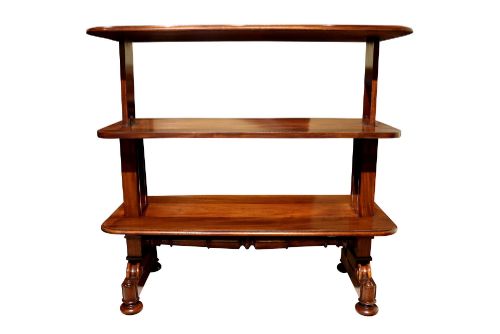
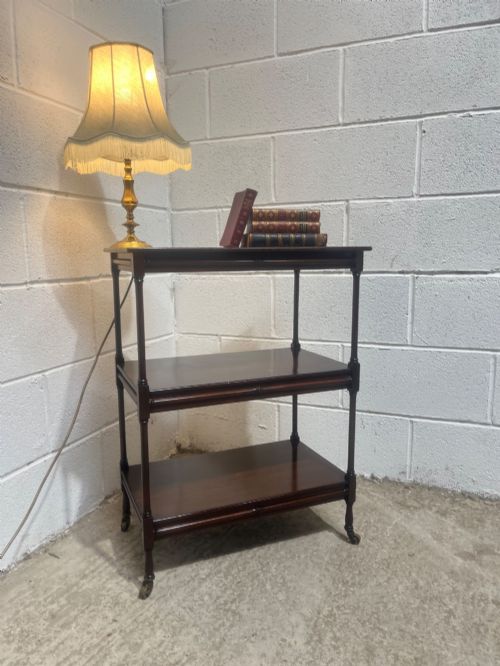
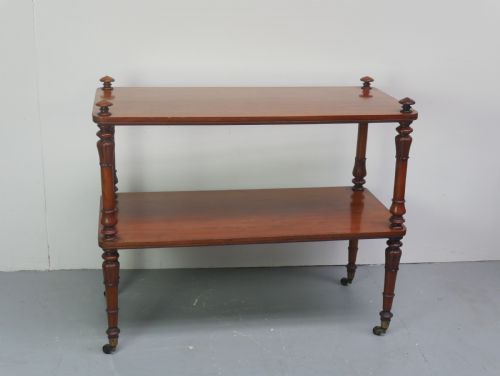


Victorian Mahogany Dinner Wagon
A victorian mahogany dinner wagon is a heavy tiered serving piece built for nineteenth-century dining rooms, prized for practical tiered tiers and rich timber.
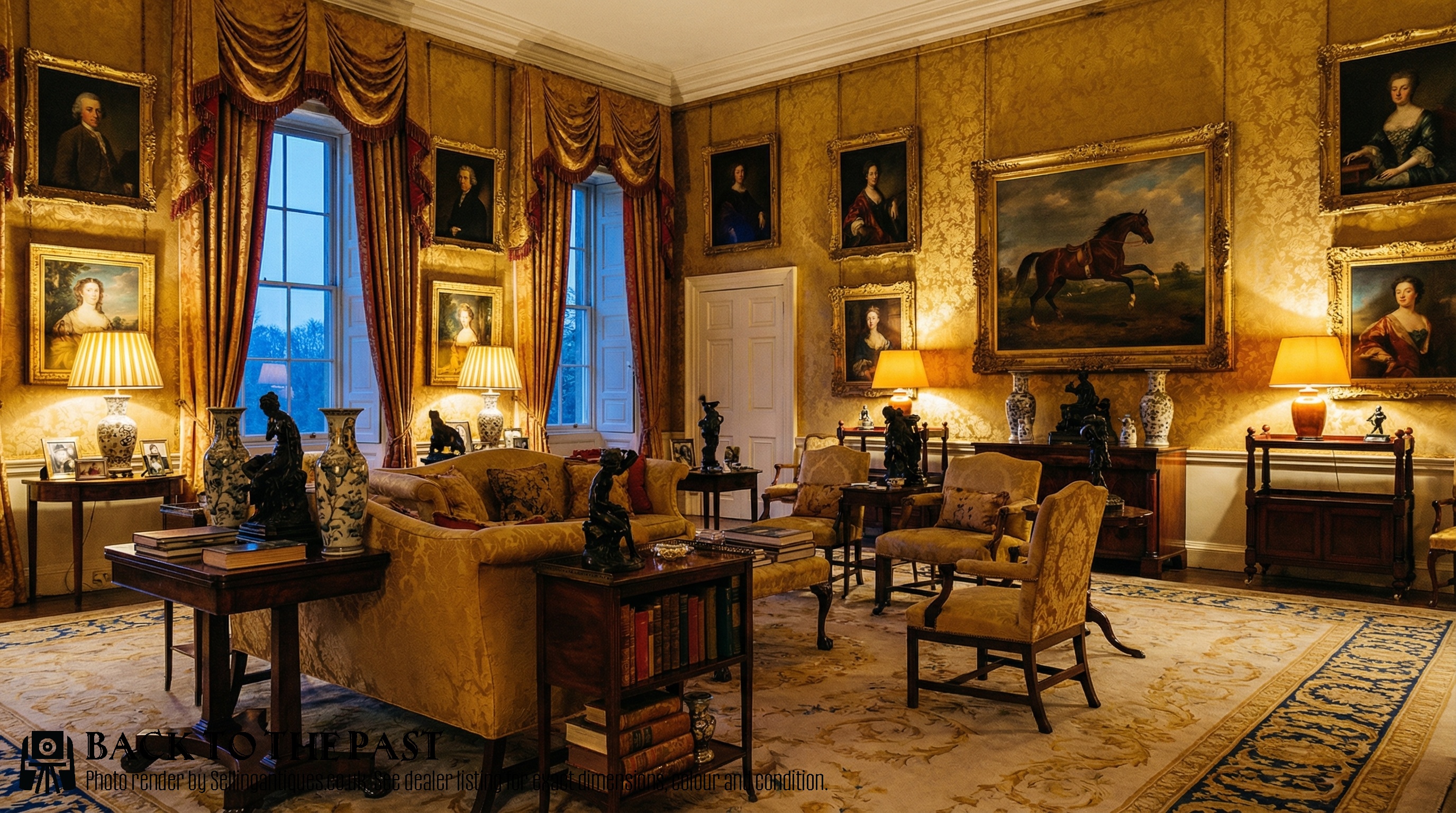
Victorian Mahogany Dinner Wagon
When you search for a victorian mahogany dinner wagon, you are looking at substantial nineteenth-century serving furniture designed to hold dishes and silver during large meals. These pieces typically take the form of multi-tiered trolleys, dumb waiters, or sideboards equipped with shelves for easy access.
The versions most commonly met on this page span the Victorian and William IV eras, featuring sturdy construction designed to bear heavy loads. They serve equally well today as display stands or drinks trolleys in a dining space.
Makers utilised rich timber and functional shelving to create items that balanced utility with domestic elegance. Each piece reflects the formal hospitality of the period.
How they were made
Makers built these pieces primarily from solid and veneered mahogany, selected for its deep reddish-brown grain and durability. Structural integrity was paramount, given the heavy dishes these wagons needed to support.
Many examples incorporate brass elements, such as original castors that allowed smooth movement across heavy carpets. Selected items also feature ceramic components, adding subtle contrast to the dark timber.
Victorian Mahogany Dinner Wagon Retail Price Guide 2026
Typical asking prices for victorian mahogany dinner wagon among the pieces listed under this phrase on Sellingantiques today, from the lower quarter to the upper quarter. They describe what is for sale here now, not the wider market.
Early dining etiquette demanded quiet service, so dinner wagons were built heavy and rolled on brass castors to glide silently across thick wool carpets.
What varies in quality
The distinction between standard examples and superior work lies in the depth of the timber grain and the crispness of any applied carving. Better pieces display thoughtful proportion across their multiple tiers rather than purely utilitarian stacking.
Original hardware, including castors and turning, elevates a piece significantly. Quality is further demonstrated by tight joinery that keeps multi-tiered structures rigid over decades of use.
Gillows of Lancaster and London
The Victorian Mahogany Dinner Wagon Glossary
- Buffet
- A side table or sideboard used for serving food or displaying plate. In this context, it often refers to multi-tiered serving furniture.
- Dumb waiter
- A tiered stand or trolley designed to hold food and tableware without requiring a servant present. These items frequently feature three graduated shelves.
- Rise and fall
- A mechanical mechanism allowing specific tiers to adjust in height. This clever engineering permitted flexible serving arrangements.
- Castor
- A small wheel mounted on a swivel, fitted to the legs of heavy furniture. Original brass versions allow historians to date pieces accurately.
- William IV
- A stylistic transition period between Regency and early Victorian design. Furniture from this era often exhibits bolder, heavier proportions.
Victorian Mahogany Dinner Wagon: Frequently Asked Questions
What is a victorian mahogany dinner wagon used for?
These pieces were originally designed to hold extra dishes, silverware, and wine during long dining room courses. Servants used them to keep food accessible without crowding the main dining table.
Today, buyers use them as serving stations, drinks trolleys, or display surfaces in sitting rooms and dining spaces.
How many tiers do these wagons typically have?
Most examples featured in the listings present a three-tier configuration, offering ample surface area for plates and serving dishes. Some variations include enclosed cabinet space on the lower level.
The stacked shelf design maximises vertical storage while keeping the footprint compact enough for domestic rooms.
Are original castors important?
Original brass castors contribute significantly to the authenticity and historical value of a nineteenth-century serving piece. They indicate that the legs have not been cut down or altered over time.
Smooth-rolling wheels also ensure the trolley remains functional for modern use as a mobile drinks station.
How do I distinguish William IV from Victorian pieces?
William IV items, dating from the 1830s, often display heavier proportions and bolder architectural turns than later Victorian examples. They bridge the gap between Regency elegance and Victorian solidity.
Both styles utilise rich mahogany, but the transitional pieces tend to show particularly robust timber selection and confident carving.