


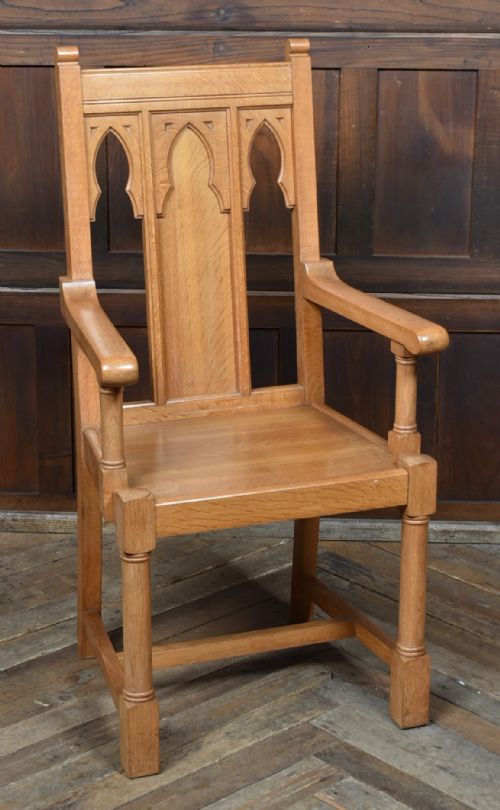

Victorian Throne Armchair
A victorian throne armchair delivers grand presence and high backs, offering a commanding seat rooted in historical revival styles.
Victorian Throne Armchair
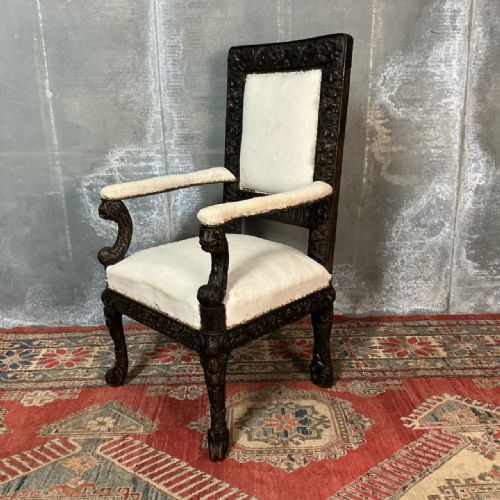
A victorian throne armchair is a substantial seating form designed to dominate a room with architectural woodwork and tall backs. These pieces draw heavily on historical revivals, emerging in heavy oak, walnut, and mahogany across the nineteenth century.
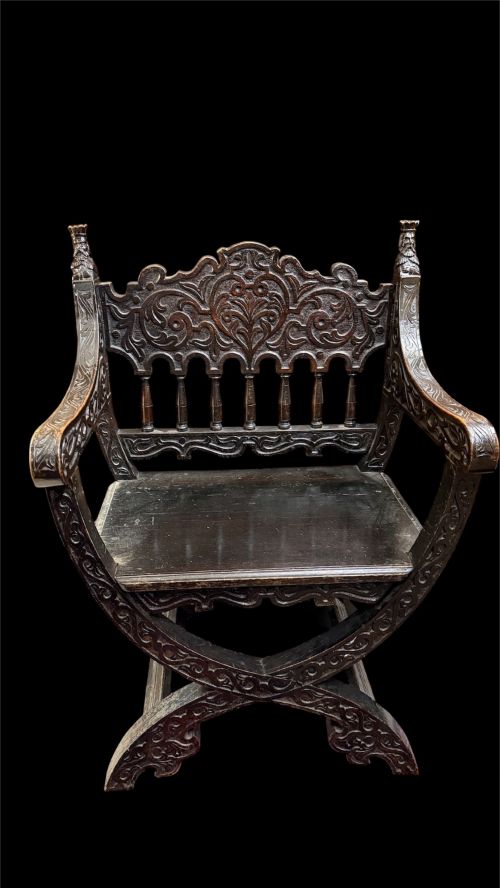
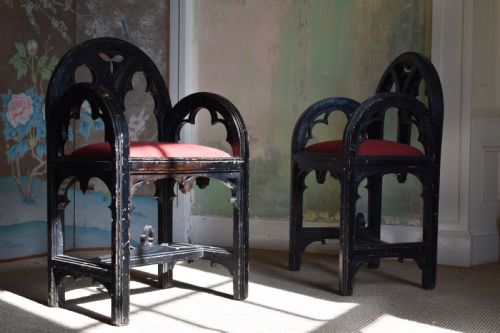
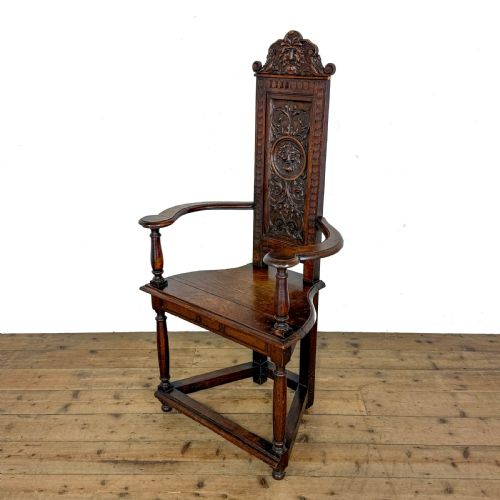
The selection on this page ranges from ecclesiastical pitch pine and chapel chairs to heavily carved oak pieces featuring Green Man motifs or armorial crests. Buyers will also encounter variants influenced by Gothic, Jacobean, and Renaissance revivals.
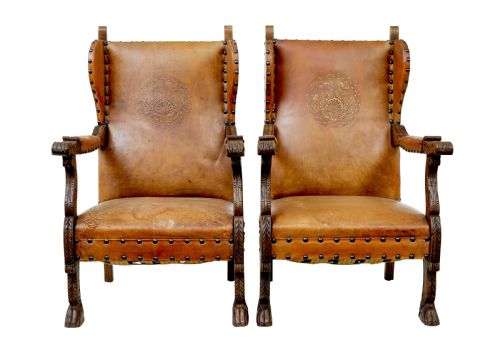
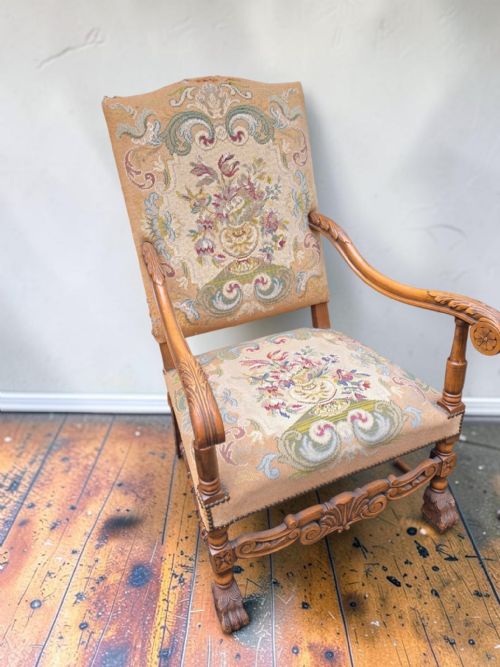
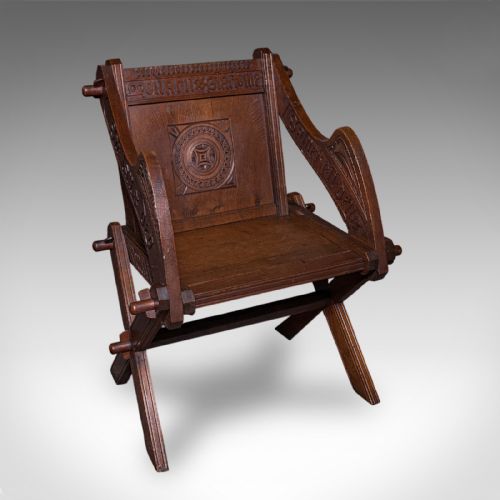
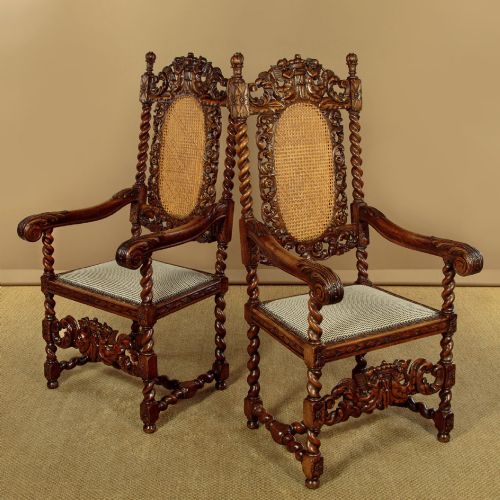
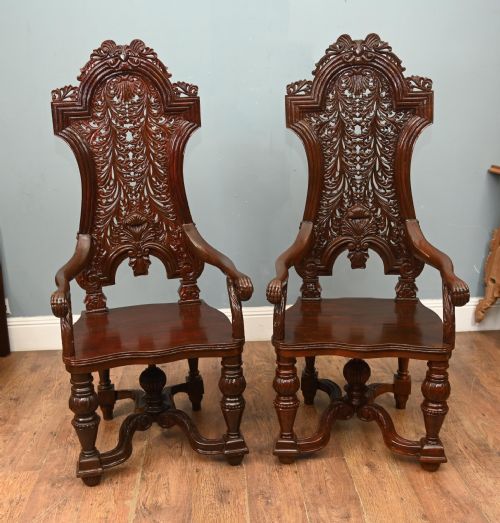
Forms extend to Glastonbury chairs, wainscot styles, and ceremonial elbow seats alongside pairs of large hall chairs. Many incorporate upholstered panels, buttoned leather, tapestry, or embossed hide.
Materials and construction
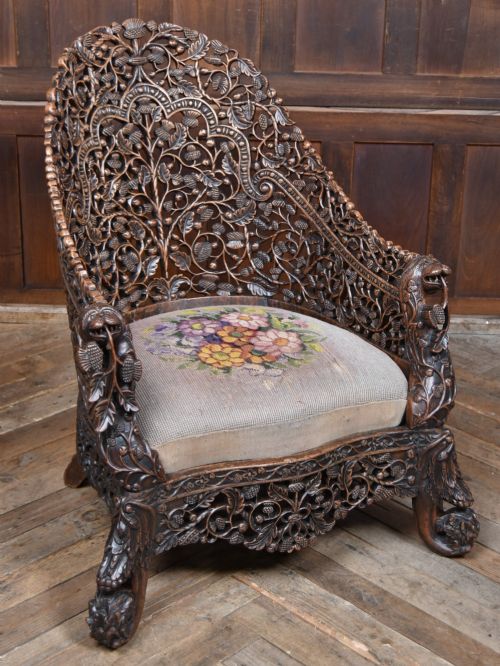
Makers relied primarily on dense timbers such as oak, walnut, and mahogany, often heavily carved with relief work, strapwork, and figural details. Structural integrity depended on sturdy joinery, panel construction, and turned wooden supports.
Upholstery utilised traditional stuffing secured with materials like leather, velvet, tapestry, and cane panels. Brass studwork and detailed embossing frequently finished the edges of leather-clad seats and tall backs.
Watch closely for watchful carved hounds and wooden Green Men peering out from the timber frames.
Assessing the range
Depth of carving and sharpness of detail separate standard seating from exceptional examples. Pieces featuring complex iconography, such as hound carvings or Green Man masks, require superior hand-tool work from skilled carvers.
The selection of timber grain and the integrity of period upholstery materials influence overall stature. Matched pairs and armchairs retaining original leather or tapestry carry greater stylistic cohesion than single or altered pieces.
A.W.N. Pugin
The Victorian Throne Armchair Glossary
- Wainscot chair
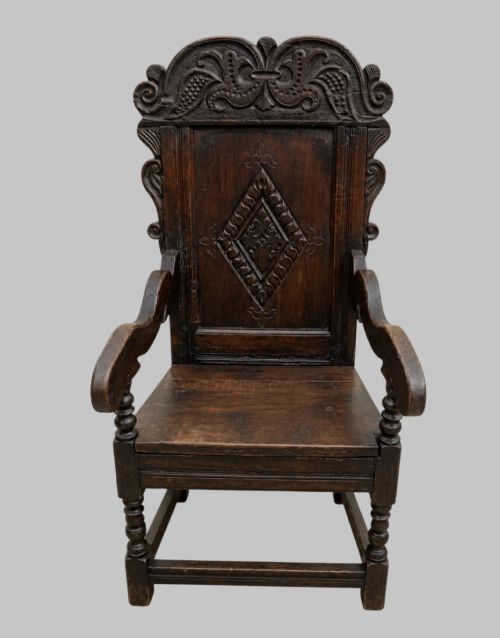
- A solid wooden armchair with a panelled back, popular in the seventeenth century and frequently reinterpreted during the Victorian revival. These sturdy seats typically feature low wooden arms and turned legs.
- Glastonbury chair
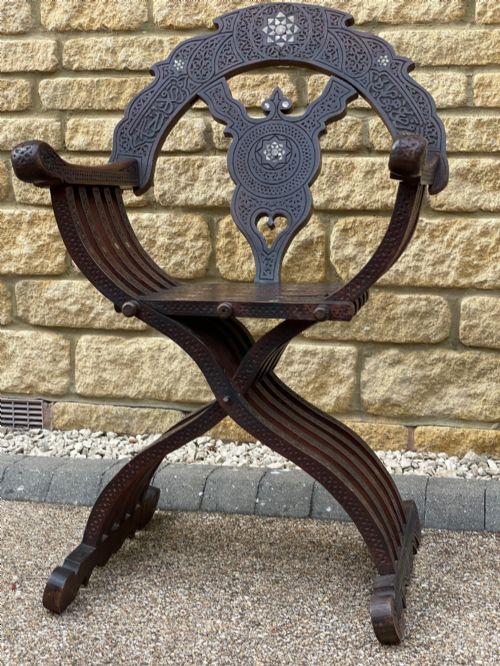
- A distinctive folding armchair design with intersecting X-form legs and a sloping panel back. This type draws on medieval ecclesiastical precedents.
- Gothic Revival
- An architectural and decorative style mimicking medieval forms, characterised by pointed arches, tracery, and heavy mouldings. It appears frequently in nineteenth-century ecclesiastical and domestic seating.
- Fauteuil
- An open-armed upholstered armchair with exposed wooden framing originating in France. Victorian makers adapted this form into tall-backed variations influenced by earlier royal styles.
Victorian Throne Armchair: Frequently Asked Questions
Where did victorian throne armchairs sit?
These imposing seats typically occupied grand reception rooms, halls, libraries, or ecclesiastical settings where authority needed visual reinforcement.
Their substantial height and heavy carving ensured they commanded attention away from everyday seating.
How do you distinguish gothic revival from jacobean styles?
Gothic revival pieces display pointed arches, lancet shapes, and ecclesiastical tracery inspired by medieval architecture.
Jacobean revival versions lean towards geometric strapwork, heavy turned supports, and rectilinear framing.
Are these armchairs comfortable for daily use?
Most examples prioritise upright posture and architectural presence over relaxed lounging, possessing rigid tall backs and firm armrests.
Versions upholstered in leather or padded tapestry offer softer support compared to entirely wooden wainscot or hall chairs.
What woods were commonly utilised?
Oak forms the vast majority of these pieces, particularly within Gothic and revival contexts, valued for its sturdiness and capacity for deep carving.
Walnut and mahogany appear frequently in refined parlor models and taller armchairs requiring smoother finished surfaces.