


Victorian Tavern Scene Artwork
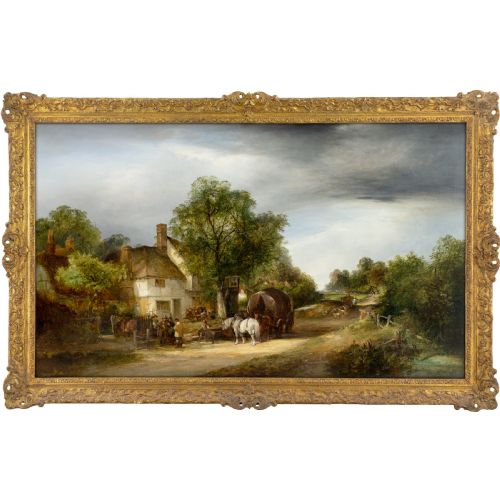
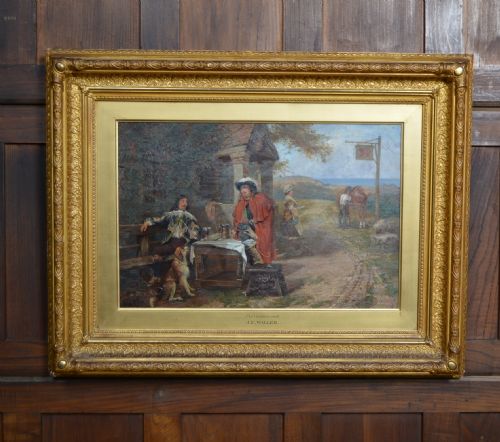
Victorian tavern scene artwork captures the social hum of nineteenth-century drinking houses in oil paint and watercolour.
Victorian Tavern Scene Artwork
When you search for Victorian tavern scene artwork, you are looking at nineteenth-century genre paintings depicting interiors and figures in public houses. These works capture social life, drinking scenes, and character studies set within British, Irish, and Italian contexts.
The pieces you are most likely to meet on this page include framed oil paintings on canvas and watercolour paintings. Subjects range from startled boys tapping barrels to disorderly drinking scenes and village taverns with windmills.
Originating predominantly from the nineteenth century, these objects belong to genres such as Victorian genre realism and folk art. They offer a direct window into the social gatherings and domestic interiors of the period.
Materials and methods
These works are executed in oil paint and watercolour on canvas or paper supports. Artists built up their compositions using traditional pigments, framed subsequently in wood ornamented with gesso and gold leaf or giltwood.
Techniques span nineteenth-century genre realism, capturing fine details of interior lighting and human expression. Canvases are stretched over wooden frames, often retained within their original gilded mouldings.
Listings feature works in oil paint, canvas, watercolour, and giltwood from the nineteenth century.
Judging quality in tavern paintings
Quality separates through the handling of human anatomy, narrative expression, and interior light. Stronger examples render facial expressions and interior atmosphere with conviction, whereas weaker pieces rely on formulaic compositions.
The preservation of the original canvas, oil paint, and giltwood frame dictates the integrity of a piece. Finer works retain their original surface texture and uncompromised framing.
John Arthur Lomax·Gilbert Scott Wright·Robert Richard Scanlan·Francesco Bergamini·John Holland Snr
The Victorian Tavern Scene Artwork Glossary
- Genre painting
- Depiction of aspects of everyday life by depicting ordinary people engaged in common activities. These scenes focus on domestic interiors, taverns, and social gatherings.
- Oil on canvas
- Pigments bound in a medium of drying oil applied to stretched woven fabric. This was the primary medium for serious nineteenth-century artists.
- Giltwood
- Wood carved and covered with a thin layer of gold leaf or metal powder. It forms the decorative framing typical of nineteenth-century pictures.
- Watercolour
- Paints made of pigments suspended in a water-based solution applied to paper. It was frequently used for preparatory sketches and finished works alike.
- Gesso
- A plaster mix used as a base coat on wooden frames before gilding. It allows for crisp ornamental moulding.
Victorian Tavern Scene Artwork: Frequently Asked Questions
What is a genre painting?
A genre painting depicts aspects of everyday life, such as figures in a tavern or domestic interiors, rather than grand historical or religious subjects.
These works provide a record of ordinary social interactions and working-class life during the nineteenth century.
How are these paintings framed?
Many nineteenth-century works retain their original wooden frames finished with gesso and gold leaf or giltwood.
These ornate surrounds were designed to complement the dark, rich tones typical of interior genre scenes.
Where were these artists from?
The artists represented span British, Irish, and Italian schools working during the nineteenth century.
Their subjects range from village taverns in England to continental interior studies.
How do I care for an oil painting?
Keep oil paintings away from direct sunlight and dramatic fluctuations in temperature and humidity to prevent cracking.
Dust the canvas and frame gently with a soft, dry brush without using liquid cleaners.