


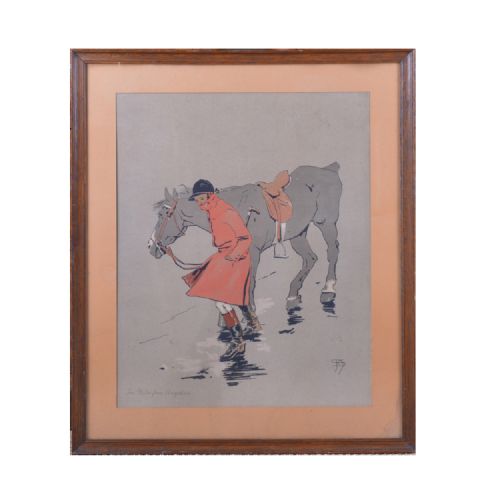


Red Coat Sporting Picture
A red coat sporting picture captures the dramatic pageantry of the British hunt, offering a vibrant window into traditional equestrian life.
Red Coat Sporting Picture
When you search for a red coat sporting picture, you are looking at vibrant depictions of huntsmen in traditional scarlet coats, hounds, and horses within British landscapes. These works span from the nineteenth century through the mid twentieth century, capturing historical meets and equestrian pursuits.
You are most likely to encounter framed watercolours and oil paintings on this page, reflecting established British sporting art traditions. Artists working in this genre documented famed packs like the Quorn and the Berkeley, often signing their works to record specific huntsmen and notable grey horses.
The pieces range from detailed nineteenth century oil paintings to early twentieth century watercolours and signed prints. They serve as historical records of equestrian culture, preserving the social atmosphere and landscape settings of past hunts.
What varies in quality
Quality in these sporting works rests primarily on the artist's ability to render the dynamic movement of horses and hounds in full cry. The strongest pieces demonstrate a deep familiarity with equine anatomy and the specific topography of British hunting country.
The distinction between ordinary decorative items and finer works lies in the liveliness of the brushwork and the clarity of the composition. Master practitioners captured the atmosphere of the meet with confident, economical strokes rather than stiff, overly laboured details.
Provenance and signature add significant distinction, particularly when works can be attributed to recognised exponents of British sporting art. Signed pieces by established practitioners hold greater artistic authority, reflecting their standing within the genre.
John Arthur Lomax·Basil Nightingale·Charles Faulkner·Charles Clifford Turner·John Sanderson Wells·Charles Johnson Payne Snaffles·Heywood Hardy·George Goodwin Kilburne·Geoffrey Mortimer·Frank Algernon Stewart·Wilfred Bailey
The Red Coat Sporting Picture Glossary
- Sporting Art
- A genre of painting and illustration dedicated to depicting field sports, equestrian subjects, and hunting scenes. It flourished in Britain throughout the nineteenth and early twentieth centuries.
- Full Cry
- The stage of a hunt when the hounds have found the scent and give tongue together in pursuit. Artists frequently chose this moment for its high drama and energetic movement.
- Chromolithograph
- A multicolour planographic printing technique used to produce reproducible colour prints. These allowed popular sporting imagery to reach wider audiences during the Edwardian period.
- Giltwood
- Wood that has been carved and coated with gold leaf or a gold-coloured finish. It was frequently utilised for traditional picture frames during the Victorian era.
- Reverse Glass Painting
- An artistic technique where the image is painted directly onto the back of a piece of glass and viewed from the front. This method creates a brilliant, glossy surface finish.
Red Coat Sporting Picture: Frequently Asked Questions
What is a red coat sporting picture?
A red coat sporting picture is a traditional artwork depicting the British hunt, featuring riders in scarlet coats alongside hounds and horses. These pieces record historical equestrian events across various media.
Created primarily during the nineteenth and twentieth centuries, they celebrate the heritage and landscape of British field sports through detailed oil paintings and expressive watercolours.
Who were the main artists?
The genre includes works by celebrated sporting artists such as Charles Johnson Payne, known as Snaffles, and painters like Heywood Hardy and George Goodwin Kilburne. These individuals specialised in capturing equine anatomy and hunt dynamics.
Many of these artists signed their watercolours and oils, documenting specific hunts and personalities across the Victorian and Edwardian periods.
How should I display them?
These artworks look best in traditional interiors, often hung in studies, hallways, or reception rooms where equestrian themes complement classic furnishings. Their original giltwood or oak frames help anchor their historical character.
Keep them away from direct sunlight to protect delicate watercolours and paper components from fading, ensuring the pigments retain their original vibrancy.
Are these paintings original works?
The listings include a mix of original oil paintings, hand-painted watercolours, and period prints such as chromolithographs and reverse glass paintings. Each piece reflects the specific technique chosen by the artist.
Checking the medium specified in the listing helps determine whether a piece is a unique hand-painted canvas or a period reproduction print.