
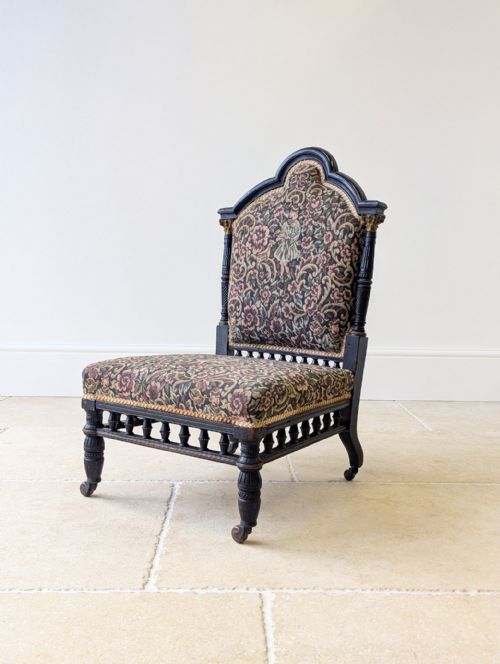
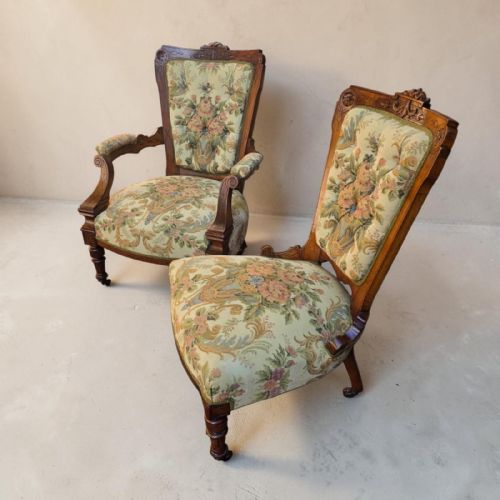
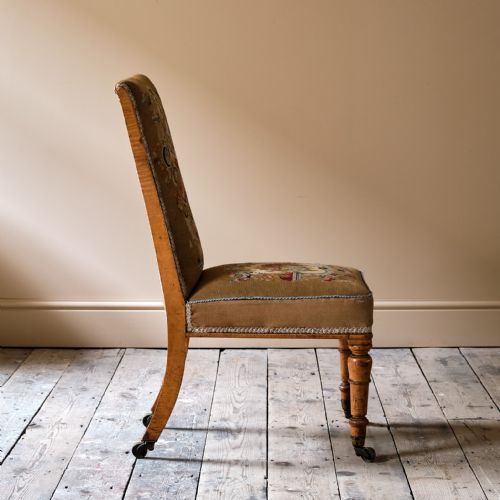


Victorian Tapestry Slipper Chair
A victorian tapestry slipper chair brings low, compact seating and textured textile art directly into nineteenth-century bedroom and parlour spaces.
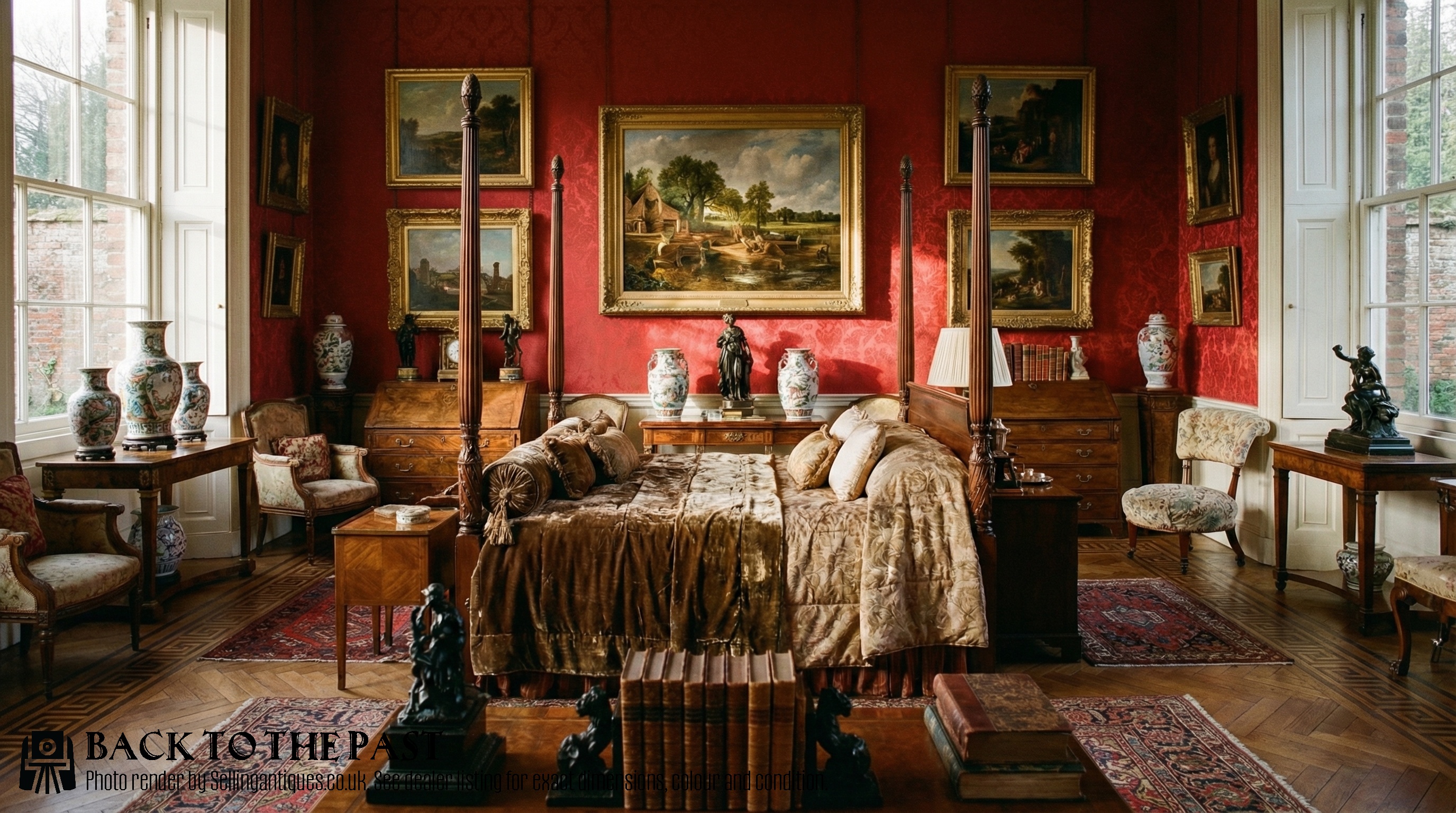
Victorian Tapestry Slipper Chair
A victorian tapestry slipper chair is a low-slung, often armless seat designed for nineteenth-century domestic spaces, particularly bedrooms and dressing rooms. Buyers searching for a victorian tapestry slipper chair encounter closely related forms such as nursing chairs, low salon chairs, boudoir chairs, and occasional chairs.
The selections span the nineteenth century and early twentieth century, encompassing periods from William IV through the Aesthetic Movement and Edwardian eras. These low chairs often feature upholstered seats and backs covered in textile, needlework, or beaded tapestry fabric.
Framing woods vary across walnut, mahogany, birds eye maple, rosewood, ebonised wood, and oak. Such pieces serve as functional bedroom or fireside seating while displaying ornamental carved woodwork and period fabric work.
What varies in quality
The refinement of the timber carving and the complexity of the frame design distinguish standard production from exceptional examples. Walnut and mahogany frames with detailed scrollwork or aesthetic movement lines demonstrate higher cabinet-making ambition.
The execution and preservation of the tapestry or needlework upholstery dictate the visual impact of the chair. Intricate floral patterns, beadwork, and original fabric integrity elevate the piece significantly above plain replacement textiles.
The listings span Victorian, Edwardian, and William IV periods, utilising walnut, mahogany, oak, and tapestry textiles.
R Whytock of Edinburgh·Gillows
The Victorian Tapestry Slipper Chair Glossary
- Slipper chair
- A low-set, typically armless chair historically used for sitting while putting on shoes or dressing. These pieces sit closer to the floor than standard parlour seating.
- Tapestry
- A form of textile art woven on a loom or worked with needle and thread. In these chairs, floral and figurative tapestry covers the seat and back.
- Nursing chair
- A low armchair or side chair traditionally used by mothers for nursing infants. They share the low profile characteristic of slipper chairs.
- Aesthetic Movement
- A late nineteenth-century design style emphasising visual beauty over narrative or moral function. Pieces from this movement often display ebonised finishes and stylised motifs.
- Prie-Dieu chair
- A devotional chair featuring a low seat and an elevated, padded top rail for kneeling or leaning during prayer. They share the compact vertical proportions seen in nineteenth-century bedroom seating.
Victorian Tapestry Slipper Chair: Frequently Asked Questions
What is a victorian tapestry slipper chair used for?
Originally designed for nineteenth-century dressing rooms and bedrooms, these low chairs provided comfortable seating for putting on shoes or attending to infants. Their compact stature made them versatile additions to intimate parlour spaces.
Today, buyers place them in bedrooms, studies, or living rooms as accent seating. They combine functional low profiles with decorative textile panels.
How do I identify a nineteenth-century piece?
Look for traditional timber framing materials such as solid walnut, mahogany, or rosewood, combined with period construction techniques. Frame styles often reflect Victorian, William IV, or Aesthetic Movement design characteristics.
The presence of original floral tapestry, beadwork, or period upholstery fabrics further supports nineteenth-century origin.
Are these chairs comfortable for daily use?
Their low seats and supportive padded backs offer a distinct seating posture compared to modern lounge chairs. They work well for short periods of reading or dressing.
Because they originate from the nineteenth century, internal padding may vary in firmness depending on past restoration work.
How do slipper chairs differ from nursing chairs?
Slipper chairs are traditionally armless and sit very low to the ground to facilitate dressing. Nursing chairs share the low profile but sometimes include low arms or taller backs designed to accommodate holding a child.
Both types overlap significantly in nineteenth-century domestic use and room placement.