


Floral Needlepoint Accent Chair
A floral needlepoint accent chair brings texture and historic colour to a room through traditional stitched upholstery.
Floral Needlepoint Accent Chair
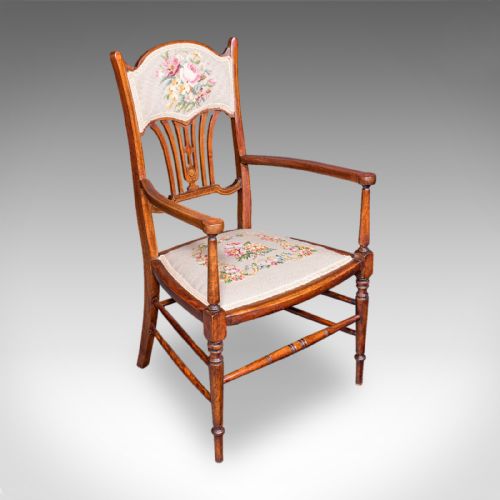
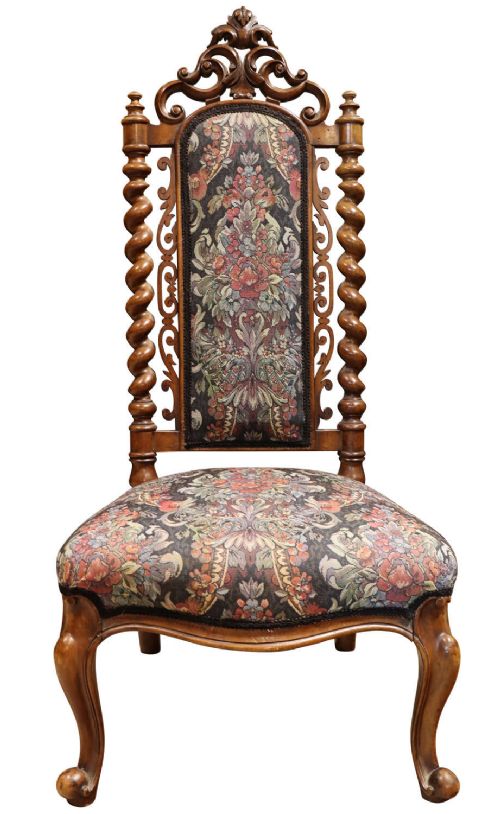
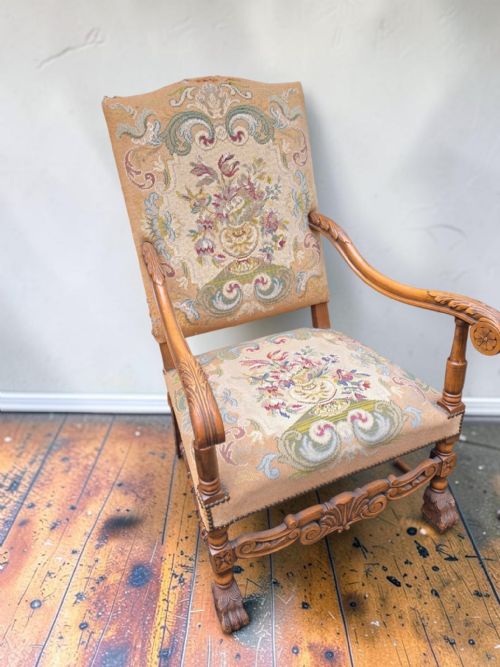
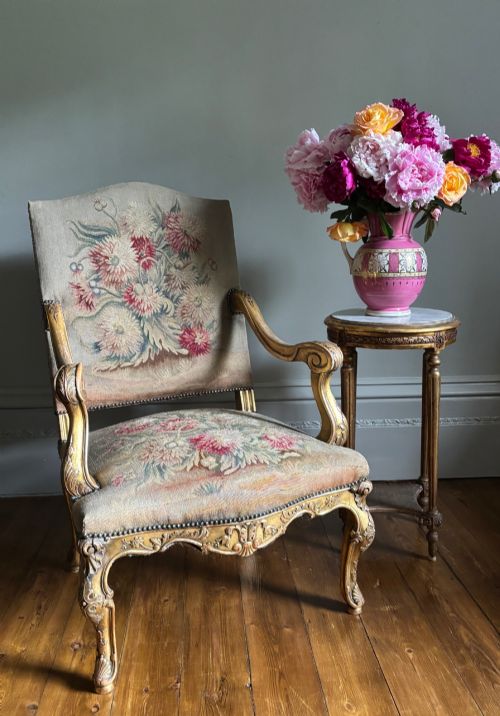
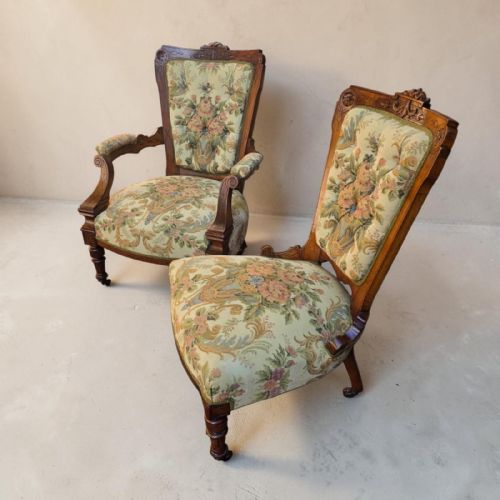
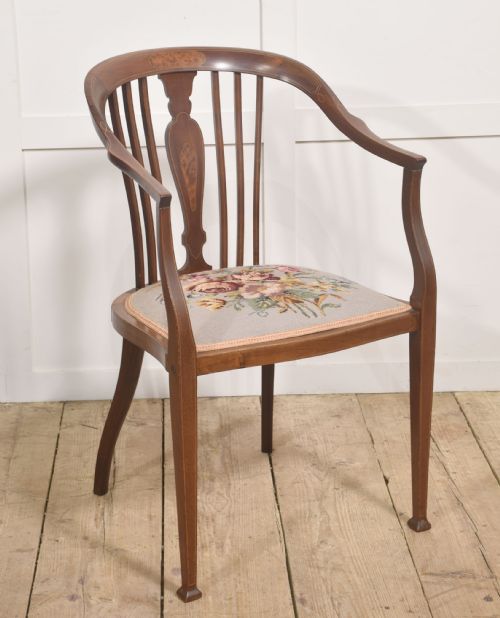
A floral needlepoint accent chair combines historic seating forms with hand-worked textile panels. These pieces span the nineteenth century and the Edwardian period, appearing as armchairs, nursing chairs, and salon seats.
Victorian walnut and mahogany frames form the majority of the selection on this page. They arrive alongside Regency, Edwardian, and French-influenced designs.
Buyers select these chairs for domestic spaces requiring decorative upholstery and traditional woodwork. The seating ranges from compact bedroom chairs to large open armchairs.
Materials and construction
Frames rely on hardwoods such as walnut, mahogany, beech, and oak, often shaped through carving or inlaid with contrasting timbers. Giltwood and brass accents appear on specific continental and revival pieces.
Upholstery utilises wool tapestry fabric and needlepoint textiles, frequently hand-stitched with floral motifs. These decorative panels are secured to sprung or stuffed wooden frames.
Several chairs served quiet hours as low nursing seats, offering comfortable placement near the nursery hearth.
Quality and execution
The distinction in quality lies in the crispness of the timber carving and the density of the needlepoint stitching. Superior frames exhibit refined joinery and thoughtful proportions.
The condition and complexity of the tapestry work dictate the distinction between standard examples and exceptional pieces. Intricate floral patterns executed in varied wool threads elevate the textile component.
Waring & Gillow·R Whytock of Edinburgh·Holland & Sons·Gillows
The Floral Needlepoint Accent Chair Glossary
- Needlepoint
- A form of counted thread embroidery stitched on canvas. This technique creates the durable floral panels seen on nineteenth-century seat backs and seats.
- Nursing chair
- A low-seated Victorian chair designed for comfort and ease of tending to infants. These pieces often feature upholstered backs and exposed wooden frames.
- Giltwood
- Timber coated with a thin layer of gold leaf. This finish appears on decorative nineteenth-century frames inspired by French styles.
- Fauteuil
- An open-arm armchair originating in France, characterised by upholstered back and arm pads with exposed wooden framing. These chairs frequently feature carved details.
Floral Needlepoint Accent Chair: Frequently Asked Questions
What periods do these chairs represent?
The selection spans the nineteenth century, including Victorian, Regency, and Edwardian eras. Makers utilised traditional styles ranging from Rococo Revival to Art Nouveau.
Craftsmen built these seats using hardwoods like walnut and mahogany alongside hand-worked wool tapestry panels.
Where were needlepoint chairs used?
These seats served primarily in reception rooms, bedrooms, and morning rooms as decorative or occasional seating. Compact versions like nursing chairs suited private domestic quarters.
Their substantial upholstered frames provided comfort for daily use in period homes.
How do I identify a Victorian needlepoint chair?
Victorian examples typically feature dark timber frames such as walnut or mahogany, often with carved ornamentation. The upholstery employs wool needlepoint depicting floral patterns.
Proportions tend to be generous, reflecting mid to late nineteenth-century domestic design preferences.
How should I care for historic upholstery?
Protect the wool needlepoint panels from direct sunlight to prevent fading of the dyed threads. Gentle vacuuming through a mesh screen helps remove dust without disturbing the stitching.
Keep the wooden frames conditioned using appropriate furniture wax applied sparingly.