
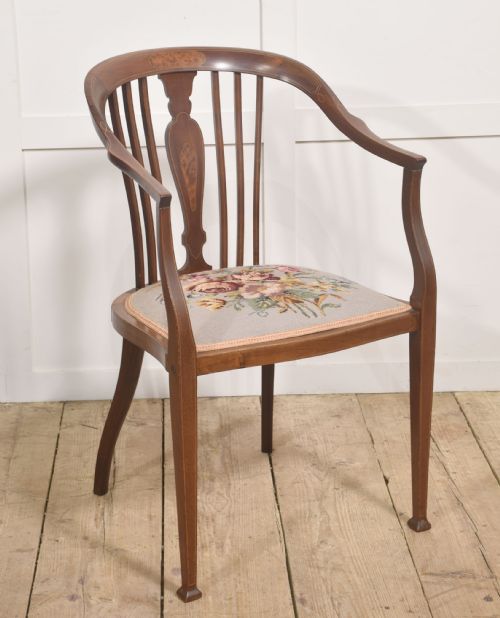


Tapestry Upholstered Bedroom Chair
A tapestry upholstered bedroom chair brings tactile textile warmth and period character to a dressing room or corner, offering compact seating with distinct historic charm.
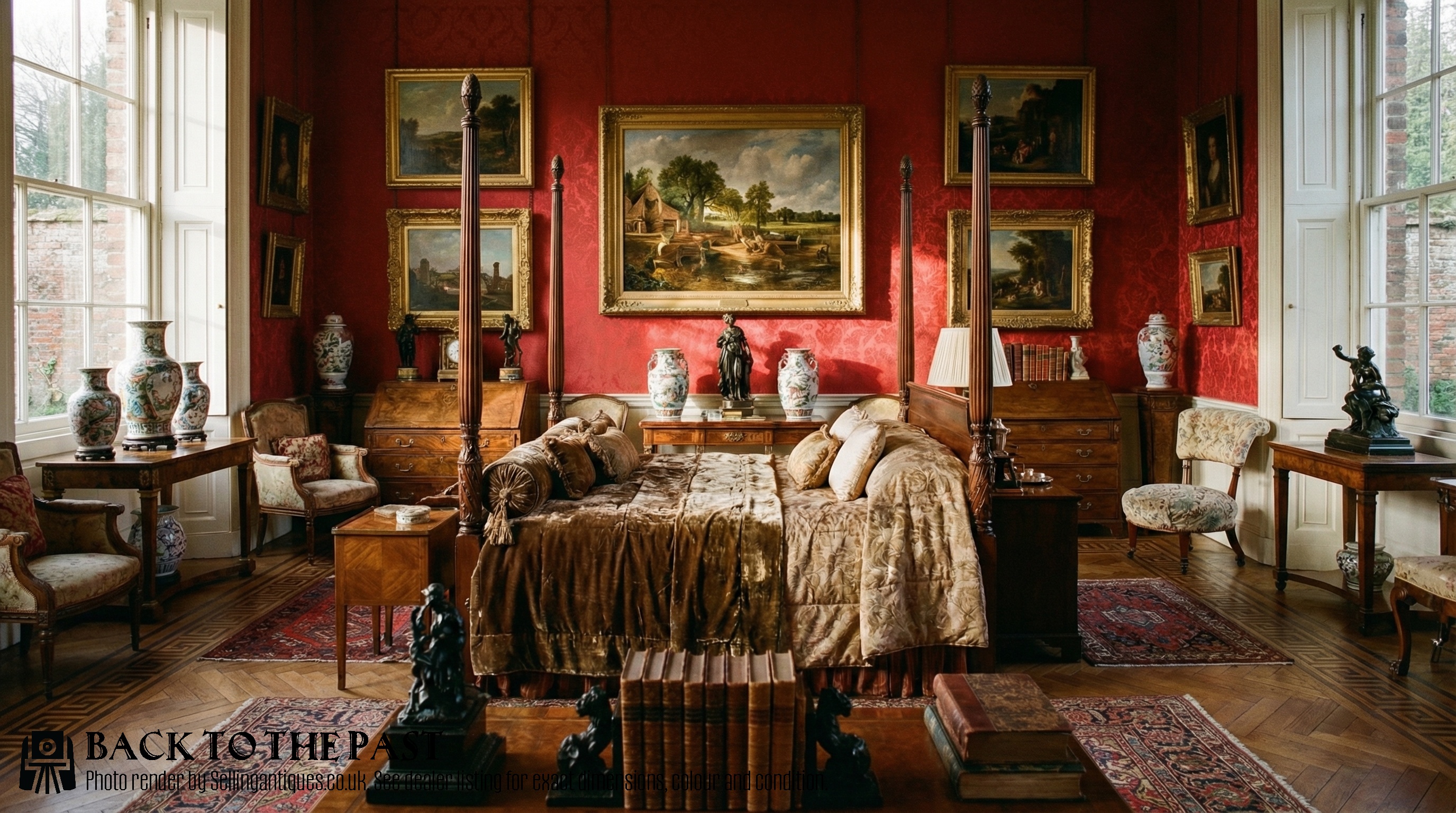
Tapestry Upholstered Bedroom Chair
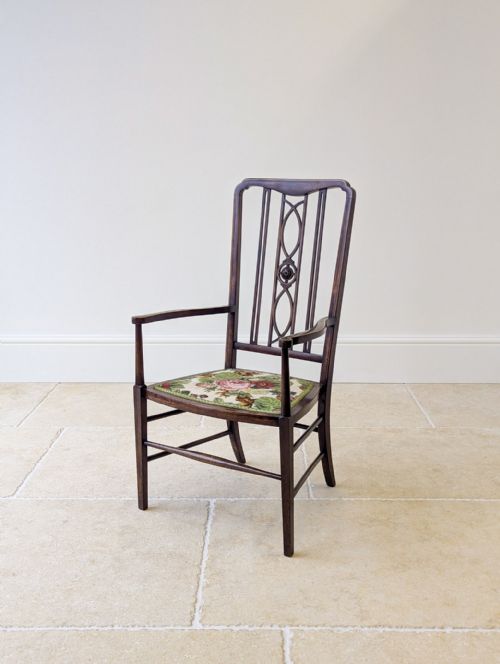
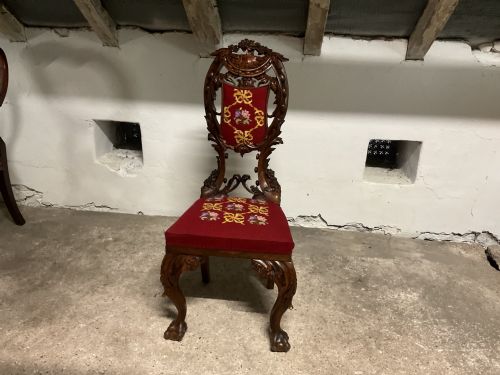
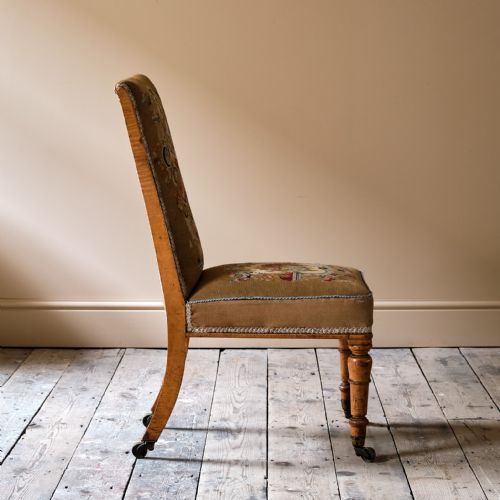
A tapestry upholstered bedroom chair is typically encountered in nineteenth-century and early twentieth-century forms, including low-slung nursing chairs, compact slipper chairs, and carved occasional seats. These versatile pieces span Victorian, Edwardian, and Regency periods, reflecting domestic seating needs from across those eras.
The primary forms found here rely on low profiles suited for dressing rooms and bedrooms, often featuring button backs, scroll backs, or open arm designs. Walnut, mahogany, and beech frames predominate, carrying worked textile panels that define the visual character of each seat.
Materials and construction methods
Makers shaped these frames from dense hardwoods such as mahogany, walnut, and beech, frequently employing turning, carving, and marquetry inlay to embellish the structural timber. Brass castors and ceramic components occasionally appear on feet, while frames range from ebonised finishes to polished natural wood grains.
Upholstery relies on needlepoint, wool tapestry, and hand-stitched textile panels secured over traditional stuffing. Floral motifs and pictorial needlework dominate these covers, pairing directly with the exposed wooden framework.
One remarkably honest slipper chair arrived wearing enough floral wool tapestry to make a small meadow look under-dressed.
Distinctions in craftsmanship and preservation
Quality rests in the crispness of the timber carving, the structural integrity of the frame joints, and the fineness of the needlepoint work. Pieces with intricate marquetry inlay or deeply figured walnut and mahogany demonstrate superior workshop input.
The survival of original textile covers and the tightness of the joinery elevate certain examples above standard utility seating. Superior items combine substantial hardwood framing with densely stitched wool tapestry panels that remain secure within the woodwork.
Gillows
The Tapestry Upholstered Bedroom Chair Glossary
- Nursing chair
- A low-seated chair designed originally for feeding infants or assisting with Victorian dress. These pieces sit close to the floor and often feature padded backs.
- Slipper chair
- An upholstered bedroom chair with a very low frame, originally intended for putting on footwear. These seats lack arms and maintain compact proportions.
- Needlepoint
- A type of canvas work embroidery executed with a yarn threaded through a stiff open-weave canvas. It forms the primary patterned surface on many historic textile seats.
- Occasional chair
- A lightweight movable seat kept primarily for decorative effect or supplementary use in a room. They appear in various revival styles across the nineteenth and twentieth centuries.
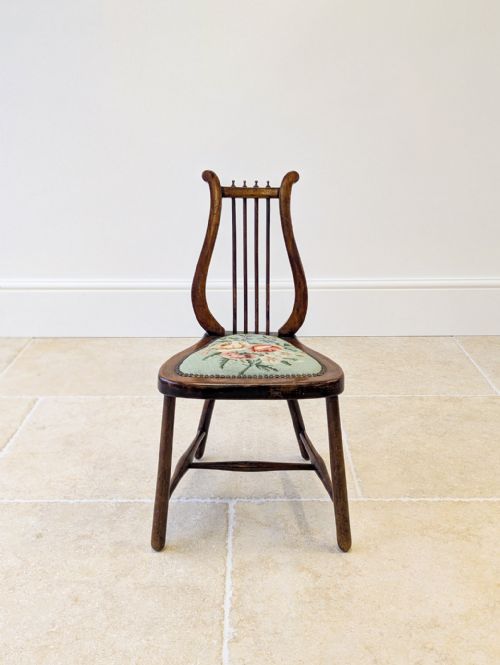
- Lyre-back
- A chair back shaped in the symmetrical outline of an ancient Greek lyre. This decorative form is frequently encountered on Edwardian side and hall chairs.
Tapestry Upholstered Bedroom Chair: Frequently Asked Questions
What is a tapestry upholstered bedroom chair used for?
These compact seats function primarily as decorative bedroom accents, dressing table seating, or low occasional chairs in a hallway or parlour.
Their reduced height and padded textile surfaces suited nineteenth-century domestic routines such as dressing or tending to children.
How do I date a tapestry bedroom chair?
Dating relies on combining timber choice, frame style, and upholstery technique. Victorian examples often utilise mahogany or walnut with carved details, while Edwardian pieces frequently feature lighter beech frames.
Needlepoint patterns and turning styles further narrow the decade of production from the early nineteenth century through to the Edwardian period.
Are tapestry covers original to the chairs?
Many chairs retain period needlework or wool tapestry panels that match the estimated age of the wooden frame. Original covers show consistent wear and secure attachment methods appropriate to their manufacturing era.
Some pieces have received later hand-stitched or period-appropriate textile replacements to preserve their usability.
What wood types are most common?
Mahogany and walnut form the majority of the timber frames across nineteenth-century examples. Beech and occasional satinwood or ebonised finishes also appear, particularly in Edwardian and salon seating.
These dense hardwoods provided the structural strength needed for slender carved legs and supportive backrests.