



Victorian Table Picture Frame
A victorian table picture frame sets a portrait on a desk with metal, glass and velvet.
Victorian Table Picture Frame
A victorian table picture frame brings desk accessories and dressing items into the room. These desk pieces sit upright on a flat surface using an easel back or a hinged support.
The pieces on this page span the late nineteenth century and the early twentieth century. They include photo frames, table mirrors, vanity sets, and desk clocks.
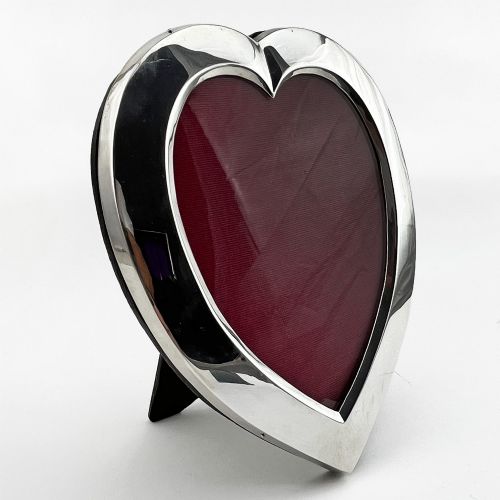
Sterling silver is the material most frequently encountered for these frames. Many pieces incorporate glass fronts, wooden supports, and velvet backing boards.
Materials and construction
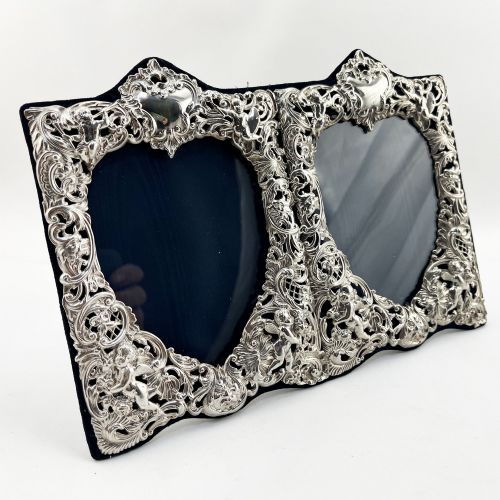
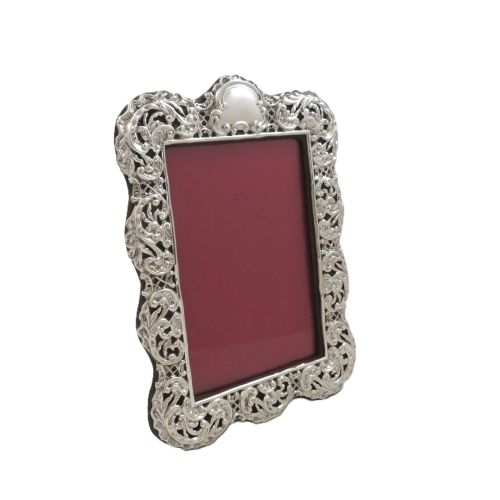
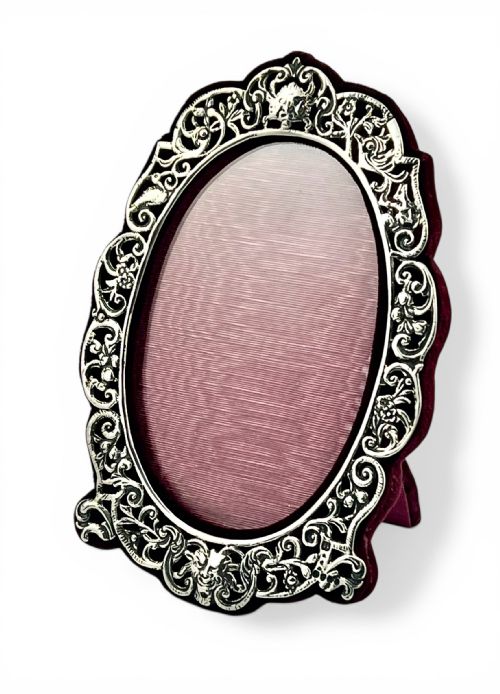
Silversmiths formed frames from sterling silver, often using embossing techniques to decorate the metal with floral motifs or figural scenes such as Reynolds angels. Brass and gilt bronze provided alternative metallic structures for heavier castings.
Enamel work, specifically champleve enamel, added coloured pattern details to French pieces. Ormolu and agate mounts also appeared on nineteenth century desk frames.
Backings typically consisted of wood covered in blue velvet or plain fabric, held in place behind a glass plate that protected the photograph or carte de visite.
Little winged angels stare out from embossed silver borders, watching over nineteenth century desks.
Judging quality and design
The distinction between standard production and superior work rests on the crispness of the metal chasing and the weight of the silver. Thicker gauge metal resists bending and supports the glass securely.
Named makers who registered their silver hallmarks indicate higher workshop standards. The intricacy of embossed ornament, whether floral repousse or figural casting, marks the finer examples.
William Comyns·Henry Matthews
The Victorian Table Picture Frame Glossary
- Sterling silver
- A silver alloy containing 92.5 percent pure silver by weight. This metal appears frequently in English picture frames and carries official hallmarks.
- Champleve
- An enamelling technique where troughs are sunk into a metal surface and filled with vitreous paste before firing. This process decorates French frames and mirrors.
- Ormolu
- Gilded bronze applied to decorative objects and furniture mounts. The technique creates a bright gold appearance on nineteenth century frames.
- Carte de visite
- A small photographic portrait popular in the Victorian era. Display boxes and frames were specifically scaled to hold these cards.
- Reynolds angels
- Depictions of cherubs derived from the paintings of Sir Joshua Reynolds. These motifs appear embossed on silver photo frames.
Victorian Table Picture Frame: Frequently Asked Questions
How do I date a silver picture frame?
Silver frames carry hallmarks that include assay office marks, date letters, and maker's marks. These stamped symbols pinpoint the exact year of testing.
Style also helps with dating, as specific revivals and embossed motifs align with particular decades in the nineteenth century.
What is an easel back frame?
An easel back frame uses a hinged prop attached to the reverse side. This allows the piece to stand upright on a desk or mantelpiece.
Most table frames rely on this mechanism alongside a protective glass front and a velvet-covered backing board.
How were carte de visite frames used?
Carte de visite frames displayed small photographic calling cards that were traded among family and friends. Table top display boxes held collections of these miniature portraits.
These compact formats kept family likenesses visible on Victorian desks and drawing room tables.
What metals besides silver were used?
Maker workshops utilised brass, gilt bronze, and ormolu for heavier decorative frames. French pieces often incorporated champleve enamel alongside gilded metals.
These alternative materials provided rich colour and varied surface textures without relying on solid silver.