



Victorian Table Globes
Victorian table globes bring geography indoors on brass, glass and ebonised wood, offering a tangible record of the nineteenth-century world.
Victorian Table Globes
Victorian table globes sit on stands for desktop study, mapping out the terrestrial sphere in miniature. They appear alongside library globes and globe-shaded oil lamps, sharing domestic spaces from the nineteenth century.
Most examples found here date from the nineteenth century into the Edwardian period, constructed with paper gores applied over plaster spheres. Makers such as Malby and Crunchley produced these geographical instruments on stands made of brass or ebonised wood.
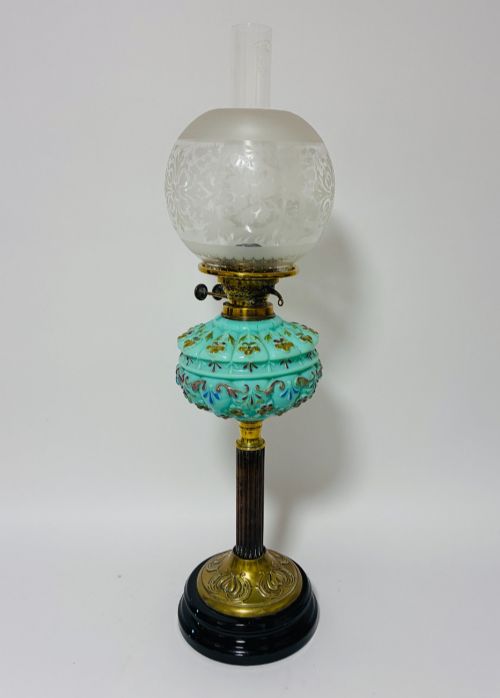
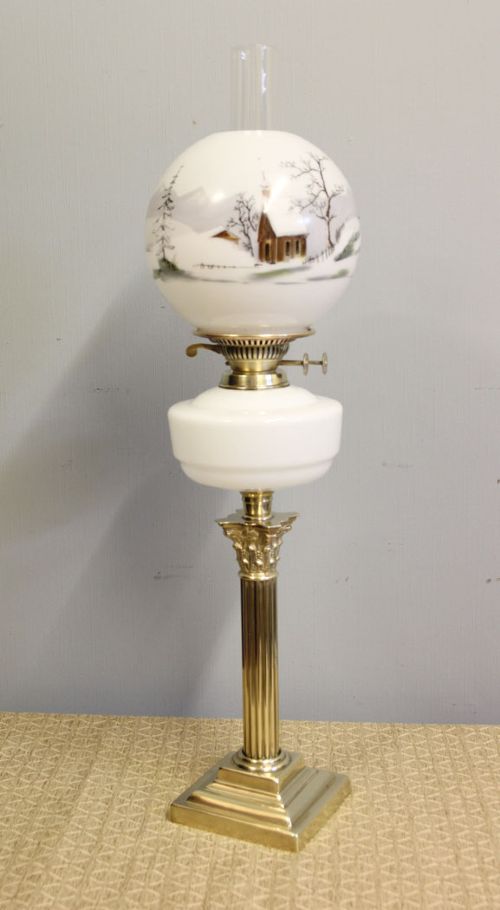
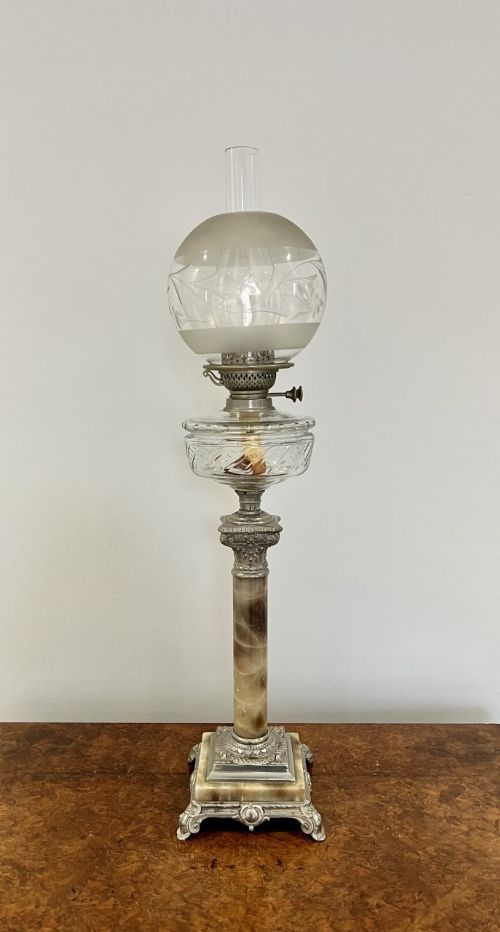
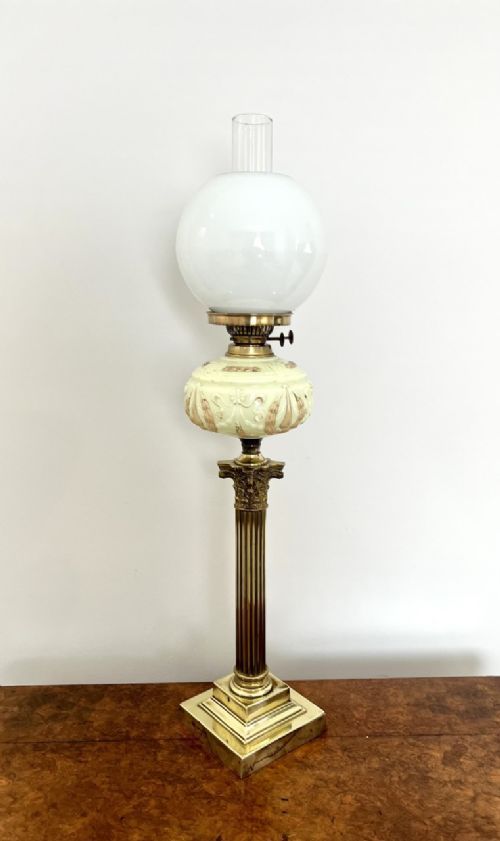
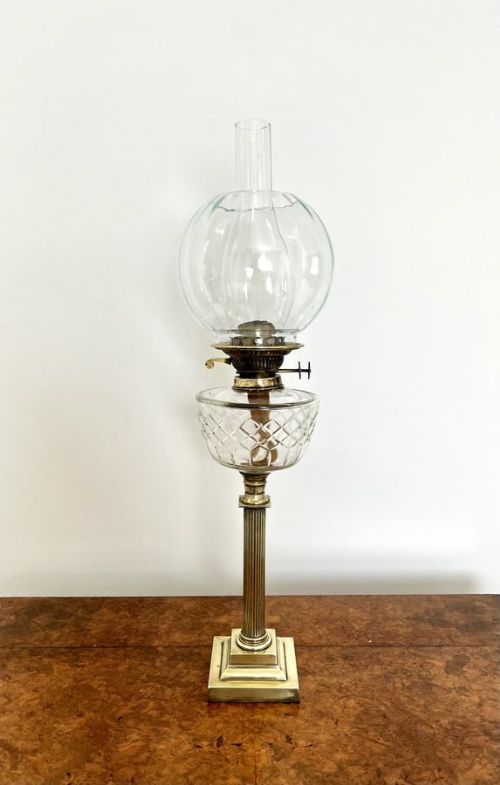
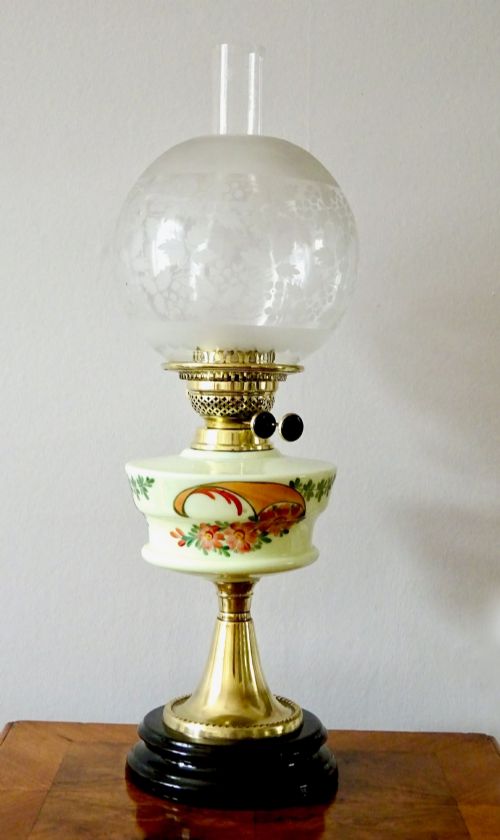
Buyers also encounter related forms that pair the globe shape with domestic lighting, such as oil lamps featuring terrestrial globe shades. These hybrid pieces merge educational utility with period illumination.
Materials and construction
Cartographers printed geographical details on paper gores, which artisans then pasted by hand onto solid plaster spheres. These mounted globes rotate on brass axes supported by stands of brass, ceramic or ebonised wood.
Lighting variants combine brass, bronze and opaline glass, sometimes integrating ceramic fonts or faience bases. Metalwork components show casting and chasing techniques typical of Victorian and Edwardian workshops.
Materials across these listings include brass, glass, ceramic, paper, opaline glass, ebonised wood, plaster and bronze.
Judging quality and condition
Quality rests primarily on the clarity of the printed cartography and the original condition of the paper gores. Crisp typography and vibrant hand-colouring indicate superior cartographic production.
The integrity of the supporting stand matters equally, with heavy brass mountings and solid ebonised bases commanding higher regard. Complete pairs or items retaining their original stands demonstrate greater craftsmanship.
Malby·Crunchley·Hinks of Birmingham·Messengers·Harrods
The Victorian Table Globes Glossary
- Gores
- Tapered strips of printed paper applied to the surface of a globe sphere to form a continuous map. These segments require precise alignment during manufacture.
- Opaline glass
- A milk-white translucent glass frequently used for Victorian lamp shades and globe components. It diffuses light softly across domestic interiors.
- Ebonised wood
- Timber treated to imitate the dark, dense appearance of ebony. It provides a stable and contrasting base for brass globe mountings.
- Pricket lamp
- A candlestick or lamp style featuring a central spike to secure the candle or fitting. Examples appear in brass and mixed metals.
Victorian Table Globes: Frequently Asked Questions
What is a Victorian table globe?
A Victorian table globe is a small-scale terrestrial sphere mounted on a stand for desktop use. These pieces map the world as understood during the nineteenth century.
They combine cartographic detail with decorative woodwork and metal stands, serving as both educational tools and desk ornaments.
How do I date a table globe?
Dating relies on the geographical boundaries, country names and trade routes printed on the paper gores. Changes in national borders often narrow down the production decade.
Material choices like brass mounts and ebonised wood bases also help place an object within the nineteenth or early twentieth century.
Were oil lamps made with globes?
Yes, Victorian lighting design frequently incorporated glass globes as shades above oil fonts. These combined functional illumination with spherical forms.
Materials like opaline glass and etched glass created diffused lighting effects in period rooms.
Where should I place a table globe?
Table globes suit studies, libraries and living rooms where they can sit securely on desks or tables. They require stable surfaces away from direct sunlight to protect the paper gores.
Positioning them at eye level allows for easy viewing of the cartography and mechanical rotation.